

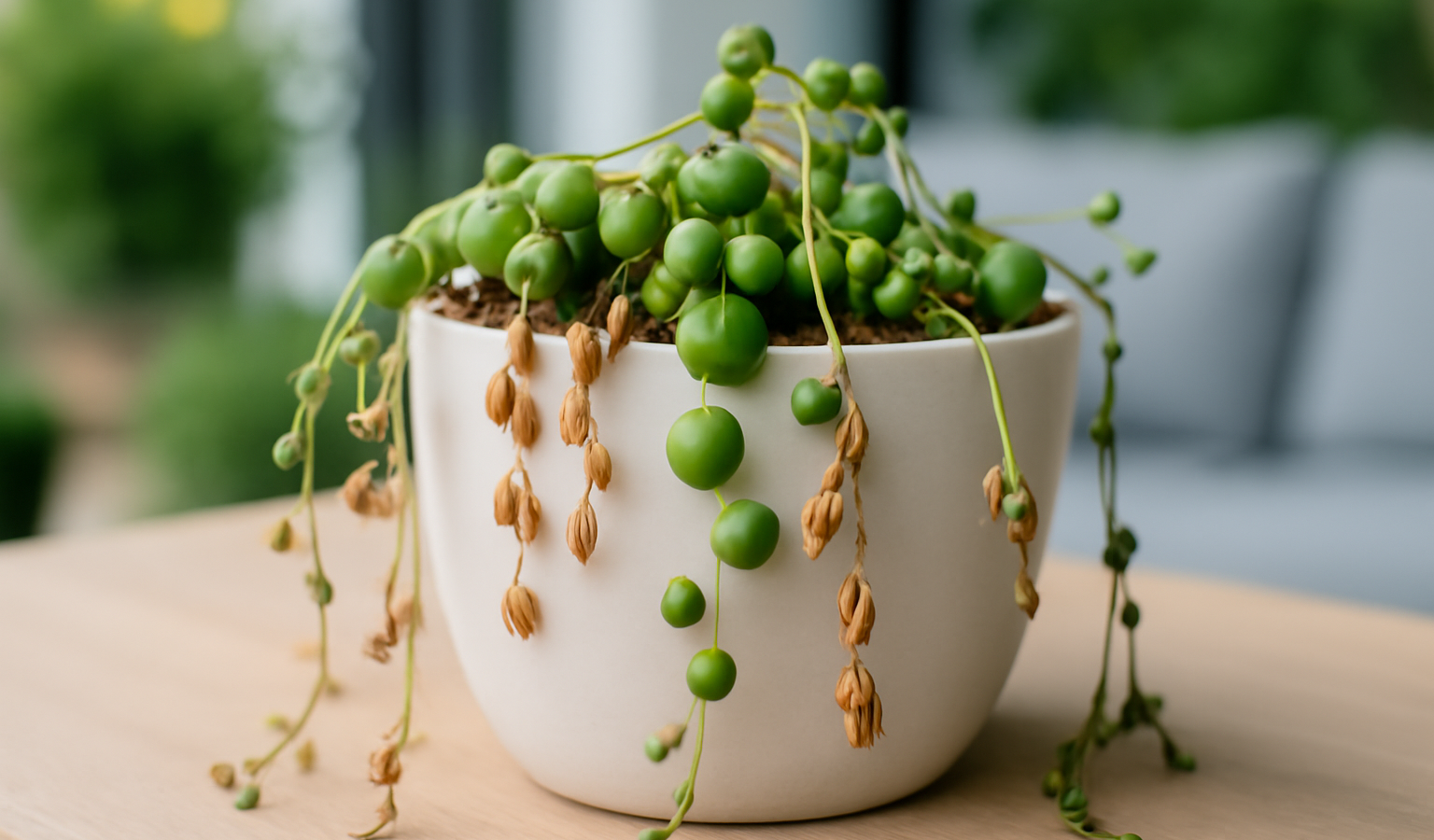
String of pearls (Curio rowleyanus, formerly Senecio rowleyanus) is gorgeous when it’s happy — cascading strands of round, bead-like leaves spilling over the pot. But it has a reputation for dying suddenly, and almost always for the same reason: it’s treated like a typical houseplant when it’s actually a desert succulent with very particular needs. Overwatering kills more strings of pearls than anything else, followed by the root rot that overwatering causes, then poor light and the wrong pot. The plant gives clear warning signs before it crashes, so if you can read them, you can usually save it. This guide covers the four reasons string of pearls dies, how to diagnose each, and how to revive a struggling plant.
Key Takeaways
- Overwatering is the top killer — string of pearls is a succulent that wants to dry out fully between waterings.
- Mushy, shriveled pearls and bare strands usually mean root rot from soggy soil.
- Shriveled, deflated pearls can also mean underwatering, so check the soil before adding more water.
- The plant needs bright light — several hours of sun — or strands go bare and leggy.
- A shallow pot suits its shallow roots and dries faster, reducing rot risk.
Cause 1: Overwatering
String of pearls stores water inside its round pearls, which is exactly why it can’t tolerate constantly moist soil. The pearls are its reservoir; the roots are fine, fibrous, and quick to rot when waterlogged. Water too often — or on a fixed weekly schedule like a leafy houseplant — and the soil never dries, the roots suffocate and rot, and the strands begin to mush, yellow, and fall apart. This is the single most common way the plant dies.
How to diagnose it
Look at the pearls and feel the soil. Overwatered pearls turn translucent, yellow, mushy, or burst, and strands may rot and detach near the soil. The soil feels wet days after watering. Confusingly, overwatered plants can also shrivel — because rotted roots can’t take up water even though the soil is wet — so always check soil moisture rather than assuming a shriveled plant is thirsty.
How to fix it
Stop watering immediately and let the soil dry out completely. Move the plant to a bright, airy spot to speed drying. Going forward, water only when the soil is fully dry top to bottom — for string of pearls that’s roughly every 2 weeks in summer and every 3 to 4 weeks in winter, and only enough to moisten the soil, then let it drain fully. Never let the pot sit in standing water. The soak-and-dry method is essential: a thorough drink, then a long dry spell. If the strands are mushy at the soil line, check the roots (cause 2) before continuing — overwatering this far gone has usually started rot.
Cause 2: Root rot
When overwatering continues, root rot sets in — and root rot is what actually kills the plant. The fine roots turn brown and mushy, lose the ability to take up water and nutrients, and the strands die back from the base. A plant with root rot can decline alarmingly fast, going from full to half-bare in a couple of weeks, which is why string of pearls seems to die “suddenly.”
How to diagnose it
Gently lift the plant from its pot and inspect the roots. Healthy roots are pale and firm; rotted roots are brown or black, slimy, and fall apart when touched. A sour, swampy smell from the soil confirms it. Above the soil, you’ll see strands dying back, pearls dropping, and stems going soft and brown near the base.
How to fix it
Act fast and propagate as insurance. Snip off all healthy strands — any with firm, plump pearls and green stems — and set them aside; these are your real rescue plan, since string of pearls roots easily. Lay the cuttings on top of fresh, dry succulent mix, pressing the stems lightly into contact with the soil, and they’ll root within a few weeks. For the original plant, rinse the roots, cut away all the mush back to firm tissue, discard the old soil, and repot the survivors into fresh, gritty succulent mix in a clean pot. Water only lightly until you see new growth. Even if the parent doesn’t make it, the cuttings will give you a fresh, healthy plant.
Cause 3: Not enough light
String of pearls is a sun-loving succulent. In its native South African habitat it grows in bright, exposed conditions, and indoors it needs lots of light to stay full and healthy. In a dim spot, the strands stretch and go bare, the gaps between pearls widen (leggy growth), pearls may shrink, and the plant slowly weakens and thins out. Low light also keeps soil wet longer, compounding the overwatering risk.
How to diagnose it
Are the strands sparse and stretched, with long bare gaps between pearls? Is the plant several feet from a window or in a low-light room? Is it growing reluctantly and looking thin overall? Those are light-starvation signs. Bright, full strands packed with pearls indicate the light is adequate; sparse, reaching strands say it isn’t.
How to fix it
Move the plant to its brightest available spot. String of pearls wants several hours of bright light daily and tolerates some gentle direct sun — a south or east window is ideal, with a little protection from harsh midday summer sun to avoid scorching the pearls. Increase light gradually so the plant adapts without burning. If your home lacks bright windows, a grow light on for 10 to 12 hours a day keeps the strands full. Better light also dries the soil faster, which lowers the rot risk — solving two problems at once.
Cause 4: The wrong pot — too deep or no drainage
String of pearls has a shallow, delicate root system, and the wrong pot works against it. A deep pot holds a tall column of soil that stays wet at the bottom long after the surface dries, keeping the roots in moisture they can’t tolerate. A pot without drainage holes traps water entirely. Both setups make overwatering nearly inevitable, even if your watering habits are otherwise careful.
How to diagnose it
Check the pot. Is it deep relative to the shallow root ball, with lots of soil beneath the roots? Does it lack drainage holes? Does the soil stay wet for a long time even though you water sparingly? Heavy, slow-draining soil that holds moisture also belongs here — string of pearls needs a gritty, fast-draining mix, not standard potting soil.
How to fix it
Repot into a shallow pot — a wide, shallow container suits the shallow roots and dries far faster than a deep one. Make sure it has drainage holes; terracotta is ideal because it wicks moisture and breathes. Use a fast-draining succulent or cactus mix, or amend regular potting soil with plenty of perlite, pumice, or coarse sand (roughly half grit). Don’t oversize the pot. With a shallow, well-drained, gritty setup, the soil dries on a healthy rhythm and the rot risk drops dramatically. For more on container and soil choices, see our succulent care guides.
How to keep string of pearls alive and thriving
Thriving string of pearls comes down to treating it as the desert succulent it is. Water with the soak-and-dry method — a thorough drink only when the soil is bone dry, every 2 weeks in summer and 3 to 4 in winter. Plant it in a shallow pot with drainage holes and a gritty, fast-draining mix. Give it bright light, including a little gentle sun. Feed lightly with diluted succulent fertilizer once or twice during the growing season, and keep it away from cold drafts. Watch the pearls as your gauge: plump and round means happy; mushy means too wet; shriveled means either too dry or rotted roots — so always confirm with the soil. Get the water and pot right and this notoriously finicky plant becomes a long-lived, easy cascade. If you suspect overwatering is a pattern across your collection, our guide on reviving an overwatered snake plant uses the same rescue logic.
Frequently Asked Questions
How do I know if my string of pearls is overwatered or underwatered?
Both can cause shriveling, so check the soil. Wet soil plus mushy, translucent, or yellowing pearls means overwatering and likely root rot. Dry soil plus deflated, wrinkled-but-firm pearls means underwatering. When in doubt, feel the soil before adding water — overwatering is the more common and more dangerous mistake.
Can I save a dying string of pearls?
Often yes, through propagation. Snip every healthy strand with plump pearls, lay the cuttings on fresh dry succulent mix, and they’ll root in a few weeks. Even if the rotted parent dies, the cuttings give you a fresh plant. Catching the decline early greatly improves the odds.
How often should I water string of pearls?
Only when the soil is completely dry — roughly every 2 weeks in summer and every 3 to 4 weeks in winter, adjusting for light and pot. Use the soak-and-dry method: water thoroughly, then let it dry out fully before the next drink. Never water on a fixed schedule without checking the soil.
Why are my string of pearls strands going bare?
Usually too little light. In dim spots the strands stretch, gaps between pearls widen, and pearls drop, leaving bare stems. Move the plant to bright light with some gentle sun, or add a grow light. Bare strands can be trimmed and the cuttings used to refill the pot.
Does string of pearls need a special pot?
It does best in a shallow pot with drainage holes, because its roots are shallow and a deep pot stays wet too long. Terracotta is ideal since it breathes and wicks moisture. Pair the shallow pot with a gritty, fast-draining succulent mix to prevent the soggy soil that causes rot.