

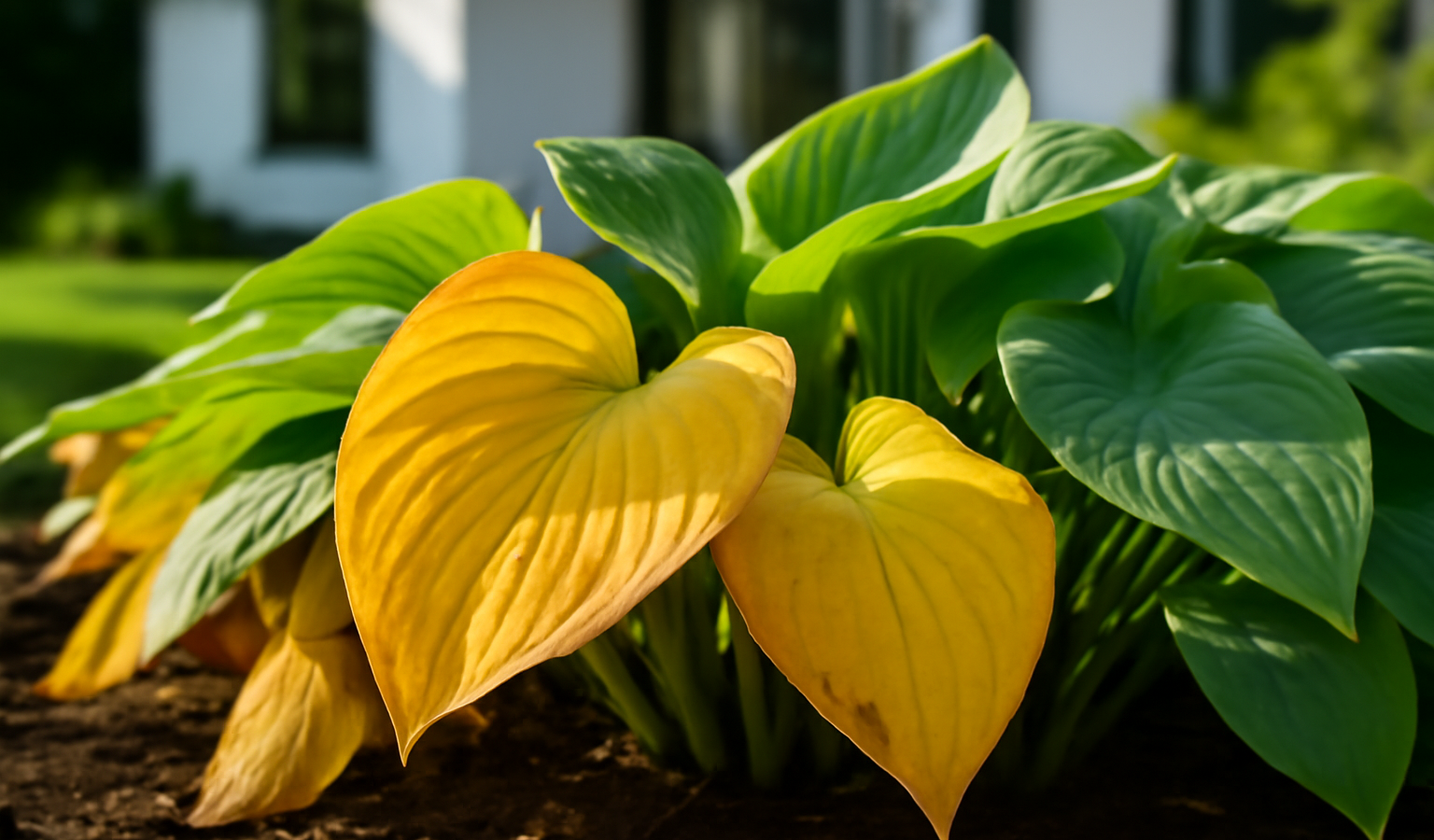
Hostas are famously easygoing shade perennials, so yellowing leaves can be alarming — but the color tells a story once you know how to read it. Some yellowing is completely normal (a fall hosta is supposed to turn gold and collapse). The rest usually traces to water problems, too much sun, nutrient shortfalls, crown or root rot, or pests. The trick is matching the pattern — which leaves, what time of year, and how fast — to the cause. Below, each likely culprit comes with how to diagnose it and exactly what to do.
Key Takeaways
- Uniform yellowing in late summer or fall is normal dormancy — hostas die back every year and this is healthy, not a problem.
- Overwatering and poor drainage are the most common off-season causes; soggy soil yellows lower leaves and leads to crown rot.
- Too much sun bleaches and scorches leaves to a pale, washed-out yellow, especially on blue and green varieties.
- Yellowing between the veins (interveinal) points to nutrient issues — often iron or magnesium, frequently triggered by overly wet or compacted soil.
- Sudden collapse with mushy, yellow lower leaves usually means crown/root rot or vole/pest damage at the base — dig and inspect the crown.
Cause 1: Normal Seasonal Dormancy
Before troubleshooting, rule out the most common “problem” of all: hostas are herbaceous perennials that die back every year. In late summer to fall they pull nutrients from the leaves into the crown and roots, and the foliage turns uniformly yellow, then gold, then brown before collapsing. This is exactly what a healthy hosta should do.
How to diagnose it
Check the calendar and the pattern. If it’s late summer or fall and the whole plant — or all the older leaves evenly — is turning gold-yellow at the same time, this is dormancy. An early hot, dry spell can trigger it prematurely in midsummer too. The plant is not dying; it’s going to sleep.
How to fix it
Nothing to fix. Let the foliage die back naturally, then cut it to the ground after a hard frost and clear the debris (which removes slug eggs and disease). The hosta returns from the crown the following spring, usually larger. If early dormancy is from drought, deeper watering during dry spells will keep plants green longer into the season.
Cause 2: Overwatering and Poor Drainage
Hostas like consistent moisture but not wet feet. Waterlogged soil suffocates the roots, which can’t take up nutrients, and the leaves yellow — typically the lower, older leaves first. Chronic sogginess slides into crown rot.
How to diagnose it
Push a finger into the soil. If it’s wet several inches down and stays that way, or the plant sits in heavy clay or a low spot that puddles, overwatering is likely. Yellowing lower leaves that feel soft, plus soil that smells sour, confirm it.
How to fix it
Let the soil dry out partway between waterings — aim for evenly moist, not soggy. Improve drainage by working compost into heavy soil, or move the hosta out of a wet low spot to a raised bed. In containers, make sure drainage holes are open and the pot isn’t sitting in a saucer of water. Our guide to fixing wet, poorly drained beds covers the longer-term soil work.
Cause 3: Underwatering and Drought Stress
The opposite extreme yellows hostas too. With their big leaves and high surface area, hostas lose a lot of water on hot, dry days. Drought stress shows as yellowing and browning, often starting at leaf edges and tips, and can trigger early dormancy.
How to diagnose it
If the soil is dry and crumbly, the leaves are wilting in the afternoon, and edges are turning brown and crispy along with the yellowing, the plant is thirsty. Hostas under thirsty tree roots or in fast-draining sandy soil are especially prone.
How to fix it
Water deeply and consistently — about an inch a week, more in heat — soaking the root zone rather than splashing the leaves. A 2–3 inch layer of organic mulch keeps the soil cool and moist and is one of the best things you can do for hostas. In tough dry shade under trees, choose thicker-leaved, more drought-tolerant varieties.
Cause 4: Too Much Sun
Most hostas are shade-to-part-shade plants. In too much direct sun, especially hot afternoon sun, the leaves bleach to a pale, washed-out yellow and develop scorched brown patches. Blue and dark-green varieties are the most sun-sensitive; some gold and fragrant types tolerate more.
How to diagnose it
If the yellowing is on the leaves most exposed to sun, looks faded or bleached rather than soft and rotten, and is worst on the south or west side of the plant with crispy brown scorch, sun is the cause. A blue hosta losing its waxy bloom and turning greenish-yellow in sun is a tell.
How to fix it
Move sun-stressed hostas to a spot with morning sun and afternoon shade, or dappled light. Transplant in spring or fall when temperatures are mild. If moving isn’t practical, increase watering and mulch to buffer the stress, and consider replacing with a sun-tolerant variety. Match the variety to the light — gold-leaved and fragrant hostas take more sun than blues.
Cause 5: Nutrient Deficiency
Hostas in poor or compacted soil can run short on nutrients. A general nitrogen shortage yellows the oldest leaves first and stunts the plant; iron or magnesium shortages show as interveinal chlorosis — yellow leaf tissue with veins staying green — often triggered when wet or compacted soil keeps roots from absorbing those nutrients.
How to diagnose it
Look at the pattern. Uniform pale-yellow oldest leaves with slow growth suggests low nitrogen. A green-veined, yellow-bladed look points to iron or magnesium, frequently alongside soggy or hard-packed soil. Never-fed hostas in thin soil are prime candidates.
How to fix it
Feed in spring with a balanced slow-release fertilizer and top-dress with compost, which supplies steady nutrition and improves the soil. For interveinal yellowing, first fix drainage and compaction so roots can work, then a foliar feed or chelated iron can green plants up. Avoid over-feeding — too much nitrogen makes soft growth that slugs love.
Cause 6: Crown Rot and Root Rot
When yellowing comes with sudden collapse, suspect rot. Hosta crown rot (often Sclerotium or fungal/bacterial rots) attacks the base in warm, wet, poorly drained conditions. The outer leaves yellow, soften, and pull away easily, and the whole clump can flop and decline fast.
How to diagnose it
Tug a yellow leaf — if it slips out of the crown with mushy, brown, foul-smelling tissue at the base, it’s rot. You may see a white fungal web or tan, mustard-seed-like fungal bodies at the soil line. Plants in soggy, mulch-piled, or crowded conditions are most at risk.
How to fix it
Dig the plant, cut away all rotten tissue back to firm, healthy crown, and replant in well-drained soil in a fresh spot, keeping mulch pulled back from the crown. Discard badly rotted plants and the surrounding soil to limit spread. Prevent recurrence with good drainage, proper spacing for airflow, and watering at the base rather than over the crown.
Cause 7: Pests — Voles, Nematodes, and Foliar Nematodes
Several pests cause yellowing. Voles chew hosta roots and crowns underground, so the top yellows and the plant lifts loosely from the soil. Foliar nematodes produce a distinctive yellowing-then-browning between the veins in bands across the leaf. (Slugs make holes rather than yellowing, but heavy damage stresses the plant.)
How to diagnose it
If a yellowing plant lifts out of the ground with chewed roots and you spot pencil-sized tunnels nearby, voles are at work. Yellow-to-brown stripes running between the parallel veins, sharply bounded by the veins, are the signature of foliar nematodes, worst in wet weather and on lower leaves.
How to fix it
For voles, reduce mulch and groundcover near the crowns, use traps or hardware-cloth barriers around prized plants, and keep the area tidy. For foliar nematodes there’s no cure: remove and destroy affected leaves (don’t compost them), avoid overhead watering, water in the morning so foliage dries, and in severe cases dig and discard the plant. Clean tools between plants to avoid spreading them.
Prevention: Keeping Hostas Green and Lush
Healthy hosta foliage comes down to siting and steady care. Plant in part to full shade — morning sun, afternoon shade for most varieties — in rich, well-drained soil amended with compost. Water consistently to keep the soil evenly moist but never soggy, soaking the root zone rather than the leaves, and mulch 2–3 inches deep (kept off the crown) to hold moisture and moderate temperature. Feed once in spring with a balanced slow-release fertilizer and top-dress with compost; resist over-feeding.
Space plants for airflow to discourage rot and foliar nematodes, water in the morning so leaves dry, and keep the bed clear of debris that harbors slugs and disease. Cut back the foliage after frost and remove it from the garden. And remember the most reassuring point: uniform yellowing in late summer and fall is just the plant going dormant on schedule. Match the yellow pattern to the cause and most hosta troubles are easy to reverse. For more shade-garden companions, see our shade perennials collection and broader plant care guides.
Frequently Asked Questions
Is it normal for hostas to turn yellow?
Yes — uniform yellowing in late summer and fall is normal dormancy. Hostas die back to the ground every year and return from the crown each spring. Yellowing during the growing season, however, usually signals a water, light, nutrient, or pest issue.
Does overwatering turn hostas yellow?
Yes. Soggy, poorly drained soil suffocates the roots and yellows the lower leaves first, eventually leading to crown rot. Let the soil dry partway between waterings and improve drainage with compost or a raised bed.
Why are my hosta leaves pale and bleached?
A washed-out, bleached yellow with crispy brown scorch usually means too much sun, especially hot afternoon sun. Blue and dark-green hostas are most sensitive. Move the plant to morning sun with afternoon shade, or switch to a sun-tolerant variety.
What does it mean when only the veins stay green?
Yellow leaf tissue with green veins (interveinal chlorosis) points to an iron or magnesium issue, often triggered by wet or compacted soil that keeps roots from absorbing nutrients. Fix drainage and compaction first, then apply chelated iron or a foliar feed.
My hosta suddenly collapsed and yellowed — what happened?
Sudden collapse with mushy, foul-smelling tissue at the base is crown or root rot, common in warm, wet, poorly drained conditions. Voles chewing the roots can also cause sudden yellowing and a loose plant. Dig and inspect the crown and roots to tell them apart.