

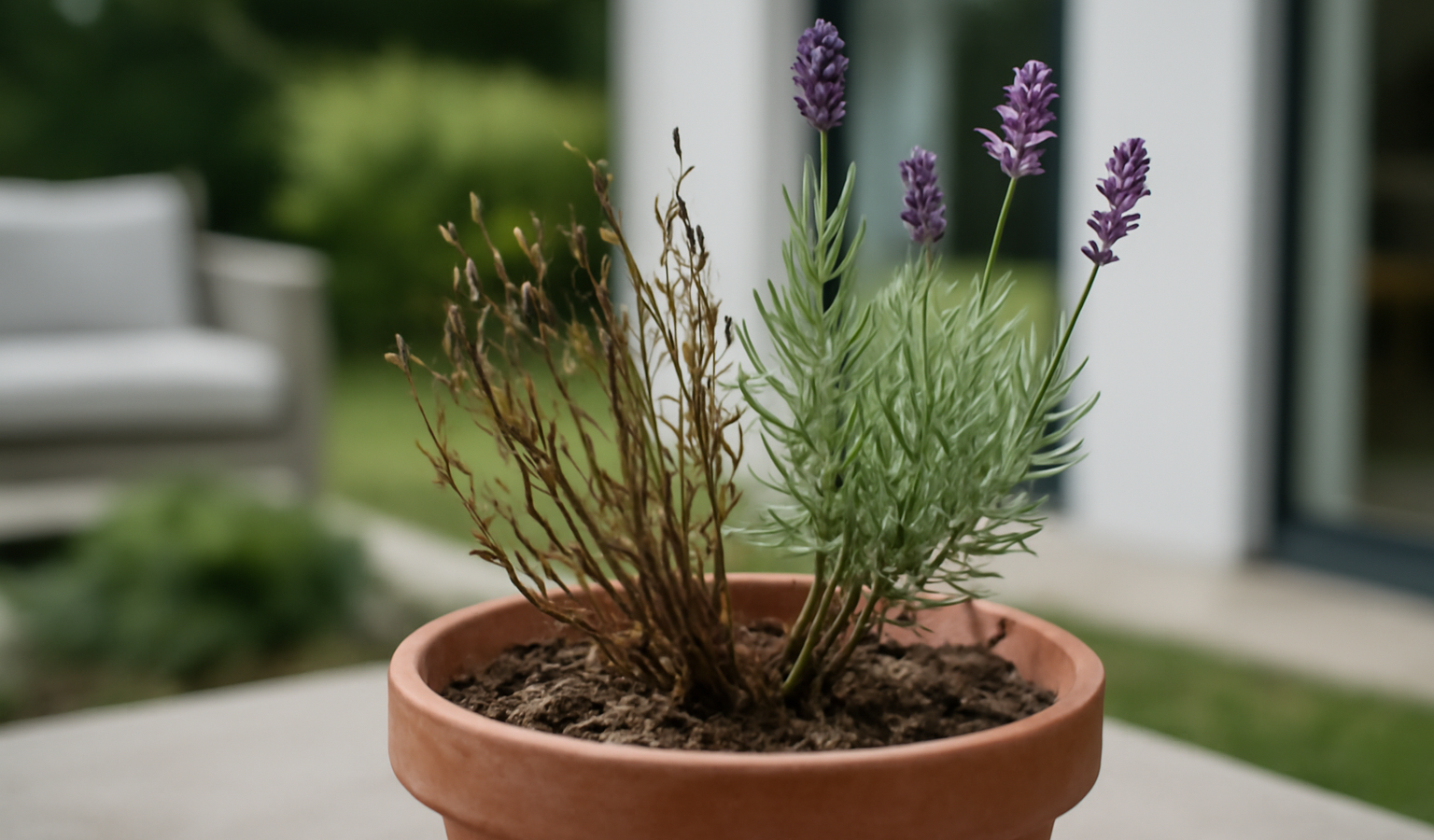
Lavender is a Mediterranean plant that evolved on dry, rocky, sun-baked hillsides, and almost everything that kills it comes from giving it conditions too kind for its own good. A dying lavender, browning, graying, dropping leaves, or rotting at the base, is usually drowning rather than starving. The most common killers are wet or poorly drained soil, root rot, high humidity, growing the wrong type for your climate zone, and damage from pruning into old wood. The encouraging news is that lavender’s needs are simple once you understand them: lean soil, sharp drainage, full sun, good airflow, and a light hand with the shears. This guide walks through each cause of a declining lavender, shows you how to tell which one is at work, and explains exactly how to save the plant or set up the next one to thrive.
Key Takeaways
- Wet, poorly drained soil is the number-one killer of lavender; it demands fast-draining, gritty, lean soil.
- Root rot from overwatering or heavy clay causes yellowing, wilting, and a soft, blackened base; improve drainage fast.
- High humidity and crowding invite fungal disease; space plants for airflow and grow humidity-tolerant types in muggy regions.
- Match the type to your zone: English lavender is hardiest; Spanish and French types are tender and need warmer climates.
- Never prune into bare old wood; lavender rarely resprouts from it, so cut only into green, leafy growth.
Cause 1: Wet or Poorly Drained Soil
If there is one thing to remember about lavender, it is that it would rather be too dry than too wet. Lavender’s roots need air, and in soggy, heavy, or poorly drained soil they suffocate. This is the single most common reason lavender dies, and it kills slowly and silently. Gardeners often plant lavender in ordinary garden bed soil amended with compost, water it like the rest of the border, and wonder why it declines. Rich, moisture-retentive soil is exactly wrong for a plant adapted to gritty Mediterranean hillsides.
How to diagnose it
Check the soil and how it drains. If water pools after rain or the soil stays damp days later, drainage is poor. Heavy clay, low spots, and beds against downspouts are red flags. A struggling lavender in such a setting, with grayish, lifeless foliage and slow decline, is almost certainly waterlogged. Dig a small test hole and fill it with water; if it takes hours to drain, that soil is too wet for lavender.
How to fix it
Improve drainage or move the plant. Amend the planting area generously with coarse sand, fine gravel, or grit to create a fast-draining, lean mix, and avoid adding rich compost. Planting lavender on a mound, slope, or in a raised bed dramatically improves drainage. In containers, use a gritty potting mix and ensure ample drainage holes. Water established lavender sparingly, only during prolonged drought, and let the soil dry fully between waterings. Getting drainage right solves the majority of lavender problems before they start.
Cause 2: Root Rot
Root rot is the fatal endpoint of the wet-soil problem. When roots sit in saturated soil, fungal pathogens move in and the root system breaks down, cutting off the plant’s water and nutrient uptake. The result is a plant that wilts and yellows even though the soil is wet, because the rotted roots can no longer function. Overwatering, especially of potted lavender or young plants, is the fastest route to root rot, and once it takes hold the plant is hard to save.
How to diagnose it
Look for wilting and yellowing combined with damp soil, and inspect the base of the plant. A soft, mushy, darkened or blackened stem at the soil line and a foul smell indicate rot. If you ease the plant up, rotted roots are brown, soft, and slimy rather than firm and pale. Lavender that looks thirsty but is sitting in moist soil is the classic, counterintuitive signature of root rot.
How to fix it
Act fast and stop watering. For a plant in early decline, lift it, trim away any soft, blackened roots, and replant into fast-draining, gritty soil or a raised, sunny spot, then withhold water until it shows recovery. A potted lavender can be repotted into fresh gritty mix in a container with strong drainage. Severely rotted plants usually cannot be saved and should be removed before the rot spreads. Prevention, through drainage and restraint with the watering can, is far more reliable than any cure.
Cause 3: High Humidity and Poor Airflow
Lavender hates damp air almost as much as damp roots. In humid climates, moisture lingering around the foliage encourages fungal diseases that cause browning, dieback, and a gray, unhealthy cast. Plants packed too closely together, or crowded by neighbors, trap humidity and starve the lavender of the breezy airflow it craves. This is why lavender that thrives in dry Western states often struggles in the humid Southeast and Midwest unless the right type and spacing are used.
How to diagnose it
Consider your climate and planting density. If you live in a humid region, your lavender is crowded among other plants, and it shows browning interior foliage or fungal spotting despite decent drainage, humidity and poor airflow are likely contributors. Persistent dampness on the leaves after morning dew that does not dry quickly is another sign. The interior of the plant, where air moves least, usually browns first.
How to fix it
Maximize airflow. Space lavender plants 2 to 3 feet apart so air moves freely around each one, and keep neighboring plants from crowding them. Mulch with light-colored gravel rather than moisture-holding bark, which reflects heat and keeps the base dry. Water at the base, never overhead, and water in the morning so any splashes dry quickly. In humid regions, grow more tolerant types like lavandins and provide the sunniest, most open, breeziest spot you have.
Cause 4: Wrong Type for Your Zone
Not all lavender is equally hardy, and planting a tender type where winters are too cold is a guaranteed way to lose it. English lavender (Lavandula angustifolia) is the cold-hardiest, generally surviving to about zone 5. Spanish lavender (L. stoechas) and French lavender (L. dentata), with their showier blooms, are far more tender and typically need zone 8 or warmer to overwinter. Gardeners who fall for a pretty Spanish lavender at the nursery without checking its hardiness often watch it die over the first cold winter.
How to diagnose it
Identify your lavender and check it against your USDA zone. If your plant thrived all summer and then collapsed or failed to leaf out after winter, and it is a Spanish or French type in a cold-winter zone, hardiness is your answer. Spanish lavender has distinctive pineapple-shaped flower heads topped with petal-like bracts; English lavender has the classic slender spikes. Knowing which you have, and which your climate supports, prevents repeat losses.
How to fix it
Match the plant to the climate. In zones 5 to 8, choose English lavender or hardy lavandins for in-ground planting. If you love tender Spanish or French types in a cold region, grow them in containers and overwinter them in a cool, bright, frost-free spot. Where a borderline-hardy lavender is in the ground, a light winter mulch and a protected, south-facing microclimate improve its odds. Choosing the right type from the start is far easier than nursing the wrong one.
Cause 5: Over-Pruning into Old Wood
Lavender pruning has one iron rule: never cut into the bare, woody base. Unlike many shrubs, lavender rarely resprouts from old, leafless wood. If you cut hard into that gray, gnarled lower growth, those stems usually just die, leaving dead patches or killing the whole plant. Over-enthusiastic pruning, or a late, drastic cut, is a surprisingly common way gardeners accidentally kill an otherwise healthy lavender that they were only trying to tidy up.
How to diagnose it
Recall how and when you pruned. If you cut the plant back hard, into the woody lower stems, and those sections then failed to releaf and died back, over-pruning into old wood is the cause. The damage shows as dead, bare stems where you made deep cuts, while any growth you left in the green leafy zone remains alive. Timing matters too: severe cuts going into winter can be especially fatal.
How to fix it
You cannot revive dead wood, but you can save the rest. Stop cutting into the bare base and let the green growth recover. Going forward, prune lavender lightly each year, in spring as new growth appears or right after flowering, removing only about a third of the plant and always cutting within the green, leafy portion, leaving a little green above the woody base. Annual light pruning keeps the plant from getting leggy and woody in the first place, which is the subject of its own common problem.
Keeping Lavender Alive and Thriving
Lavender rewards a hands-off, lean approach. Plant it in full sun in fast-draining, gritty, low-fertility soil, ideally on a mound or raised bed, and water it only sparingly once established. Space plants well apart and give them an open, breezy site to fend off humidity-driven disease. Choose hardy English lavender or lavandins for cold or humid regions and reserve tender Spanish and French types for warm climates or pots. Prune lightly every year within the green growth and never into old wood. Resist the urge to pamper it; most dead lavender was loved a little too much, with too much water and too rich a soil. Give it the spare, sunny, dry life it evolved for and it will thrive for years.
If your lavender is surviving but getting gnarled and bare at the base, that is a related issue covered in our guide on why lavender turns woody. To get pruning right, see the difference between pruning and shearing, and browse more plant care in the Plants & Flowers hub.
Frequently Asked Questions
Why is my lavender turning gray and dying back?
The most common cause is wet or poorly drained soil suffocating the roots, often leading to root rot. Lavender needs lean, fast-draining, gritty soil and only sparing water. Check that water drains quickly and that the plant is not sitting in damp ground.
Am I overwatering my lavender?
Quite possibly, as overwatering is one of the leading causes of lavender death. Established lavender needs water only during prolonged drought and prefers the soil to dry out completely between waterings. Wilting in moist soil is a sign of rot from too much water.
Which lavender is hardiest for cold climates?
English lavender (Lavandula angustifolia) is the cold-hardiest, usually surviving to about zone 5, along with hardy lavandins. Spanish and French lavenders are tender and generally need zone 8 or warmer, or must be grown in pots and overwintered indoors.
Can I save lavender after cutting into the woody base?
The dead wood will not resprout, so those stems are lost. Stop cutting into the bare base, let the remaining green growth recover, and from now on prune only within the green leafy zone, removing about a third of the plant each year.
Does lavender struggle in humid climates?
Yes. Humidity and poor airflow encourage fungal disease and browning. In humid regions, choose tolerant lavandin types, space plants 2 to 3 feet apart for airflow, mulch with gravel rather than bark, and give them the sunniest, breeziest spot available.