

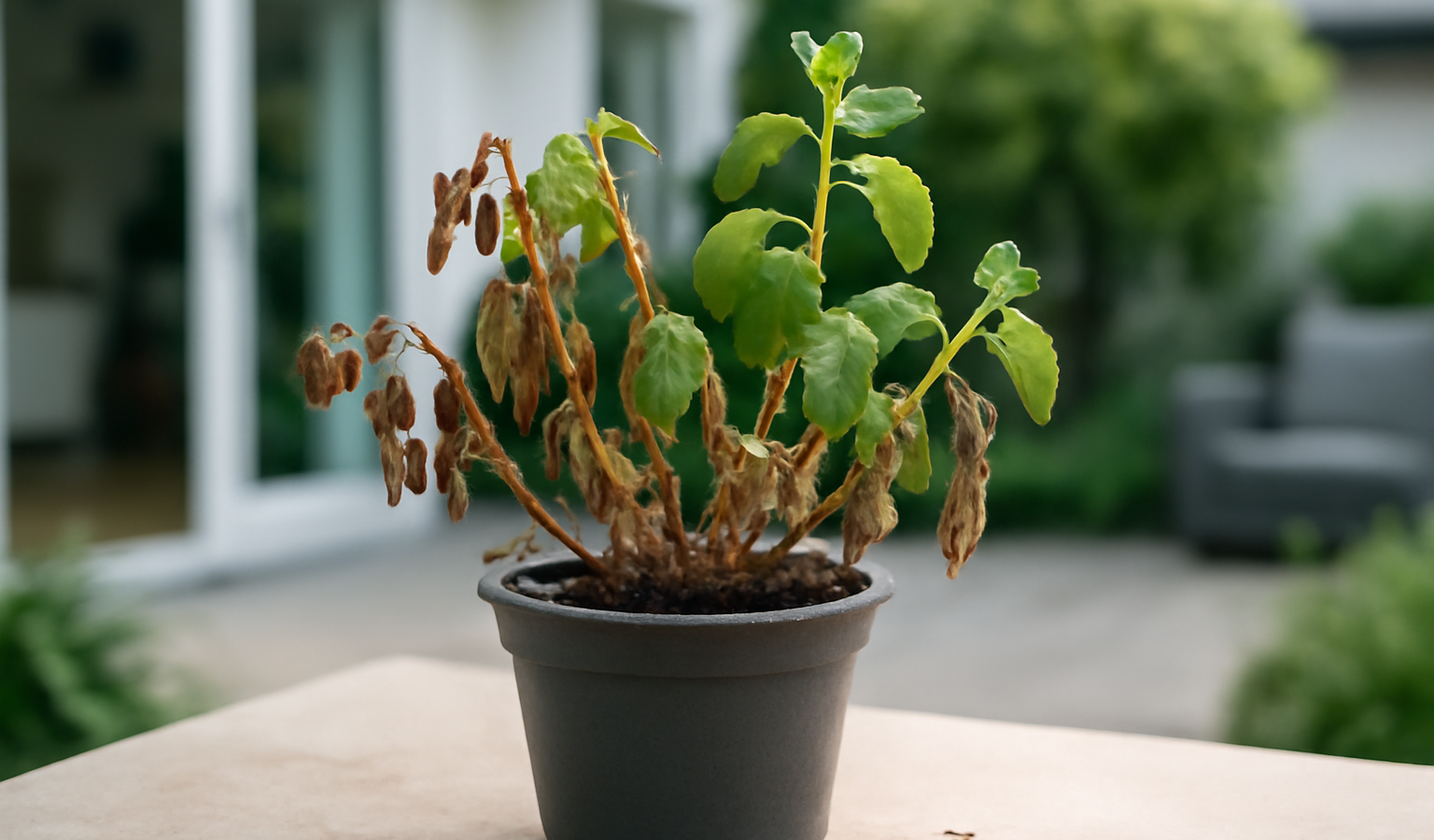
Mint is famous for being nearly impossible to kill, which makes a dying mint plant especially frustrating. The herb that supposedly takes over gardens is suddenly wilting, browning, or collapsing, and the usual explanation is that one of its few real weaknesses has been hit. Mint dies most often from overwatering and the root rot that follows, from drying out completely, from a fungal disease called mint rust, from becoming hopelessly root-bound in a pot, or from a pest infestation. Because mint is so vigorous, it usually wants to recover if you remove the cause in time. This guide runs through the five reasons mint declines, how to diagnose each by its distinct symptoms, and the practical steps to revive your plant and keep it growing with mint’s trademark enthusiasm.
Key Takeaways
- Overwatering and the resulting root rot are the top reasons potted mint dies; mint likes moist but never soggy soil.
- Underwatering causes fast wilting and crispy brown leaves, especially in pots and hot weather, but mint usually rebounds when watered.
- Mint rust shows as orange-brown pustules on leaf undersides; remove affected growth and improve airflow.
- Root-bound mint in a tight pot exhausts itself; divide and repot every year or two to keep it vigorous.
- Aphids, spider mites and other pests can sap a plant; rinse them off and treat with insecticidal soap.
Cause 1: Overwatering and Root Rot
Mint likes consistently moist soil, but there is a crucial difference between moist and waterlogged. When mint sits in soil that stays saturated, in a pot without drainage, a saucer of standing water, or heavy soggy ground, the roots cannot get oxygen and begin to rot. Root rot then cuts off the plant’s ability to take up water, so the mint wilts and yellows even though it is drowning. This is the most common way potted mint dies, precisely because people assume the thirsty-looking plant needs even more water and make it worse.
How to diagnose it
Check the soil moisture and the base of the plant. Wilting, yellowing leaves combined with soil that is constantly wet point to overwatering rather than thirst. Look for blackened, mushy stems at the soil line, a sour smell, and roots that are brown and soft instead of white and firm. A pot sitting in a water-filled saucer or lacking drainage holes is a giveaway. If your mint looks limp but the soil is wet, suspect rot.
How to fix it
Stop watering and fix the drainage. Empty any saucer of standing water and make sure the pot has open drainage holes. Let the soil dry out until the top inch is dry before watering again. For a plant with active rot, unpot it, trim away soft, blackened roots and stems, and repot into fresh, well-draining potting mix in a container with good drainage. Going forward, water mint when the top inch of soil feels dry rather than on a rigid schedule, keeping it moist but never sodden.
Cause 2: Underwatering
At the other extreme, mint hates drying out. It has shallow, thirsty roots and large, soft leaves that lose water fast, so it is one of the quickest herbs to collapse when the soil goes dry. Potted mint is especially vulnerable because small containers dry out rapidly, and in summer heat a pot can go from moist to bone dry in a day. An underwatered mint wilts dramatically and its leaves go crispy and brown at the edges, looking, briefly, as if it is finished.
How to diagnose it
Feel the soil. If it is dry and the leaves are wilted, drooping, and turning crisp and brown rather than soft and yellow, the plant is thirsty, the opposite signature from rot. A lightweight pot that feels dry to the bottom, especially during hot weather or after you have been away, confirms underwatering. The reassuring sign is that an underwatered mint usually perks back up within hours of a thorough watering, whereas a rotted one does not.
How to fix it
Water thoroughly and adjust your routine. Give the plant a deep soak until water runs from the drainage holes; for a severely dry pot, set it in a basin of water for an hour to rehydrate the root ball. Then keep the soil consistently moist, checking daily in hot weather. Mulching the soil surface and moving pots out of scorching afternoon sun helps retain moisture. Mint planted in the ground, with access to more soil moisture, dries out far less readily than potted mint.
Cause 3: Mint Rust
Mint rust is a fungal disease that specifically attacks mint and can quickly disfigure and weaken a plant. It produces small orange, rusty, or brown pustules, mostly on the undersides of leaves, followed by yellowing, distorted growth, and leaves that brown and drop. It spreads in damp, crowded, poorly ventilated conditions and can knock back a vigorous patch surprisingly fast. Because the affected leaves are not appetizing or safe to use, rust effectively ruins a harvest as well as harming the plant.
How to diagnose it
Turn the leaves over and inspect them. Tiny raised orange-to-brown spots or pustules on the undersides are the unmistakable sign of mint rust, often with yellow blotches on the upper surface. Affected leaves may curl, distort, and brown before falling. The problem is worst on crowded plants in humid, damp settings with poor airflow. If your mint is browning from a spotty, pustuled disease rather than from watering issues, rust is the cause.
How to fix it
Remove infected material and improve conditions. Strip off and destroy all rust-affected leaves and stems, in the trash and not the compost, to limit spread. Thin the plant to improve airflow, water at the base rather than overhead to keep foliage dry, and give it more sun and space. For a badly infected patch, cutting it right back to the ground and letting fresh, clean growth emerge often works because mint regrows so vigorously. Persistent cases may warrant disposing of the plant and starting fresh elsewhere, since rust can linger in the soil.
Cause 4: Root-Bound in a Pot
Mint’s aggressive spreading habit is the very reason people grow it in pots, but confinement has a downside. A vigorous mint quickly fills its container with a dense mat of roots, becoming root-bound. Once the pot is a solid tangle of roots with little soil left, the plant cannot take up enough water or nutrients, dries out almost instantly after watering, and declines into woody, sparse, weak growth from the center outward. Many a potted mint that mysteriously fades after a year or two is simply strangled by its own roots.
How to diagnose it
Consider how long the mint has been in the same pot and how it behaves. A plant that has been in its container a year or more, dries out within a day of watering, and is growing weak, woody, and bare in the middle is likely root-bound. Slide it out of the pot to check: a thick, circling mass of roots with barely any visible soil confirms it. Roots escaping the drainage holes are another clear sign.
How to fix it
Divide and repot. Lift the plant, and either pot it up into a larger container or, better, split the root mass into sections with a knife or spade and replant the healthiest divisions into fresh potting mix. This rejuvenation gives mint room to grow and access to new nutrients, and it typically rebounds with a burst of fresh growth. Repeat the divide-and-refresh routine every one to two years to keep potted mint vigorous indefinitely. It is the same process that keeps mint from overwhelming a bed in the ground.
Cause 5: Pests
Though mint’s strong oils deter many insects, it is not immune. Aphids cluster on tender new growth and stem tips, sucking sap and leaving sticky honeydew. Spider mites, common in hot, dry conditions, stipple leaves with fine yellow speckling and spin faint webbing. Other chewers and sap-feeders can move in as well. A heavy infestation drains the plant, causing wilting, yellowing, distorted growth, and decline, and pests often pile on when the mint is already stressed by one of the watering problems above.
How to diagnose it
Examine the plant closely, especially the new growth and leaf undersides. Clusters of tiny green, black, or gray insects on shoot tips are aphids; fine yellow stippling with delicate webbing signals spider mites. Look for the pests themselves, sticky residue, or sooty mold growing on honeydew. If your mint is declining and you find insects on it rather than rot or rust, pests are the cause. Distinguishing the speckling of mites from the pustules of rust is key to choosing the right fix.
How to fix it
Knock the pests back with the gentlest effective method, since you will be eating the leaves. Start by blasting the plant with a strong spray of water to dislodge aphids and mites. For stubborn infestations, treat with insecticidal soap or a horticultural oil, coating the leaf undersides and repeating every few days as needed. Remove the worst-affected stems entirely. For a heavily infested plant, cutting it back hard and letting clean new growth flush out is highly effective given how fast mint regrows. Keep the plant healthy and well-watered, since vigorous mint shrugs off pests far better than a stressed one.
Keeping Mint Healthy and Vigorous
Reviving mint is mostly about reading its symptoms correctly, then removing the cause. Water it to stay evenly moist but never soggy, and check the soil rather than watering on autopilot, since both overwatering and underwatering are common killers. Give the plant good airflow, sun, and base watering to head off mint rust, and cut it back hard if disease takes hold. Divide and repot potted mint every year or two so it never becomes root-bound, and watch for aphids and mites, knocking them back early with water and insecticidal soap. Because mint is so resilient, almost any struggling plant can be saved by cutting it back to clean, healthy growth and correcting its conditions. Do that, and your mint will be back to its unstoppable self in no time.
Mint’s vigor makes it ideal for containers, and the Urban Gardening hub has more on keeping potted herbs thriving. Overwatering and root rot trip up many plants the same way, as our guide on why lavender dies shows from the opposite, drought-loving angle. For more herb and plant care, see the Plants & Flowers hub.
Frequently Asked Questions
Why is my potted mint wilting even though I water it?
Most likely overwatering and root rot. When soil stays soggy, the roots suffocate and rot, so the plant wilts as if thirsty. Check for mushy, blackened stems and wet soil, empty any standing water, improve drainage, and let the top inch dry before watering again.
How do I tell overwatering from underwatering in mint?
Feel the soil. Wet soil with yellowing, soft, limp leaves and mushy stems means overwatering and rot. Dry soil with wilted leaves turning crispy and brown at the edges means underwatering. Underwatered mint usually revives within hours of a deep soak; rotted mint does not.
What are the orange spots on my mint leaves?
That is mint rust, a fungal disease showing as orange-to-brown pustules on leaf undersides with yellowing above. Remove and destroy affected leaves, improve airflow, water at the base, and cut a badly infected plant to the ground to let clean new growth emerge.
How often should I repot mint?
Every one to two years. Mint quickly fills a pot with roots and becomes root-bound, drying out fast and growing weak and woody in the center. Lift it, divide the root mass, and replant healthy sections in fresh mix to keep it vigorous.
Can I save mint that looks almost dead?
Usually yes, because mint is extremely resilient. Identify and fix the cause, then cut the plant back hard to healthy growth or even to the ground. With corrected watering and conditions, mint regrows vigorously from its roots and often bounces back within weeks.