

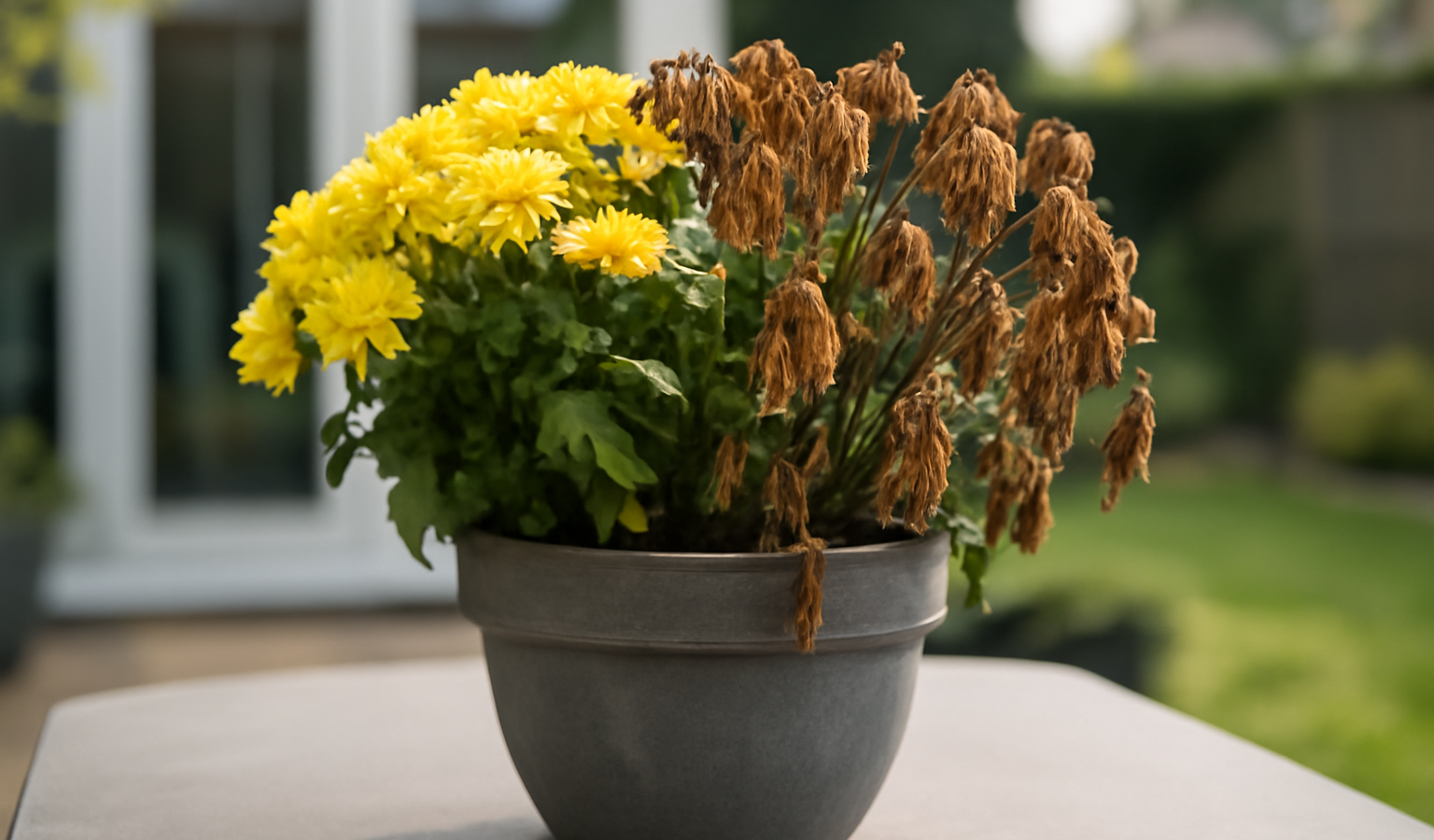
Few plants go from glorious to grim as fast as a potted mum. You bring home a tight mound of buds, set it on the porch, and within a week it’s wilting, browning, and dropping flowers. Chrysanthemums are thirsty, root-packed plants that are often sold in full bloom in undersized pots, which makes them prone to drying out, overheating, and burning through their flower display quickly. Most “dying” mums are actually suffering from a fixable watering or environmental problem — and some are simply finishing a natural bloom cycle. This guide covers the real reasons mums die, how to diagnose each, and how to keep yours alive and blooming longer.
Key Takeaways
- Underwatering is the most common reason potted mums wilt and die — their packed roots dry out fast and need water often.
- Heat and harsh sun, especially on a hot porch, stress mums and cause rapid wilting and faded, short-lived flowers.
- Overwatering and poor drainage cause root rot, which looks like wilting but with soggy soil and yellow, mushy growth.
- Newly planted mums often droop from transplant shock; keep them watered and they usually rebound.
- Sometimes a mum isn’t dying at all — it’s just finished blooming, and deadheading or cutting back sets up the next round.
First: Wilting Down vs. Truly Dying
Start by checking the soil, because mums wilt for opposite reasons. Stick a finger into the pot: bone-dry soil with a light pot and wilting foliage almost always means thirst, and the plant usually perks back up within hours of a good watering. Wet, soggy soil with wilting and yellowing means the roots are rotting from too much water. And browning, fading flowers on an otherwise firm, green plant often just means the bloom cycle is ending — not that the plant is dying. Reading the soil and the difference between droopy-but-green and mushy-and-yellow tells you which problem you’re solving.
Cause 1: Underwatering
This is far and away the top mum killer. Garden-center mums are sold rootbound in small pots crammed with foliage and flowers, all of which demand a lot of water. In a sunny or breezy spot they can dry out in less than a day, and once the soil goes bone-dry the plant wilts dramatically and the lower leaves and flowers brown and crisp.
How to diagnose
The soil is dry and the pot feels very light, the whole plant droops and wilts, and leaves and flowers turn brown and papery. Often the soil has shrunk away from the sides of the pot, so water runs straight down the gap. Crucially, the wilting reverses quickly once you water — the hallmark of thirst rather than rot.
How to fix it
Water deeply and often. If the soil has pulled away and repels water, bottom-water by setting the pot in a tub of water for 20–30 minutes so the rootball rehydrates fully, then let it drain. During warm weather, potted mums frequently need water every day, sometimes twice — check the soil daily and water whenever the top inch is dry. The plant should recover within hours. To reduce the constant drying, repot the mum into a larger container with fresh potting mix so the cramped roots have room and the soil holds moisture longer.
Cause 2: Too Much Heat and Sun
Mums are cool-season fall plants. Set on a hot, sun-baked porch or against a reflective wall in late summer, they overheat, wilt, and burn through their flowers fast. High heat both stresses the plant directly and dries the soil so quickly that underwatering follows close behind.
How to diagnose
The plant wilts in the heat of the afternoon even when the soil is still moist, flowers fade and brown quickly, and the worst symptoms show on a hot, exposed, south- or west-facing spot. Wilting that eases as the day cools points to heat stress rather than a pure watering problem.
How to fix it
Move the mum out of intense afternoon sun and heat into a spot with morning sun and afternoon shade, especially while temperatures are high. Cooler conditions make the flowers last much longer. As the weather cools into true fall, mums can take more sun. Pairing cooler placement with consistent watering solves most heat-driven decline.
Cause 3: Overwatering and Root Rot
Trying to compensate for thirsty mums, some owners overwater — or leave the pot sitting in a saucer or decorative sleeve that traps water. Constantly soggy soil suffocates and rots the roots, which then can’t take up water, so the plant wilts even though the soil is wet.
How to diagnose
The soil is constantly wet or soggy, yet the plant is wilting; lower leaves yellow and the stems or roots may feel soft and mushy. A sour smell from the soil and water pooling in the foil sleeve or saucer confirm waterlogging. Unlike thirst, watering more makes it worse.
How to fix it
Improve drainage immediately. Remove any foil wrapper or pour out standing water, and make sure the pot has open drainage holes. Let the soil dry out before watering again, and water only when the top inch is dry from then on. If rot is advanced — many soft, blackened roots — repot into fresh, well-draining mix, trimming away the mushy roots first. Going forward, never let a mum sit in standing water.
Cause 4: Transplant Shock
A mum that wilts and droops right after you plant it in the ground or repot it is usually in transplant shock — temporarily stressed as its roots adjust to new surroundings. This is common and rarely fatal if you support the plant through it.
How to diagnose
The wilting begins within a day or two of planting or repotting, and the soil moisture is reasonable. The plant looks droopy and sad but the stems and leaves are still green and pliable, not browned or mushy.
How to fix it
Keep the soil consistently moist (not soggy) while the roots settle, and give the plant shade from harsh sun for the first several days. Avoid fertilizing right after transplanting, which can further stress the roots. Most mums recover within a week or two. To minimize shock, transplant in cooler weather and water the plant well before and after moving it.
Cause 5: The Bloom Cycle Is Just Ending
Sometimes a mum isn’t dying at all. Each flush of flowers lasts only a few weeks, and as blooms age they naturally brown and fade. An owner sees the browning flowers and assumes the plant is dying, when it’s simply finishing its display.
How to diagnose
The flowers are browning and dropping, but the foliage and stems are still firm and green. The plant is otherwise healthy — no widespread wilting, no mushy roots, no crispy leaves. This is normal aging of the blooms.
How to fix it
Deadhead the spent flowers by pinching or snipping them off, which tidies the plant and can encourage more buds. If you want to keep the plant for next year, treat it as a hardy perennial in suitable zones: plant it in the ground, keep it watered, and cut it back after blooming or in late fall. Many garden mums sold in fall are perennials and will return and rebloom if planted and overwintered.
Keeping Mums Alive and Blooming Longer
The formula for happy mums is consistent water, cool placement, and good drainage. Check potted mums daily and water whenever the top inch of soil is dry — often that’s every day in warm weather. Keep them out of scorching afternoon sun until the weather cools, and never let them sit in standing water. Deadhead spent flowers to extend the show, and consider repotting cramped garden-center mums into a roomier container so they dry out less violently. If you want them to come back, plant them in the ground in a suitable zone, water through the season, and cut them back for winter. Get the watering rhythm right and a mum that looked doomed will often bounce right back. For more plant care, see our guides on pruning for bushier growth and the Plants & Flowers collection, plus Outdoor Living for garden tips.
Frequently Asked Questions
Why is my potted mum wilting so fast?
Almost always underwatering. Garden-center mums are rootbound in small pots packed with foliage and can dry out in less than a day, especially in sun or heat. Check the soil daily and water deeply whenever the top inch is dry — they often need water every day.
How do I tell if my mum is underwatered or overwatered?
Feel the soil. Dry, light pot with droopy green foliage that perks up after watering = underwatered. Soggy, wet soil with yellowing leaves, mushy stems, and a sour smell = overwatered and rotting. The fixes are opposite, so check first.
Can I save a wilted mum?
Usually yes if it’s thirsty — bottom-water the rootball for 20–30 minutes and it should recover within hours. Heat-stressed mums recover when moved to cooler shade. Root-rotted mums need better drainage and possibly repotting; advanced rot is harder to reverse.
Why is my mum dying right after I planted it?
That’s typically transplant shock as the roots adjust. Keep the soil evenly moist, shade it from harsh sun for a few days, and skip fertilizer. Most mums rebound within a week or two. Transplanting in cooler weather reduces the shock.
Do mums come back every year?
Garden (hardy) mums are perennials and can return if planted in the ground in a suitable zone, kept watered, and cut back for winter. Florist mums sold purely for display are less reliable outdoors. Browning flowers on a green plant just mean the bloom cycle is ending — deadhead and it may rebloom.