

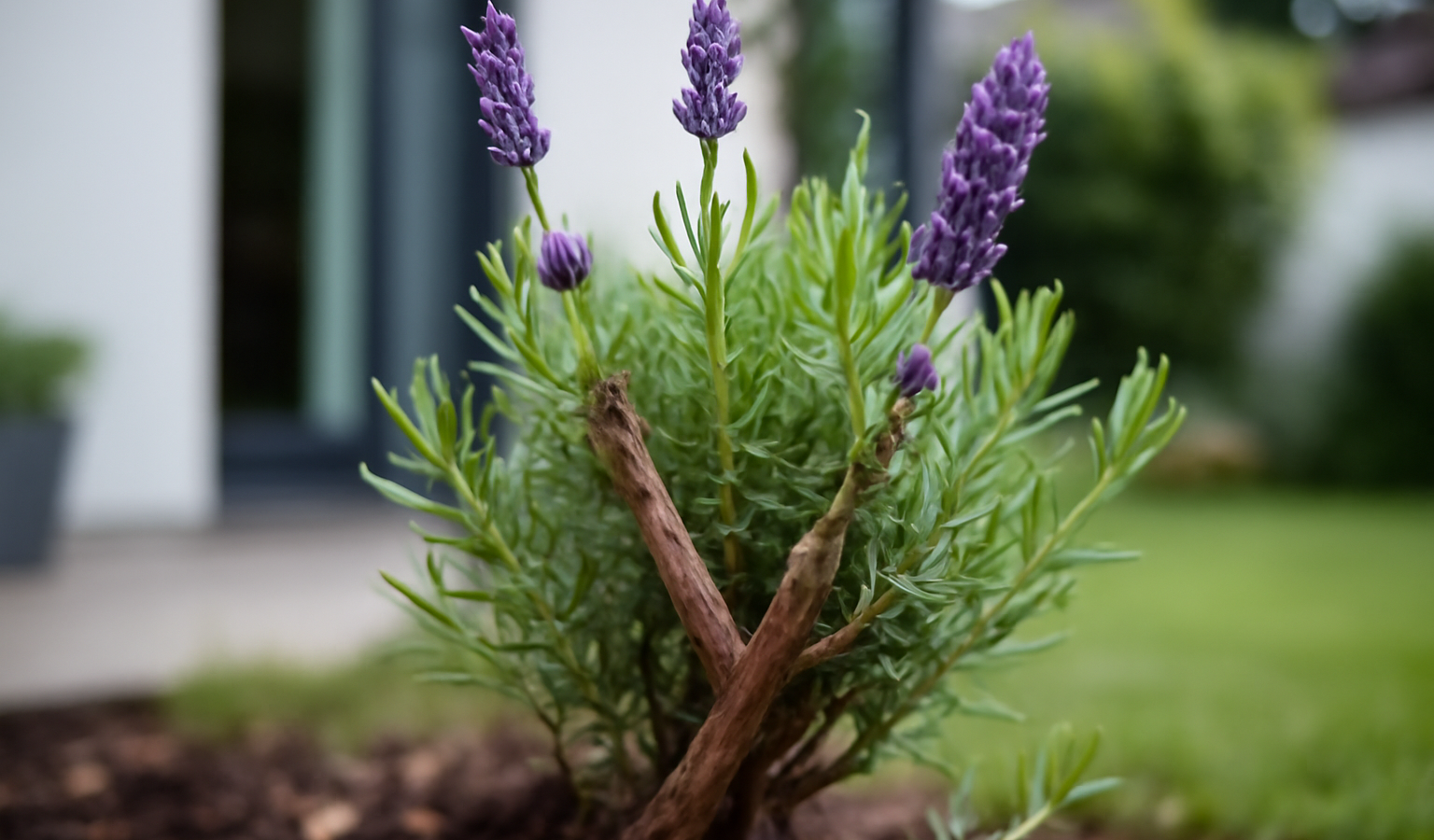
Every lavender eventually shows some wood at its base, but a plant that has become a sprawling tangle of bare, gray, gnarled stems with only a thin fringe of green and flowers on top has gone too far. Woody lavender flops open in the middle, blooms poorly, and looks worn out. The causes are straightforward and mostly about time and pruning: lavender is a short-lived subshrub that naturally gets woodier with age, and skipping its annual prune accelerates the decline. The cruel twist is that once a plant is badly woody, you cannot simply cut it back hard to renew it, because lavender will not resprout from old wood. This guide explains why lavender turns woody, how to slow it with proper pruning, why cutting into old wood fails, and how to know when it is time to replace the plant.
Key Takeaways
- Lavender is a short-lived subshrub; some woodiness with age is natural and cannot be fully prevented.
- Skipping annual pruning is the biggest controllable cause of premature woodiness and floppy, sparse plants.
- Prune lightly every year, cutting only into green growth and never into the bare old wood, which will not resprout.
- You cannot rejuvenate a badly woody lavender with a hard cut; that usually kills the stems you cut.
- Most lavender lasts 5–10 years; when it is mostly bare wood and barely blooms, replace it.
Cause 1: Age and Natural Growth Habit
Lavender is not a long-lived perennial; it is a subshrub, meaning it builds woody stems as it matures, much like a small shrub. Over the years, the lower portions of those stems lose their leaves and harden into bare, gray wood, while green growth and flowers are pushed out to the tips. This is simply how lavender grows. Even a perfectly cared-for plant becomes progressively woodier over its lifespan of roughly five to ten years. Some woodiness, then, is not a failure on your part but the natural arc of the plant’s life.
How to diagnose it
Consider the plant’s age and overall vigor. An older lavender, several years in the ground, that has gradually developed a woody base while still blooming reasonably well at the top is simply aging normally. The wood develops from the bottom up and from the inside out. If the plant is otherwise healthy, flowering, and just slowly getting more substantial at the base, age is the cause rather than any mistake in care.
How to fix it
You cannot stop aging, but you can slow woodiness and keep the plant attractive longer with consistent annual pruning, covered next. Accept that some wood is inevitable and focus on maintaining a compact, mounded shape with a dense green layer over the wood. When a plant finally becomes more wood than green and blooms poorly, replacing it is the right move rather than fighting nature. Taking cuttings from a favorite plant before it declines lets you carry it forward.
Cause 2: No Annual Pruning
This is the most important controllable cause. Lavender that is pruned lightly every year stays compact, dense, and slow to go woody. Lavender that is never pruned grows leggy fast: the stems elongate, the base hardens, the center opens up, and the plant sprawls into a floppy ring of bare wood within just a few seasons. Skipping the annual prune is the single biggest reason a relatively young lavender looks old and woody before its time. Regular trimming keeps fresh growth coming and delays the bare-wood stage by years.
How to diagnose it
Ask yourself whether you have been pruning. If you have never trimmed the plant, or only deadheaded the spent flower stalks without shaping it, and it has become leggy and woody faster than its age would suggest, missed pruning is the cause. A neglected lavender typically flops open in the middle, exposing a tangle of bare stems, with green and blooms only at the outer tips. This open, sprawling shape is the signature of a plant that was never shaped.
How to fix it
Start an annual pruning routine and stick to it. Prune lavender once or twice a year: a light shaping in spring as new growth emerges, and a tidy-up after flowering. Each time, remove about a third of the plant’s height, cutting back the soft green growth to form a neat mound, but always stop short of the bare wood. The goal is a tight, rounded shape with fresh green growth covering the stems. Begin this early in a plant’s life and it will stay attractive far longer.
Cause 3: Cutting Into Old Wood
When gardeners discover a woody lavender, the natural instinct is to cut it back hard to force new growth from the base, the way you might rejuvenate a hydrangea or a butterfly bush. With lavender, this almost always fails. Lavender does not reliably produce new shoots from old, leafless wood. Cut into that bare gray growth and the stems usually just die, leaving dead stubs or killing the section entirely. So not only does hard pruning fail to renew a woody plant, it often finishes it off. This is the most misunderstood aspect of lavender care.
How to diagnose it
This is less a cause of woodiness than a fatal response to it, so the diagnosis is about your pruning plan. If you are looking at a woody plant and contemplating a hard cut into the old stems to renew it, stop, because that is the mistake to avoid. If you have already done so and the cut stems failed to releaf and died, you have confirmed firsthand that lavender will not regenerate from old wood.
How to fix it
Never cut into the bare wood. Prune only within the green, leafy zone, leaving a thin band of green growth above the wood at all times. To partially improve a moderately woody but not hopeless plant, prune as low as you can while still keeping a little green on each stem, and do it gradually over a season or two rather than all at once. Where the plant is mostly bare wood, accept that no pruning will rescue it and plan to replace it instead.
Cause 4: When to Replace the Plant
Sometimes the honest answer is that the plant has reached the end of its useful life. Because lavender will not resprout from old wood, a specimen that has become mostly bare, sprawling, gray stems with only a sparse fringe of green and few flowers cannot be brought back. No amount of pruning or feeding will reverse it. Recognizing this saves you seasons of frustration nursing a plant that will only look worse, and frees the space for a vigorous young lavender that will bloom generously.
How to diagnose it
Judge the ratio of wood to green and the quality of bloom. When more than half to two-thirds of the plant is bare wood, the center has died out, the shape has collapsed into a floppy ring, and flowering has dwindled, the plant is spent. If light pruning into green growth leaves you with almost nothing to work with, that confirms it. A lavender past five to ten years showing these signs is simply old.
How to fix it
Replace it, and propagate first if you love it. Take softwood cuttings in early summer from the healthy green tips: strip the lower leaves, dip in rooting hormone, and set them in a gritty, free-draining mix to root, giving you genetically identical replacements for free. Then pull the old plant and set a new one, or your rooted cuttings, in fast-draining soil and full sun. Start its annual pruning routine immediately, and this new plant will stay dense and woodiness-free far longer than the one it replaced.
Preventing Woody Lavender from the Start
The whole problem is far easier to prevent than to cure. From the day you plant, treat annual pruning as non-negotiable: trim lightly in spring and again after flowering, removing about a third each time and always cutting within the green growth, never into the wood. This keeps the plant tight, mounded, and continuously producing fresh growth, which delays woodiness by years. Pair good pruning with the right growing conditions, full sun and sharp drainage, so the plant stays vigorous. Accept that lavender is short-lived and woodiness is its natural fate, take cuttings before a plant declines, and replace it when it is mostly wood. Manage it this way and you will always have a handsome, free-flowering lavender rather than a gnarled relic.
Pruning technique is at the heart of this issue, so it helps to understand how careful pruning differs from indiscriminate shearing in our guide on pruning versus shearing. If your lavender is doing worse than just getting woody, see why lavender dies for the full set of causes. More care guides live in the Plants & Flowers hub.
Frequently Asked Questions
Can I cut woody lavender back hard to rejuvenate it?
No. Lavender does not reliably resprout from old, bare wood, so a hard cut into those gray stems usually just kills them. Always prune within the green, leafy growth and leave a thin band of green above the wood. Badly woody plants are best replaced.
How do I prune lavender to prevent woodiness?
Prune lightly once or twice a year, a shaping in spring and a tidy-up after flowering, removing about a third of the plant’s height each time. Cut only the soft green growth into a neat mound and never into the bare wood. Consistent annual pruning is the best prevention.
Is some woodiness in lavender normal?
Yes. Lavender is a short-lived subshrub that naturally builds woody stems as it ages, even with perfect care. Some wood at the base is inevitable. Good pruning slows it down and keeps a dense green layer over the wood for as long as possible.
How long does a lavender plant live?
Most lavender lasts about five to ten years. Toward the end of that span it becomes increasingly woody and blooms less. When the plant is mostly bare wood with a sprawling, collapsed shape and few flowers, it is time to replace it.
Can I save a favorite lavender before replacing it?
Yes, by taking cuttings. In early summer, snip healthy green tip growth, strip the lower leaves, dip in rooting hormone, and root in a gritty, free-draining mix. The rooted cuttings are genetically identical and will replace the old plant for free.