

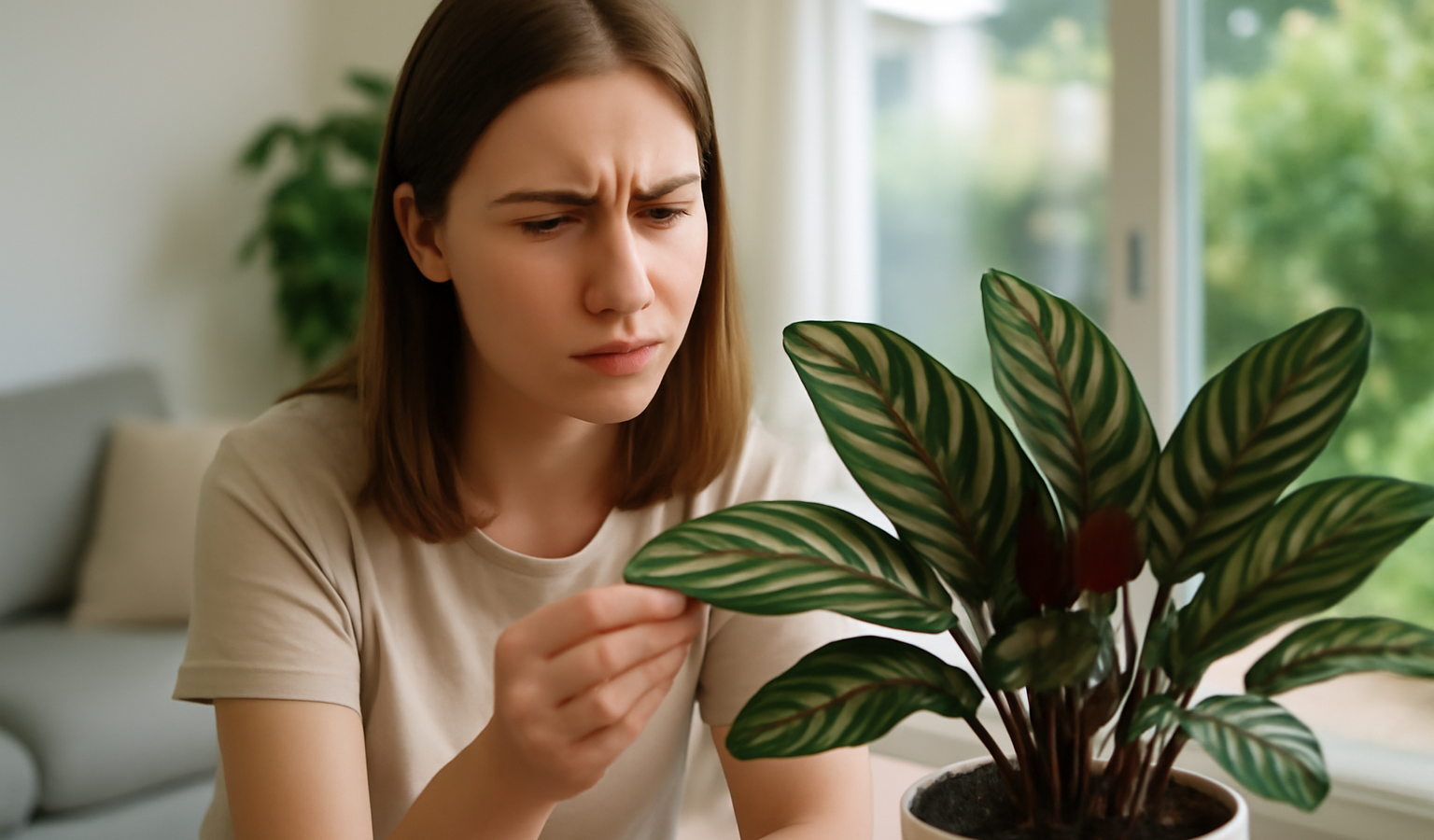
One of the most charming things about calatheas and their close relatives, the marantas or prayer plants, is the way their leaves rise up at night and lower again in the morning, folding together like hands in prayer. This nightly movement is called nyctinasty, and it is driven by a special hinge-like structure at the base of each leaf called a pulvinus, which swells and shrinks with the plant’s internal water pressure in response to the day-night light cycle. When a calathea stops praying, owners often worry the plant is dying. Usually it is not. The most common reason a calathea stops moving is simply that its light cues have changed, and once you restore a proper day-night light rhythm and good general health, the movement almost always returns.
This guide explains how the praying movement works, walks through every realistic reason a calathea stops doing it, and shows you how to diagnose and fix each cause. Because the movement is so tightly linked to light and to the plant’s overall wellbeing, the fixes also happen to make for a healthier, better-looking plant.
Key Takeaways
- The praying movement, called nyctinasty, is triggered by the day-night light cycle.
- Wrong light is the top reason calatheas stop moving: too little, too much, or no clear dark period.
- A genuinely dark night and bright indirect days restore the prayer rhythm.
- A stressed or unhealthy plant diverts energy away from movement until it recovers.
- Some leaves naturally move less as they age, and a little variation is normal.
How the Praying Movement Actually Works
Before troubleshooting, it helps to understand the mechanism. At the base of each calathea leaf, where the leaf meets its stem, sits the pulvinus, a small swollen joint full of water-filled cells. As light fades in the evening, the plant moves water between cells in the pulvinus, changing the pressure and causing the leaf to lift and fold upward. In the morning, the process reverses and the leaves lower and open to catch the day’s light. Because the whole system runs on light cues and water pressure, the two things most likely to disrupt praying are a confused light environment and a plant that is dehydrated, stressed or unwell. Keep those two ideas in mind and every cause below makes sense.
Cause 1: Not Enough Light During the Day
The praying response is the plant repositioning its leaves to make the most of daily light. If a calathea sits in a spot that is too dark, the day-night contrast is weak and the cues that drive movement are muted, so the leaves stay in a fairly static position. Low light also slows the whole plant down, leaving it less energy for the active process of moving its leaves.
How to diagnose it
If your calathea sits in a dim corner, a north-facing room, or several feet back from any window, and the leaves barely move day to night, insufficient daytime light is a likely cause. Slow growth, faded or dull leaf color, and a generally lethargic plant support this diagnosis.
How to fix it
Move the plant to bright, indirect light: near an east-facing window, or set back from a brighter south or west window so no direct sun strikes the leaves. The stronger, clearer daytime light gives the plant the cue and the energy it needs to resume praying. If your home is dim, a grow light on a timer providing a consistent bright “day” can restore the rhythm. Give it a week or two of better light and watch the evening movement return.
Cause 2: Too Much Light or No Real Dark Period
The flip side is just as disruptive. Direct sun is too intense for calatheas and scorches the leaves, and a plant under heat and light stress will not move normally. Equally important, the praying response depends on a genuine dark period at night. A calathea sitting under a lamp that stays on late, near a streetlight, or in a room with the lights on into the small hours never gets the darkness cue that triggers the leaves to rise.
How to diagnose it
Look for bleached, scorched or crispy patches on leaves facing a bright window, which point to too much direct light. For the dark-period issue, think about the plant’s nighttime environment: if it is lit by indoor lamps, a TV, or outdoor light pollution through an uncurtained window, it may simply never experience true darkness. A plant that “should” be praying but never does, despite otherwise good care, often turns out to have no real night.
How to fix it
Pull the plant back from any direct sun into bright filtered light. Then make sure it gets a proper dark night: keep it out of rooms where lights burn late, draw curtains to block streetlights, and if you use a grow light, put it on a timer that switches off in the evening to mimic a natural day-night cycle. Restoring a clear contrast between bright days and dark nights is often all it takes to bring the praying back.
Cause 3: The Plant Is Stressed or Dehydrated
Because the movement runs on water pressure inside the pulvinus, anything that disrupts the plant’s water balance can stop it praying. A calathea that is underwatered and dehydrated does not have the turgor pressure to move its leaves. Calatheas are also notoriously sensitive to tap-water minerals, fluoride and chlorine, low humidity and inconsistent watering, all of which stress the plant and can pause the movement.
How to diagnose it
Check the soil and the leaves. If the soil has dried out and the leaves are curling, crisping at the edges, or looking limp, dehydration is likely suppressing movement. Brown leaf edges and tips are a classic sign of low humidity or sensitivity to tap-water minerals. If the plant looks generally unhappy, with browning, curling or fading leaves, its energy is going into coping rather than into the optional luxury of moving.
How to fix it
Keep the soil lightly and evenly moist, never bone dry and never waterlogged, watering when the top inch begins to dry. Use filtered, distilled or rainwater rather than hard tap water, since calatheas react badly to the minerals and chemicals in many municipal supplies. Raise humidity to 50 percent or more with a humidifier, since these are humidity-loving tropical plants. As the plant rehydrates and settles into stable, gentle care, the turgor pressure that powers the prayer movement is restored.
Cause 4: Recent Repotting, Moving or Acclimation
Calatheas are drama queens about change. Repotting, dividing, or moving to a new home or room disrupts their environment and their internal rhythm, and they frequently pause the praying movement while they adjust. This is temporary stress, not damage.
How to diagnose it
If the movement stopped within a week or two of repotting, buying or relocating the plant, and it otherwise looks reasonably healthy, acclimation is the obvious explanation. A new light environment in particular resets the plant’s day-night cues and can briefly interrupt the rhythm until it adapts.
How to fix it
Settle the plant into a good spot with bright indirect light and a clear dark night, then leave it alone. Avoid moving it repeatedly or repotting more than necessary. Keep watering and humidity steady. Within a couple of weeks the calathea usually adjusts to its new conditions and the leaves begin rising and falling again on schedule.
When Reduced Movement Is Normal
Not every leaf moves equally, and not every calathea prays dramatically. Older, mature leaves often move less than young ones, and some species and cultivars are simply more theatrical than others. Day-to-day variation in how much the leaves rise and fall is also normal and depends on the strength of that day’s light. So if your calathea still moves at least somewhat and looks healthy, with good color and no browning or curling, a quieter prayer response is nothing to worry about. The time to act is when the movement stops entirely and the plant also shows signs of stress, because that combination points to one of the fixable causes above rather than to normal variation.
How to Keep Your Calathea Praying
To keep the nightly show going, give your calathea bright indirect light during the day and a genuinely dark night, since that contrast is the engine of the praying movement. Water with filtered, distilled or rainwater to keep the soil evenly moist, never letting it dry out completely or sit soggy. Maintain humidity around 50 to 60 percent with a humidifier, group it with other tropical plants, and keep it warm and away from cold drafts and heating vents. Feed lightly with a balanced fertilizer at half strength during the growing season. Above all, keep conditions consistent, because calatheas reward stability and punish sudden change.
Get those basics right and a healthy calathea will lift its leaves each evening and lower them each morning like clockwork. If the movement has stopped, work through the light and water causes above, fix what is out of range, and give the plant a couple of weeks to respond. For more on reading houseplant symptoms and keeping fussy tropicals happy, explore our wider plants and flowers care guides, and if leaf curling has you worried about watering, our breakdown of root rot versus overwatering will help you read the signs correctly.
Frequently Asked Questions
What does it mean when a calathea prays?
Praying is the natural nightly movement, called nyctinasty, where the leaves rise and fold upward at night and lower again by day. It is driven by a hinge-like joint at the leaf base that changes shape with the day-night light cycle, and it is a sign the plant is responding normally to its light environment.
Why has my calathea stopped moving its leaves?
Most often the light cues have changed: too little daytime light, too much direct sun, or no genuinely dark night. Stress from dehydration, hard tap water, low humidity, or recent repotting can also pause the movement. Restore bright indirect days, a dark night and steady care, and praying usually returns.
Does a calathea need darkness to pray?
Yes. The praying response depends on a real dark period at night to trigger the leaves to rise. A plant kept under lamps that stay on late or exposed to streetlight may never get the darkness cue, so make sure it experiences a proper dark night.
Is it bad if my calathea is not praying?
Not necessarily. Older leaves move less, some cultivars are less dramatic, and movement varies with daily light. It is only a concern when the leaves stop moving entirely and the plant also shows stress like browning or curling, which points to a fixable light or water problem.
How long until my calathea prays again after I fix the light?
Once you provide bright indirect days and a dark night, most calatheas resume the movement within one to two weeks. If the plant was also stressed or dehydrated, allow extra time for it to recover its leaf turgor and overall health before the rhythm fully returns.