

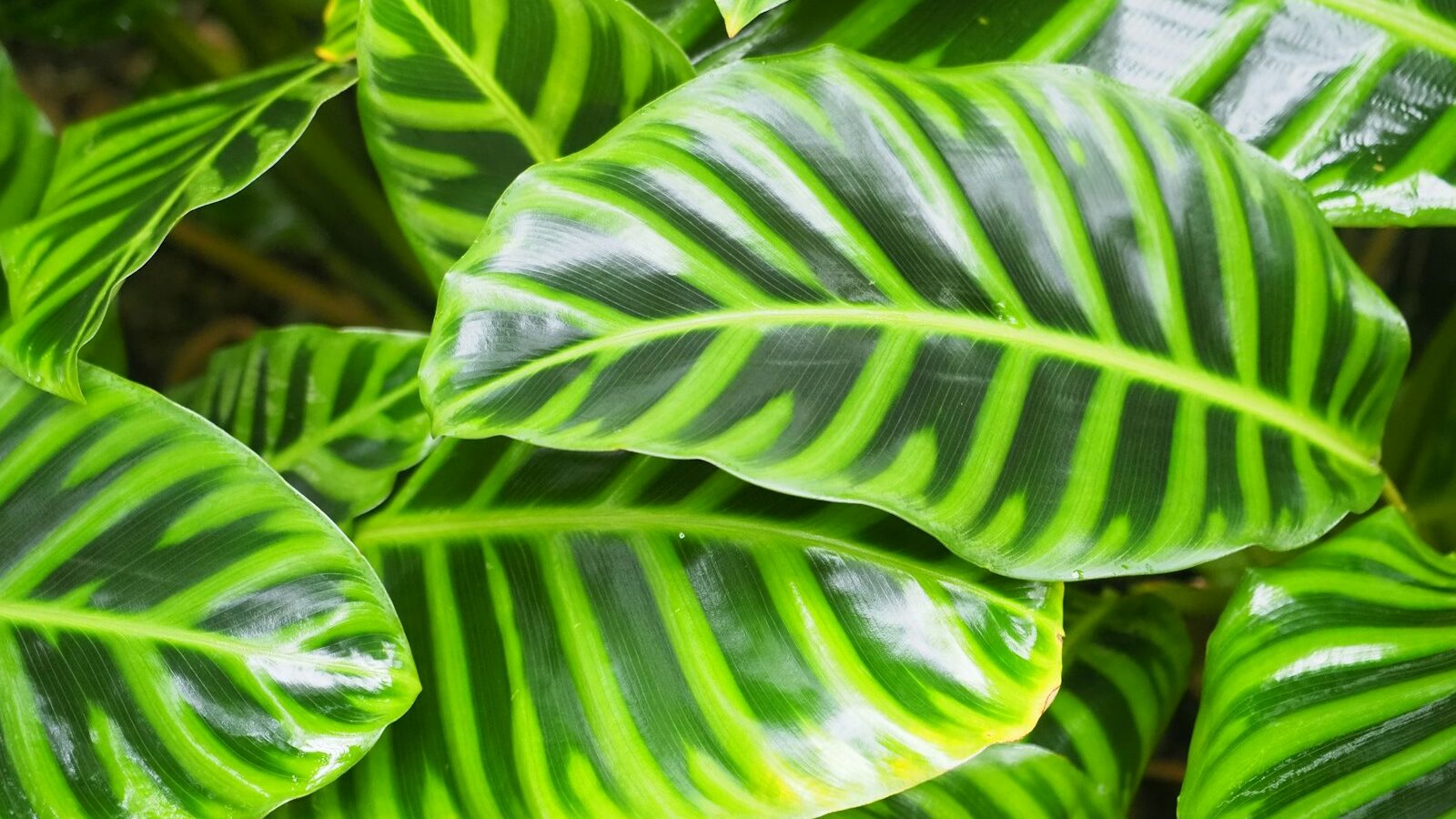
If your calathea leaves are curling, the most common culprit is thirst. Calathea is a thirsty plant with a shallow root system, and when the top inch or two of soil dries out, the leaves curl inward to conserve moisture. But underwatering is only the first suspect on a short list. Dry air, sensitivity to the chemicals in tap water, too much light, sudden temperature swings, and spider mites can all make a calathea curl, taco, or crisp at the edges. The good news is that calatheas are honest communicators: once you read the curl correctly, the fix is usually straightforward. This guide walks through all six causes, how to tell them apart, and exactly what to do about each one.
Key Takeaways
- Underwatering is the number one reason calathea leaves curl; check that the top inch or two of soil stays lightly moist, never bone dry.
- Calathea wants humidity of 50 to 60 percent or higher; dry indoor air causes edges to curl and crisp.
- Tap water chemicals (fluoride, chlorine, and dissolved salts) build up and burn leaf edges; switch to distilled, filtered, or rainwater.
- Bright direct sun scorches and curls leaves; calathea wants bright indirect light, never a south-facing window with no buffer.
- Drafts, cold air, and temperatures outside 65 to 80 degrees Fahrenheit stress the plant, and spider mites cause fine curling with webbing.
Underwatering (the most common cause)
Calatheas hail from the humid floor of tropical forests, where the soil stays consistently damp. They do not have the water-storing tissue of a succulent or even a pothos, so they react quickly when they go dry. The first sign is almost always curling: the leaves roll inward along the central vein, sometimes folding nearly in half, as the plant tries to reduce the surface area losing water. If you let it go further, the edges turn crispy and brown. Because calathea is the thirstiest houseplant most people own, underwatering should be the first thing you rule out before chasing anything more exotic.
How to diagnose it
Push a finger into the soil up to the second knuckle. If the top inch or two feels dry and the pot feels light when you lift it, thirst is your answer. Underwatered calathea leaves curl inward (rolling up like a scroll) rather than drooping flat, and the curl often appears or worsens in the late afternoon, then partially relaxes after you water. Lift the whole leaf: an underwatered leaf feels papery and limp, while a healthy one feels firm and slightly cool. If the soil is pulling away from the sides of the pot, it has dried past the point where it will easily re-absorb water, which is a strong confirmation.
How to fix it
Water thoroughly until it runs from the drainage holes, then let the excess drain completely so the roots are never sitting in a saucer of water. The goal is soil that stays lightly moist, like a wrung-out sponge, not soggy and not dry. For most homes that means watering when the top inch starts to dry, often every five to seven days in summer and a little less in winter. If the soil has gone hydrophobic and water runs straight through, bottom-water instead: set the pot in a basin of room-temperature water for fifteen to twenty minutes so the soil wicks moisture up evenly, then let it drain. Curled leaves that were caught early usually relax within a day; badly crisped edges will not heal but new growth will come in flat once your routine is consistent. Curling that comes from a watering problem can look a lot like other plant complaints, so if you are also troubleshooting another plant, our guide on why pothos leaves curl walks through the same moisture logic on a tougher plant.
Low humidity
After thirst, dry air is the next most common reason calathea leaves curl. These are rainforest understory plants that evolved in air that rarely drops below 60 percent humidity. The average heated or air-conditioned home sits around 30 to 40 percent, which feels like a desert to a calathea. Without enough moisture in the air, the plant loses water through its leaves faster than the roots can replace it, and the leaves curl and crisp at the margins even when the soil is perfectly watered. This is why people who water correctly still get brown, curling edges in winter.
How to diagnose it
Buy an inexpensive hygrometer and set it next to the plant for a day or two. If it reads below about 45 percent, low humidity is contributing. The visual tell is curling combined with thin, brown, papery edges that have a slightly yellow halo before the brown, while the center of the leaf stays green and healthy. Low-humidity damage tends to be worst on the oldest leaves and during the driest months, and it gets noticeably worse near heating vents, radiators, and air-conditioning outlets.
How to fix it
Aim for 50 to 60 percent humidity or higher. The most reliable way to get there is a small room humidifier running near the plant; this beats every other method by a wide margin. Grouping plants together raises local humidity because they release moisture into the air around one another. A pebble tray, a shallow dish of water and stones that keeps the pot above the waterline, helps a little but will not transform a dry room on its own. Misting feels productive but the effect lasts only minutes and can encourage fungal spotting if leaves stay wet, so skip it as your main strategy. Bathrooms and kitchens with good light are naturally humid and make excellent calathea homes.
Tap-water chemical sensitivity
Calathea is famously fussy about water quality. The fluoride, chlorine, chloramine, and dissolved mineral salts in ordinary tap water accumulate in the leaf tissue over time, and the plant simply cannot process them. The result is leaf edges that curl, brown, and crisp, often with a darker, almost burned margin, even when humidity and watering are both correct. This is one of the most overlooked causes because the damage builds slowly and looks identical to a humidity problem at first glance.
How to diagnose it
Suspect water chemistry if you are watering well and keeping humidity up but the leaf edges still brown and curl, especially with a sharp, dark-brown rim rather than the soft tan of dryness. A white or yellowish crust on the soil surface or around the drainage holes is mineral salt buildup, which is a clear sign your water is too hard or too treated. Homes with municipally fluoridated water and those with water softeners (which add sodium) tend to see this most. If the tips of nearly every leaf go bad in the same way regardless of the leaf’s age, water is the likely cause.
How to fix it
Switch to distilled water, collected rainwater, or filtered water for your calathea. Distilled and rainwater are the safest because they carry virtually none of the offending chemicals. If you must use tap water, let it sit out uncovered for 24 hours so the chlorine can off-gas, though this does nothing for fluoride or chloramine, so it is only a partial fix. To clear existing salt buildup, flush the pot: run a large volume of clean water slowly through the soil until it drains freely several times, which leaches the accumulated minerals out the bottom. Always use room-temperature water, because cold water is its own form of stress. Once you correct the water, existing damaged edges will not recover, but new leaves will emerge clean.
Too much or direct light
As understory plants, calatheas live in dappled, filtered light beneath a canopy. Direct sun is something they almost never experience in the wild, so when you put one in a hot, bright window, it reacts defensively. The leaves curl inward and the plant may fold up tightly during the brightest part of the day to shield itself, a behavior that goes beyond its normal nightly leaf movement. Prolonged direct sun bleaches the color out of the leaves and scorches them with dry, faded patches. Too much light is a frequent problem for people who assume a tropical plant must want a sunny spot.
How to diagnose it
Note where the plant sits and when the curling happens. If leaves curl up tightly during the sunniest hours and relax in the evening, and the plant is within a few feet of a south- or west-facing window with no curtain, light is the cause. Look for faded, washed-out color and crispy bleached patches in the middle of leaves rather than just at the edges; sun scorch hits the flat face of the leaf that catches the most light. The vivid patterning that makes calatheas worth growing also fades under harsh light, so loss of contrast is another clue.
How to fix it
Move the plant to bright indirect light. An east-facing window with gentle morning sun is close to ideal, as is a spot a few feet back from a brighter window or behind a sheer curtain that diffuses the rays. The plant should sit in a bright room but out of any beam of direct sun that lands on the leaves. If you only have bright windows, pull the plant back into the room or filter the light. Within a few days of moving it, the daytime curling should ease. Browse more light and care fundamentals on our Plants and Flowers hub if you are still dialing in placement.
Temperature stress and drafts
Calatheas like it warm and stable, roughly 65 to 80 degrees Fahrenheit, with no sudden swings. Cold air, hot dry air, and drafts all stress the plant, and a stressed calathea curls. A leaf that suddenly gets a blast of cold from an open window in winter, or a steady stream of dry heat from a radiator, will roll and curl as it struggles to regulate. Calatheas are not frost tolerant and suffer below about 60 degrees, so a chilly windowsill or a spot near an exterior door can quietly cause ongoing curling that no amount of watering will fix.
How to diagnose it
Think about airflow and temperature around the plant. If it sits near a heating or cooling vent, a frequently opened door, a single-pane window, or a fireplace, drafts are a likely factor. Temperature-stressed leaves often curl and may also droop, and you may see the damage appear suddenly after a cold night rather than building slowly. Run your hand around the plant at different times of day to feel for cold drafts or blasts of warm dry air you might not notice when standing.
How to fix it
Relocate the plant away from vents, exterior doors, and cold glass, and keep it in a room that stays comfortably warm day and night. Avoid placing it directly above a radiator or in the path of an air conditioner. Aim to keep it within that 65 to 80 degree range and protect it from any spot where the temperature drops sharply overnight. Stability matters as much as the exact number: a calathea in a steady 68 degrees will be far happier than one that swings between 60 and 78. Once the plant is in a calm, warm spot, new growth should come in flat and the curling should stop.
Pests, especially spider mites
The dry indoor air that calatheas dislike is exactly what spider mites love, which is why these two problems often appear together. Spider mites are tiny sap-sucking pests that pierce the leaf and drain its fluids, causing fine stippling, curling, and eventually crisping. Because they thrive in the same low-humidity conditions that stress your calathea, a plant already struggling with dry air is an easy target. Left unchecked, a mite infestation will spread to your other houseplants, so it pays to catch it early.
How to diagnose it
Turn a curling leaf over and inspect the underside, ideally with a magnifying glass. Spider mites show up as fine pale or yellow speckling across the leaf surface and, in heavier infestations, delicate webbing in the leaf joints and along the veins. The mites themselves look like minute moving dots, often reddish or tan. A quick test: hold a sheet of white paper under a leaf and tap it; if you see tiny specks drop and crawl, you have mites. Curling from pests is usually accompanied by this telltale stippling, which separates it from the smooth curling of a watering or light problem.
How to fix it
Isolate the plant immediately so the mites cannot spread. Rinse the foliage, including the undersides, under a gentle stream of room-temperature water to knock off as many mites as possible, then treat with insecticidal soap or a horticultural oil such as neem, coating the undersides thoroughly. Repeat the treatment every five to seven days for at least three rounds, because mites breed quickly and you need to catch newly hatched ones. Raising the humidity around the plant makes the environment less hospitable to mites and helps the calathea recover at the same time. For a full walkthrough of identification and treatment, see our guide on how to treat houseplant pests.
Preventing calathea leaf curl
Prevention with calathea comes down to consistency, because almost every curl traces back to a swing in conditions the plant cannot tolerate. Water on a regular rhythm so the soil stays lightly moist and never dries out completely, checking the top inch with your finger rather than watering by the calendar alone. Use distilled water, rainwater, or filtered water from the start to head off the slow chemical burn that hard tap water causes. Keep humidity in the 50 to 60 percent range with a humidifier, and place the plant in a warm, stable room well away from vents, drafts, and cold windows.
Give it bright indirect light, never direct sun, and rotate the pot occasionally so it grows evenly. Inspect the undersides of the leaves every week or two when you water; catching spider mites early is far easier than fighting an established infestation. Wipe dust off the leaves now and then, since clean foliage breathes and photosynthesizes better. Finally, watch the plant rather than the clock: calatheas tell you what they need through their leaves, and a daily curl that relaxes overnight is normal nyctinastic movement, not a problem. With steady moisture, clean water, warm air, and gentle light, a calathea will unfurl flat, vivid leaves season after season. If you enjoy diagnosing plant problems this way, our guide on why a snake plant goes mushy applies the same read-the-symptom approach to overwatering.
Frequently Asked Questions
Why do my calathea leaves curl up at night?
Nighttime curling is usually normal. Calatheas perform nyctinasty, raising and folding their leaves in the evening and lowering them by morning, which is why they are nicknamed prayer plants. If the leaves relax flat again by day, there is nothing wrong. Worry only when the curl persists through the daytime or comes with browning and crisping.
Will curled calathea leaves uncurl again?
It depends on the cause. Leaves that curled recently from thirst or a daytime light blast often relax within a day once you correct the problem. But leaves with crispy brown edges from low humidity, hard water, or scorch will not heal, because that tissue is dead. Fix the underlying issue and the new growth will come in flat and healthy.
What kind of water is best for calathea?
Distilled water or collected rainwater are best because they contain virtually none of the fluoride, chlorine, or mineral salts that calatheas cannot tolerate. Filtered water is a good second choice. If you only have tap water, let it sit out uncovered for 24 hours to release chlorine, though that will not remove fluoride or chloramine. Always use room-temperature water.
How often should I water a calathea?
There is no fixed schedule; water when the top inch or two of soil begins to dry, which for most homes is roughly every five to seven days in summer and less in winter. The soil should stay lightly moist like a wrung-out sponge, never bone dry and never soggy. Check with your finger each time rather than relying on the calendar.
What humidity does a calathea need to stop curling?
Aim for 50 to 60 percent humidity or higher. Most homes sit at 30 to 40 percent, which is too dry and causes edges to curl and crisp. A small room humidifier near the plant is the most reliable fix; grouping plants and using a pebble tray help a little. A bright bathroom or kitchen is often naturally humid enough.