

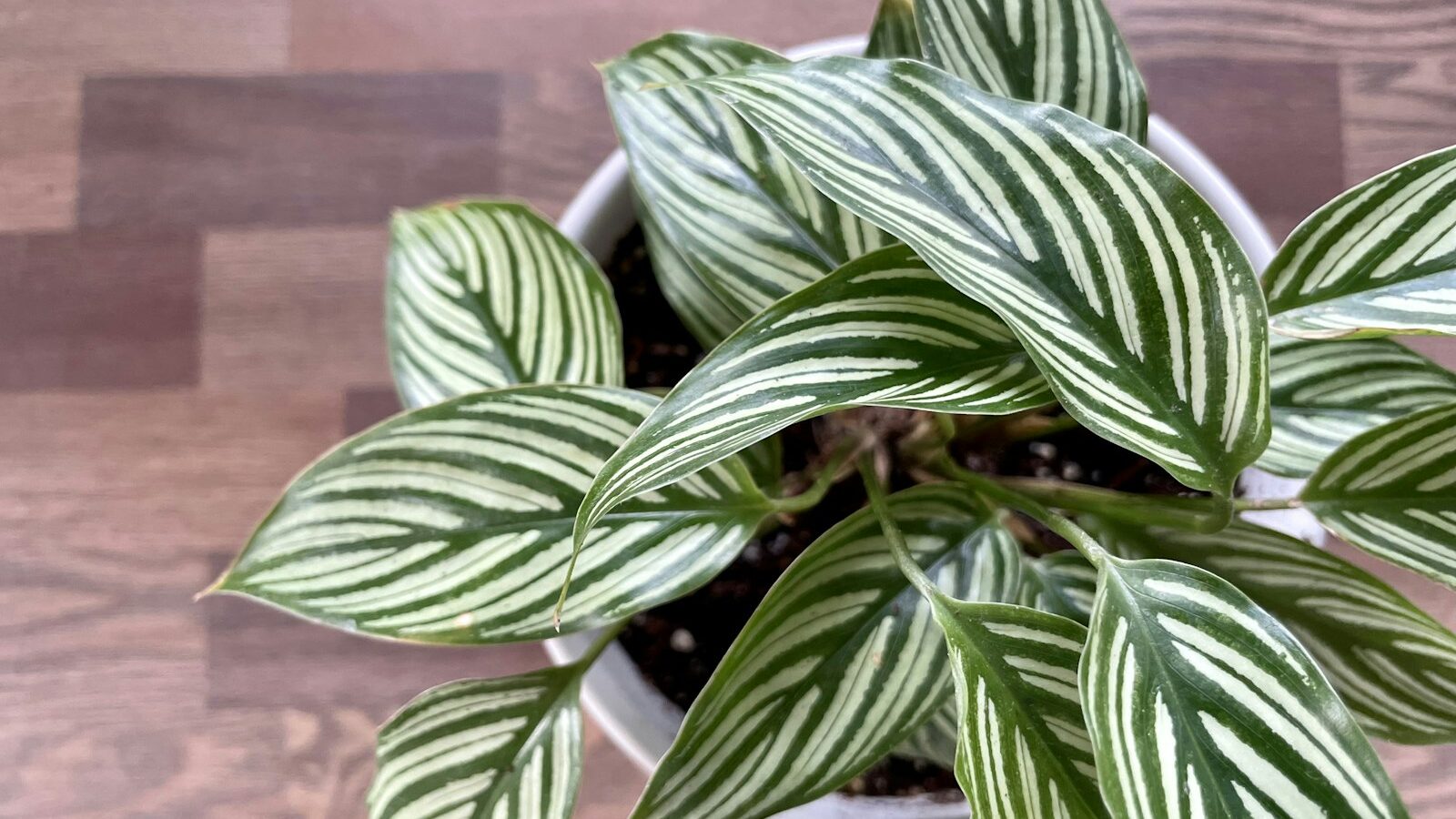
With their hand-painted leaves, rippling patterns and dramatic colour, calatheas are among the most beloved houseplants in Singapore homes. They reward attentive care with lush, jewel-toned foliage, but they can also be fussy in our climate of dry aircon and bright tropical glare. This guide walks you through everything you need to keep a calathea thriving in a local flat, condo or balcony.
Calathea quick care
- Light: bright indirect
- Water: keep lightly moist, filtered water
- Humidity: high (mist/pebble tray)
- Soil: light, peat-free mix
- Watch aircon dryness
Understanding the calathea (the patterned prayer plant)
Calatheas (now botanically reclassified into the genus Goeppertia, though most shops and growers still say “calathea”) belong to the Marantaceae family, the prayer plants. Their party trick is nyctinasty: the leaves fold upwards at night and relax open by day, a slow daily dance driven by changing light. In their native South American rainforests they grow on the shaded forest floor under a dense canopy, which tells you almost everything about how to treat them at home.
That rainforest-floor heritage means two things for Singapore growers. First, calatheas never see harsh sun, so they hate the direct rays that pour through an unshaded west-facing window here. Second, they are used to warm, consistently humid air and steady moisture, conditions that are easy to provide in a non-aircon kitchen or bathroom, but surprisingly hard inside a chilled, dehumidified living room.
Why calatheas have a reputation for being fussy
- They show stress quickly and visibly, with crisping edges and curling leaves.
- They are sensitive to chemicals in tap water, especially fluoride and chlorine.
- They dislike drying out completely, but equally dislike sitting in soggy soil.
- They sulk in low humidity, which is exactly what an air conditioner creates.
None of these are dealbreakers. Once you match their conditions, calatheas are tough and long-lived. The trick is reading the plant and adjusting before problems set in.
Light: bright indirect, never direct sun
Calatheas want bright but filtered light. Think of the kind of brightness you would happily read a book by, without a hard beam of sunshine falling across the page. Too much direct sun bleaches and scorches their patterns; too little light and the colours fade, growth slows, and the daily leaf movement becomes sluggish.
Best placements in a Singapore home
- A metre or two back from an east-facing window, where morning light is gentle.
- Beside a north-facing window, which rarely gets direct sun in Singapore.
- Behind a sheer curtain on a brighter window to diffuse the glare.
- On a sheltered balcony under a roof overhang or behind taller plants, out of the midday and afternoon sun.
Avoid placing a calathea directly on a hot, exposed window ledge, especially a west-facing one. If the leaves look washed-out or develop pale, papery patches, move it further from the light. If new leaves emerge small and the plant leans hard towards the window, it needs more brightness. For deeper sunlight advice across species, see our best indoor plants for Singapore guide.
Watering: keep lightly moist with the right water
Calatheas like their soil to stay lightly and evenly moist, never bone-dry and never waterlogged. Aim to water when the top one to two centimetres of soil feels dry to the touch. In a humid non-aircon room this might be every five to seven days; in a dry aircon space the surface can dry faster, so check more often rather than watering on a fixed schedule.
Why water quality matters
This is the single most common reason calatheas develop brown, crispy edges. They are sensitive to the fluoride, chlorine and dissolved minerals found in tap water. Singapore tap water is treated and perfectly safe to drink, but those same additives accumulate in calathea leaf tips over time.
- Best: collected rainwater or filtered water.
- Good: tap water left to stand uncovered overnight, which lets some chlorine dissipate.
- Avoid: watering straight from the tap repeatedly, especially with hard or heavily treated water.
How to water well
- Water thoroughly until it drains from the bottom, then empty the saucer so roots never sit in standing water.
- Use room-temperature water; cold water can shock tropical roots.
- Reduce frequency slightly if the room is cool and chilled, as the soil dries more slowly.
Humidity: the make-or-break factor in Singapore
Humidity is where calatheas are either delighted or miserable in local homes. Singapore’s ambient humidity often sits at 70 to 90 per cent, which calatheas love. The problem is air conditioning, which strips moisture from the air and can drop indoor humidity to uncomfortable, desert-like levels for a rainforest plant.
Great spots for naturally humid air
- Non-aircon kitchens and bathrooms with a bright window are calathea paradise.
- A sheltered, shaded balcony where natural humidity stays high.
- A laundry or service yard that gets indirect light.
Boosting humidity in dry, air-conditioned rooms
- Pebble tray: sit the pot on a tray of pebbles topped with water, keeping the pot base above the waterline.
- Grouping: cluster calatheas with other leafy plants to create a humid microclimate.
- Misting: a light misting can help short term, though it is the least effective option on its own.
- Humidifier: the most reliable fix for a chilled bedroom or study; a small unit keeps levels comfortably above 60 per cent.
- Keep clear of the aircon vent: never place a calathea in the direct path of cold, drying airflow.
If you love humidity-hungry foliage, our best ferns guide covers companions that thrive in the same conditions and pair beautifully with calatheas.
Soil and feeding
Calatheas need a soil that holds moisture but still drains and breathes, mimicking the loose, leafy litter of the forest floor. A heavy, compacted mix that stays soggy is a fast route to root rot in our warm climate.
A good calathea mix
- A light, peat-free base such as coco coir or a quality houseplant compost.
- A handful of perlite or pumice for drainage and aeration.
- Some fine bark or a little compost for structure and gentle nutrition.
Always pot into a container with drainage holes. A decorative cachepot is fine as long as you lift the plant out to water and never let it sit in pooled water.
Feeding
Calatheas are light feeders. Use a balanced liquid houseplant fertiliser diluted to half the recommended strength, roughly once a month while the plant is actively growing. In Singapore’s warm climate growth continues much of the year, but ease off if the plant looks stressed. Over-feeding shows up as brown leaf tips, the same symptom as poor water quality, so always feed sparingly.
Popular calathea varieties for local homes
All calatheas share the same basic care, but a few varieties are especially popular and widely available at Singapore nurseries and weekend plant markets.
- Calathea orbifolia: large, rounded leaves with silvery-green stripes. Bold and architectural, ideal as a statement plant in a bright corner.
- Calathea medallion: round leaves with a feathery green pattern on top and rich purple-burgundy undersides. A classic, compact choice.
- Calathea rattlesnake (lancifolia): long, wavy leaves with dark green markings and purple undersides. More forgiving and tolerant than many calatheas.
- Calathea zebrina: velvety leaves with bold zebra-like striping. Stunning, but among the thirstier and more humidity-demanding types.
If you are just starting out, rattlesnake and medallion are the most beginner-friendly. Orbifolia and zebrina are showstoppers but reward a bit more attention to humidity and water quality.
Common problems and how to fix them
Crispy brown edges
The classic calathea complaint. Usually caused by low humidity (often dry aircon), mineral build-up from tap water, or inconsistent watering. Switch to filtered or rainwater, raise humidity, and keep the soil evenly moist. Trim crispy edges with clean scissors for tidiness; they will not turn green again.
Curling or rolled-up leaves
Tightly curled leaves usually signal thirst or low humidity, the plant’s way of reducing water loss. Check the soil; if dry, water and mist. If leaves curl despite moist soil and good humidity, the plant may be getting too much direct light or sitting in an aircon draught.
Spider mites
Dry, air-conditioned air is a magnet for spider mites, which thrive in low humidity and are a frequent calathea pest in Singapore aircon rooms. Look for fine webbing, tiny moving dots, and a stippled, dusty look on leaves. Raise humidity, wipe leaves regularly, rinse the plant in the shower, and treat with insecticidal soap or neem oil. Isolate affected plants until clear.
Yellowing leaves
A few older leaves yellowing and dropping is normal. Widespread yellowing usually points to overwatering or roots sitting in water. Check drainage, let the soil dry slightly more between waterings, and ensure the saucer is empty.
For a broader troubleshooting reference across all your greenery, bookmark our full plant care guide.
Indoor and balcony placement in local homes
In an HDB flat or condo, the best calathea spot balances bright indirect light with steady humidity. A bright bathroom, a kitchen window away from the stove’s direct heat, or a corner near an east or north window all work well. Bedrooms and living rooms are fine too, provided you manage the aircon dryness with a pebble tray, grouping or a humidifier, and keep the plant out of the cold airflow.
On a balcony, calatheas can flourish if it is shaded and sheltered. Tuck them under a roof overhang or behind taller foliage so they get bright, filtered light rather than harsh sun or driving rain. The naturally high outdoor humidity is a real bonus, often outperforming an aircon interior. Just watch for strong afternoon glare on west-facing balconies and move plants inwards if leaves start to bleach.
Frequently asked questions
Can I keep a calathea in an air-conditioned bedroom?
Yes, but you will need to manage the dryness. Air conditioning strips humidity, which calatheas hate. Use a humidifier or pebble tray, keep the plant well away from the cold airflow, and water with filtered or rainwater to prevent crispy edges.
Why does my calathea get brown, crispy edges?
The usual culprits are low humidity, mineral and fluoride build-up from tap water, or inconsistent watering. Switch to filtered or rainwater, raise the humidity, and keep the soil lightly and evenly moist.
How often should I water my calathea in Singapore?
There is no fixed schedule. Water when the top one to two centimetres of soil feels dry, roughly every five to seven days in humid rooms and more often in dry aircon spaces. Always check the soil first.
Which calathea is easiest for beginners?
Rattlesnake (Calathea lancifolia) and medallion are the most forgiving and widely available. Orbifolia and zebrina are gorgeous but more demanding about humidity and water quality.
Can calatheas grow on a Singapore balcony?
Yes, if the balcony is shaded and sheltered. Keep them under an overhang or behind taller plants out of direct sun and heavy rain. The high outdoor humidity often suits them better than a chilled indoor room.