

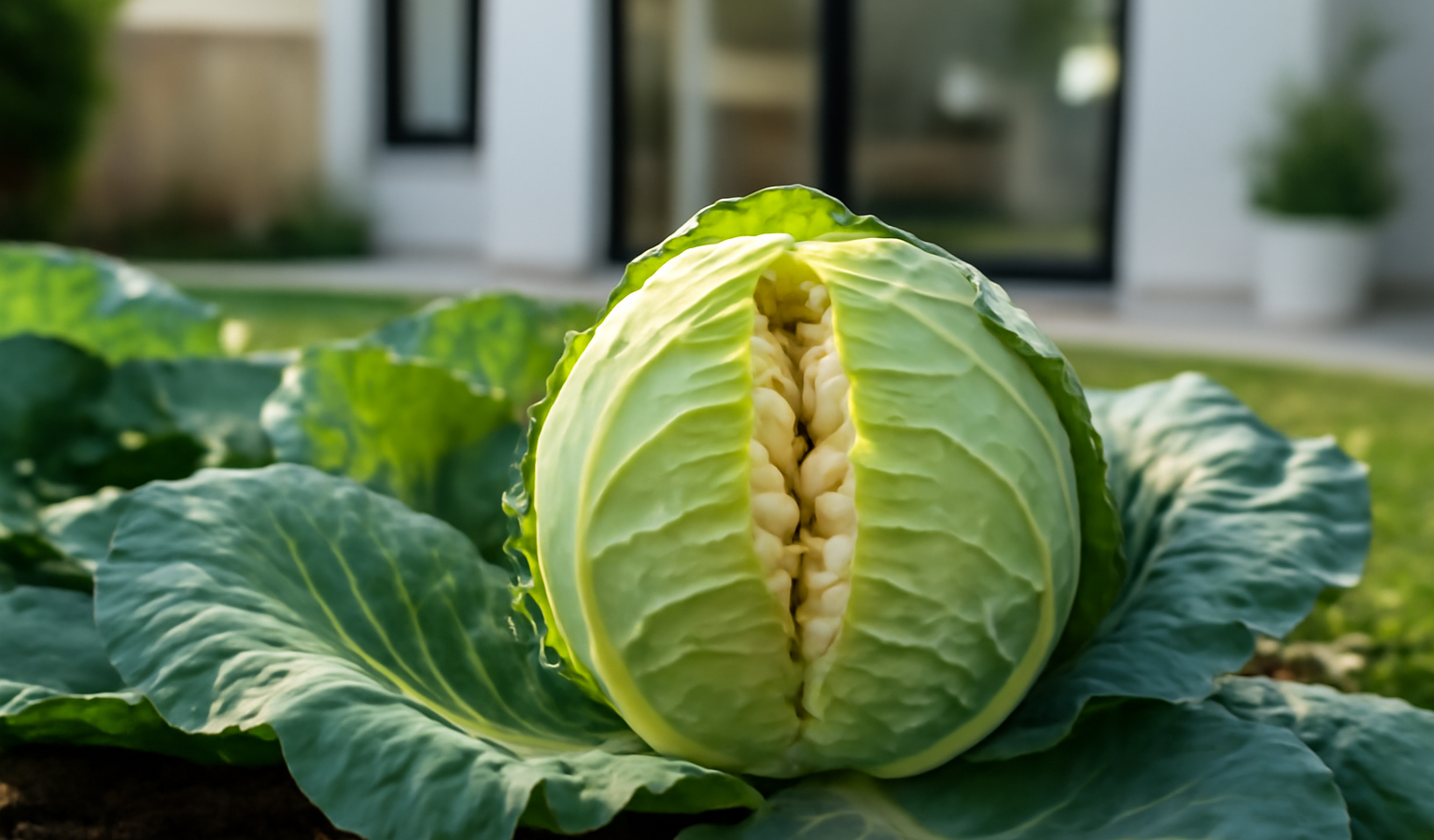
You walk out to the garden, finally ready to cut that fat, firm cabbage you’ve been watching for weeks, and there it is: a long crack running across the top, the head burst open like an over-inflated balloon. Splitting (sometimes called bursting or cracking) is one of the most frustrating problems in the brassica patch because it almost always happens at the finish line, when the head is mature and only days from harvest. The good news is that cabbage splitting is rarely a disease and never contagious. It is a growth-pressure problem: the inside of the head keeps growing after the outside has stopped stretching, and something gives.
Once you understand the three things that drive that internal pressure — a sudden flush of water, leaving heads on the plant past maturity, and pushing too much nitrogen late in the season — you can read your own garden and stop losing heads. This guide walks through each cause, how to tell which one is hitting you, the fix you can apply right now, and how to prevent it next season. A split head is still completely edible, by the way, so don’t toss it; just trim the cracked edges and use it promptly because the exposed interior invites rot and slugs.
Key Takeaways
- Splitting is caused by rapid internal growth outpacing the outer leaves — a pressure problem, not a disease.
- The number-one trigger is a sudden rush of water (heavy rain or a big watering) after a dry spell.
- Over-mature heads that sit too long after firming up are the second-most-common cause.
- Excess late-season nitrogen drives soft, fast growth that splits easily.
- Harvest firm heads on time, water evenly, and you can twist or root-prune at-risk heads to slow the surge.
Cause 1: A Sudden Rush of Water After Dry Weather
This is the classic and most common reason cabbages split, and it explains why you’ll often see a whole row crack open the morning after a thunderstorm. When the soil dries out, the plant’s growth slows and the outer wrapper leaves of the head firm up and stop expanding. Then a heavy rain or a deep watering arrives, the roots suddenly take up a large volume of water, and that water is pushed straight into the dense, mature center of the head. The interior cells swell faster than the now-rigid outer leaves can stretch, and the head splits — usually a single deep vertical or horizontal crack across the crown.
How to diagnose it
The timing is the giveaway. If your heads were fine yesterday and several split overnight after rain or irrigation, water surge is almost certainly the cause. Think back over the previous week or two: was the bed noticeably dry, with the soil cracking or the outer leaves looking dull and tight? A dry-then-wet swing is the fingerprint. You’ll also notice that the firmest, most mature heads split first — they have the least give. Loose or still-growing heads usually ride out the same rain unharmed because their leaves are still elastic.
How to fix it
Keep soil moisture steady so there’s never a feast-or-famine cycle. Aim for about one to one and a half inches of water per week, delivered in one or two deep soakings rather than daily sprinkles, and let rainfall count toward that total. A two-to-three-inch mulch of straw, shredded leaves, or compost is your single best tool: it buffers the soil against drying out and dramatically softens the swing when rain finally comes. If you know a big storm is coming and you have mature heads, harvest them first — a head in your kitchen can’t split in the garden. For at-risk heads you want to hold a little longer, see the prevention tricks below, which physically slow water uptake.
Cause 2: Heads Left Too Long Past Maturity
A cabbage doesn’t stop once the head feels firm — the plant keeps trying to grow, and an over-mature head is essentially a tightly wound spring under constant pressure. Every extra day a fully firm head sits on the plant, the interior keeps adding leaf tissue against an outer layer that has run out of room. Eventually it bursts, even without a dramatic water event, sometimes just from the normal day-night moisture cycle. This is especially common for gardeners who plant a whole row of the same variety that matures all at once and can’t eat or store it fast enough.
How to diagnose it
Check maturity by squeezing the head. When it feels solid and firm all the way through — not spongy or soft at the top — it is ready and should be cut. If you’ve got rock-hard heads that have been “ready” for a week or more and they’re starting to crack, over-maturity is your answer. Compare against the days-to-maturity number on your seed packet (most green cabbages mature in roughly 65 to 95 days from transplant); if you’re well past that and the heads are firm, you’re in the danger window. Heat speeds everything up, so summer-maturing heads burst faster than fall ones.
How to fix it
Harvest on time — as soon as heads firm up, start cutting, even if you have more than you can use immediately. Cabbage stores beautifully: a solid head keeps three to six weeks in the crisper drawer and far longer in a cold root cellar around 32 to 40°F. To spread the harvest and avoid a glut, stagger your plantings two to three weeks apart, or grow two or three varieties with different maturity dates in the same bed. If you simply can’t harvest at-once-ready heads, root-prune them (next section) to put the whole plant into a holding pattern.
Cause 3: Too Much Nitrogen Late in the Season
Nitrogen drives leafy growth, which is exactly what you want early on when the plant is building its frame and outer wrapper leaves. But a heavy dose of nitrogen late — a side-dressing of high-N fertilizer or a flood of fresh manure or blood meal just as heads are firming — pushes a burst of soft, fast, watery growth at precisely the wrong time. That lush, rapid expansion in the interior is far more prone to splitting than slow, steady growth, and the soft tissue has less structural integrity to hold pressure.
How to diagnose it
Look at the plant’s overall vigor. Over-fed cabbages have very large, dark blue-green, almost floppy outer leaves and put on size noticeably fast. If you applied a nitrogen-rich feed within the last few weeks before heading and now see splitting, especially combined with that overly lush look, over-feeding is a strong suspect. It often compounds with the other two causes — a fast-growing, well-fed head that then gets a slug of rain is the most likely of all to split.
How to fix it
Front-load your feeding. Mix a balanced fertilizer or rich compost into the bed at planting and side-dress once with nitrogen about three to four weeks after transplanting, while the plant is still building leaves. Then ease off — once heads begin to form, stop pushing nitrogen and let the plant firm up at its own steady pace. If you’ve already over-fed, you can’t undo it, but you can manage the consequences: keep watering dead-even, watch the heads closely, and harvest the moment they’re firm rather than letting them sit.
Prevention: Keep Your Heads Intact
Most splitting is preventable with a few habits that all aim at the same goal — steady, unhurried growth. Start with even moisture: mulch heavily and water deeply and consistently rather than letting the bed swing from bone-dry to soaked. Feed early, not late, so the head firms slowly. And harvest on time, cutting heads as soon as they’re solid instead of leaving them as a standing “spring” under pressure. Staggered plantings and mixed varieties spread that harvest window so you’re never forced to leave ripe heads in the ground.
When you need to hold a mature head a little longer — say a storm is coming and you can’t harvest yet — two old-school tricks physically slow water uptake. The first is to give the plant a sharp quarter-to-half turn (a twist) once the head is firm; this tears some of the feeder roots and reduces how much water the plant can pull in. The second is root pruning: slide a spade straight down into the soil about six to eight inches from the stem on one or two sides to sever part of the root system. Both methods throttle the water surge and can buy you one to two extra weeks before splitting. Choosing split-resistant varieties also helps; some modern cabbages are bred to “hold” in the field much longer than older types.
These same even-watering and timely-harvest principles carry across the whole brassica family. If you’re battling other cool-season crop quirks, our guides on why broccoli flowers early (buttoning) and why cauliflower won’t head tackle the same growth-stress dynamics from a different angle. For the bigger picture on what to plant when, our overview of warm-season vs cool-season vegetables will help you time cabbage so it matures in the cooler weather it prefers, where splitting is far less common.
Frequently Asked Questions
Can I still eat a cabbage that has split?
Yes. A split head is perfectly safe and tasty. Just trim away any browned or dried-out edges along the crack, rinse it well, and use it soon — the exposed interior dries out, discolors, and attracts slugs and rot, so it won’t store like an intact head.
How do I stop my cabbages from splitting before a big rainstorm?
Harvest any firm, mature heads first. For heads you must leave, give the plant a sharp quarter-turn twist or root-prune it with a spade pushed into the soil 6–8 inches from the stem. Both sever some roots and cut water uptake, easing the pressure that causes splitting.
Does splitting mean my cabbage has a disease?
No. Splitting is purely a physical growth-pressure problem from rapid internal expansion — it isn’t a fungal or bacterial disease and won’t spread to other plants. The crack can become a secondary entry point for rot, but the split itself is mechanical.
How firm should a cabbage be before I harvest it?
Squeeze the head — it should feel solid and firm all the way through, with no soft or spongy give at the top. Once it reaches that firmness, cut it. Waiting “just a few more days” for size is the most common reason gardeners lose heads to splitting.
Are some cabbage varieties less likely to split?
Yes. Many modern varieties are bred to “hold” in the field — they resist splitting and stay field-ready for weeks. Seed catalogs often note this as good “standability” or “holding ability.” Mixing an early type with a holding type also spreads your harvest and reduces glut-driven splitting.