

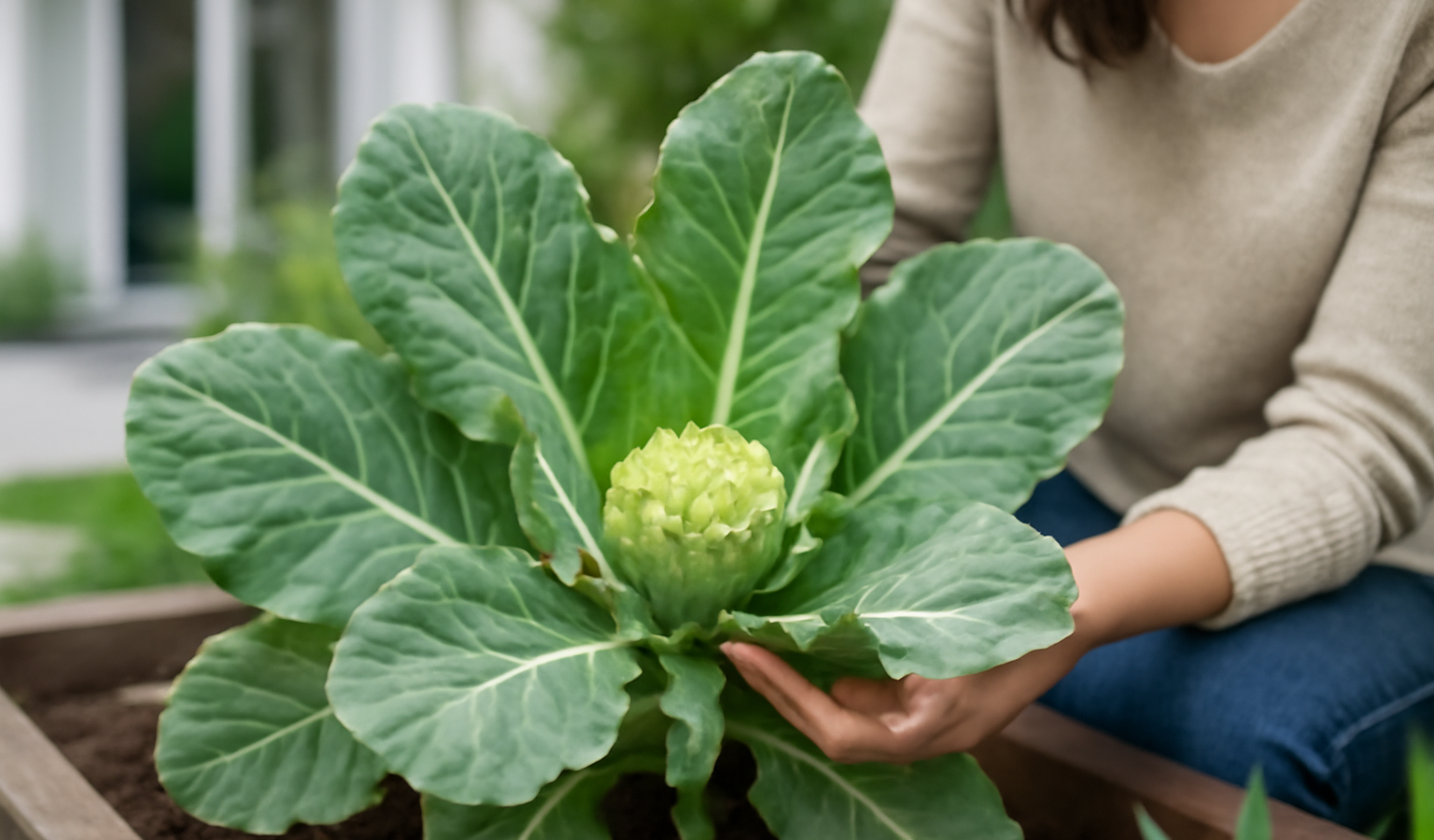
Cauliflower has a reputation as the diva of the vegetable garden, and nothing earns it that reputation faster than a row of big, healthy, leafy plants that stubbornly refuse to form a head. You water, you feed, you wait, and the plants just keep making leaves — or they throw up a tiny, knobbly, premature curd the size of a golf ball and then stall. Unlike its cousin broccoli, which forgives a lot, cauliflower demands that conditions stay within a fairly narrow band from seedling to harvest, and when any one factor drifts out of range, the curd is the first thing to suffer.
The good news is that “no head” is not a mystery once you know the four usual suspects: heat that prevents or ruins the curd, cold that buttons the plant into a premature mini-head, a boron deficiency that distorts or aborts the curd, and simple bad timing that puts the heading stage in the wrong weather. Each has a recognizable signature and a specific fix. This guide walks through how to tell which one is hitting your plants and exactly what to change so your next crop produces the heavy, tight, creamy-white head you were after.
Key Takeaways
- Cauliflower needs steady cool weather. It heads best around 60–65°F; heat above the mid-70s prevents curds or makes them loose and “ricey.”
- Cold buttons it. Young plants chilled below about 50°F for a stretch form tiny premature heads and then stop growing.
- Boron deficiency wrecks curds. Brown, distorted or hollow curds and stems point to a lack of boron — a common cauliflower-specific issue.
- Timing is critical. The plant must reach heading size while the weather is cool, so fall crops are usually far more reliable than spring.
- Never let it stall. Any major check — drought, transplant shock, starvation — interrupts the smooth growth cauliflower needs to head.
Cause 1: Heat Stopped the Curd From Forming
Cauliflower is the most heat-sensitive of the common brassicas. It wants to form its curd in cool, steady conditions around 60–65°F, and when temperatures climb into the mid-70s and beyond during the heading stage, the plant either refuses to initiate a curd at all or produces a malformed one. Heat-stressed cauliflower commonly forms loose, grainy “ricey” curds where the surface looks like cooked rice, or it bolts and the curd separates and shoots up to flower before it ever gets dense. Hot weather also encourages “leafiness,” where small leaves grow up through the curd and break it apart.
How to diagnose it
Check the weather against your heading stage. If your plants stayed leafy with no curd, or threw a loose, ricey, or leafy curd during a warm spell — typically a spring crop running into early-summer heat — heat is the cause. The signatures are a head that never tightens, a granular surface, small leaves poking through the curd, or the curd separating and starting to bolt. Big lush plants with no head, grown into hot weather, almost always means heat.
The fix
Time the crop so the curd forms in cool weather, and in hot-summer climates favor a fall planting where the head matures as temperatures fall. Choose heat-tolerant varieties such as ‘Snow Crown’ or ‘Amazing’ if your conditions are marginal. Keep soil consistently moist, since dry soil compounds heat stress, and mulch to keep roots cool. If a heat wave threatens during heading, throw shade cloth over the bed to drop the temperature. For self-blanching types, the wrapping leaves also shield the curd; for others, tie the outer leaves up over the developing head to protect it from sun and heat.
Cause 2: Cold “Buttoned” the Plant
The opposite extreme causes its own failure. When young cauliflower transplants are exposed to a prolonged cold spell — sustained temperatures below about 50°F for a week or two while the plant is still small — they can be tricked into thinking they are mature and triggered to form a curd prematurely. The result is “buttoning”: a tiny, useless head on an undersized plant that then stops growing, because the plant has committed to heading before it built the leaf area needed to support a full-sized curd. This is the most common reason an early spring crop set out too soon produces nothing but button-sized heads.
How to diagnose it
Look at the plant size and your planting date. A small plant with few leaves carrying a miniature head that has stalled out is classic buttoning, and it points to cold exposure early in the crop’s life. If you transplanted into cold spring soil, hit a late cold snap, or set out hardened, stressed transplants that sat in chilly conditions, the cold checked them into premature heading. Buttoning hits small plants early; heat damage hits larger plants later.
The fix
Do not rush cauliflower transplants into cold soil. Wait until soil and air are reliably above 50°F, or protect young plants with row cover or cloches during cold snaps so they never get a sustained chill while small. Use young, vigorous transplants — about four to five weeks old with several true leaves — rather than older, root-bound, hardened ones, since stressed transplants button more easily. Keep them growing steadily and unchecked from the day they go out. In cold-spring regions, a fall crop sidesteps the buttoning risk entirely because plants size up in warm late summer before the cool weather arrives for heading.
Cause 3: Boron Deficiency Distorted the Curd
Cauliflower has an unusually high demand for boron, a micronutrient, and a shortage of it produces some of the crop’s most distinctive failures. Boron-deficient cauliflower develops brown, water-soaked patches on the curd, distorted or aborted heads, hollow or browned stems, and a generally bitter result. Boron deficiency is most common in sandy soils, in soils that have been heavily limed (high pH locks up boron), and during dry spells, since boron moves to the plant in soil water and drought starves the plant of it. Because cauliflower needs more boron than almost any other vegetable, it can show a deficiency even where other crops grow fine.
How to diagnose it
Look for the specific symptoms. Brown, sunken or water-soaked spots on the curd, a curd that is distorted or aborts, hollow or discolored stems, and brittle, downward-curling young leaves all point to boron deficiency rather than temperature. The clues are strongest if you garden on sandy soil, have limed heavily, or went through a dry stretch. Distinguish this from heat damage, which makes curds loose and ricey but not brown and corky.
The fix
Correct boron carefully, because the margin between enough and too much is narrow and excess boron is toxic to plants. A common home remedy is to dissolve about one tablespoon of borax in a gallon of water and apply it as a foliar spray or soil drench over roughly 100 square feet of bed — never more, and never to dry soil. Better still, build organic matter with compost, which buffers micronutrient availability, and avoid over-liming so the soil pH stays in the slightly acidic-to-neutral range where boron stays available. Keep the bed evenly moist so boron can move to the roots. A soil test is the surest way to confirm a deficiency before you add anything. For the bigger picture on building a soil that holds nutrients evenly, see our guide to compost versus topsoil.
Cause 4: You Planted at the Wrong Time
Underlying the heat and cold problems is a timing problem: cauliflower has to grow from transplant to mature head — a stretch of roughly 55 to 100 days depending on variety — and the heading portion of that has to land squarely in cool weather. Plant a spring crop too late and the curd forms in summer heat; plant a fall crop too late and frost arrives before the head matures; plant too early in spring and cold buttons the seedlings. Cauliflower’s narrow comfort window means timing mistakes that broccoli or cabbage might shrug off will leave cauliflower headless.
How to diagnose it
Count backward from your variety’s days to maturity and check what the weather was doing during the heading stage. If a 70-day variety was transplanted so that it headed up in July heat, or so late in fall that frost cut it down before the curd sized, the timing was the problem regardless of plant health. Repeated failure every spring, no matter how carefully you grow the plants, is a strong sign your climate simply does not give cauliflower a long enough cool window in spring — and that fall is your season.
The fix
Work backward from your weather. For spring cauliflower, start seeds indoors early and transplant out only after the hard-cold risk has passed but with enough cool weeks left for the curd to mature before summer heat. In most regions a fall crop is far more reliable: sow in mid-summer and transplant so the head matures in the cool of autumn, often after a light frost that does the plant no harm. Choose a variety whose days-to-maturity fits the cool window you actually have, and stagger plantings a couple of weeks apart to hedge against an unexpected hot or cold spell hitting the heading stage. Timing it right matters as much for cauliflower as it does for its relatives — see why broccoli flowers early for the parallel timing logic.
Prevention: Growing Cauliflower That Actually Heads
Cauliflower rewards steadiness above all. Choose a variety matched to your cool window, and in hot climates lean on fall crops so the curd forms as the weather cools. Set out vigorous young transplants — never old, root-bound, or stressed ones — only when soil is reliably above 50°F, and protect them from both cold snaps (which button them) and heat waves (which ruin the curd) with row cover and shade cloth as needed. Keep the soil evenly moist and rich in compost so the plant never stalls and boron stays available, and avoid over-liming. Blanch the curd by tying the outer leaves over it once it reaches egg size, then harvest while the head is still tight, firm and white. Get those conditions to hold steady from seedling to harvest and the diva behaves. For more cool-season crop guidance, browse the Plants & Flowers section.
Frequently Asked Questions
Why does my cauliflower make leaves but no head?
The most common reasons are heat preventing the curd from forming, cold buttoning young plants into premature mini-heads, boron deficiency aborting the curd, or bad timing that put the heading stage in the wrong weather. Identify which by checking the weather, plant size and curd appearance, then adjust timing and growing conditions accordingly.
What does a boron deficiency look like in cauliflower?
Look for brown, water-soaked or sunken spots on the curd, distorted or aborted heads, hollow or browned stems, and brittle leaves. It is most common on sandy or heavily limed soils and during dry spells. A careful borax application or, better, building compost and avoiding over-liming corrects it.
Should I grow cauliflower in spring or fall?
In most climates fall is more reliable because the head matures as the weather cools, avoiding the heat and bolting that ruin spring crops. Spring cauliflower works only where you have a long enough stretch of cool weather for the curd to form before summer heat arrives.
What is buttoning and how do I prevent it?
Buttoning is when a young plant forms a tiny premature head and stops growing, usually triggered by prolonged cold below about 50°F while the plant is small. Prevent it by not transplanting into cold soil, protecting seedlings during cold snaps, and using vigorous young transplants kept growing without stress.
Do I need to blanch cauliflower curds?
For most white varieties, yes — tie the outer leaves up over the curd once it reaches about egg size to shield it from sun, which keeps it creamy white rather than yellowing. Self-blanching and colored (purple, orange, green) varieties do not need this step.