

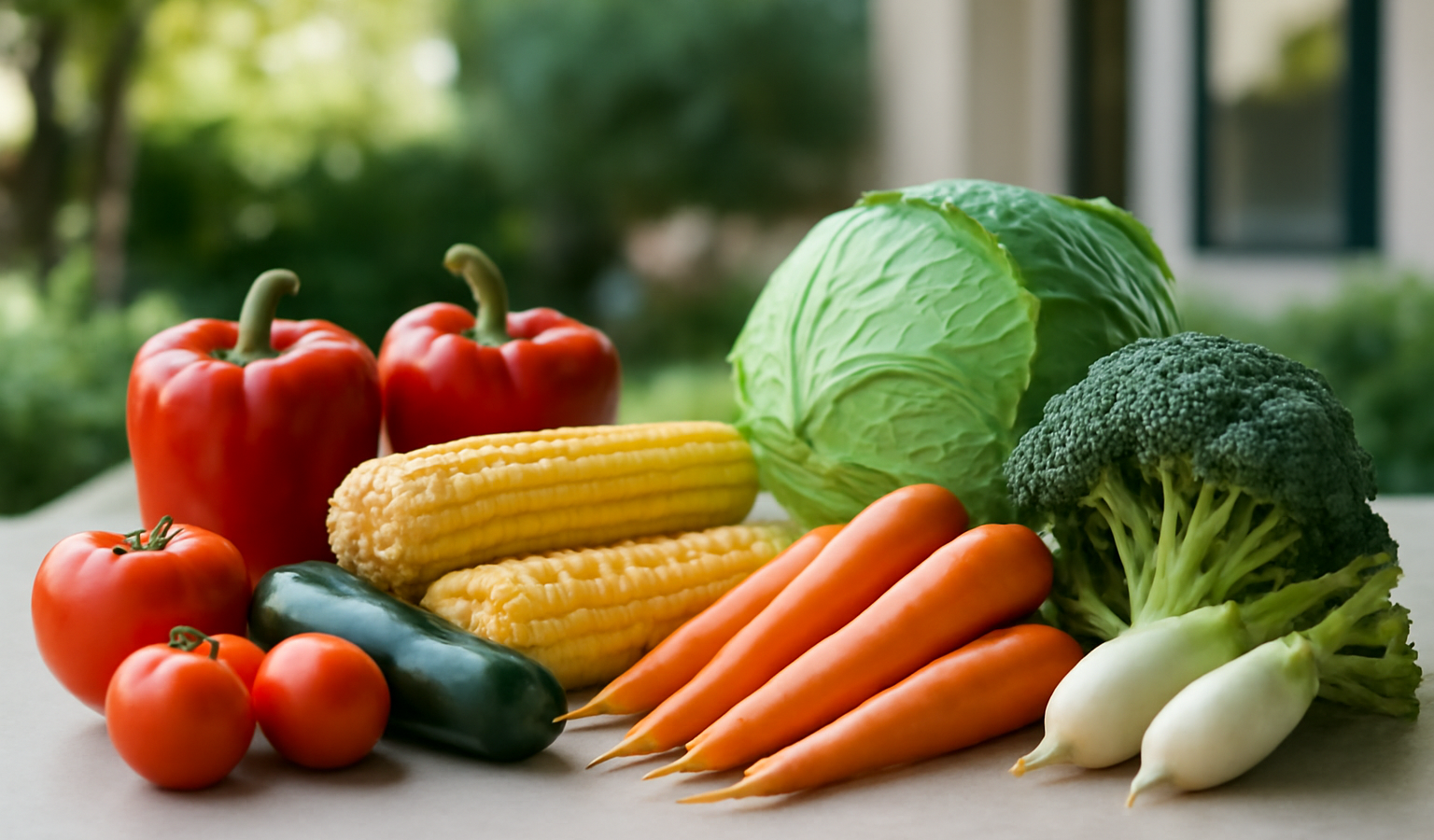
Every vegetable has a temperature personality, and matching it to your calendar is the single biggest factor in whether your garden thrives or sulks. Cool-season vegetables — lettuce, peas, spinach, broccoli, carrots — germinate and grow best when soil and air sit in the 40s to 60s Fahrenheit, and many actually taste sweeter after a touch of frost. Warm-season vegetables — tomatoes, peppers, beans, squash, corn — refuse to do anything useful until the soil passes 60°F, and a single frost kills them outright. Plant a tomato in March and it stalls; plant lettuce in July and it bolts to seed and turns bitter. Understanding this divide lets you do something most beginners miss: harvest from the same bed twice or even three times a year by stacking a cool-season crop, a warm-season crop, and another cool-season crop across a single season. This guide explains exactly how the two groups behave, when to plant each by soil temperature rather than guesswork, and how to plan a year-round rotation that keeps your beds productive from late winter through hard frost.
Key Takeaways
- Cool-season crops thrive at 40–70°F and tolerate frost; warm-season crops need soil above 60°F and die at frost.
- Plant cool-season vegetables in early spring and again in late summer; plant warm-season ones after your last frost date.
- Use soil temperature, not the calendar, to time planting accurately.
- Cool-season crops bolt in heat; warm-season crops stall and rot in cold, wet soil.
- Stacking both groups lets a single bed produce two or three harvests per year.
- Frost dates and a soil thermometer are your two most important planning tools.
Quick Comparison: Warm vs Cool Season
| Trait | Cool-Season Vegetables | Warm-Season Vegetables |
|---|---|---|
| Ideal soil temp | 40–70°F | 60–85°F |
| Frost tolerance | Tolerant (some improve with frost) | None — killed by frost |
| When to plant | Early spring & late summer | After last spring frost |
| Failure in wrong season | Bolts & turns bitter in heat | Stalls, rots in cold soil |
| Examples | Lettuce, peas, spinach, broccoli, carrots | Tomatoes, peppers, beans, squash, corn |
| Harvest part | Often leaves, roots, buds | Often fruits |
Cool-Season Vegetables: What They Are and When to Plant
Cool-season vegetables evolved to grow during the mild, moist shoulders of the year — spring and fall — and to finish their cycle before summer heat arrives. The group splits roughly into leafy crops (lettuce, spinach, arugula, kale), brassicas (broccoli, cabbage, cauliflower, Brussels sprouts), legumes (peas, fava beans), and many root crops (carrots, beets, radishes, turnips). What unites them is a love of cool soil and a hatred of heat. Most germinate happily at soil temperatures as low as 40°F, and hardy types like spinach, kale, and mâche shrug off frost down into the 20s.
Plant them in two windows. The first opens four to six weeks before your last spring frost — the soil only needs to reach 40 to 50°F, and a soil thermometer pushed two inches down tells you when. The second, often more reliable window opens in late summer for a fall harvest, sown roughly eight to ten weeks before your first fall frost so plants mature as temperatures drop. Fall-grown cool-season crops are frequently the best of the year because cool nights concentrate sugars; carrots, kale, and Brussels sprouts famously sweeten after frost. The enemy is heat: once daytime temperatures climb past 75 to 80°F, lettuce and spinach bolt — sending up a flower stalk and turning bitter — and peas stop setting pods. Extend the cool window with shade cloth in spring and with row covers or a cold frame in fall.
Warm-Season Vegetables: What They Are and When to Plant
Warm-season vegetables are the heat lovers, mostly grown for their fruits: tomatoes, peppers, eggplant, squash, cucumbers, melons, beans, corn, okra, and sweet potatoes. They originated in tropical and subtropical climates and carry zero frost tolerance — a light frost blackens and kills them in a single night. Beyond frost, they simply will not perform in cold soil. Seeds rot rather than germinate below about 60°F, and transplants set out too early sit shocked and stunted for weeks, often never fully recovering even after warmth returns.
The rule is simple: do not rush them. Wait until all danger of frost has passed and, more importantly, until the soil has warmed to at least 60°F — 65 to 70°F is better for heat-greedy crops like peppers, melons, and okra. In most of the country that means two to four weeks after the official last-frost date, not on it. Warming the soil with black plastic or starting seeds indoors four to eight weeks early under lights buys a head start without risking cold injury. Watch the weather, not just the calendar: a warm March followed by a cold snap fools many gardeners into planting too soon. If you garden where summers are short, choose fast-maturing varieties and use season-extension tools like a low tunnel to trap warmth early and late.
How to Time Planting by Soil Temperature
Air temperature swings wildly day to night, but soil temperature changes slowly and tells the true story of what your seeds will experience. Buy a basic soil thermometer and take readings in the morning at a two-inch depth for a few days running; use the average. Cool-season crops are ready to sow once soil holds steadily above 40 to 45°F. Warm-season crops wait for a steady 60°F or higher. This single tool eliminates most early-season failures, because it stops you from trusting a freak warm week or panicking over a cold one.
Pair the thermometer with your local average frost dates, which you can find by ZIP code. Count backward from the last spring frost to schedule cool-season sowings and indoor seed starting, and count backward from the first fall frost to schedule your fall cool-season planting. Keeping a simple notebook of when your soil actually hit each threshold each year quickly becomes more accurate than any generic chart, because it reflects your specific microclimate, slope, and soil type.
Planning Two or Three Harvests a Year
The real payoff of understanding the two groups is succession across a single bed. A classic three-act rotation runs like this. In early spring, sow a fast cool-season crop — radishes, spinach, or lettuce — that finishes before the soil warms. As that crop clears in late spring, transplant a warm-season crop like tomatoes, peppers, or beans into the same space for the summer. Then, in late summer as the warm crop winds down, pull it and sow a second round of cool-season vegetables for fall: more lettuce, kale, or a quick brassica. Done well, one bed feeds you from March through November.
Make it work by refreshing fertility between crops with an inch of compost, choosing fast-maturing varieties for the spring and fall slots, and starting transplants in advance so the next crop is ready the day the previous one comes out. Rotate plant families across beds year to year to limit pests and disease. For more on stretching the cool shoulders of the year, see our guide to overwintering vegetables and the broader plants and flowers collection.
The Verdict: Use Both, in the Right Order
This is not a competition where one group wins. The productive garden uses both, deliberately, in sequence. Cool-season vegetables open and close the gardening year, thriving in the mild, frost-flecked weeks that destroy warm crops, and rewarding you with the sweetest greens and roots of the season. Warm-season vegetables own the summer, delivering the tomatoes, peppers, and squash that no cool crop can match — but only if you wait for genuinely warm soil before planting. Master the temperatures, keep a soil thermometer in your back pocket, and respect your frost dates, and you will move from a single mid-summer harvest to a continuous supply that runs three seasons deep. The secret was never which vegetables to grow, but when.
Frequently Asked Questions
What is the difference between warm and cool-season vegetables?
Cool-season vegetables grow best at 40–70°F and tolerate frost, often grown for leaves and roots. Warm-season vegetables need soil above 60°F, are killed by frost, and are usually grown for their fruits like tomatoes and squash.
When should I plant cool-season vegetables?
Sow them four to six weeks before your last spring frost once soil reaches 40–45°F, and again in late summer (about eight to ten weeks before first fall frost) for a sweet fall harvest.
How do I know when soil is warm enough for tomatoes?
Use a soil thermometer at two inches deep in the morning. Tomatoes and most warm-season crops need a steady 60°F or higher; peppers and melons prefer 65–70°F, usually two to four weeks after the last frost date.
Why did my lettuce turn bitter and flower?
It bolted from heat. When temperatures rise past 75–80°F, cool-season crops send up a flower stalk and turn bitter. Plant earlier in spring, use shade cloth, or shift to a fall sowing.
Can I grow both groups in the same bed in one year?
Yes. Sow a fast cool-season crop in early spring, replace it with a warm-season crop for summer, then sow cool-season vegetables again in late summer for fall — two or three harvests from one bed.