

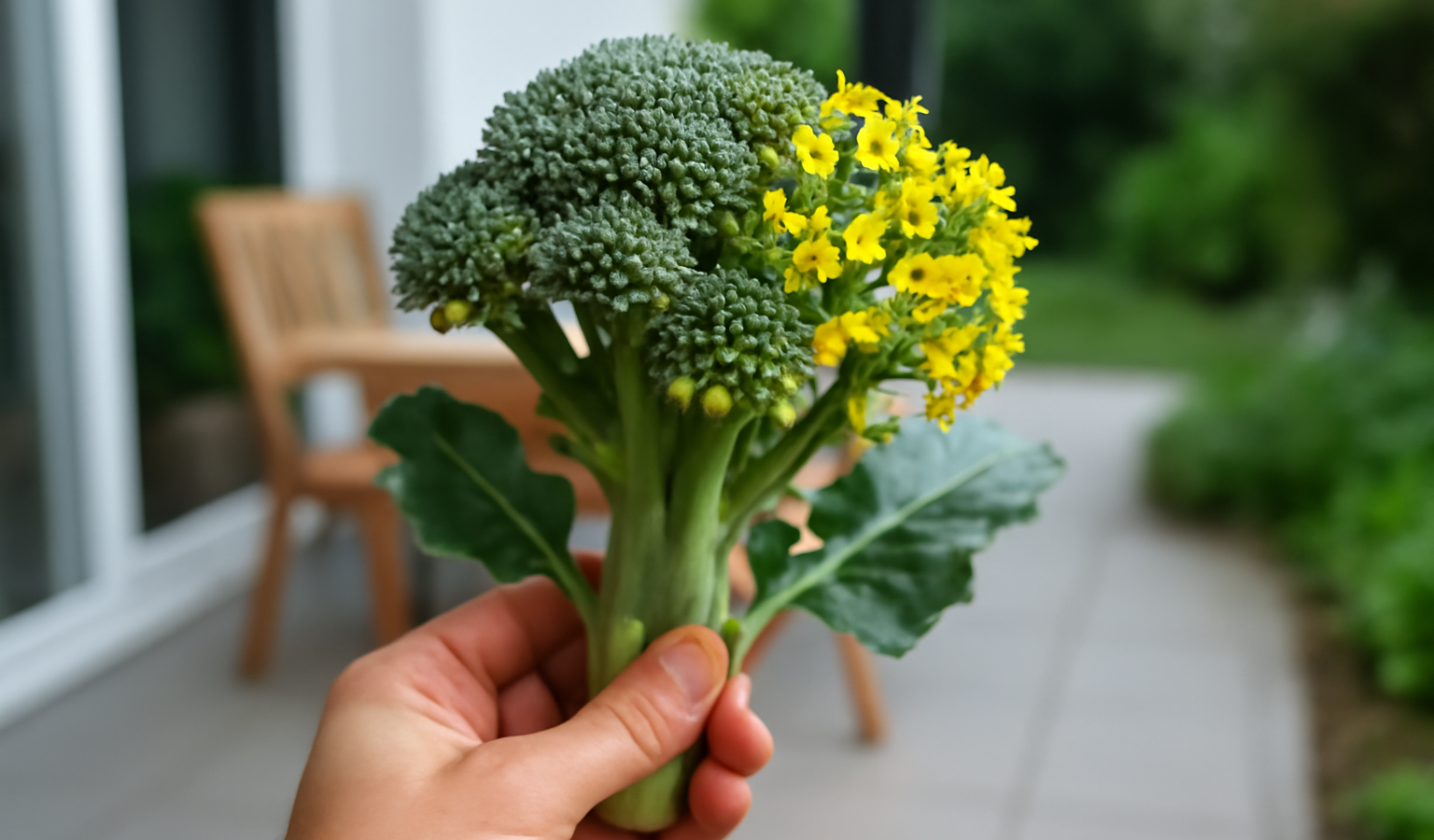
You have been watching a broccoli plant for weeks, waiting for that fat blue-green dome to appear, and then almost overnight the tight little head loosens, the buds separate, and sprays of bright yellow flowers shoot up. Or you never got a real head at all — just a sad coin-sized cluster the size of a quarter sitting on top of a small plant. Either way the crop is over before it started, because once broccoli flowers it is done, and the texture turns coarse and the flavor turns bitter and cabbagey. It feels like a betrayal: the plant looked fine, then it sprinted to seed.
Broccoli is a cool-season crop with a narrow comfort zone, and almost every case of early flowering — gardeners call the premature heading “buttoning” and the rush to flower “bolting” — comes down to the plant deciding, for one reason or another, that its season is ending and it had better make seed now. Heat is the usual trigger, but transplant stress, the wrong planting date, and a few other checks can all push it over the edge. This guide breaks down each cause, shows you how to tell which one hit your plants, and gives you the fix so your next sowing produces a heavy, tight, sweet head instead of a bouquet.
Key Takeaways
- Heat is the main trigger. Sustained temperatures above roughly 75–80°F push broccoli to bolt and flower instead of holding a tight head.
- Buttoning comes from stress. Tiny premature heads usually mean the young plant was checked — by cold, drought, root binding or starvation — early in life.
- Timing is everything. Broccoli must mature in cool weather. Plant so heads form in spring before summer heat, or in fall as temperatures drop.
- Never let transplants stall. Root-bound, hardened-off-too-long, or hungry seedlings flower early. Keep them growing steadily from seed to harvest.
- Harvest the moment buds are tight. Once individual beads start to swell or yellow, cut immediately — flowering only accelerates from there.
Cause 1: Heat Made the Plant Bolt
Broccoli evolved as a cool-weather brassica and it heads best when daytime temperatures sit between about 60 and 70°F. When the thermometer climbs past roughly 75–80°F for several days while the head is forming, the plant interprets the heat as a signal that the favorable growing season is ending. Its survival response is to abandon the slow business of building a dense head and rush straight to flowering and seed production, which is why a head can go from tight to blooming in a matter of days during a warm spell. Heat-stressed broccoli also produces loose, “ricey” heads where the buds separate and the surface looks granular instead of smooth.
How to diagnose it
Look at the calendar and the weather. If your broccoli loosened and flowered during or just after a stretch of hot days — typically late spring or early summer for a spring crop — heat is almost certainly the cause. The classic signs are a head that turns loose and bumpy before it ever gets dense, buds that yellow and open quickly, and a slightly bitter, strong flavor. A spring planting that matured into June or July heat is the textbook scenario.
The fix
Time the crop so heads form in cool weather. For a spring crop, start seeds indoors 6–8 weeks before your last frost and transplant out 2–4 weeks before that frost so heads mature before summer heat arrives. In many regions a fall crop is more reliable: sow in mid to late summer so plants head up as temperatures fall, and broccoli will tolerate light frost, which actually sweetens it. Choose heat-tolerant or fast-maturing varieties such as ‘Belstar’, ‘Gypsy’ or ‘Sun King’ if your springs warm up quickly. During unexpected warm spells, drape shade cloth over the bed to knock temperatures down and keep moisture even, since dry soil compounds heat stress. For a fuller picture of which crops belong in which season, see our guide to warm-season versus cool-season vegetables.
Cause 2: The Plant “Buttoned” From Early Stress
Buttoning is the specific failure where a young plant forms a tiny, premature head — often no bigger than a button or a quarter — long before it has built enough leaf area to support a full-sized one. It is not the same as heat bolting; buttoning is set in motion when a seedling or young transplant is checked or stressed early in life. The plant reads the stress as a threat to survival, switches prematurely from vegetative growth to reproductive growth, and tries to flower while it is still small. Common triggers are prolonged cold on young transplants, drought, severe root binding in the cell pack, and nutrient starvation.
How to diagnose it
The tell is a small plant with few leaves topped by a miniature head that opens into flower without ever sizing up. Think back to the seedling stage: were the transplants root-bound and yellowing in their pots, set out into cold soil, allowed to dry out repeatedly, or held too long before planting? Any of those early checks produces a buttoned plant. Buttoning shows up early in the crop’s life, whereas heat bolting hits a plant that had already grown large and was forming a normal head.
The fix
Keep young broccoli growing without a single major check from seed to harvest. Pot seedlings up before they become root-bound, and transplant at the right age — usually 4–6 weeks old with four to five true leaves, not leggy six-week-old plants stuck in tiny cells. Avoid setting transplants into cold soil; wait until it is consistently above about 50°F, or protect young plants with row cover during cold snaps. Never let seedlings dry out, and feed them a balanced fertilizer so they are never starved. Hardening off should take 7–10 days, not three weeks of neglect on a porch. A steadily growing, well-fed, well-watered young plant simply does not button.
Cause 3: You Planted at the Wrong Time
Even a perfectly grown plant will flower early if its maturity date lands in the wrong weather. Broccoli takes roughly 55 to 85 days from transplant to harvest depending on variety, and that maturity window has to fall during cool conditions. Plant too late in spring and the head forms just as summer heat peaks; plant too early for fall and the head matures while it is still hot. The single most common timing mistake is direct-sowing or transplanting a spring crop too late, so it heads up into June or July heat and bolts on schedule.
How to diagnose it
Count backward. Look up your variety’s days to maturity, then check what the weather was doing when the head was forming. If a 65-day variety was transplanted in late April and headed up into hot early-July weather, the timing was always going to fail regardless of how healthy the plant looked. Repeated bolting every spring, no matter what you do, is a strong sign your planting date is simply too late for your climate.
The fix
Work backward from your weather. For spring broccoli, choose a variety’s days-to-maturity number and count back from the date your area reliably hits the mid-70s, then start seeds indoors early enough to transplant well before that. In hot-summer regions, skip the spring crop and grow broccoli only in fall, sowing 85–100 days before your first expected frost so heads mature in the cooling weather of October and November. Fall broccoli is generally sweeter and far less prone to bolting because conditions are heading in the right direction as the plant matures rather than the wrong one.
Brassicas and alliums share a lot of this stress-and-bolt logic — if you also grow onions, our guide on why onion sets flower and bolt covers the parallel cold-and-stress triggers.
Cause 4: You Missed the Harvest Window
Sometimes the plant did everything right and you simply waited too long. A broccoli head is a cluster of immature flower buds, and it will only stay tight for a limited window — sometimes just a few days in warm weather — before those buds mature and burst into yellow bloom. Gardeners who check the bed only once or twice a week, or who keep hoping the head will get bigger, frequently miss the moment and find the head flowering. Once even a few buds open, the texture and flavor have already started to decline.
How to diagnose it
If the plant produced a large, normal-looking head that then opened into flower, and you had been waiting for it to grow even bigger, you missed the window. The give-away is a full-size head with loosening, swelling beads or a few yellow flowers, on an otherwise healthy plant grown in cool weather. This is a harvest-timing problem, not a growing problem.
The fix
Harvest the central head while the buds are still tight, firm and dark green, before any of them swell, loosen or show yellow. Do not wait for it to grow larger — broccoli heads do not keep getting bigger indefinitely, and pushing your luck only risks flowering. Check plants every day or two once a head is visible, especially in warm weather. Cut the main head with 5–6 inches of stem, and most varieties will then push a flush of smaller side shoots from the leaf axils that you can harvest for several more weeks, so a single plant keeps producing long after the main head is gone.
Prevention: Heading Off Bolting Next Time
Reliable broccoli comes down to keeping the plant cool, unstressed and on schedule. Start with the right planting date so heads mature in cool weather — favor fall crops in hot climates. Grow strong, unchecked transplants and never let them go root-bound, cold-shocked, dry or hungry, which prevents buttoning. Keep soil consistently moist with about an inch of water a week, mulch to moderate soil temperature, and use shade cloth if a heat wave threatens during heading. Choose heat-tolerant varieties where summers come on fast. Then watch the developing head closely and cut it the instant the buds are tight and full, rather than gambling on more size. Do all that and broccoli rewards you with dense, sweet heads followed by weeks of side shoots — and you can apply the same cool-season discipline to its relatives across the Plants & Flowers section.
Frequently Asked Questions
Can I still eat broccoli that has started to flower?
Yes, broccoli that is just beginning to loosen or show a few yellow buds is still edible, though the texture gets coarser and the flavor more bitter as it opens. Harvest it right away rather than waiting. Fully bloomed broccoli is past its prime but the flowers and tender stems are still safe to eat.
What temperature makes broccoli bolt?
Broccoli generally starts to bolt and flower when daytime temperatures stay above about 75–80°F for several days during head formation. It heads best in the 60–70°F range, which is why cool spring and fall conditions produce the tightest heads.
Will broccoli regrow after I cut the main head?
Most broccoli varieties produce smaller side shoots from the leaf axils after the central head is harvested, and these can keep producing for several weeks. Cut the main head with some stem attached and keep feeding and watering the plant to encourage the secondary harvest.
Why is my broccoli making tiny heads on small plants?
That is buttoning, caused by early stress on young plants — cold soil, root-bound transplants, drought or starvation. The seedling switched to flowering before it grew large enough to support a full head. Prevent it by keeping transplants growing steadily and never letting them be checked.
Is fall broccoli better than spring broccoli?
In hot-summer climates, yes. Fall broccoli matures as temperatures drop, so it is far less likely to bolt, and a touch of light frost actually sweetens the heads. Spring broccoli is riskier because the crop often matures into rising summer heat.