

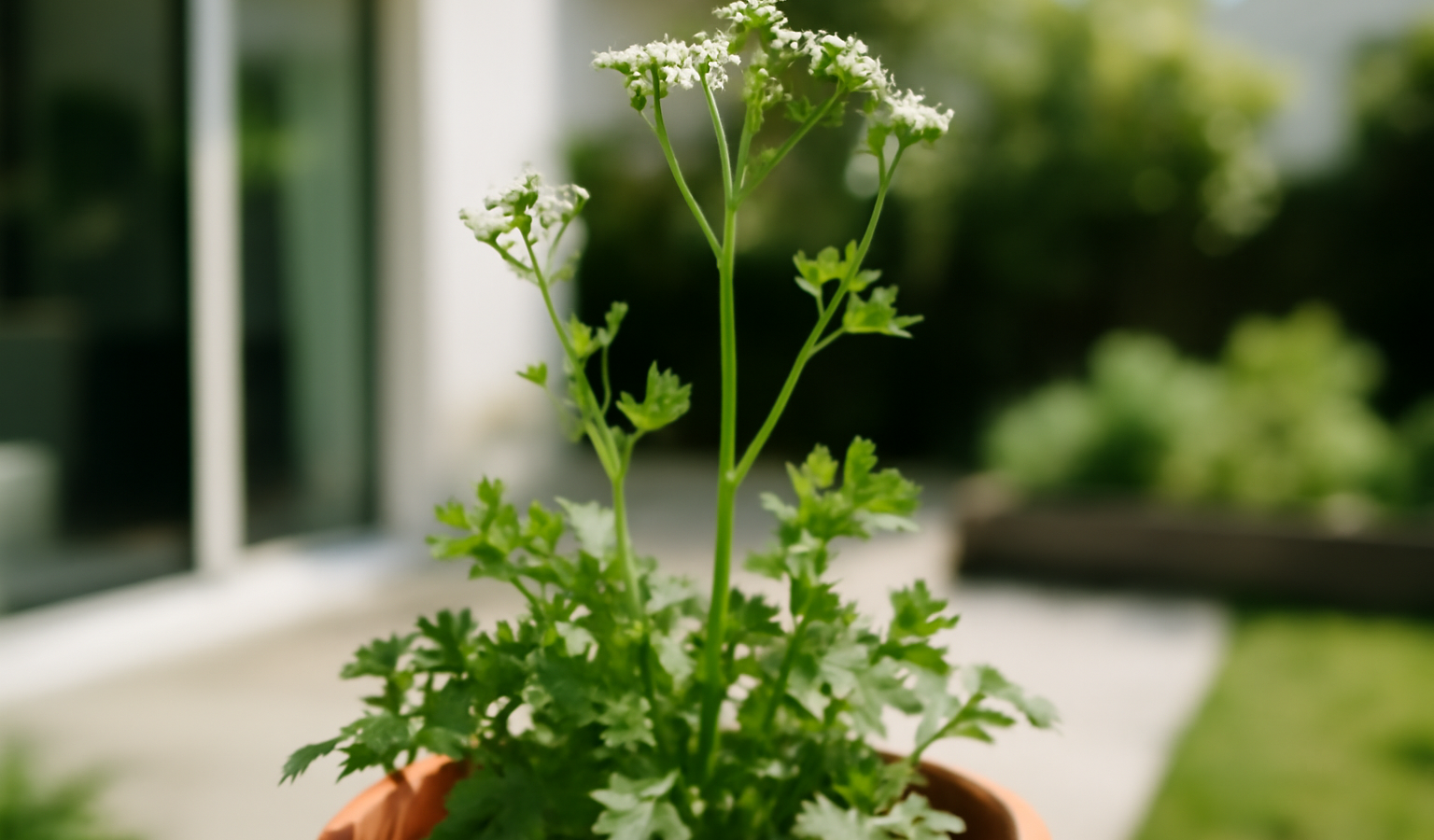
If your cilantro suddenly shot up a tall flower stalk, grew thin feathery leaves, and started tasting soapy or bitter, it is bolting & you mostly cannot reverse it once it starts. Bolting is when the plant abandons leaf production and rushes to flower and set seed. Here is the key thing to understand: cilantro is a cool-season annual that is genetically programmed to bolt, so this is normal behavior, not a disease or a mistake you made. Heat, long summer days, root disturbance, plant age, and drought stress all push it to flower faster. You cannot stop bolting forever, but you can delay it, and you can keep a steady leaf supply by changing how you sow, site, and water the plant. This guide covers each trigger.
Key Takeaways
- Bolting is cilantro’s natural lifecycle response, not a problem you caused — you can delay it but not prevent it forever.
- Heat is the number one trigger; sustained temperatures above roughly 75°F (24°C) push the plant to flower fast. Aim for 50–80°F (10–27°C) growing weather.
- Long summer daylight, transplant shock, plant maturity, and drought stress all accelerate bolting.
- Sow fresh seed every 2–3 weeks (succession sowing) so you always have young, leafy plants coming on.
- Choose slow-bolt varieties like Calypso, Santo, Leisure, or Slow Bolt, and give the plants afternoon shade in warm weather.
Cause 1: Heat & Warm Temperatures (the Primary Trigger)
Heat is by far the most common reason cilantro bolts. Cilantro is a cool-season annual, the same plant we call coriander, and it thrives in the mild weather of spring and fall. It grows best between 50°F and 80°F (10–27°C). Once daytime temperatures climb past about 75°F (24°C) and especially when they push into the 85°F-plus range, the plant interprets the heat as a signal that the favorable growing window is closing. Its survival strategy is to flower and produce seed before conditions get worse. A single hot spell of a few 90°F days can trigger bolting in plants that looked perfectly healthy a week earlier, which is why cilantro so often bolts the moment summer arrives.
How to diagnose it
Check the timing against your weather. If your cilantro bolted within a week or two of the first sustained warm spell — late spring into early summer is the classic window — heat is almost certainly the cause. Look at the plant: heat-triggered bolting produces a central stalk that elongates quickly, and the new leaves up top look thin, fern-like, and divided rather than the broad, scalloped lower leaves. If multiple cilantro plants in the same bed bolted at once after a hot stretch, that confirms it, because a shared environmental trigger affects the whole planting at the same time rather than one stressed individual.
How to fix it
You cannot cool a plant that has already started flowering, so the real fix is preventive timing. Grow cilantro in the cool shoulder seasons — early spring and fall — and avoid the peak of summer entirely in hot climates. In summer, move container plants to a spot that gets morning sun and afternoon shade, or use 30–40% shade cloth over an in-ground bed to knock temperatures down. Mulch the soil with an inch or two of straw or compost to keep roots cooler. If a heat wave is forecast and your plants are still leafy, harvest heavily before it hits so you bank the leaves while they still taste good. See our Plants & Flowers growing guides for more on managing cool-season crops through hot spells.
Cause 2: Long Daylight Hours
Cilantro is a long-day plant, meaning the length of daylight is itself a flowering cue independent of temperature. As days lengthen through late spring and into the summer solstice, the increasing hours of light signal the plant to switch from vegetative growth to reproduction. This is why cilantro sown in May or June often bolts quickly even if you keep it cool and well watered — the daylight clock is telling it to flower regardless. It is also why fall-sown cilantro, growing into shortening days, tends to stay leafy far longer and is often the easiest, most productive crop of the year for leaf harvest.
How to diagnose it
Daylight-triggered bolting shows up as plants flowering in late spring and early summer despite reasonable temperatures and consistent moisture. If you have ruled out heat — your weather has been mild but the plants still rushed to flower as the days got long — daylight length is the likely driver. A telling comparison: cilantro you sow in early fall, as days shorten, will stay in leaf production much longer than an identical sowing made in late spring, even with the same care. The calendar, not just the thermometer, is doing the work.
How to fix it
You cannot change the day length, so work with it. Lean on fall as your main leaf-cilantro season; a planting made about 8–10 weeks before your first expected frost will grow into shortening days and produce abundantly. For spring crops, sow as early as the soil can be worked so plants get a long, cool, leafy run before the long days arrive. In summer, accept shorter harvest windows and rely on frequent succession sowing rather than expecting any single planting to last. Some gardeners in long-summer regions skip the midsummer slot for leaf cilantro entirely and instead let summer plants go to seed for coriander.
Cause 3: Transplant Shock & Root Disturbance
Cilantro has a long, delicate taproot and genuinely resents being moved. When you transplant a seedling, the inevitable root disturbance is a major stress, and stress of any kind tends to trigger the bolt-and-set-seed survival response. This is one of the most overlooked causes of premature bolting. Gardeners buy a nursery six-pack or a potted cilantro plant, transplant it into the garden, and watch it bolt within a week or two — not because they did anything wrong with water or light, but simply because disturbing that taproot told the plant its conditions had turned hostile and it should reproduce while it can.
How to diagnose it
If a plant bolted very soon after you transplanted it — particularly a store-bought plant that may already have been root-bound and mature — transplant shock is the prime suspect. Direct-sown cilantro that was never moved, growing in the same conditions, will usually stay leafy noticeably longer than transplants. Another clue: the bolting plant may also have looked briefly wilted or checked in growth right after planting, the classic signs of a disturbed root system, before sending up its flower stalk.
How to fix it
The cleanest fix is to skip transplanting altogether: direct-sow cilantro seed where it will grow, thinning to about 2–3 inches apart. The seeds germinate readily in cool soil in 7–14 days and the plants establish without any root insult. If you must start in containers, use deep cells or soil blocks to accommodate the taproot, transplant while seedlings are very young and small, and disturb the roots as little as possible. Water well immediately after planting and give a few days of afternoon shade to ease the transition. Buying mature potted cilantro for transplanting is the least reliable approach — treat those plants as a short-term leaf source rather than a long-lived crop.
Cause 4: Plant Maturity & Variety
Even in perfect cool weather with flawless care, cilantro will eventually bolt because it is an annual that is genetically programmed to complete its lifecycle in a single season. Once a plant reaches reproductive maturity — often just 6–8 weeks after germination — it begins shifting toward flowering no matter what you do. Age alone is therefore a built-in trigger. On top of that, variety matters enormously. Standard or unnamed cilantro sold for coriander seed production tends to bolt quickly, while purpose-bred slow-bolt varieties have been selected to delay flowering and stay in leaf far longer under the same conditions.
How to diagnose it
If your plants grew happily for a couple of months in cool weather and only then started to flower, you are simply seeing normal maturity — there is nothing to fix, the plant has reached the end of its leaf phase. If, on the other hand, plants bolt fast and young even in mild conditions, you may be growing a quick-bolting variety. Check your seed packet: many are simply labeled “cilantro” or “coriander” with no bolt-resistance note, which usually means a standard, fast-flowering type bred more for seed than for prolonged leaf harvest.
How to fix it
Choose slow-bolt varieties bred specifically for extended leaf production. Reliable named options include Calypso, Santo (also sold as Santo Long Standing), Leisure, and varieties simply marketed as Slow Bolt. These can add weeks to your harvest window compared to generic seed. Because no variety resists bolting forever, pair the right variety with succession sowing — a fresh batch every couple of weeks — so a younger planting is always coming on as the previous one matures and flowers. Since cilantro and coriander are the same plant, a bolted plant is never wasted: see cilantro vs coriander for how the leaves and seeds differ in use.
Cause 5: Drought Stress & Inconsistent Watering
Water stress is the last major bolting trigger, and it often compounds the others. When cilantro dries out — or swings between bone-dry and soaked because watering is erratic — the plant reads it as adverse conditions and accelerates toward flowering and seed set, the same self-preservation logic behind heat-triggered bolting. Container cilantro is especially vulnerable because pots dry out fast, particularly in warm weather, and a single skipped watering on a hot day can be enough stress to tip a mature plant into bolting. Inconsistent moisture also stresses the taproot and weakens overall leaf quality.
How to diagnose it
Check your soil moisture history. If your cilantro has dried to the wilting point at any time, or if you water sporadically rather than on a schedule, drought stress is a likely contributor. Plants in small or unglazed terracotta pots, in full sun, or in fast-draining sandy beds are the usual victims. A clue that water (rather than heat or daylight) is the dominant factor: plants in the same conditions that received steadier moisture — say, those near a drip line or in larger pots — held off bolting longer than their drought-stressed neighbors.
How to fix it
Keep the soil evenly moist but not waterlogged — think consistently damp, never swinging from dry to drenched. In the ground, that usually means watering deeply once or twice a week; in containers, it often means checking daily in warm weather and watering whenever the top inch feels dry. A 1–2 inch mulch layer dramatically steadies soil moisture and keeps roots cooler at the same time, addressing two triggers at once. Larger pots hold moisture longer and buffer the plant against missed waterings, so size up your containers if cilantro keeps drying out and bolting on you.
How to Prevent Cilantro From Bolting
The single most effective strategy is succession sowing: sow a small batch of cilantro seed every 2–3 weeks throughout the cool parts of the season rather than planting one big crop. Because each plant will eventually bolt no matter what, a continuous string of young plantings guarantees you always have tender, leafy cilantro coming on while older plants flower. Pair this with the right timing — concentrate your sowings in early spring and fall, and treat the heat and long days of midsummer as a lost cause for leaf production in warm climates. Choose slow-bolt varieties such as Calypso, Santo, Leisure, or Slow Bolt to stretch each planting’s leaf window as far as possible.
Site and care round out the plan. Keep plants in the 50–80°F (10–27°C) range, give afternoon shade once weather warms, mulch to steady soil temperature and moisture, and water consistently so the plants never hit drought stress. Direct-sow whenever possible to avoid transplant shock, and harvest by cutting the outer leaves regularly — frequent harvest keeps plants in a vegetative, leaf-producing mood and lets you use the crop while it tastes best. When a plant finally does bolt, do not fight it. Let it go to flower — the blossoms feed pollinators and beneficial insects — then let the green seeds ripen and dry into coriander, which you can grind as spice or save to resow. Nothing is wasted, because cilantro and coriander are simply two harvests from the very same plant.
Frequently Asked Questions
Can I reverse cilantro bolting once it starts?
No. Once a plant sends up a flower stalk, you cannot make it return to leaf production. Pinching off the flower buds may slow seed set slightly and buy a few extra leafy days, but the plant has committed to its reproductive phase. The practical move is to harvest remaining good leaves quickly, then either pull the plant or let it finish flowering and set coriander seed.
Is bolted cilantro safe to eat?
Yes, it is perfectly safe — it just does not taste as good. As cilantro bolts, the leaves turn thin, feathery, and noticeably more bitter or soapy, and they lose the bright flavor you want for cooking. You can still use small amounts, but most gardeners stop harvesting leaves at that point and switch to using the flowers, green seeds, or dried coriander instead.
How long does cilantro last before bolting?
It varies with conditions, but figure on roughly 4–8 weeks of good leaf harvest from a planting under cool conditions, sometimes longer with slow-bolt varieties grown in fall. In hot weather or long summer days, that window can shrink to just a couple of weeks. This short lifespan is exactly why succession sowing every 2–3 weeks is the standard approach.
Are cilantro and coriander the same plant?
Yes. Cilantro and coriander come from one plant, Coriandrum sativum. In American usage, “cilantro” refers to the leaves and stems while “coriander” refers to the dried seeds; in much of the world the whole plant is called coriander. So when your cilantro bolts and sets seed, you are simply getting coriander spice from the same plant that gave you leaves.
Does picking cilantro leaves stop it from bolting?
Regular harvesting helps keep the plant in leaf-producing mode and can modestly delay bolting, so cut the outer leaves often. However, harvesting will not override the major triggers — heat, long daylight, maturity, and stress — so it slows bolting rather than preventing it. Combine frequent harvest with cool timing, shade, steady water, and succession sowing for the best results.