

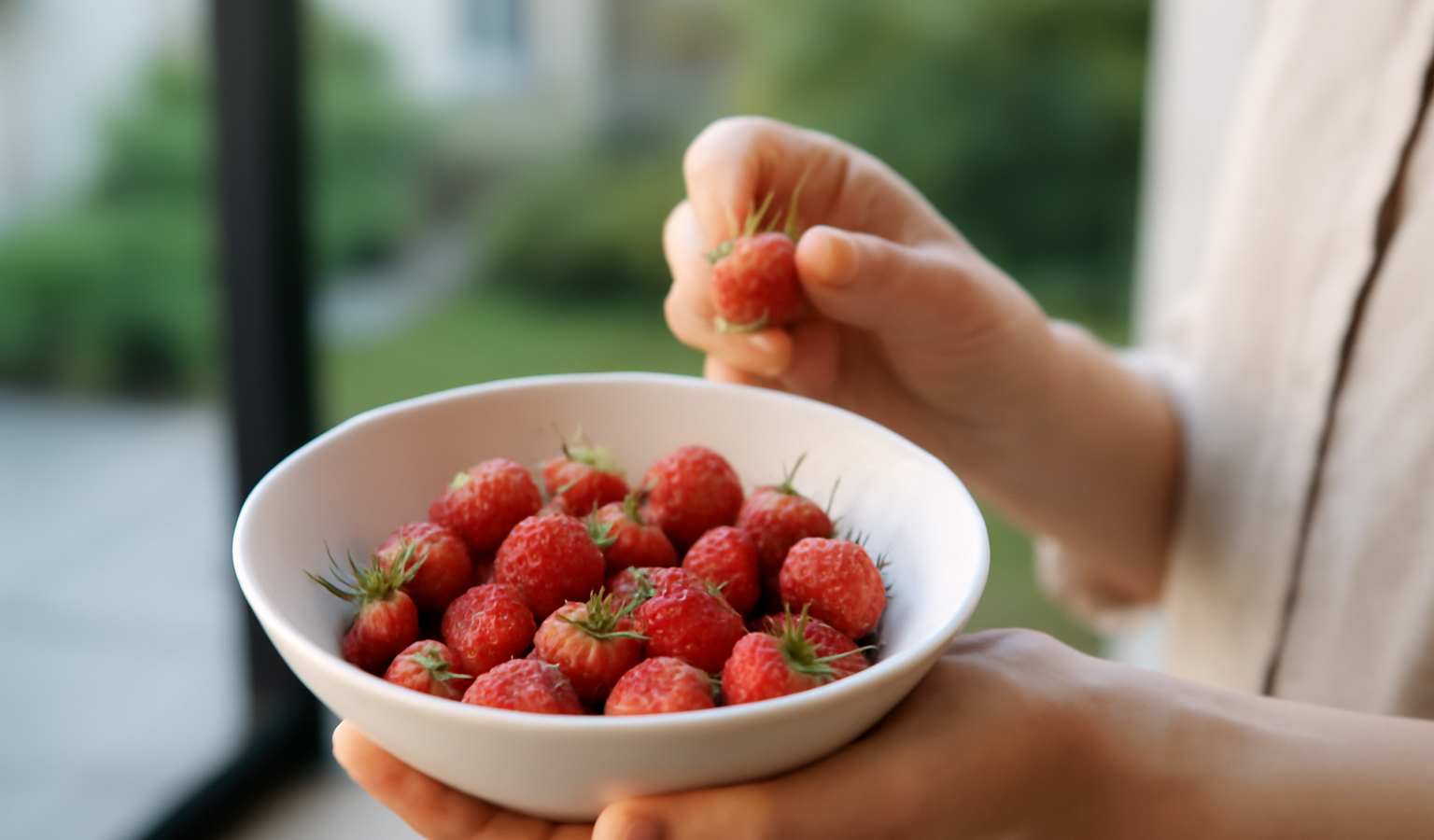
You waited all spring, the plants bloomed beautifully, and now you are picking berries the size of a thumbnail. Small strawberries are one of the most common complaints I hear, and the frustrating part is that the plants usually look perfectly healthy. Lush green leaves, plenty of flowers, no obvious disease. The problem is almost never one dramatic failure. It is usually a stack of small things quietly capping berry size: a bed that is a few years past its prime, bloom that never got fully pollinated, a planting spot that lost its sun to a maturing tree, or watering and feeding habits that grow leaves instead of fruit. The good news is that strawberries are honest plants. Each cause leaves a specific fingerprint, and once you learn to read it, you can fix the right thing instead of guessing. Below I walk through the five reasons berries stay small, how to confirm each one in your own patch, and exactly what to do about it.
Part of our Vegetable Gardening & Raised Beds guide →
In this guide
Key Takeaways
- Strawberry beds peak in years 2 and 3, then decline; berries shrink as plants age past 3 to 4 years and crowd themselves with runners.
- Misshapen, nubby, lopsided berries point to poor pollination, not bad soil or genetics.
- Strawberries need 6 to 8 hours of direct sun; anything less directly shrinks fruit size.
- Inconsistent water plus too much nitrogen builds big leaves and tiny berries; potassium and phosphorus build fruit.
- First-year plants, everbearing types, and heat above 85 degrees F all naturally produce smaller berries.
Cause 1: Old Plants and an Overcrowded Bed
This is the single most common reason home strawberry patches decline, and almost nobody suspects it because the plants look so vigorous. A June-bearing strawberry plant does its best work in its second and third years. By year four it is sending most of its energy into survival and reproduction by runner, not into fat berries. At the same time, every mother plant has been throwing out daughter plants on runners for several seasons, and a bed that started with twelve well-spaced plants can hold sixty crowded ones by year three. Those plants are all competing for the same light, water, and nutrients, so each one fruits weakly. A crowded, aging bed is a bed of small berries.
How to diagnose
Ask yourself how old the bed is. If you planted it four or more years ago and have never renovated or replanted, age is almost certainly a factor. Then look at spacing. Healthy June-bearing plants want roughly 12 inches between crowns; if your plants are packed so tightly the leaves form a solid mat with no soil showing, the bed is overcrowded. Get down and count crowns in a square foot. More than four or five established crowns in that space, and they are choking each other. Also check for woody, thick, brown central crowns with leaves only at the edges. That gnarled, woody crown is the look of an old plant that has stopped putting energy into big fruit.
How to fix
For June-bearers, renovate right after harvest ends, usually late June or early July. Mow or shear the foliage down to about 1 inch above the crowns, rake out the clippings, and then thin hard. Pull plants until you are back to one plant every 8 to 12 inches, keeping the youngest, healthiest daughters and removing the old woody mothers. Narrow each row to 12 to 18 inches wide. It feels brutal, but a renovated bed will hand you noticeably larger berries the following season. Stay on top of runners during the growing season too: snip off most of them so the plant feeds fruit instead of babies. Plan to fully replant the bed with fresh stock every 3 to 4 years, and rotate to a new location to dodge soil-borne disease. If your patch is already five or six years deep, the kindest fix is to start a new bed from certified disease-free crowns and retire the old one.
Cause 2: Poor Pollination
Here is the one that surprises people most. A single strawberry is not one fruit; it is the swollen receptacle behind hundreds of tiny seeds, and each of those seeds, called achenes, is the result of a separate pollination event. A strawberry flower has 200 to 400 of these. The berry only grows large and even where the achenes around it got fertilized. If pollination is incomplete, you get small, lopsided, knobby berries with hard green or white patches and tips that never fill out. That classic nubby, cat-faced strawberry is the signature of a pollination problem, not a soil or watering problem.
How to diagnose
Look closely at the shape, not just the size. Evenly small berries usually mean something else, like shade or age. But if your berries are misshapen, with bulges and dimples, hard shoulders, or pointed undersized tips, that is poor pollination. Think back to your bloom window. Was it cold, rainy, or windy for a stretch of days while the plants were flowering? Bees do not fly much below 55 degrees F or in steady rain, and strawberry pollen is sticky and heavy, so it relies heavily on insects rather than wind. Also ask whether you left a row cover or netting on during bloom. Covers that protect against frost or birds will also lock pollinators out, and a covered patch in full flower will set deformed fruit almost every time.
How to fix
Pull any row cover or netting off the moment the first flowers open, and keep it off until fruit has set. If you must protect blooms from a late frost, cover in the evening and remove the cover by mid-morning so bees can work. Plant for pollinators nearby: a strip of borage, alyssum, calendula, or any early-blooming flower within a few feet of the bed pulls bees right to your strawberries. Avoid spraying any insecticide while plants are in bloom, even organic ones, because it suppresses the very bees you need. If you have a small patch and a stubbornly cold, wet spring, you can hand-pollinate. Take a soft artist’s brush or a cotton swab and gently dab the center of each open flower, moving from bloom to bloom every day or two during the flowering period. It is tedious but it visibly improves berry shape and size on a dozen plants.
Cause 3: Not Enough Sun
Strawberries are sun engines. The sugars and bulk that fill a berry are built directly from sunlight, so light is not optional for them the way it is for some leafy crops. The plants will survive in partial shade, even look green and leafy, and still flower, but the berries will be small and bland. A patch that produced beautifully a few years ago can quietly decline as nearby trees, shrubs, or a neighbor’s fence grow up and steal morning or afternoon sun. Because the change is gradual, gardeners rarely connect shrinking berries to the maple that has been getting taller every year.
How to diagnose
Strawberries want a minimum of 6 hours of direct sun, and 8 or more is better. Spend a sunny day watching the bed and actually time the direct sun, or check it at 9 a.m., noon, 3 p.m., and 6 p.m. and note whether the patch is in sun or shadow. If it sits in shade for large parts of the day, especially through midday, you have your answer. Tall, stretched, leggy leaf stems that lean toward the brightest direction are another sign that the plants are reaching for light they are not getting. Berries that are uniformly small and stay soft and pale rather than coloring up deeply also point to a sun shortage.
How to fix
Open up the sun if you can. Prune back overhanging tree limbs or trim shrubs that have grown over the bed; even removing a few low branches can restore a couple of hours of light. If a structure or a large tree permanently shades the spot, the real fix is to move the bed. Strawberries transplant well, so in early spring or right after harvest you can relocate crowns to the sunniest part of the yard. Raised beds and large containers make this easy because you can place them on a patio, driveway edge, or any sunny strip. For container growers chasing the light, even moving pots a few feet to catch full afternoon sun makes a real difference in berry size. If your whole growing area is part shade, look for varieties bred to tolerate it, but understand you are managing the problem, not solving it; full sun is what produces big fruit.
Cause 4: Water and Nutrient Problems
Strawberries have shallow roots, most of them in the top 6 inches of soil, so they feel every swing in moisture. Berries are mostly water, and they bulk up in the final couple of weeks before ripening. If the plant runs short of water during that window, the fruit simply stops sizing up and stays small. Feeding is the other half of this. Strawberries that get too much nitrogen, often from a generic high-nitrogen lawn or all-purpose fertilizer, respond by growing big, dark, beautiful leaves and skimpy little berries. They want potassium and phosphorus to build fruit, with nitrogen kept modest. Get the balance wrong and you grow a salad, not a dessert.
How to diagnose
Check your watering rhythm first. Strawberries want about 1 to 2 inches of water per week, delivered steadily, not a drought followed by a flood. If you water only when you remember, or rely on inconsistent rain, that erratic supply alone can keep berries small. Dig a finger 2 to 3 inches into the soil; if it is bone dry between waterings, moisture is your problem. For nutrients, look at the leaf-to-fruit ratio. Plants with huge, deep green, fast-growing foliage and few or small berries are almost always overfed with nitrogen. Recall what you fed them and when. A spring dose of high-nitrogen fertilizer, or strawberries planted at the edge of a fertilized lawn, is a classic setup for leafy plants and tiny fruit.
How to fix
Water deeply and consistently, aiming for that 1 to 2 inches a week, and lean on a soaker hose or drip line rather than overhead sprinkling, which wets the fruit and invites rot. Mulch with 2 to 3 inches of straw or pine needles around the plants; mulch keeps soil moisture even, holds berries off the dirt, and is literally where the name comes from. For feeding, stop pouring on nitrogen. Choose a balanced or fruit-formulated fertilizer with relatively higher phosphorus and potassium and use it sparingly, the heaviest feeding coming for June-bearers right after renovation so plants build strong buds for next year. Working a couple of inches of finished compost into the bed each year does most of the nutrient work gently; if you are weighing your amendment options, our breakdown of manure versus compost covers which to use and how much. Go light, feed for fruit, and keep the water steady.
Cause 5: Variety, First-Year Plants, and Heat Stress
Sometimes the plants are doing everything right and the small berries are simply built in. The variety you planted, the age of the planting, and the weather all set a ceiling on size before you do anything. Alpine and wild strawberries, for example, are naturally tiny no matter how well you grow them. Many everbearing and day-neutral types produce smaller fruit than the big June-bearing varieties because they spread their energy across a long season instead of one heavy flush. And brand new plants put up their first berries before their root systems are established, so a first-year crop is often disappointing even when the variety is a large-fruited one.
How to diagnose
Find out what you actually planted. If you do not know the variety, that alone is worth tracking down, because alpine, everbearing, and day-neutral types are expected to run smaller. If this is the first year in the ground, small early berries are normal and not a sign of any problem. Watch the calendar and the thermometer too: strawberries set and size their best fruit in cool conditions, and once daytime highs climb past about 85 degrees F, plants get stressed, fruit ripens fast and small, and quality drops. If your berries shrink specifically during a midsummer heat wave, that is heat stress, not a cultural mistake.
How to fix
Match your expectations to your plants. If you want big berries, plant large-fruited June-bearing varieties suited to your USDA zone, such as widely grown types bred for size, rather than alpines or small everbearers. For first-year June-bearers, the standard advice is to pinch off the first season’s flowers entirely so the plant pours energy into roots and crowns; you sacrifice a small first harvest for a much bigger one in year two. For heat, mulch heavily to keep roots cool, water in the early morning, and in hot zones use shade cloth that knocks back the harshest afternoon sun during heat waves. Day-neutral varieties grown in warm regions will give their best fruit in spring and fall, so judge them then, not in the dog days of summer. None of this changes a variety’s genetics, but it lets each plant hit its true potential.
How to Get Bigger Strawberries
Put the pieces together and a routine for big berries emerges. Keep the bed young: thin runners through the season, renovate June-bearers right after harvest, and fully replant with certified disease-free stock every 3 to 4 years. Give the plants real sun, 6 to 8 hours minimum, and move or prune your way back to it if trees have closed in. Protect the bloom: get covers off during flowering, plant a few pollinator flowers nearby, and skip sprays while plants are in flower. Water steadily at 1 to 2 inches a week through a soaker hose, mulch with 2 to 3 inches of straw, and feed for fruit with phosphorus and potassium rather than dumping on nitrogen. Then match your hopes to your variety and pinch first-year flowers so the plants build strength before they fruit hard.
The reassuring part is that small berries are fixable. Unlike a disease that wipes out a crop, the causes here are all about energy and conditions, and you control most of them. A bed that handed you nubby thumbnails this year can hand you full-sized, sweet berries next year with nothing more than a hard renovation, better watering, and a little attention to the bloom. Misshapen fruit is often a different fix than uniformly tiny fruit, so let the berry’s appearance guide you. If you enjoy chasing down this kind of garden puzzle, the same diagnose-then-fix approach applies across the patch, from forked carrots to the rest of the troubleshooting guides in our plants and flowers hub. Read the symptom, fix the cause, and the size follows.
Frequently Asked Questions
Why are my strawberries small but the plant looks healthy?
A green, leafy, vigorous plant with tiny berries usually points to too much nitrogen, an aging or overcrowded bed, or not enough sun. The plant is healthy at growing foliage; it just is not channeling energy into fruit. Thin and renovate the bed, cut back nitrogen, and confirm it gets 6 to 8 hours of sun.
Why are my strawberries small and misshapen or nubby?
Lopsided, knobby, cat-faced berries are the classic sign of incomplete pollination, where many of the tiny seeds on the berry never got fertilized. Cold or wet weather during bloom, too few pollinators, or a row cover left on during flowering are the usual culprits. Remove covers during bloom and attract bees with nearby flowers.
Do strawberries get bigger in their second year?
Yes. June-bearing strawberries peak in their second and third years, so a first-year planting almost always produces smaller, sparser berries while the roots establish. Pinching off the first season’s flowers helps the plant build a stronger crown for a much larger crop the next year.
What fertilizer makes strawberries bigger?
Use a balanced or fruit-formulated fertilizer with relatively higher phosphorus and potassium and modest nitrogen. Too much nitrogen grows leaves at the expense of fruit. For June-bearers, the main feeding should come right after renovation in summer. Working in finished compost each year covers most needs gently.
Why did my strawberries get smaller during summer?
Heat stress. Once daytime highs pass about 85 degrees F, strawberries ripen fast and small and quality drops. Mulch to keep roots cool, water in the early morning, and use shade cloth during heat waves in hot zones. Day-neutral types will give better fruit again in the cooler fall.