

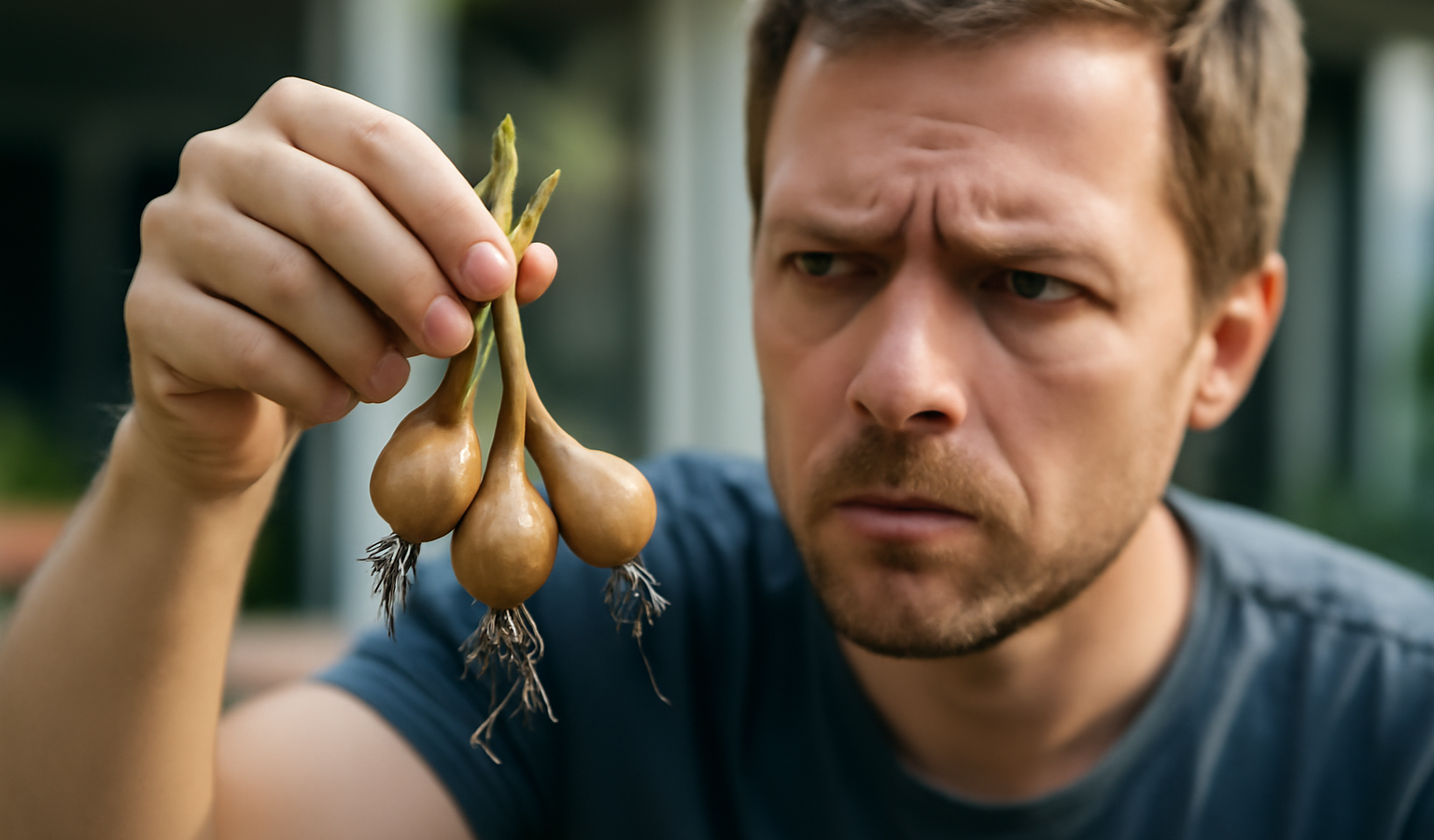
If your onions are coming out the size of golf balls instead of softballs, the single most common reason is that you planted the wrong day-length type for your latitude, so the bulbs never got the daylength signal they needed to size up. Other big offenders are starting too late, crowding plants too close together, running short on nitrogen during leaf growth, and bolting brought on by stress or temperature swings. An onion builds its bulb from the energy stored in its leaves, so anything that limits leaf growth before bulbing, or cuts bulbing short, leaves you with small onions. Below we walk through the five usual causes, how to tell which one is hitting your patch, and exactly how to fix each one for a bigger harvest next season.
Key Takeaways
- Bulb size is driven by leaf count: every healthy leaf becomes a ring, so big tops before bulbing mean big bulbs.
- Match the day-length type to your latitude: short-day below ~35 degrees, long-day above ~37, day-neutral in between.
- Plant early: sets or transplants in early spring (or fall in mild climates) give onions time to grow tops before daylength triggers bulbing.
- Space plants 4 to 6 inches apart, feed nitrogen every 2 to 3 weeks until bulbing starts, and give about 1 inch of water weekly.
- Stop feeding once bulbs swell, keep weeds out, and avoid cold spells that trigger bolting, which kills bulb size.
Cause 1: The Wrong Day-Length Type for Your Latitude
This is the big one, and it surprises most gardeners. Onions are photoperiodic, which means they decide when to stop growing leaves and start forming a bulb based on the length of the day. Each variety is bred to begin bulbing at a specific daylength. Short-day onions start bulbing when days reach about 10 to 12 hours, long-day onions wait until days hit roughly 14 to 16 hours, and day-neutral (also called intermediate) onions bulb somewhere around 12 to 14 hours regardless of latitude. If you grow a short-day onion in the far north, it bulbs the moment spring days lengthen past 12 hours, long before the plant has built a big leafy top, so you get a tiny bulb. Grow a long-day onion in the Deep South and the days may never get long enough to trigger proper bulbing at all.
How to diagnose it
Check the variety name and packet against your latitude. Roughly speaking, gardeners south of about 35 degrees latitude (think Texas, Florida, the Gulf Coast, Southern California) need short-day onions. Gardeners north of about 37 degrees (the northern half of the US and most of Canada) need long-day types. In the band between those lines, day-neutral or intermediate onions perform best. If you bought a generic bag of “onion sets” at a big-box store with no day-length listed, that is a strong clue you may have the wrong type, since those are often whatever was cheapest to source. Small bulbs combined with otherwise healthy, green plants point straight at a daylength mismatch.
How to fix it
Buy named varieties matched to your region from a seed company that lists the day-length type. In the South, look for short-day varieties like Texas Early Grano, Yellow Granex, or Red Burgundy. In the North, choose long-day types such as Walla Walla, Yellow Sweet Spanish, or Copra for storage. In the middle latitudes, day-neutral varieties like Candy or Superstar give big bulbs across a wide range. Getting this one decision right often doubles your bulb size with no other changes. If you are unsure of your latitude band, a quick map check or a call to your local extension office will settle it.
Cause 2: Planting Too Late or Getting a Slow Start
Onions grow their leafy tops first and only later convert that growth into a bulb. Once the daylength trigger hits, the plant stops making new leaves and pours everything into swelling the bulb. The number of leaves the plant has built by that moment caps the eventual size, because each leaf feeds one ring of the onion. If you plant late, the daylength signal arrives before the plant has had time to grow a large top, and you simply run out of runway. A late start is one of the most common reasons otherwise correct varieties produce small bulbs.
How to diagnose it
Think back to when your onions went in the ground relative to your last spring frost, and how big the tops were when they began bulbing. If the plants were still short and thin (pencil-sized or smaller) when the bulbs started to swell at the base, you started too late. Spring-planted onions that went in during late spring or early summer, rather than as early as the soil could be worked, are prime suspects. Plants that never developed more than five or six leaves before bulbing will produce correspondingly small onions.
How to fix it
Plant as early as your climate allows. In most regions, that means setting out transplants or sets in early spring, four to six weeks before your last expected frost, since young onions tolerate light frost well. In mild-winter areas (zones 8 and warmer), short-day onions are best planted in fall so they grow a big top over winter and bulb the following spring, which is how growers in the South get jumbo bulbs. Starting from seed indoors 8 to 10 weeks before transplanting gives you the earliest, strongest plants. The goal is a vigorous top with as many leaves as possible before the days reach bulbing length.
Cause 3: Overcrowding and Tight Spacing
A bulb onion needs physical room to expand, and it also competes with its neighbors for light, water, and nutrients. When onions are packed too tightly, they shoulder against each other and never reach full diameter, no matter how good your variety or timing is. This is an easy mistake to make because onion seedlings and sets are small going in, and the empty bed looks like it can hold far more than it should. The result is a dense row of small, sometimes misshapen bulbs.
How to diagnose it
Measure the gap between your plants. If onions destined for full-size bulbs are sitting closer than about 4 inches apart, crowding is limiting them. Bulbs that are flat-sided where they pressed against a neighbor, or a row that looks like a solid mat of tops, confirm it. Note that this only applies to bulbing onions: if you intended to harvest green onions, tight spacing is fine and even desirable, which is one reason it helps to know the difference between the two crops.
How to fix it
Space bulbing onions 4 to 6 inches apart in rows 12 to 18 inches apart. If you plant thicker to hedge your bets, thin progressively and eat the thinnings as scallions until the keepers stand at the right spacing by the time bulbing begins. Pull every other plant once they reach pencil thickness, then pull again a few weeks later. For an easy explanation of how green onions and scallions relate to your bulb crop, see our guide on scallions versus green onions, which makes it clear why those thinnings are worth keeping.
Cause 4: Not Enough Nitrogen Early (or Weed Competition)
Because bulb size depends on leaf growth, and leaf growth depends on nitrogen, an underfed onion makes a small bulb. Onions are shallow-rooted and not strong competitors, so they need steady nitrogen during the leaf-building phase and they suffer badly when weeds steal it from them. The catch is timing: you want generous nitrogen while the tops are growing, but you want to ease off once bulbing begins, because late nitrogen pushes soft top growth and thick necks that store poorly instead of fat bulbs.
How to diagnose it
Pale, yellowish-green, or slow-growing tops during the leaf phase signal a nitrogen shortage, especially on sandy soils that leach quickly or in beds that were not amended. Look also at your weed pressure: if grasses and broadleaf weeds have crowded in around the shallow roots, they are likely outcompeting your onions for both nitrogen and water. Stunted plants surrounded by lush weeds are a clear sign the onions lost the contest.
How to fix it
Work compost or a balanced fertilizer into the bed before planting, then side-dress with a nitrogen source every 2 to 3 weeks during active leaf growth. Stop feeding nitrogen as soon as the bulbs start to swell and the soil cracks around the shoulders, so the plant shifts its energy into the bulb. Keep the bed weed-free with shallow, frequent cultivation or a light mulch, taking care not to disturb the shallow onion roots. Consistent feeding through the top-growth window is one of the highest-payoff habits for big onions; for more on building healthy beds and feeding routines, browse our Plants & Flowers growing hub.
Cause 5: Inconsistent Water and Bolting
Onions have sparse, shallow roots and resent both drought and waterlogging. Erratic watering stresses the plant and stalls bulb growth, leaving you with small, sometimes split or double bulbs. Worse, stress and temperature swings can trigger bolting, where the onion sends up a flower stalk. A bolted onion has decided to make seed instead of a bulb, so it diverts energy away from the bulb and produces a small, woody onion with a tough central stem that will not store. Bolting is commonly caused by a cold snap after planting (which the plant reads as a passing winter) or by big heat-and-stress swings.
How to diagnose it
If you see thick, round flower stalks shooting up from the center of the plant, that onion has bolted and the bulb will stay small. Bulbs that are small and have a hard, woody plug running through the middle confirm past bolting even after the stalk is cut. For water issues, look for tops that wilt in the afternoon, soil that swings between bone-dry and soggy, or bulbs that have split into two. Planting oversized sets (larger than a dime in diameter) also raises bolting risk, since big sets are more likely to read cold weather as a trigger.
How to fix it
Give onions about 1 inch of water per week, more in hot or sandy conditions, aiming for steady moisture rather than feast-or-famine. A mulch helps buffer the soil and keep it evenly moist. To limit bolting, plant small sets (dime-sized or smaller), avoid setting plants out so early that they sit through a hard cold spell, and choose bolt-resistant varieties suited to your area. If a few plants do bolt, snap off the flower stalks and use those onions fresh right away, since they will not size up or keep in storage.
Prevention: Setting Up for Big Bulbs Next Season
The biggest onions come from getting a handful of decisions right before the first plant goes in the ground. Start with the variety: pick a named onion matched to your latitude (short-day in the South, long-day in the North, day-neutral in the middle) and buy from a source that lists the day-length type. Plant as early as your climate allows, using transplants or small sets so the plant can grow a large, leafy top before the daylength trigger arrives. Space the keepers 4 to 6 inches apart, and prepare a loose, compost-rich bed in full sun, since onions need every hour of light they can get to drive leaf growth.
Through the growing season, feed nitrogen every 2 to 3 weeks while the tops are bulking, then stop once the bulbs begin to swell so energy moves into the bulb. Keep the bed weed-free and watered to a steady 1 inch per week, and use small sets and timely planting to dodge the cold spells that cause bolting. Treat the leaves as the engine of the whole crop: protect them from pests, disease, and competition, and the bulbs will follow. Do these things together and small onions stop being a mystery, because you have removed every common cause at once. For seasonal planting timing and companion ideas, the Plants & Flowers hub has more vegetable growing guides.
Frequently Asked Questions
Will small onions keep growing if I leave them in the ground longer?
Usually no. Once the daylength trigger has hit and the plant has stopped making new leaves, the bulb only grows as large as the existing tops can support. Leaving small bulbs in the ground past maturity tends to make them rot or rebound into new growth rather than enlarge, so it is better to harvest, use them fresh, and fix the underlying cause next season.
How do I know if I have short-day or long-day onions?
The day-length type should be printed on the seed packet or in the variety description. If you bought unlabeled sets, you can only guess, which is exactly why mismatches happen. As a rule of thumb, gardeners below about 35 degrees latitude want short-day onions, those above about 37 degrees want long-day, and those in between do best with day-neutral or intermediate types.
Does spacing really make that big a difference in bulb size?
Yes. Bulbing onions need 4 to 6 inches between plants to reach full diameter; closer than that and they physically crowd each other and compete for light and nutrients. Tighter spacing is fine only if you are growing green onions or scallions, where you harvest the slim stalks before any bulb forms.
Why did my onion send up a flower stalk?
That is bolting, and it usually follows a cold spell after planting or planting oversized sets that read the cold as a winter cycle. A bolted onion makes seed instead of a bulb, so it stays small and woody. Snap off the stalk, use that onion fresh soon, and next time plant smaller sets a little later to avoid the trigger.
When should I stop fertilizing my onions?
Feed nitrogen every 2 to 3 weeks while the tops are growing, then stop as soon as the bulbs begin to swell and the soil starts to crack around the shoulders. Late nitrogen pushes soft leaf growth and thick necks instead of bulb size, and it also hurts storage life, so the cutoff at bulbing is important.