

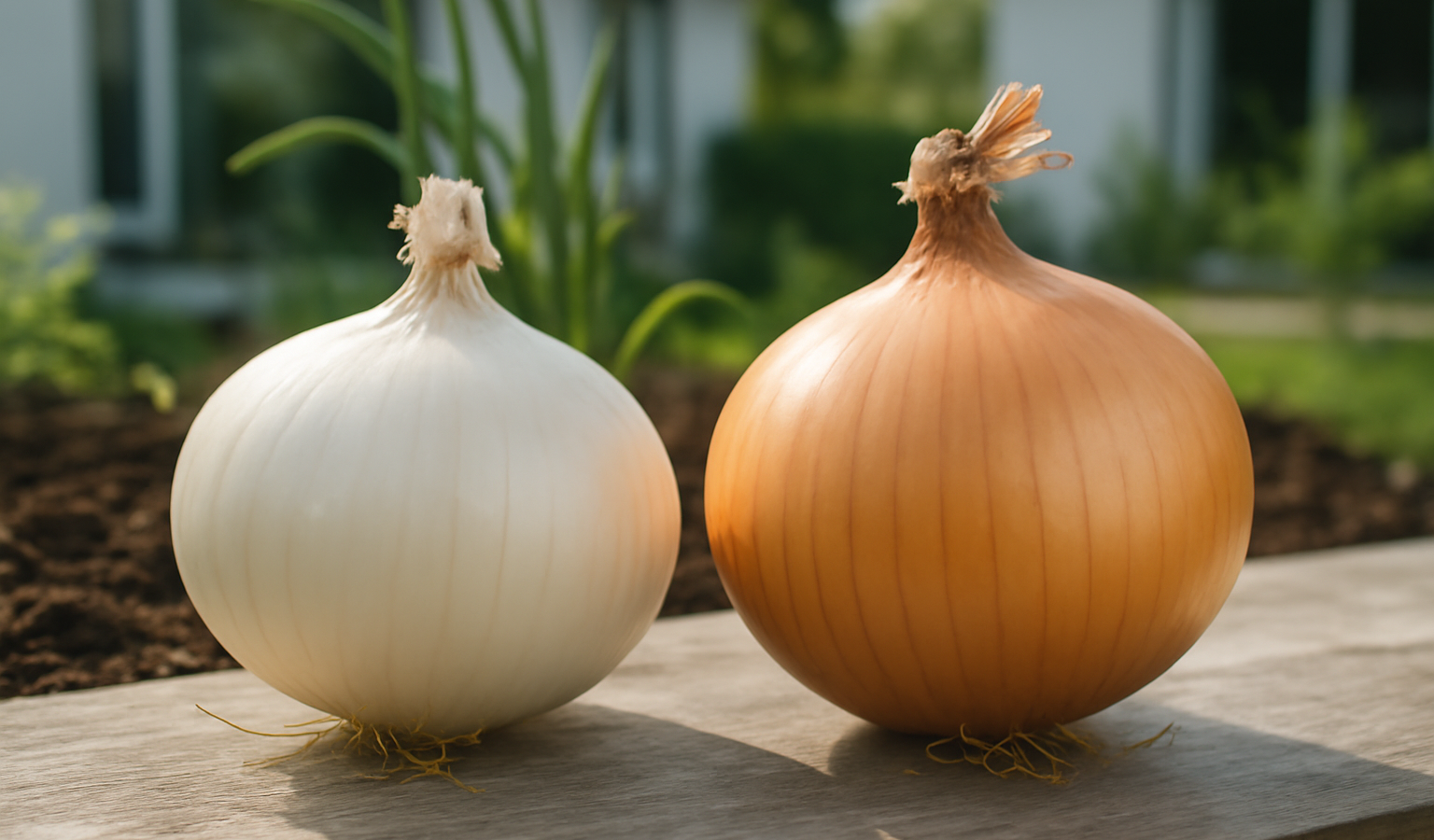
The short answer: yellow onions are the sweeter-when-cooked, longer-storing all-purpose workhorse most recipes mean when they just say “onion,” while white onions are sharper and cleaner raw, with thinner papery skin and a shorter shelf life. Both grow exactly the same way in the garden — the differences that matter for a home grower are storage life, flavor at different cooking stages, and which kind you actually reach for in the kitchen. The most important growing decision isn’t white versus yellow at all; it’s choosing the right day-length type for your latitude, which we’ll cover below.
Part of our Vegetable Gardening & Raised Beds guide →
In this guide
Key Takeaways
- Yellow onions are the all-purpose choice: balanced flavor, sweeten when cooked, and store 4–6+ months.
- White onions are sharper and crisper raw, with a milder cooked flavor and shorter storage (2–4 months).
- Both grow identically — the real choice is day length: long-day for the North, short-day for the South, day-neutral anywhere.
- Plant in early spring (sets or transplants) or fall in mild climates; onions need full sun and loose, fertile soil.
- Stop watering when tops fall over; cure in a dry, airy spot for 2–3 weeks before storing.
- Yellow stores longer, so grow more yellow if you want a winter pantry supply.
| Trait | Yellow Onions | White Onions |
|---|---|---|
| Raw flavor | Sharp, pungent | Sharp, clean, crisp |
| Cooked flavor | Sweet, rich | Milder, less sweet |
| Skin | Thick golden-brown | Thin papery white |
| Storage life | 4–6+ months | 2–4 months |
| Best raw use | Acceptable | Salsa, salads, tacos |
| Best cooked use | Caramelizing, soups, roasts | Stir-fry, quick sautés |
| Growing difficulty | Same | Same |
Yellow Onions: The All-Purpose Default
Yellow onions are the standard cooking onion in most of the world, and for good reason. Raw, they’re pungent and sharp, but their higher sugar content means they mellow and sweeten beautifully when cooked. They’re the onion you want for caramelizing — that slow, 40-minute transformation into jammy brown sweetness for French onion soup, burgers, or pizza. They also anchor soups, stews, roasts, and the basic flavor base (with carrot and celery) for countless dishes.
Their thick, papery golden-brown skin and dense, layered flesh make them excellent keepers, storing four to six months or longer in the right conditions. That makes yellow onions the smart choice if you’re growing for a winter pantry. Good storage varieties include ‘Yellow Globe’, ‘Patterson’ (a long-day type prized for storage), ‘Copra’, and the Southern short-day favorite ‘Texas Early Grano’. If you want a sweet specialty onion, types like ‘Walla Walla’ and ‘Vidalia’ are yellow but bred for mildness and low sulfur — note they store poorly and should be eaten within weeks.
White Onions: Sharper and Cleaner
White onions have a sharper, more straightforward bite raw and a crisper texture, with a cleaner “oniony” taste that doesn’t muddy delicate dishes. They’re the traditional onion in Mexican cooking — diced into salsa fresca, pico de gallo, guacamole, and piled on tacos — where their crispness and bright pungency are exactly what you want. They have a thin, papery white skin and flesh that tends to be slightly softer than a yellow onion’s.
Cooked, white onions turn tender and mild faster than yellows but don’t develop the same deep caramel sweetness, so they’re better suited to quick sautés, stir-fries, and dishes where you want the onion to soften without dominating. The trade-off for that thin skin and higher water content is storage: white onions keep only two to four months and bruise more easily. Common varieties include ‘White Sweet Spanish’, ‘Southport White Globe’, and the small ‘White Bermuda’. Because they don’t keep as long, plan to use white onions earlier in the season rather than stashing them for spring.
Day Length: The Choice That Actually Matters
Here’s the thing most beginners miss: whether your onions bulb at all depends far more on day-length type than on color. Onions form bulbs in response to the number of daylight hours, so you must match the variety to your latitude.
- Long-day onions (need 14–16 hours of daylight) are for northern gardens roughly above 37°N — think the upper half of the US. Examples: ‘Patterson’, ‘Walla Walla’, ‘Yellow Globe’.
- Short-day onions (bulb at 10–12 hours) are for the South, roughly below 35°N. Examples: ‘Texas Early Grano’, ‘White Bermuda’, most Vidalia types. Planted in fall and grown over winter in mild zones.
- Day-neutral (intermediate) onions bulb at 12–14 hours and perform across a wide middle band. Examples: ‘Candy’, ‘Superstar’. A safe bet if you’re unsure.
Plant a long-day onion in Florida and it will never get enough daylight to bulb; plant a short-day onion up north and it will bulb prematurely while still tiny. Both white and yellow onions come in all three day-length categories, so pick the day length for your zone first, then the color you prefer to cook with.
How to Grow Both (Identical Method)
White and yellow onions grow the same way. You can start from seed (12–14 weeks before transplanting, the cheapest and widest variety selection), from purchased transplants (easiest for beginners), or from sets — small dormant bulbs (most foolproof but limited varieties and slightly more prone to bolting). In cold climates, plant in early spring as soon as the soil can be worked. In mild-winter regions (zones 7+), short-day onions are planted in fall and overwinter for an early-summer harvest.
Onions demand full sun and loose, fertile, well-drained soil with a near-neutral pH of 6.0–7.0. Space plants 4–6 inches apart in rows 12–18 inches apart; closer spacing yields smaller bulbs. They’re shallow-rooted and need consistent moisture — about 1 inch per week — and they hate weed competition, so keep the bed clean or mulch lightly. Onions are heavy feeders: work compost in before planting and side-dress with a nitrogen source every few weeks until the bulbs start to swell, then stop, as late nitrogen delays maturity and softens skins. A drip line keeps water off the foliage; see our guide on how to install drip irrigation for an easy setup.
Harvest, Curing & Storage
Both types tell you when they’re ready the same way: the green tops flop over and begin to yellow and dry, usually 90–120 days after planting. Stop watering at that point to let the bulbs firm up. Loosen the soil and lift the bulbs on a dry day, then cure them — the step that determines how long they’ll keep. Lay them in a single layer in a warm, dry, airy spot out of direct sun (a covered porch or a shed with a fan) for two to three weeks until the necks are fully dry and the outer skins rustle like paper.
After curing, trim the roots and cut the tops to about an inch (or braid soft-neck types). Store in a cool, dark, dry place at 35–50°F with good air circulation — a mesh bag or open crate, never a sealed plastic bag. This is where the white-versus-yellow difference shows up in practice: cured yellow onions will hold four to six months or more, while whites are best used within two to four months. Thick-necked or bruised bulbs of either color won’t keep, so eat those first. For more vegetable storage tactics heading into the cold months, see our guide on how to winterize a vegetable garden.
Verdict: Which Onion to Grow
Grow yellow if you want one all-purpose, long-keeping onion
For most gardeners, yellow onions are the obvious main crop. They cover nearly every cooked use, caramelize like nothing else, and store through winter so your harvest actually lasts. If you can only grow one type, make it yellow — choose a dedicated storage variety in the right day length for your zone, and you’ll have onions in the pantry until spring.
Grow white if you eat a lot of raw onion and fresh dishes
If your kitchen leans toward salsa, tacos, ceviche, and crisp raw onion in salads and sandwiches, dedicate a row to white onions. Just plan to use them within a few months rather than expecting them to keep, and harvest your most damaged bulbs first.
Grow both for variety
Since they share identical care, planting a block of each costs you nothing extra in effort. A common split is two-thirds yellow for cooking and storage, one-third white for fresh use through summer and fall. Add a sweet variety like ‘Walla Walla’ for early eating and you’ll cover every onion need from a single bed.
Frequently Asked Questions
Can I substitute white for yellow onions in a recipe?
Usually yes. Use white where you want a sharper, cleaner flavor or in raw dishes; use yellow where you want sweetness from cooking, like caramelizing or soups. For most everyday recipes the swap is fine, just expect slightly less sweetness from white.
Which onion stores longer?
Yellow onions, by a wide margin. With proper curing they keep four to six months or more thanks to their thick skin and dense flesh. White onions have thinner skins and higher water content, so they generally last only two to four months.
Why didn’t my onions form bulbs?
Almost always a day-length mismatch — for example, growing a long-day variety in a southern garden that never reaches enough daylight hours. Too much shade, crowding, or late nitrogen can also stunt bulbing. Match the variety’s day-length type to your latitude.
When do I stop watering onions?
Stop once the green tops begin to fall over and yellow, signaling the bulbs are maturing. Withholding water then lets the bulbs firm up and the skins dry, which is essential for good curing and long storage. Lift them on a dry day.
Do white and yellow onions grow differently?
No. They have identical needs for sun, soil, spacing, water, and feeding, and the same harvest and curing process. The only growing variable that matters is choosing the correct day-length type (long-day, short-day, or day-neutral) for your region.