

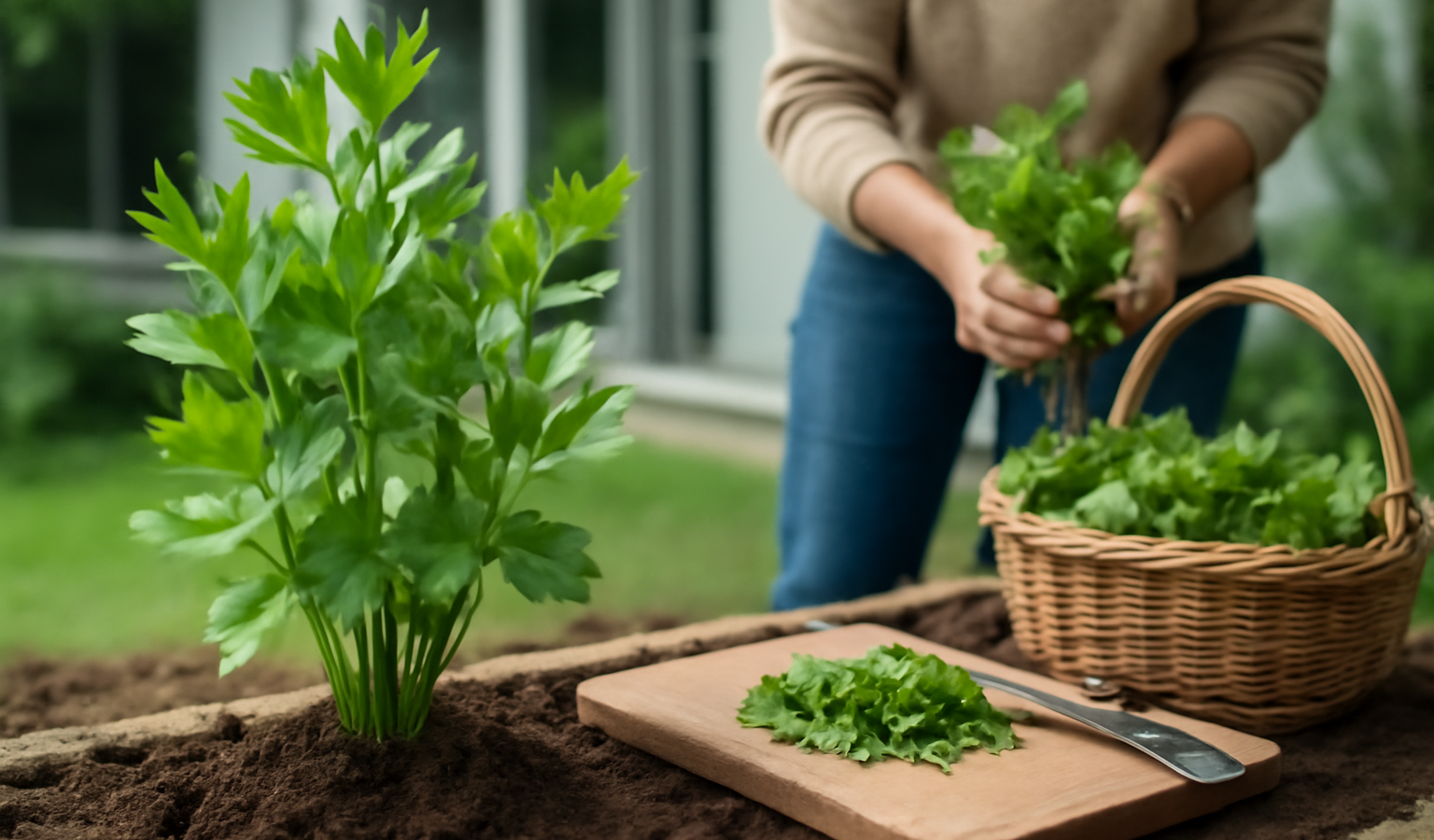
Lovage (Levisticum officinale) is the giant of the herb garden — a hardy perennial that returns bigger every spring and can tower to 6 feet by midsummer. Every part of it tastes like an intensified, slightly peppery celery: the glossy leaves, the hollow stems, the seeds, and even the root. One well-grown plant supplies a household with celery flavor all season, which is exactly why this old-fashioned cottage-garden herb deserves a comeback. It is also one of the easiest perennials you can grow, asking only for decent soil, regular moisture, and a spot where its considerable size will not crowd smaller plants. This guide walks through choosing a planting site, starting lovage from seed or division, ongoing care, when and how to harvest each part of the plant, and the many ways to use its powerful celery flavor in the kitchen.
Key Takeaways
- Lovage is a hardy perennial in USDA zones 3 to 9 that dies back in winter and returns each spring for 5 to 10 years.
- Give it full sun to part shade, rich moist soil, and plenty of room — it reaches 4 to 6 feet tall and 3 feet wide.
- Start from seed in spring (it needs light to germinate) or divide an established crown in early spring or fall.
- Every part tastes of concentrated celery: harvest tender leaves and stems young, and use them sparingly.
- Cut leaves regularly to keep new growth coming; remove flower stalks unless you want seeds.
- One plant is plenty for most households — the flavor is strong and the plant is large.
- Use fresh leaves in soups, stocks, salads, and potato dishes; dry leaves and save seeds for winter.
What Is Lovage and Why Grow It?
Lovage is a tall, clump-forming perennial herb in the same family as celery, carrots, parsley, and dill. Its dark-green, divided leaves resemble flat-leaf celery, and in early to midsummer it sends up hollow stems topped with flat umbels of tiny greenish-yellow flowers, much like dill or fennel. The whole plant carries a strong, warm, celery-meets-anise flavor that is considerably more potent than celery itself, so a little goes a long way.
The case for growing it is simple: it is a true perennial that comes back for years from a single planting, it is fully cold-hardy, it is virtually pest-free, and it gives you celery flavor without the fuss of growing actual celery, which is notoriously demanding. Tuck it at the back of a border or in a dedicated corner of the herb bed where its height becomes an asset rather than a problem. If you enjoy growing other umbel-family herbs, lovage pairs naturally with the dill and fennel you may already grow.
Choosing a Site and Soil
Lovage is hardy in USDA zones 3 through 9 and is genuinely undemanding, but a little planning pays off because the plant is large and long-lived — you will not want to move it later. Choose a spot in full sun to partial shade. In hot southern climates, afternoon shade keeps it from bolting and scorching in summer; in cool northern gardens, full sun produces the lushest growth.
The ideal soil is deep, fertile, and rich in organic matter, holding moisture without becoming waterlogged. Work several inches of compost into the bed before planting, since lovage is a heavy feeder that will occupy the same ground for years. It tolerates a wide pH range but does best between 6.0 and 7.0. Because a mature plant reaches 4 to 6 feet tall and up to 3 feet wide, give it ample space and position it at the back of the bed where it will not shade out smaller herbs and vegetables.
Planting Lovage from Seed
Lovage grows readily from seed, and fresh seed germinates best — viability drops quickly with age, so use seed less than a year old. Sow in early spring. You can start indoors 6 to 8 weeks before the last frost or sow directly in the garden once the soil has warmed.
- Press seeds onto the surface of moist soil or seed-starting mix and barely cover them — lovage needs light to germinate, so do not bury the seed deep.
- Keep the medium consistently moist at around 60 to 70°F.
- Expect germination in 10 to 20 days; be patient, as it can be erratic.
- Thin or transplant seedlings to stand at least 2 to 3 feet apart, allowing for the plant’s eventual width.
- Harden off indoor-started seedlings before transplanting after the last frost.
Plants started from seed usually reach harvestable size in their first season and full mature stature in their second year.
Dividing an Established Plant
If a friend grows lovage, division is the fastest route to a productive plant. In early spring or fall, dig up an established crown and split it into sections, making sure each piece has both roots and at least one growth bud. Replant the divisions promptly at the same depth, water well, and they will establish quickly. Dividing every few years also keeps an aging clump vigorous.
Watering, Feeding and Ongoing Care
Lovage likes steady moisture. Water regularly so the soil stays evenly moist but never soggy, especially during dry spells and through the heat of summer, providing roughly an inch of water per week. A 2- to 3-inch layer of organic mulch around the base conserves moisture, suppresses weeds, and feeds the soil as it breaks down. Dry, stressed plants are more likely to bolt and turn bitter.
As a heavy feeder occupying the same spot for years, lovage benefits from an annual spring topdressing of compost or a balanced organic fertilizer to fuel its vigorous growth. Each autumn the plant dies back to the ground; simply cut the spent stalks down and mulch over the crown in cold climates. It re-emerges reliably the following spring. The same moisture-and-compost routine suits most leafy perennial herbs in the Plants & Flowers hub.
Flowering and Managing Self-Seeding
In its second year and beyond, lovage sends up tall flowering stalks in early to midsummer. Whether you let it flower depends on your goal. If you want to harvest seeds for cooking or sowing, leave the umbels to mature and dry on the plant. If you want to maximize tender leaf production and prevent unwanted volunteers, cut the flower stalks off as they appear — this redirects the plant’s energy into fresh leaf growth and keeps the foliage milder and more usable.
Lovage self-seeds readily if you let the flowers go to seed, so deadhead before the seeds scatter if you do not want seedlings popping up around the garden. The volunteers are easy to pull or transplant when young.
How and When to Harvest
Lovage is generous, and you can harvest different parts throughout the season:
- Leaves: Pick young, tender leaves from spring through fall. They are most flavorful before the plant flowers; older leaves grow tough and stronger-tasting. Harvest from the outside of the clump and cut regularly to encourage a steady supply of fresh growth.
- Stems: Cut the young, hollow stems while still tender. Like celery stalks, they can be eaten raw, cooked, candied, or even used as edible drinking straws for a Bloody Mary or tomato juice.
- Seeds: Let a few flower umbels mature and turn brown, then snip the heads and dry them on a tray. Rub off the seeds and store them airtight; use whole or ground like celery seed.
- Root: In fall of a plant’s second or third year, you can dig a portion of the thick taproot to use as a vegetable or dry for tea, though most gardeners grow lovage mainly for its leaves.
To preserve the harvest, dry leaves in a dehydrator or a warm, airy spot out of direct sun, then crumble and store airtight; lovage also freezes well chopped into ice-cube trays with a little water.
Culinary Uses in the Kitchen
Think of lovage as super-concentrated celery, and use it accordingly — sparingly at first, since its flavor can overwhelm a dish. The chopped leaves are superb in soups, stews, broths, and stocks, where they add a savory, herbal celery depth; a single leaf transforms a pot of vegetable or chicken soup. They also brighten potato salad, egg dishes, green salads, and homemade salad dressings.
The hollow stems work as a celery substitute in cooking or as a garnish, the dried leaves season winter dishes when fresh celery is scarce, and the seeds can be used anywhere you would use celery seed — in breads, pickles, salad dressings, and spice rubs. Blanched young leaves can even be tossed into stir-fries. Because lovage is a relative of celery, anyone with a celery allergy should approach it with the same caution. Used with a light hand, though, it is one of the most rewarding savory herbs you can grow, and it pairs beautifully with the other culinary herbs covered throughout the Plants & Flowers hub.
Frequently Asked Questions
Does lovage come back every year?
Yes. Lovage is a hardy perennial in USDA zones 3 to 9. It dies back to the ground in winter and re-emerges from the crown each spring, remaining productive for roughly 5 to 10 years before it benefits from division.
What does lovage taste like?
It tastes like an intense, slightly peppery and anise-tinged version of celery. The flavor is much stronger than celery, so use small amounts. Every part of the plant — leaves, stems, seeds, and root — carries this concentrated celery character.
How big does a lovage plant get?
A mature plant reaches 4 to 6 feet tall and up to 3 feet wide, with flower stalks sometimes topping 6 feet. Give it plenty of room at the back of a bed where its height is an asset rather than a problem.
Should I let my lovage flower?
Only if you want seeds. Removing the flower stalks as they appear redirects energy into tender leaf growth, keeps the leaves milder, and prevents prolific self-seeding. Leave a few umbels to mature if you want to harvest or save seed.
How do I use lovage in cooking?
Use it like concentrated celery, sparingly. The leaves shine in soups, stocks, stews, potato salad, and dressings; the hollow stems substitute for celery; and the seeds work like celery seed in breads and pickles. Start with a small amount and add more to taste.