

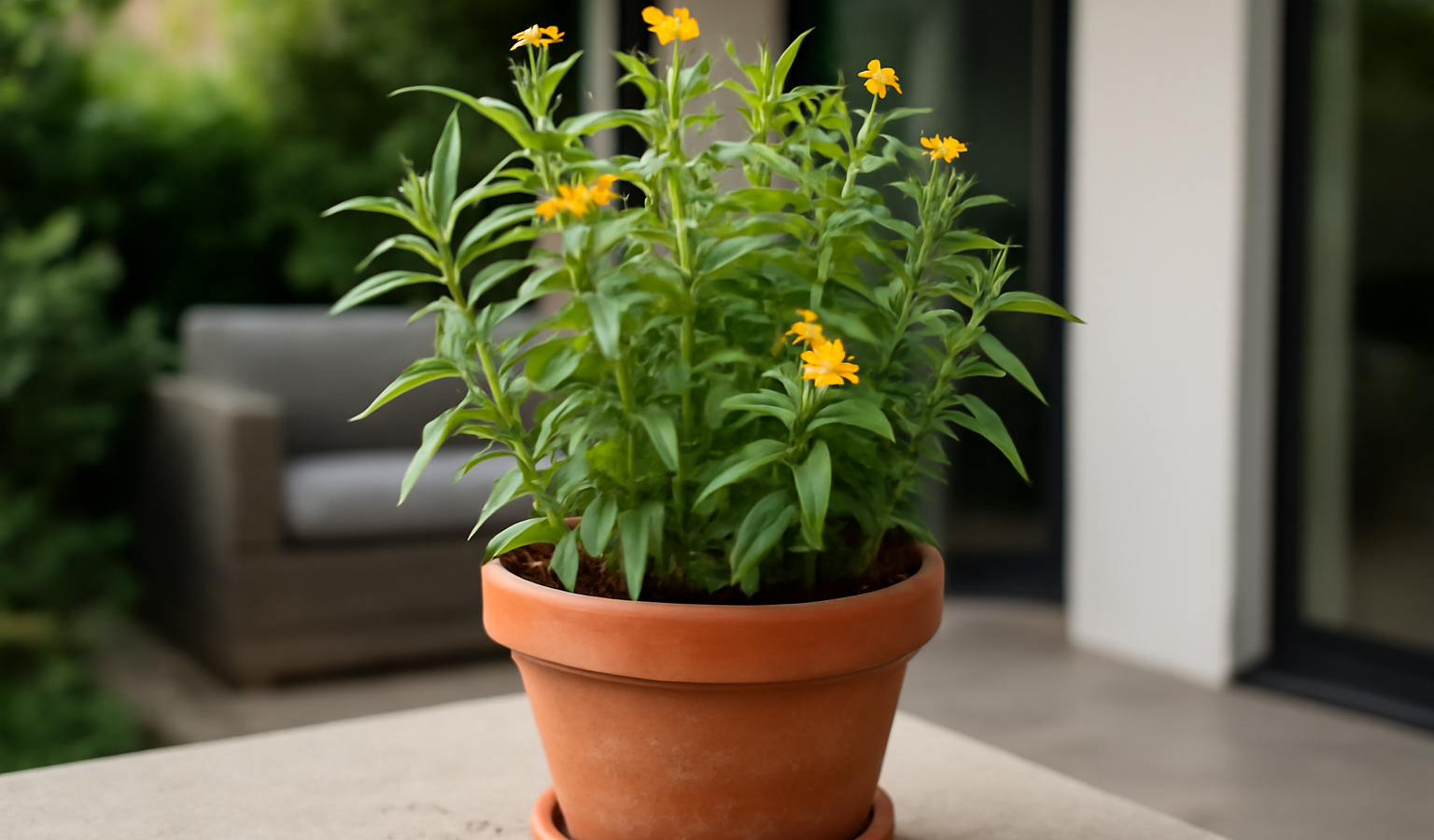
Mexican tarragon (Tagetes lucida) is the herb to grow if French tarragon keeps melting in your summer heat. A member of the marigold family, it delivers a remarkably similar sweet, anise-licorice flavor to true tarragon but thrives in exactly the hot, humid, sunny conditions that French tarragon hates. It is a tough, pest-resistant perennial in warm zones, doubles as an ornamental thanks to its cheerful clusters of small golden-yellow flowers in late summer and fall, and asks for almost nothing once established. If you cook with tarragon — chicken, fish, vinegars, dressings — and live anywhere warm, this is a near-effortless way to keep that flavor in your garden year-round.
In this guide
Key Takeaways
- Heat-loving substitute: Tastes like French tarragon but thrives in heat and humidity, where French tarragon fails.
- Perennial in warm zones: Hardy in USDA zones 8–11; grown as an annual or container plant in colder areas.
- Full sun, lean soil: Wants 6+ hours of sun and well-drained soil; tolerates poor ground and drought.
- Culinary use: Use leaves fresh or dried in chicken, fish, vinegars, teas, and dressings — flowers are edible too.
- Low-maintenance: Pest-resistant like its marigold cousins; pinch to keep it bushy.
What Mexican Tarragon Is
Mexican tarragon goes by many names — Mexican mint marigold, Texas tarragon, sweet mace, yerbanís, and Spanish tarragon. It is native to Mexico and Guatemala, where it has a long history both as a culinary herb and a traditional medicinal and ceremonial plant used by the Aztecs. The plant forms an upright clump 18 to 30 inches tall with narrow, glossy, dark-green leaves that release a sweet anise scent when crushed. In late summer and fall it crowns itself with clusters of small, single golden-yellow marigold flowers. Because it is a true marigold relative, it carries the family’s natural pest resistance, which is part of why it is so easy to grow.
Why Choose It Over French Tarragon
French tarragon (Artemisia dracunculus) is the classic culinary tarragon, but it is fussy: it dislikes heat and humidity, struggles in zones 8 and warmer, must be grown from cuttings or division (its seed is sterile or inferior), and tends to languish in southern summers. Mexican tarragon solves all of that. It powers through heat and humidity, can be grown easily from seed, and comes back reliably as a perennial in warm climates. The flavor is comparable — some find Mexican tarragon a touch sweeter and stronger — so for hot-climate gardeners it is simply the more practical choice. For cooler northern gardens, French tarragon remains an option, but Mexican tarragon still works well as a sun-loving annual.
Climate and Zones
Mexican tarragon is a tender perennial hardy in USDA zones 8 through 11, where it survives mild winters and resprouts from the root each spring. In zones 7 and colder it is grown as a warm-season annual or in containers that move indoors before frost. It loves heat and full sun and shrugs off the humidity that troubles many herbs. It is short-day sensitive for flowering, blooming as days shorten in late summer and fall, which is why the golden flowers appear toward season’s end.
Planting
You can start Mexican tarragon from seed, cuttings, division, or nursery plants. Sow seed indoors 6 to 8 weeks before the last frost, pressing the fine seed onto the surface of moist mix and barely covering it, since it benefits from light to germinate; expect sprouts in one to two weeks at 70°F. Transplant out after frost danger passes once the soil is warm. Stem cuttings root readily in summer, and established clumps can be divided in spring.
Plant in full sun — at least 6 hours, and more is better — in well-drained soil. It is not picky about fertility and actually develops better flavor in lean-to-average soil; overly rich ground produces lush but weaker-tasting leaves. A neutral pH around 6.0 to 7.5 is fine. Space plants 12 to 18 inches apart. It grows happily in containers of at least 8 to 10 inches, which is the easiest way to overwinter it indoors in cold regions.
Watering and Feeding
Once established, Mexican tarragon is notably drought-tolerant. Water young plants regularly until their roots take hold, then water only when the top inch of soil dries — about once a week in the ground, more often for containers in heat. The one thing it will not tolerate is soggy, poorly drained soil, which causes root rot, so err on the dry side.
Feeding needs are minimal. A single application of compost or a light, balanced organic fertilizer in spring is plenty. Avoid heavy nitrogen feeding, which produces floppy growth and dilutes the essential oils that give the leaves their flavor and aroma. Treat it lean and it will reward you with more intense taste.
Pruning and Maintenance
Pinch the growing tips when plants are young to encourage a bushy, compact habit rather than a leggy stem. Regular harvesting does most of this work for you. In warm zones where it overwinters, cut the plant back hard after flowering or in late winter to refresh it; it will push vigorous new growth in spring. Mulch the base in borderline zones to help the roots through cold snaps. Plants tend to get woody and less productive after a few years, so divide or replace them every two to three years to keep the harvest tender and flavorful.
Harvesting and Culinary Uses
Begin harvesting once plants are established and well-leafed, usually a couple of months after transplanting. Snip sprigs as needed, taking no more than about a third of the plant at once so it keeps regrowing. Flavor is best in leaves harvested before the plant flowers heavily, and morning harvesting, after the dew dries, captures the strongest aroma.
Use Mexican tarragon anywhere you would use French tarragon. It shines with chicken, fish, and egg dishes, in béarnaise-style sauces, infused into vinegars and oils, whisked into salad dressings, and steeped as a pleasant anise tea. Both the leaves and the edible flowers can garnish plates and salads. Fresh is best, but it dries and freezes well — dry sprigs in a dark, airy spot and store the crumbled leaves in an airtight jar, or freeze chopped leaves in oil. The flowers also make a charming, edible garnish.
Overwintering in Cold Zones
If you garden in zone 7 or colder, the easiest way to keep a plant going from year to year is to grow it in a container and bring it inside before the first frost. In late summer, pot up a healthy plant (or root a few cuttings) into an 8- to 10-inch pot of free-draining mix. Cut it back by about a third, move it to the brightest window you have or under a grow light, and water sparingly — the plant rests over winter and rots easily if kept wet in low light. It will look sparse and may drop leaves; that is normal. As days lengthen in spring, it perks up, and you can take fresh cuttings or move the whole pot back outdoors after the last frost. Alternatively, simply treat it as an annual: it grows fast enough from a spring transplant to give a full season of harvest before fall frost ends it.
In its hardy range, zones 8 through 11, an established clump needs little winter help. A layer of mulch over the crown protects the roots through occasional cold snaps, and the plant resprouts from the base in spring even if a frost knocks back the top growth. This reliability is one of the reasons hot-climate cooks favor it: plant it once and it tends to keep coming back, often spreading slowly into a generous clump you can divide and share.
Pests, Problems, and Companion Planting
Thanks to its marigold heritage, Mexican tarragon is one of the most pest-resistant herbs you can grow, and its scent may even help deter some insect pests from neighboring plants, making it a useful companion in the vegetable garden. The few problems that occur are almost always related to wet feet: root rot and fungal issues from overwatering or heavy soil. Improve drainage, water less, and space plants for airflow to avoid them. Occasionally spider mites appear in hot, dry indoor conditions over winter — rinse the foliage and raise humidity. Otherwise this herb is about as carefree as they come.
For hot-climate cooks, Mexican tarragon is a genuine upgrade: the tarragon flavor you want, on a plant that actually wants to live in your garden. Plant it in sun, keep it lean and on the dry side, and harvest often. To round out a warm-climate herb bed, see our guide on growing epazote, and browse the Plants & Flowers hub for more herb and edible guides.
Frequently Asked Questions
Is Mexican tarragon a good substitute for French tarragon?
Yes. It has a very similar sweet, anise-licorice flavor and can be used in the same dishes — chicken, fish, vinegars, and dressings. Many cooks find it slightly sweeter and stronger, and it grows far more easily in hot, humid climates.
Is Mexican tarragon a perennial?
It is a tender perennial in USDA zones 8–11, resprouting from the root each spring. In zones 7 and colder it is grown as a warm-season annual or in a container that is moved indoors before frost.
How much sun does Mexican tarragon need?
Full sun — at least 6 hours a day, and more is better. It thrives in heat and tolerates poor soil and drought, but needs good drainage to avoid root rot.
When does Mexican tarragon flower?
It blooms in late summer and fall as the days shorten, producing clusters of small golden-yellow marigold flowers. The leaves have the best flavor when harvested before heavy flowering, and the flowers themselves are edible.
Can I grow Mexican tarragon in a container?
Yes, easily. Use a pot at least 8 to 10 inches wide with well-drained mix in full sun. Containers are the simplest way to overwinter the plant indoors in cold climates — just bring it in before the first frost.