

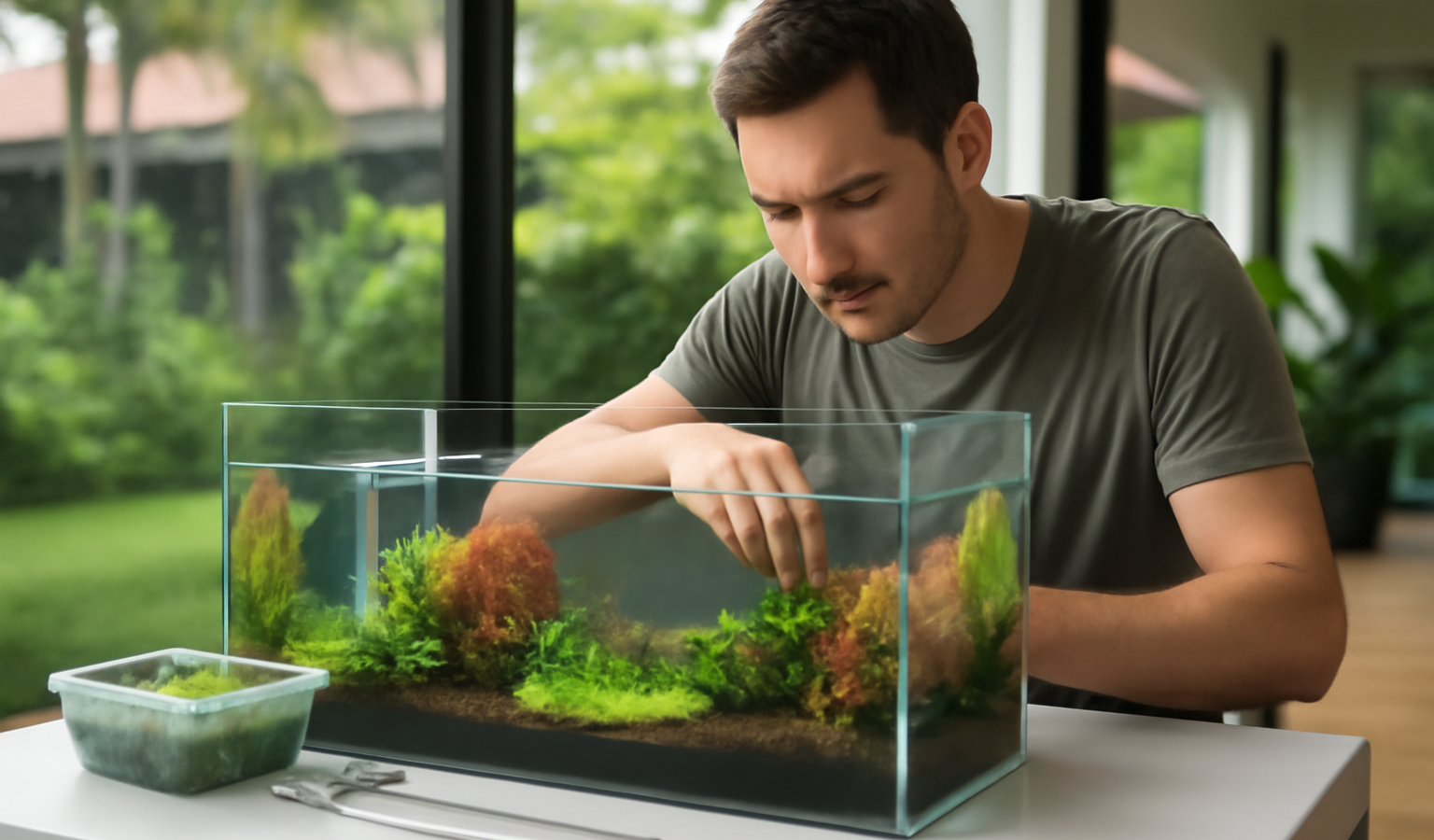
Setting up your first planted aquarium in Singapore is hugely rewarding, but the tropical climate, PUB tap water and tight HDB or condo spaces all shape how you should go about it. A planted tank done well becomes a self-balancing slice of nature on your shelf; done badly it turns into an algae-covered chore. This step-by-step guide walks you through tank size and placement, substrate, hardscape, lighting, filtration, the CO2 question, filling with dechlorinated water, planting order, cycling in our warm climate and choosing your first livestock, all with realistic SGD costs.
Key takeaways
- A low-tech planted tank can be set up for roughly S$250 to S$500, while a high-tech CO2 setup runs S$700 to S$1,500 or more.
- Aqua soil makes planting far easier for beginners, but inert gravel plus root tabs is a cheaper, lower-maintenance route.
- PUB tap water is fine for most plants and fish once dechlorinated, as it contains chlorine or chloramine that must be neutralised.
- Our warm water speeds up cycling, so a tank often cycles in three to four weeks, but it also accelerates algae if light and nutrients are unbalanced.
- Plant heavily from day one, go slow on livestock, and never add fish to an uncycled tank.
Choosing tank size and placement
Counter-intuitively, a slightly larger tank is more forgiving for a beginner than a tiny one. A bigger water volume dilutes mistakes and keeps temperature and water parameters stable, which matters in Singapore where an air-conditioned living room and a hot afternoon can swing room temperature noticeably. For most HDB and condo homes, a tank in the 30 to 60 litre range is the sweet spot: large enough to be stable, small enough to fit on a sturdy sideboard or dedicated stand.
Placement is just as important as size. Keep the tank away from direct sunlight, because our intense sun streaming through a window will fuel relentless algae blooms within days. Choose a spot away from windows, ideally near a power point, on furniture that can take the weight; water alone weighs about one kilogram per litre, so a full 60-litre tank with substrate and hardscape easily exceeds 80 kilograms. If you are completely new to the hobby, our aquascaping for beginners guide covers the fundamentals before you buy.
Substrate: aqua soil versus inert plus root tabs
Your substrate is the foundation of a planted tank, and the choice comes down to two routes. Aqua soil is a nutrient-rich, slightly acidic baked-clay substrate that feeds plants through their roots and gently softens the water. It makes plants establish quickly and is the easiest option for a first heavily planted tank, though it costs more and eventually exhausts its nutrients after a year or two. It also releases ammonia when new, which actually helps kick-start cycling.
The alternative is inert substrate such as fine gravel or sand, paired with root tabs pushed under heavy root-feeding plants. This is cheaper, never needs replacing and keeps water parameters neutral, but plants grow more slowly and you take on the job of dosing nutrients yourself. For a first low-tech tank with hardy plants, inert plus root tabs is perfectly viable; for a lush, fast-growing carpet, aqua soil earns its keep.
Hardscape and aquascaping the layout
Hardscape means the rocks and driftwood that form the bones of your aquascape. Arrange these before adding water, as they are awkward to reposition later. Driftwood pieces commonly sold at local fish shops (LFS) such as spider wood or Malaysian driftwood often float at first and may need soaking or weighting down for a week or two; they also release tannins that tint the water a tea colour, which is harmless and fades over time.
For a natural look, follow a simple principle: use an odd number of focal stones, avoid placing your main feature dead centre, and create a sense of depth by sloping substrate higher at the back. Be aware that some rocks raise water hardness and pH, so if you want soft water, stick to inert stones like seiryu alternatives or lava rock and rinse everything thoroughly before it goes in.
Lighting, filtration and the CO2 question
Light drives plant growth, so a decent LED aquarium light is essential, but more is not always better in our climate. A modest light running six to eight hours a day on a timer suits low-tech tanks and starves algae of the excess it craves. Only ramp up intensity and duration once you have strong plant mass and, ideally, CO2. High light without enough CO2 and nutrients is the fastest route to an algae disaster.
For filtration, a hang-on-back or small canister filter works well for most home tanks, while a simple sponge filter suits nano and shrimp setups. Aim to turn over your tank volume several times an hour, and avoid creating a surface storm that drives off CO2. This brings us to the big decision:
- Low-tech (no CO2) relies on hardy plants like anubias, java fern, cryptocoryne and various stems that tolerate low CO2. It is cheaper, simpler and slower-growing, ideal for a first tank.
- High-tech (pressurised CO2) injects carbon dioxide for fast, dense growth and carpeting plants, but adds the cost and fuss of a CO2 cylinder, regulator, diffuser and more frequent trimming and dosing.
Most beginners are happiest starting low-tech and upgrading later once the basics click. For plant choices suited to our conditions, see our best aquarium plants for Singapore guide.
SGD budget: low-tech versus high-tech
Costs vary with tank size and how much you buy new versus second-hand, but the table below gives realistic ranges for a roughly 40 to 60 litre first planted tank bought from local fish shops in Singapore.
| Item | Low-tech (SGD) | High-tech (SGD) |
|---|---|---|
| Tank and stand or cabinet | S$80 – S$200 | S$120 – S$300 |
| LED lighting | S$40 – S$120 | S$120 – S$350 |
| Filter (sponge / HOB / canister) | S$20 – S$100 | S$80 – S$250 |
| Substrate (inert + tabs / aqua soil) | S$25 – S$60 | S$50 – S$120 |
| Hardscape (wood and rock) | S$20 – S$60 | S$40 – S$120 |
| Plants (starter selection) | S$30 – S$80 | S$60 – S$200 |
| CO2 system (cylinder, regulator, diffuser) | Not needed | S$150 – S$400 |
| Dechlorinator, test kit, fertiliser, tools | S$30 – S$70 | S$50 – S$120 |
| Approximate total | S$250 – S$500 | S$700 – S$1,500+ |
Filling and dechlorinating PUB tap water
Singapore’s PUB tap water is clean and safe to drink, but it is treated with chlorine or chloramine to keep it that way, and both are harmful to fish, shrimp and beneficial bacteria. Before water touches livestock, you must neutralise these with a liquid dechlorinator, available cheaply at any LFS; a few drops per bucket is all it takes, and products that handle chloramine specifically are the safest choice.
When filling, pour slowly onto a plate or plastic bag laid over the substrate so you do not blast a crater in your scape or cloud the water. The good news is that PUB water sits at a moderate hardness that suits most common community fish and plants straight from the tap, so unlike keepers in some countries you rarely need reverse-osmosis water for a general planted community tank.
Planting order and the nitrogen cycle
Plant before you fully fill, or at a low water level, so you can see what you are doing. Work back to front: tall background stems first, then midground bushy plants, then foreground carpeting plants or low growers at the front. Use tweezers to push roots gently into the substrate, and plant densely from the start, since heavy planting outcompetes algae and gives the best results in our nutrient-rich warm water.
Once filled, your tank must cycle before any fish go in. Cycling is the process of growing beneficial bacteria that convert toxic ammonia into nitrite and then into far less harmful nitrate. You drive it by adding a source of ammonia, whether from aqua soil, a pinch of fish food or a bottled ammonia source, and waiting while the bacteria colonise your filter and substrate. A liquid test kit lets you watch ammonia rise and fall, then nitrite rise and fall, until both read zero.
Singapore’s warm water is an advantage here, as bacteria multiply faster in the heat, so a tank often cycles in around three to four weeks rather than the six to eight common in cold climates. Resist the temptation to rush; adding fish to an uncycled tank exposes them to ammonia burns and is the most common beginner mistake.
First livestock and ongoing care
Once your tank reads zero ammonia and zero nitrite, introduce livestock slowly and in small numbers. Hardy starters that do well in Singapore tanks include small schooling fish like rasboras and ember tetras, along with algae-eating cleanup crews such as otocinclus, nerite snails and cherry shrimp. Avoid the urge to fully stock on week one; add a few animals at a time so your filter can keep pace, and always acclimatise new arrivals slowly to your water. If shrimp appeal to you, our shrimp tank aquascaping guide goes deeper.
Ongoing care is straightforward once balanced: a weekly partial water change of around 20 to 30 percent with dechlorinated water, regular trimming to keep plants bushy and light reaching lower leaves, light feeding, and dosing liquid fertiliser if your plants show deficiencies. Trim stem plants by cutting and replanting the healthy tops, and remove dying leaves promptly so they do not rot and feed algae.
While this guide is all about indoor planted aquariums, if you have a garden or balcony and fancy something larger outdoors, take a look at our pond and water feature installation service instead.
Frequently asked questions
How much does a planted aquarium cost to set up in Singapore?
A simple low-tech planted tank costs roughly S$250 to S$500 all in, including tank, light, filter, substrate, hardscape, plants and basics. A high-tech tank with pressurised CO2 typically runs S$700 to S$1,500 or more depending on size and equipment.
Can I use PUB tap water for my planted tank?
Yes. PUB tap water suits most common plants and community fish, but it contains chlorine or chloramine, which you must neutralise with a liquid dechlorinator before adding livestock. Its moderate hardness means you rarely need RO water for a general community planted tank.
Do I need CO2 for a beginner planted tank?
No. Plenty of attractive low-tech tanks thrive without injected CO2 using hardy plants like anubias, java fern and cryptocoryne. CO2 speeds up growth and enables carpets, but it adds cost and maintenance, so most beginners start without it and upgrade later.
How long does it take to cycle a tank in Singapore?
Thanks to our warm water, beneficial bacteria establish quickly, so a planted tank often cycles in about three to four weeks rather than the six to eight common in cold climates. Always confirm with a test kit reading zero ammonia and zero nitrite before adding fish.
Why does my new planted tank keep getting algae?
Early algae usually comes from too much light, direct sunlight, excess nutrients or too few plants. Reduce your light to six to eight hours on a timer, move the tank away from windows, plant heavily, and avoid overfeeding. A cleanup crew of shrimp or otocinclus also helps.