

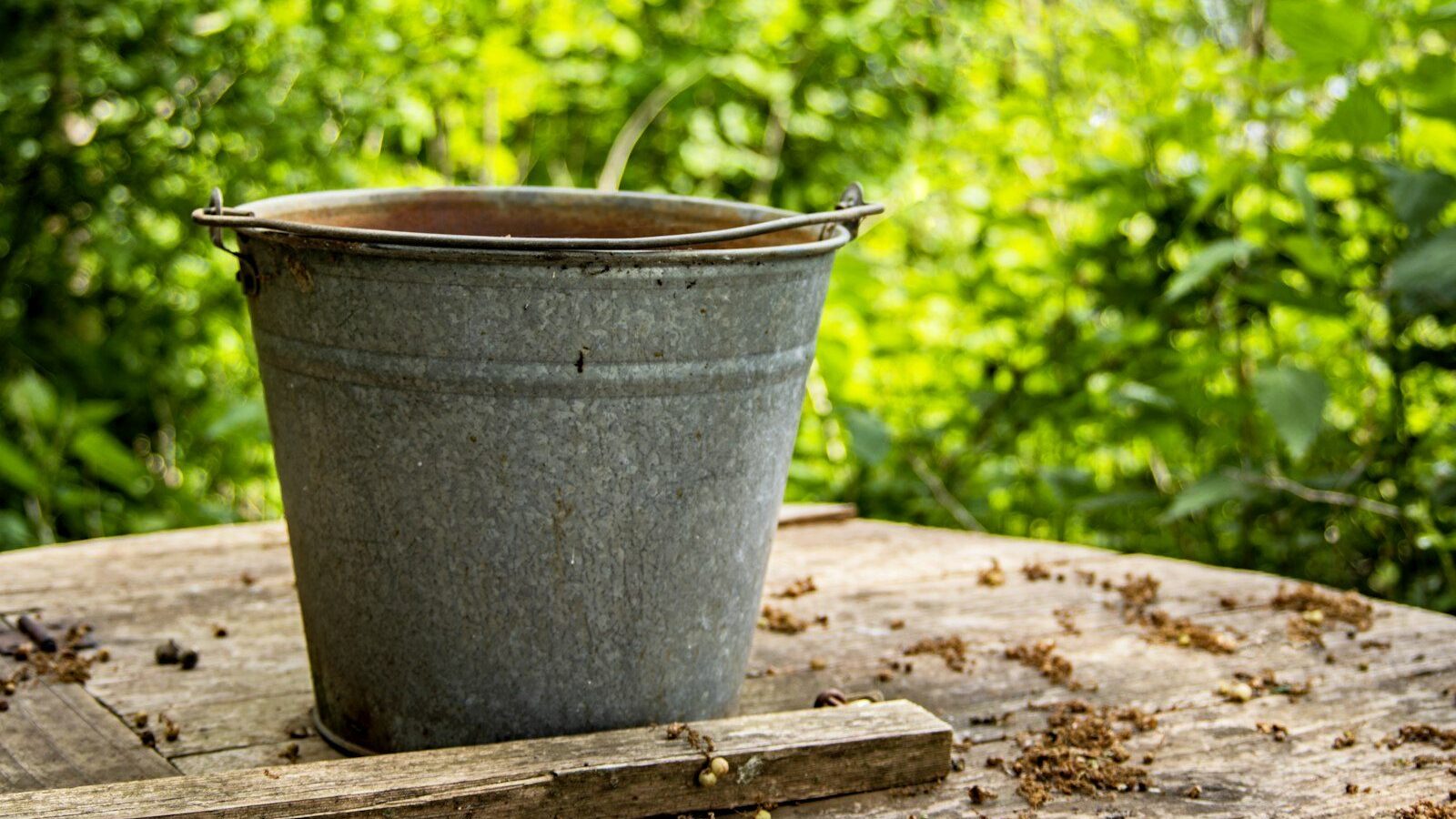
The easiest way to store food scraps for compost is a small lidded compost bucket on the counter or under the sink, emptied every two to four days, with a layer of dry “brown” material in the bottom and a carbon-filter lid to tame odor. If you only get to the pile weekly, or you hate fruit flies, freeze your scraps instead: a gallon bag or a dedicated bin in the freezer holds a week of scraps with zero smell. Everything else, from liners to bokashi, is a variation on those two ideas.
Part of our Composting & Soil guide →
In this guide
- Why Storage Matters More Than the Container
- Choosing a Kitchen Compost Container
- Freezing Scraps: The No-Smell Method
- Liners: Paper, Compostable or None
- Controlling Odor Between Trips to the Pile
- Stopping Fruit Flies
- What to Save and What to Skip
- Storage Setups for Different Households
- Getting Scraps Into the Pile the Right Way
- Frequently Asked Questions
Key Takeaways
- A 1- to 2-gallon kitchen compost container with a tight lid suits most households; empty it every 2 to 4 days in warm weather.
- Freezing scraps stops odor and fruit flies completely and lets you go a week or more between trips to the pile.
- Line the bottom with shredded paper or newspaper to soak up liquid, and rinse the bucket every time you empty it.
- Keep meat, dairy, oils and cooked food with sauces out of a backyard pile unless you use bokashi or a municipal program.
- Fruit flies come in on produce; a sealed lid, frequent emptying and covering scraps in the pile are the cure.
Why Storage Matters More Than the Container
Food scraps are wet and nitrogen-rich. Sealed in a container without air, they start to ferment and go anaerobic within a few days at room temperature, which is where the sour, rotten smell comes from. Leave them open and fruit flies lay eggs on them; the life cycle from egg to adult takes around a week in a warm kitchen, so a forgotten bucket can produce a swarm.
So the goals are simple: keep scraps cool or dry, limit how long they sit, and keep flies out. Any container that helps you do that works. A gorgeous ceramic crock you never empty will smell worse than a yogurt tub you rinse every other day. Good scrap storage is the first link in the chain our composting and soil guide follows from kitchen to garden bed.
Choosing a Kitchen Compost Container
The compost bucket is the default for most people. What to look for:
- Size: 1 to 1.5 gallons for one or two people, 2 gallons for a family that cooks most meals. Bigger is not better; a large bucket just means scraps sit longer.
- Lid: A tight-fitting lid is the most important feature. Lids with a replaceable charcoal filter let a little air in while absorbing odor; replace the filter every few months.
- Material: Stainless steel does not stain or hold odors and lasts for years. Ceramic looks good on a counter but is heavy and breakable. Plastic is light and cheap but can absorb smells over time. Bamboo-fiber bins look nice but can crack.
- Handle and shape: A sturdy bail handle and a wide mouth make emptying cleaner. Straight sides are easier to scrub than tapered ones.
- Dishwasher-safe: A container you can run through the dishwasher gets cleaned more often.
For specific models, see our roundup of the best countertop compost bins. Under-sink caddies and bins that hang on a cabinet door work well if counter space is tight; just make sure the cabinet is not next to the dishwasher vent or a hot pipe, which speeds up rotting.
Budget alternatives that work
A large yogurt or ice cream tub with its lid, a coffee can, a gallon pickle jar or a small trash can with a locking lid all work. The tradeoff is that plastic tubs eventually smell, so replace them every few months. Avoid open bowls on the counter, which are a fruit fly magnet.
Freezing Scraps: The No-Smell Method
Freezing is the best option if you compost weekly, live in an apartment and take scraps to a drop-off, or simply cannot stand fruit flies. Freezing also starts to break down plant cell walls, so thawed scraps decompose a little faster in the pile.
- Pick a container: a reusable silicone bag, a gallon zip bag you reuse, a paper bag, or a lidded plastic bin you keep only for scraps. Some people keep an open paper grocery bag in a chest freezer.
- Add scraps as you go. Cut large items like melon rinds and broccoli stalks into pieces so the container packs efficiently.
- On compost day, empty it straight into the pile or the collection cart. Frozen scraps tip out more easily if you let the container sit for ten minutes.
- Rinse and refreeze the container.
The only real drawback is freezer space. A family can fill a gallon a day in summer. If space is tight, freeze only the smelly or fly-prone material, such as fruit, melon rinds, onion skins and coffee grounds, and keep dry items like eggshells, paper towels and nut shells in a separate container at room temperature.
Liners: Paper, Compostable or None
Liners keep the bucket cleaner, but they add a step and sometimes cost. Your options:
- No liner: Cheapest and simplest. Put a handful of shredded paper or a folded sheet of newspaper in the bottom to absorb liquid, and rinse the bucket after emptying.
- Paper bags: Small kraft paper bags made for compost caddies hold up for a few days and break down quickly in a hot pile.
- Compostable plastic-like bags: These are made from plant-based polymers. Many need the sustained heat of an industrial composting facility to break down, so check whether your home pile or municipal program accepts them. Our explainer on what BPI certified compostable means covers the labels, and our best compostable bags roundup compares options.
- Regular plastic bags: Never put these in compost. If you use one to carry scraps, tip the scraps out and bin the bag.
Controlling Odor Between Trips to the Pile
Most odor problems come down to moisture and time. Practical fixes:
- Empty more often. Every two to three days in summer, every three to five days in winter. Set a routine, such as emptying it whenever you take out the trash.
- Layer browns. Add a handful of shredded paper, dry leaves, sawdust from untreated wood or torn egg cartons every day or two. This soaks up liquid and gives the pile a head start on its carbon needs.
- Drain wet items. Let coffee grounds and tea leaves drain in the sink strainer, and shake excess water off salad greens before tossing them in.
- Change the filter. Charcoal filters lose effectiveness over a few months. Most can be rinsed and dried once, then replaced.
- Wash the bucket. A quick rinse every time, and a scrub with hot soapy water or a splash of white vinegar weekly, prevents residue from building up.
- Sprinkle baking soda. A teaspoon in the bottom of a clean bucket helps neutralize acidic smells.
If the problem is the outdoor pile rather than the bucket, our guide to why compost smells walks through fixing a wet or unbalanced heap.
Stopping Fruit Flies
Fruit flies usually arrive as eggs on bananas, tomatoes and other ripe produce, so you cannot entirely prevent them, but you can stop them breeding in your scraps.
- Keep the lid closed every time. A gap of a few millimeters is enough for them to get in.
- Empty and rinse the bucket within a week at the latest, which interrupts the breeding cycle.
- Freeze fruit scraps, peels and rinds, which attract flies the most.
- Trap adults with a small jar of apple cider vinegar plus a drop of dish soap near the bucket.
- At the pile, bury fresh scraps under 4 to 6 inches of browns or finished compost so flies cannot lay eggs on them.
What to Save and What to Skip
What goes in the bucket depends on where it ends up. For a typical backyard pile or tumbler:
- Save: Fruit and vegetable scraps, coffee grounds and paper filters, tea leaves and plastic-free tea bags, eggshells (crushed), stale bread and plain grains in small amounts, nut shells, plain paper napkins and paper towels, wilted flowers.
- Skip: Meat, fish, bones, dairy, greasy food and cooking oil, which attract rodents and smell as they rot in a cool pile. Also skip pet waste, diseased plants, glossy paper, produce stickers and anything plastic.
- Exception: Many municipal curbside programs and bokashi systems accept meat, dairy and cooked food. Check your program’s list.
Bokashi is worth a look if you want to compost everything. It ferments scraps, including meat and dairy, in an airtight bucket with an inoculated bran, and the pre-compost is then buried or added to a pile. See our bokashi composting guide for the details.
Storage Setups for Different Households
Backyard composter, daily trips possible
A 1-gallon stainless bucket with a filter lid, emptied every couple of days, is all you need. Keep a bag of shredded leaves or cardboard by the pile to cover each deposit.
Weekly composter or long walk to the bin
Freeze fruit and wet scraps, and keep a small bucket for dry items. In winter, an unheated garage or a covered bin on the porch can act like a refrigerator, but watch for raccoons and rodents and use a container with a locking lid.
Apartment with a drop-off or curbside program
Use the freezer, or a lidded bucket lined with a liner your program accepts. Some cities provide a kitchen caddy; use it, since it is sized to their collection schedule.
Worm bin owner
Store scraps in the freezer, then thaw before feeding. Freezing and thawing softens the scraps so the worms process them faster, and it kills fruit fly eggs that would otherwise hatch in the bin.
Getting Scraps Into the Pile the Right Way
Storage is only half the job. When you empty the bucket, dig a small hole in the center of the pile, tip the scraps in, and cover them with browns. Aim for roughly two to three parts brown material by volume to one part food scraps. Chop large items or run a spade through them to speed things up. For the full process from start to finished compost, see how to make compost.
Frequently Asked Questions
How long can food scraps sit before composting?
At room temperature, two to four days is a good limit in summer and up to about a week in a cool kitchen in winter. In the freezer, scraps keep indefinitely, though most people empty them weekly to save space.
Can I store compost scraps in the refrigerator?
Yes. A lidded container in the fridge slows rotting and keeps flies away for about a week. Many people prefer the freezer because it stops odor completely and does not take up fridge space next to fresh food.
Do charcoal filters in compost bins really work?
They help, mainly by absorbing odors that escape while letting a little air in. They do not fix a bucket that sits too long. Replace or refresh the filter every few months, and treat it as backup to frequent emptying.
Should I add water to my compost bucket?
No. Food scraps are already wet, and extra water speeds up anaerobic rotting and odor. Add dry browns such as shredded paper instead, and save the moisture adjustments for the outdoor pile.
Will freezing scraps hurt composting?
No. Freezing ruptures plant cells, which tends to help scraps break down faster once they thaw in the pile. Just bury frozen scraps in the center of the heap so they do not chill a cold pile even further in winter.