

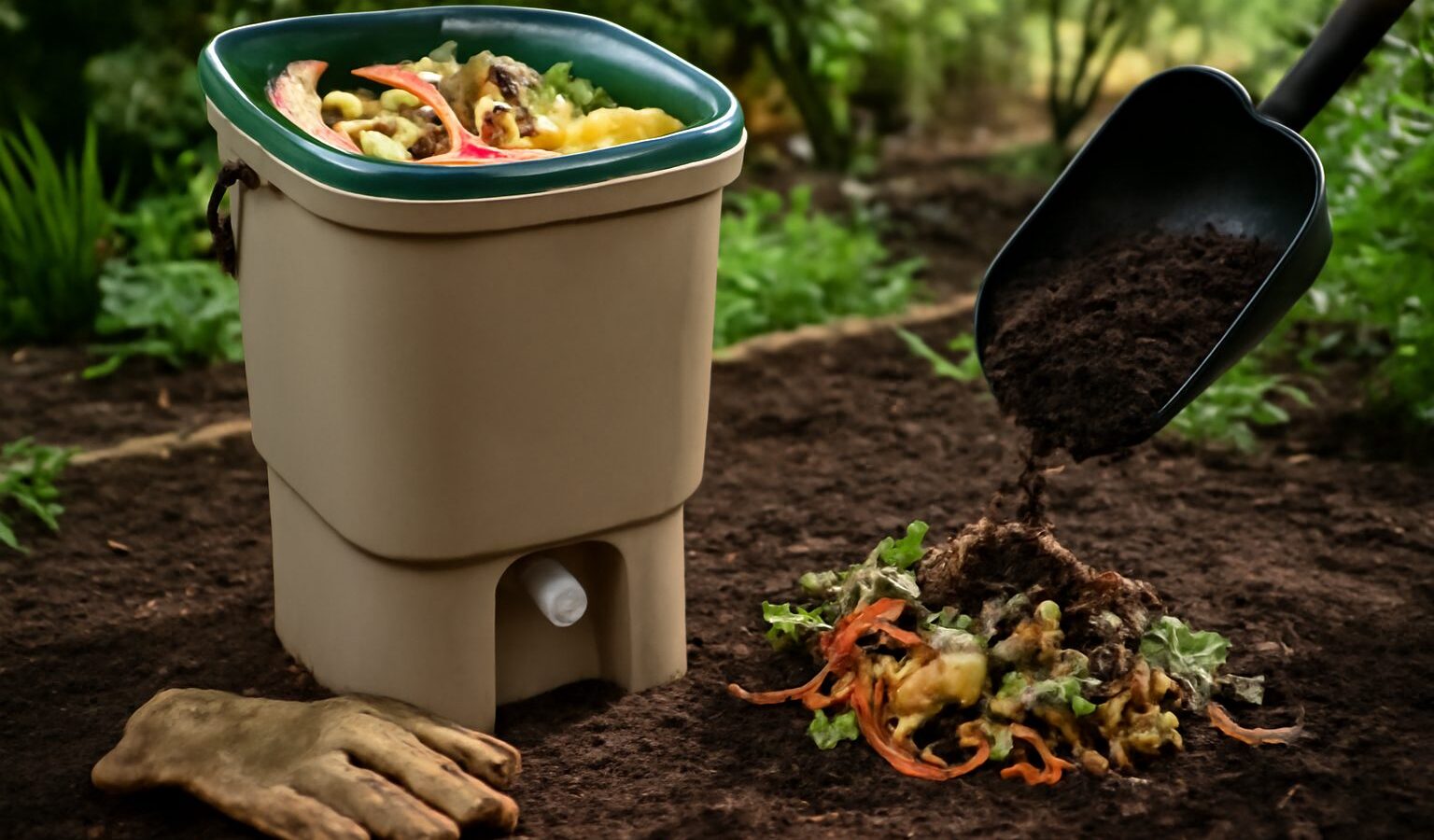
Bokashi composting is the answer for anyone who wants to compost in an apartment, a balcony, or a small kitchen and is tired of being told they cannot compost meat, dairy, or cooked food. Unlike a traditional aerobic pile, bokashi is an anaerobic fermentation — you seal food scraps in an airtight bucket with a bran inoculated with beneficial microbes, and in about two weeks the scraps are pickled into a pre-compost that breaks down in soil within another two to four weeks. It is fast, odor-controlled, takes up the footprint of a kitchen trash can, and accepts almost everything you eat. This guide walks through the gear, the daily routine, the timeline, and exactly what to do with the fermented result.
Key Takeaways
- Bokashi is anaerobic fermentation, not rotting — it ferments scraps in a sealed bucket using inoculated bran.
- It accepts everything most compost bins reject: meat, fish, dairy, bread, and cooked leftovers.
- The cycle is fast: roughly 2 weeks to ferment, then 2–4 weeks buried in soil to fully break down.
- A healthy bokashi bin smells sweet-and-sour like pickles; a foul, rotten smell means oxygen got in.
- Drain the liquid “tea” every 2–3 days and dilute it 1:100 with water as a fast-acting plant feed.
How Bokashi Works
“Bokashi” is Japanese for “fermented organic matter.” The system relies on effective microorganisms (EM) — a blend of lactic acid bacteria, yeasts, and phototrophic bacteria — carried on a dry bran. When you bury food scraps under this bran in an oxygen-free bucket, those microbes pickle the food in their own acids, the same way sauerkraut or kimchi ferments. Because the process is anaerobic and acidic, it suppresses the putrefying bacteria that cause rotting smells and never heats up like a traditional pile. Nothing visibly “composts” inside the bucket — the scraps keep their shape but turn soft and sour, with white fungal threads sometimes appearing. The real composting happens after, in the soil.
That makes bokashi ideal for small-space growers who lack room for an outdoor pile. It pairs perfectly with container and balcony setups covered across our urban gardening hub, because the finished pre-compost can be buried right into the same pots and raised beds you are already growing in.
What You Need
- A bokashi bin — an airtight bucket with a tight lid, a perforated false bottom (an inner grate), and a spigot at the base to drain liquid. Buy a kit or build one from two nested 5-gallon buckets with a drilled inner bucket and a tap.
- Bokashi bran — wheat or rice bran pre-inoculated with EM microbes. Plan on roughly a generous handful per inch of scraps; one bag lasts a typical household several weeks.
- A plate or press — a flat lid or a plastic disc to press scraps down and squeeze out air.
- A second bin — useful so one bucket can ferment undisturbed while you fill the next.
- A spot to finish it — a garden bed, a soil-filling trench, or a “soil factory” tote of soil for apartment dwellers.
What You Can and Cannot Add
Add freely: raw and cooked vegetables and fruit, meat and fish scraps (including small bones), dairy and cheese, eggs and eggshells, bread and grains, coffee grounds and tea, wilted flowers, and small amounts of paper. This broad acceptance is bokashi’s biggest advantage over worm bins and traditional piles.
Avoid or limit: liquids (drain off soups and excess sauce — too much moisture turns the bin slimy), large bones, very oily or saucy messes in bulk, moldy food that is already rotting before it goes in, and pet feces. Chop big pieces smaller so they ferment evenly and pack down with fewer air pockets.
Step-by-Step: The Bokashi Routine
Step 1 — Prime the bin
Sprinkle a thin layer of bokashi bran across the false bottom of an empty bin before you add the first scraps. This seeds the base with microbes.
Step 2 — Add scraps in layers
As food accumulates, add it in layers about 1–2 inches deep. After each layer, sprinkle a generous handful of bran over the top — more bran for meat, dairy, and oily food, which need extra inoculant. The goal is to coat the scraps, not bury them in bran.
Step 3 — Press out the air
After each addition, press the scraps down firmly with a plate or your fist to squeeze out trapped air, then seal the lid immediately. Oxygen is the enemy of fermentation. The less air in the bucket, the better the result and the less chance of off-smells. Open the bin as briefly as possible each time you add to it.
Step 4 — Drain the tea every few days
Within a couple of days, liquid begins collecting in the base reservoir. Drain this “bokashi tea” through the spigot every 2–3 days — leaving it to pool encourages anaerobic sliminess and odor. The tea is a potent fertilizer: dilute it 1:100 (about 1–2 teaspoons per quart of water) and water your plants with it, or pour it undiluted down a drain to clean and deodorize the pipes. Use the tea within a day; it does not store.
Step 5 — Fill, then ferment
Keep layering and draining until the bin is full, which takes most households one to three weeks. Once full, stop adding, press it down a final time, seal it, and let it ferment undisturbed for about 2 weeks at room temperature (warmer is faster). Start filling your second bin in the meantime. After two weeks the contents will be pickled, soft, and sour-smelling — pre-compost ready for soil.
Step 6 — Bury or “soil factory” the pre-compost
Bokashi pre-compost is too acidic to plant into directly. Bury it. In a garden, dig a trench 8–12 inches deep, tip in the fermented scraps, chop them into the soil a little, and cover with at least 4 inches of soil. Roots will fill the area in 2–4 weeks once it has neutralized. No garden? Build a “soil factory”: layer the pre-compost with potting or garden soil in a tote (roughly equal parts), keep it lightly moist, and in 3–4 weeks you have rich soil you can pot with.
Timeline at a Glance
Filling the bin takes 1–3 weeks depending on how much you cook. Sealed fermentation runs about 2 weeks. Breaking down in soil takes another 2–4 weeks. So from the day you start a bin to fully usable compost is roughly 5–9 weeks — far faster than a cold compost pile, which can take six months to a year. Run two bins in rotation and you will always have one fermenting while you fill the other, giving a steady, year-round supply. For other compost methods and how the finished product feeds beds and borders, browse the Outdoor Living hub.
Troubleshooting
Foul, rotten, or putrid smell: the fermentation has gone bad because oxygen got in or the contents were too wet. Press scraps down harder, seal the lid tightly, add more bran, and drain the tea more often. A healthy bin smells sweet-and-sour, like vinegar or pickles. Blue, green, or black mold: these indicate spoilage from too much air or moisture; remove the bad patch, add bran, and reseal. White, cottony mold: this is good — it is the beneficial fungus thriving, a sign the bin is working. No liquid draining: normal if your scraps are dry, especially early on; do not worry. Slimy, soggy contents: too much liquid food went in — drain off soups and sauces before adding and bump up the bran. Fruit flies: they cannot survive the sealed, acidic environment, so flies mean the lid is not sealing — check the gasket and keep it closed between additions.
Why Bother With Bokashi
Beyond speed and the ability to compost meat and dairy, bokashi keeps food waste out of the landfill where it would generate methane, and it returns carbon and nutrients straight to your soil. The fermented matter introduces beneficial microbes that improve soil structure and feed plants, and the diluted tea is a free liquid fertilizer. For renters and small-space gardeners it is often the only practical way to compost at all. Pair it with container growing and you close the loop — kitchen scraps become the soil amendment for next season’s pots.
Frequently Asked Questions
Does bokashi composting smell bad?
No, when it is working correctly. A healthy bokashi bin has a mild sweet-and-sour, pickle-like smell that you only notice when the lid is open. A genuinely foul, rotten odor means oxygen got in or the contents are too wet — press scraps down, seal the lid, and add more bran.
Can I really compost meat and dairy in bokashi?
Yes. This is bokashi’s signature advantage. Because the process is an anaerobic fermentation rather than open-air rotting, it safely handles meat, fish, dairy, cheese, and cooked food that traditional piles and worm bins cannot. Just add extra bran over those richer scraps.
How long does bokashi take to finish?
About 2 weeks of sealed fermentation once the bin is full, then 2–4 weeks buried in soil to fully break down. Counting fill time, expect roughly 5–9 weeks from start to usable compost — much faster than a cold pile.
What do I do with the bokashi liquid?
Drain the “tea” every 2–3 days. Diluted 1:100 with water (1–2 teaspoons per quart) it is a fast-acting liquid fertilizer for houseplants and garden plants. Undiluted, it works as a natural drain cleaner and deodorizer. Use it the same day — it does not keep.
Can I do bokashi in an apartment with no garden?
Yes. After fermentation, use a “soil factory”: layer the pre-compost with soil in a sealed tote, keep it lightly moist, and in 3–4 weeks it becomes finished soil for your containers. This makes bokashi one of the few composting methods that works entirely indoors.