

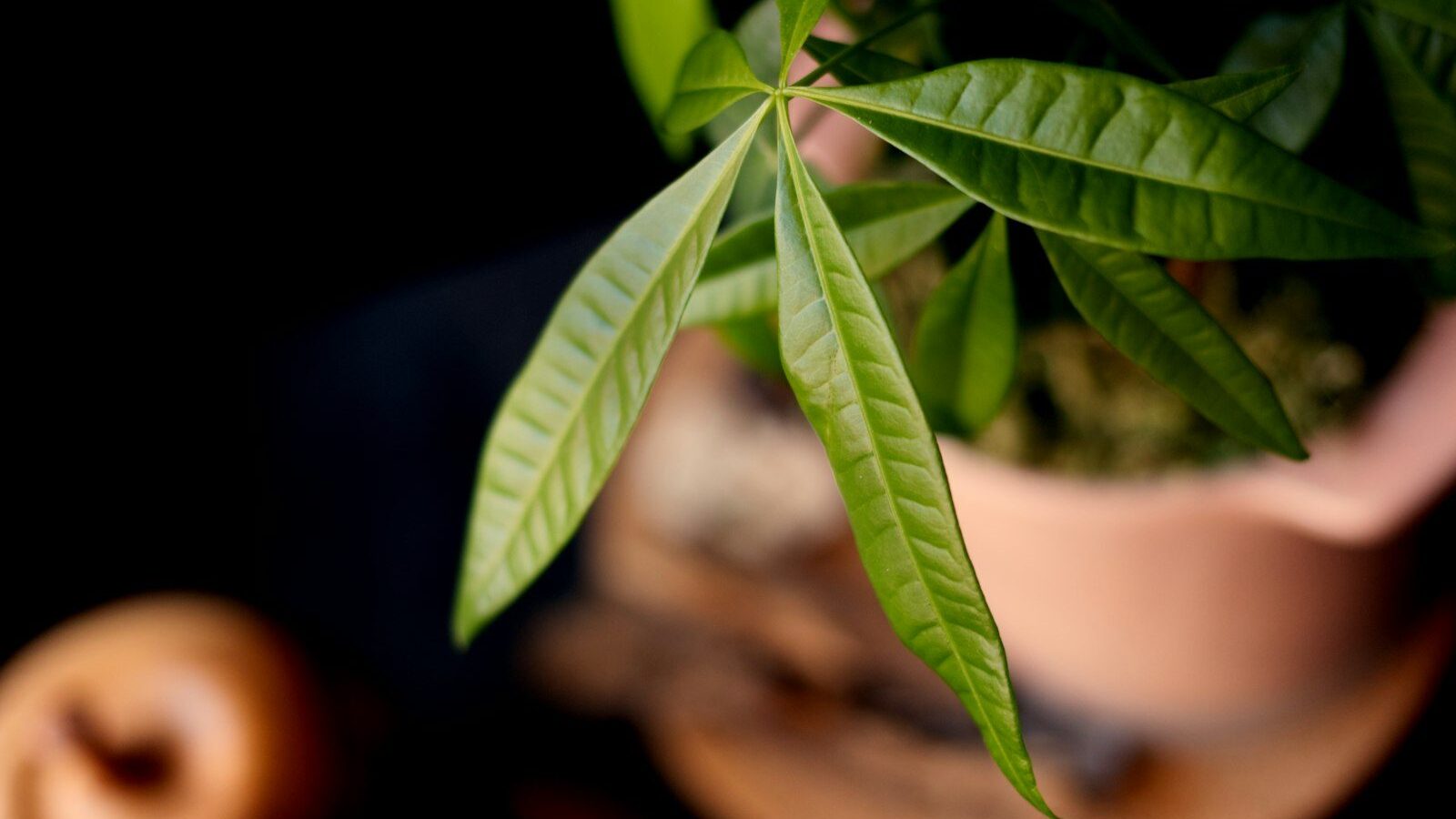
Money trees (Pachira aquatica) are tough, fast-growing houseplants, but they are sensitive to two things during repotting: soggy soil and an oversized pot. Repot in spring or early summer, move up only 1–2 inches in pot diameter, use a fast-draining mix, and keep the braided trunk at the same depth it was growing before. Do those four things and most money trees bounce back within a couple of weeks with little or no leaf drop. This guide covers how to tell when your plant actually needs a new pot, how to choose the pot and soil, a step-by-step repotting method, how to handle braided trunks and root problems, and what to do in the weeks afterward. It is part of our wider houseplants and containers guide.
Part of our Trees & Shrubs guide →
In this guide
Key Takeaways
- Repot every 2–3 years, ideally in spring or early summer when the plant is actively growing.
- Go up only 1–2 inches in pot diameter, and always use a pot with drainage holes.
- Use a chunky, fast-draining mix such as potting mix with perlite and orchid bark.
- Keep the trunk base at the same depth; burying braided trunks invites rot.
- Trim black, mushy roots; healthy roots are firm and pale tan to white.
- Expect a little leaf yellowing or drop; hold off on fertilizer for 4–6 weeks.
Signs Your Money Tree Needs Repotting
Money trees do not mind being slightly root-bound, and repotting a plant that does not need it causes stress for no benefit. Look for at least one of these signs before you reach for a bigger pot:
- Roots growing out of the drainage holes or circling visibly on the soil surface.
- Water runs straight through and out the bottom almost immediately, because roots have displaced most of the soil.
- Soil dries out within a day or two of watering in normal indoor conditions.
- The plant is top-heavy and tips over easily.
- Growth has stalled during spring and summer despite good light and feeding.
- Soil has broken down into a dense, compacted mass, smells sour, or has a crust of mineral salts.
- Root rot is suspected—wilting despite wet soil, yellowing leaves, a soft trunk base. This is the one case where you repot right away regardless of season.
Many money trees sold in garden centers and grocery stores are potted in dense, peat-heavy mix that holds too much water. If yours came that way and is struggling, repotting into a better mix after a few weeks of acclimation is often worthwhile even if it is not root-bound. For general day-to-day needs, see our money tree care guide.
When to Repot
Spring through early summer is ideal—roughly March through June in most US homes. Longer days and warmer temperatures mean the plant is pushing new roots and leaves and will recover quickly. Avoid repotting in late fall and winter unless there is an emergency such as root rot; growth slows, and disturbed roots sit in cool, wet soil for longer. Also avoid repotting a plant you have just brought home or just moved to a new location. Give it two to four weeks to adjust to its new light first, so you are not stacking stresses.
Choosing the Right Pot
The most common repotting mistake is going too big. A pot much larger than the root ball holds a large volume of soil that stays wet for days, and that is how money tree roots rot. Choose a pot just 1–2 inches wider than the current one (2–3 inches for large floor plants in 12-inch pots and up).
- Drainage holes are non-negotiable. If you love a decorative pot without holes, use it as a cachepot and keep the plant in a plastic nursery pot inside it, emptying any standing water after watering.
- Terra-cotta breathes and dries faster, which is helpful for overwaterers and in humid homes.
- Plastic or glazed ceramic holds moisture longer; good in dry homes or if you tend to underwater.
- Weight: tall braided money trees get top-heavy. A heavier ceramic or terra-cotta pot helps stop tipping.
The Best Soil for Money Trees
Money trees want soil that holds some moisture but drains fast and lets air reach the roots. A good homemade blend:
- 2 parts quality indoor potting mix (peat- or coir-based)
- 1 part perlite or pumice
- 1 part fine orchid bark
A bagged cactus or “aroid” mix, blended with some regular potting mix, also works. Avoid garden soil, moisture-control mixes with water-holding crystals, and dense bagged mixes with no visible perlite. If you want to blend your own in larger batches, our sibling guide on how to make your own potting soil explains the ingredients.
What You Need
- New pot 1–2 inches wider, with drainage holes
- Fresh, well-draining potting mix
- Clean, sharp pruners or scissors (wipe with rubbing alcohol)
- A tarp, newspaper or tray to contain mess
- Optional: a chopstick to settle soil, gloves, mesh screen to cover large drainage holes
How to Repot a Money Tree, Step by Step
- Water a day before. Lightly moist soil slides out of the pot more easily and roots are less brittle. Do not repot a soaking wet plant.
- Remove the plant. Tip the pot on its side, support the trunks at the soil line, and gently ease the root ball out. Squeeze a plastic pot or run a butter knife around the inside edge of a rigid pot to loosen it. Never yank by the trunks.
- Inspect the roots. Healthy roots are firm and white to light tan. Black, brown, mushy or foul-smelling roots are rotting.
- Loosen and trim. Tease apart circling roots with your fingers. Trim any dead or rotten roots back to healthy tissue, and shorten very long circling roots by up to about a quarter if needed.
- Prepare the new pot. Add enough fresh mix to the bottom so the top of the root ball sits about 1 inch below the rim. Do not add a gravel layer; it actually raises the wet zone in the pot.
- Position the plant. Set the root ball in the center, keeping the trunk base at the same depth as before. Check that the braid stands straight.
- Backfill. Add mix around the sides, settling it gently with your fingers or a chopstick to remove large air pockets. Do not pack it down hard.
- Water thoroughly. Water until it runs from the drainage holes, let it drain fully, and top up any soil that settled.
The basic technique is the same as for most houseplants; our guide to how to repot a houseplant covers more on loosening root balls and choosing materials.
Handling Braided Trunks
Most money trees sold indoors are several separate plants, usually three to five, braided together while young. A few tips keep them healthy during repotting:
- Remove ties and wires. Growers often leave plastic ties or wire at the top or base of the braid. As trunks thicken, these can girdle the stems. Snip them off carefully.
- Do not bury the braid deeper. Setting the trunks lower in the soil encourages rot at the base.
- Check each trunk. If one trunk in the braid is soft, shriveled or dead, it can be cut out at the base. The rest of the braid will usually carry on, though there will be a gap.
- Do not try to unbraid mature trunks. Once trunks have thickened and grown into each other, separating them causes damage. Splitting into individual plants is only practical with young, loosely braided specimens.
- To continue braiding on a young plant, loosely weave the soft new growth above the existing braid and tie with soft plant tape, not wire.
Repotting a Money Tree With Root Rot
If you find extensive black, mushy roots, act quickly, regardless of season:
- Remove all old soil by gently rinsing the root ball in room-temperature water.
- Cut away every rotten root with sterilized pruners until only firm, healthy roots remain.
- Check the trunk base. If it is soft, cut out that trunk; rot inside the trunk will not recover.
- Repot into a clean pot—often the same size or smaller to match the reduced root system—with fresh, very well-draining mix.
- Water lightly once, then wait until the top 2 inches of soil dry before watering again.
- Keep the plant in bright, indirect light and remove yellowing leaves as they drop.
A plant that has lost most of its roots will drop many leaves before it recovers. As long as the trunks are firm, it can regrow over several weeks.
Aftercare: The First Six Weeks
- Light: return the plant to bright, indirect light. Avoid moving it into strong direct sun right after repotting.
- Water: after the first soak, wait until the top 1–2 inches of soil dry before watering again. New mix in a slightly bigger pot often stays moist longer than you expect.
- Fertilizer: skip feeding for 4–6 weeks. Fresh mix supplies some nutrients, and fertilizer can burn tender new roots.
- Humidity and temperature: keep it in the 65–80°F range and away from heating vents and cold drafts.
- Leaf drop: a few yellow leaves in the first two weeks are normal transplant shock. Ongoing heavy drop usually points to overwatering.
For troubleshooting yellow leaves and other problems once your plant is settled, see how to care for a money tree.
Keeping a Money Tree Small
If your plant has reached the size you want, you can refresh it without moving to a larger pot. Remove it, trim up to about a quarter of the outer roots, add fresh mix around the root ball, and return it to the same pot. Pair root pruning with light top pruning to keep the plant in balance. Bonsai money trees are maintained this way every year or two in spring.
Frequently Asked Questions
How often should you repot a money tree?
Every two to three years is typical for a healthy plant. Repot sooner if roots are growing out of the drainage holes, the soil dries out within a day or two, or you suspect root rot.
What size pot does a money tree need?
Choose a pot just 1 to 2 inches wider than its current one. Larger jumps leave too much wet soil around the roots, which raises the risk of rot.
Do money trees like to be root-bound?
They tolerate being slightly root-bound and often grow well that way. Repot only when the roots clearly fill the pot or the soil no longer holds water properly.
Why is my money tree dropping leaves after repotting?
Some leaf drop is normal transplant shock and settles within two weeks. Continued drop usually means the new soil is staying too wet, so let the top inch or two dry between waterings.
Can I use cactus soil for a money tree?
Yes, cactus mix works well when blended with some regular potting mix. On its own it can dry out a bit too fast for a money tree, especially in a terra-cotta pot.