

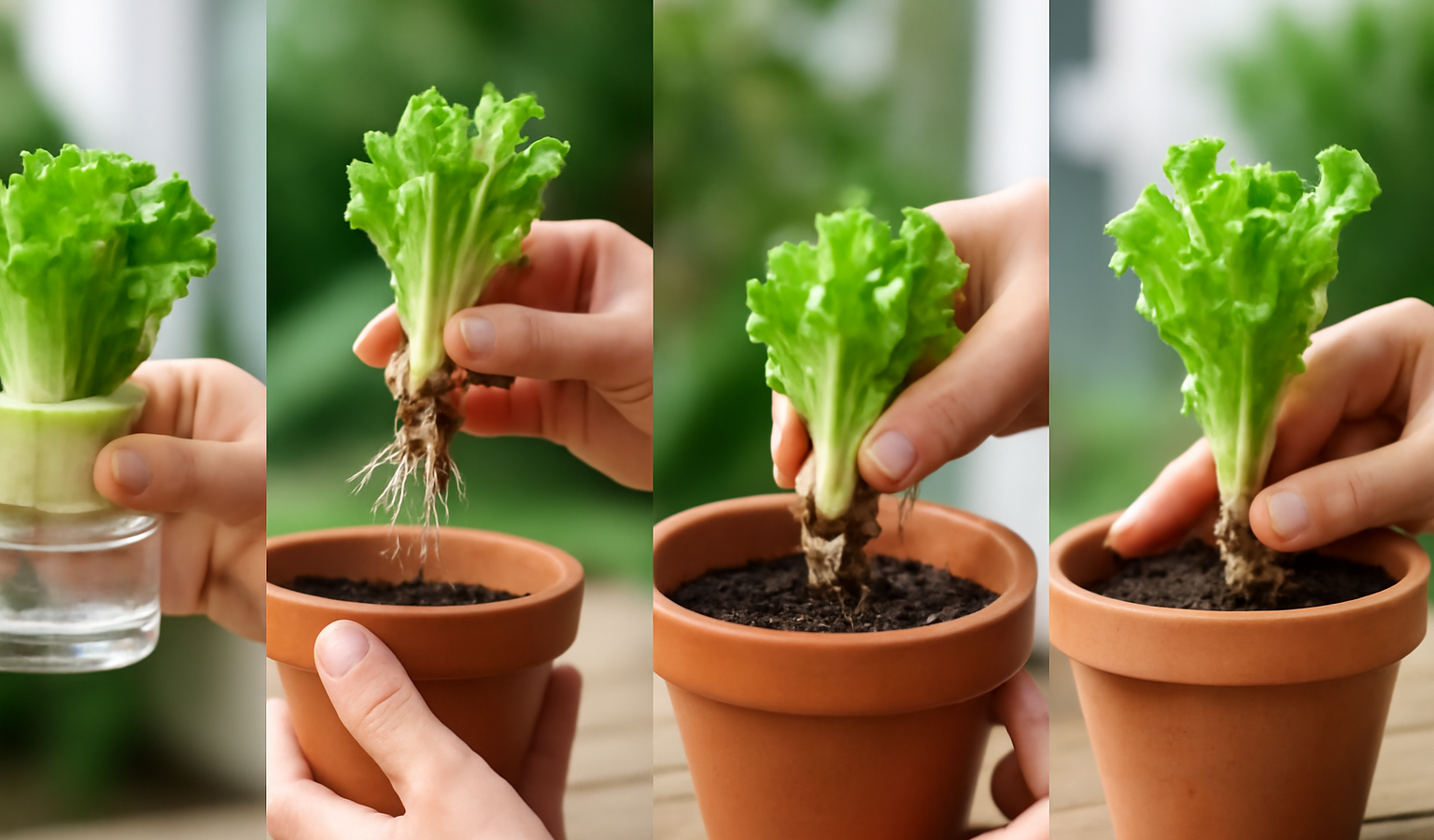
The bottom stub of a romaine heart that you would normally compost will sprout a fresh crown of leaves in a saucer of water on your windowsill. The method is the same gentle trick that works for celery and green onions: stand the cut base in shallow water until new leaves and roots appear, then plant it in soil to keep it going. Be clear-eyed about the payoff, though — regrown lettuce gives you a handful of small, tender leaves for a sandwich or a garnish, not a whole new head. It is a free, satisfying, kid-friendly project and a genuine source of a few harvests of greens, but it is a supplement to your salad bowl, not a substitute for buying or seed-sowing lettuce. This guide covers the exact steps, what to expect, the light and timing that make it work, and the common reasons a base fails.
Part of our Vegetable Gardening & Raised Beds guide →
In this guide
Key Takeaways
- Save the bottom 1–2 inches of a romaine or leaf lettuce base, stand it in half an inch of water, and set it in a bright spot.
- New leaves emerge from the center in 3–4 days; small roots follow within a week. Change the water daily.
- Regrown lettuce gives you a small flush of tender leaves for a few harvests — not a full new head.
- Move it to potting soil after about a week; soil keeps it producing longer than water, which stalls once the old tissue is spent.
- The usual failures are rot from deep or stale water, leggy pale growth from low light, and quick bolting (flowering) in heat.
What You Need
This is a no-cost kitchen project. The whole kit is the cut base of a lettuce you already bought, a shallow dish, clean water, and a sunny window. To extend the harvest you will want a small pot and some potting soil.
- The intact bottom 1–2 inches of a lettuce base — romaine works best, followed by other firm-hearted types
- A shallow saucer, ramekin, or small bowl
- Clean room-temperature water
- A bright south- or west-facing windowsill, or a grow light
- A 4–6 inch pot with drainage and potting mix (for the soil stage)
Romaine and other firm, upright hearts regrow best. Loose-leaf and butterhead types will sprout too but tend to be weaker and bolt faster. Crisphead types like iceberg are the least reliable. Pick the freshest, firmest base you can — one with a solid, undamaged core regrows far better than a base that is already browning. The same shallow-water start works for many windowsill crops in our urban gardening guides.
Step-by-Step: Regrowing Lettuce in Water
Step 1 — Cut and keep the base
When you use a head of lettuce, slice the leaves off about 1 to 2 inches above the bottom, leaving the base and its central core intact. That pale center is the growing point where new leaves will appear, so keep it whole — do not cut into or scoop out the core. Trim away any browned or slimy outer edges with a clean knife so you start with healthy tissue.
Step 2 — Stand it in shallow water
Set the base cut-side up in a dish and add water until it reaches about halfway up the stub — roughly half an inch deep. This is the detail that makes or breaks the project: the bottom should sit in water while the cut top and growing center stay above the waterline in the air. Submerge the whole base and it will simply rot. Put the dish on a windowsill that gets at least 5–6 hours of bright light a day. Lettuce is a cool-season plant, so a spot that stays around 60–65°F is ideal — avoid a hot, sun-baked sill in summer.
Step 3 — Refresh the water daily
Pour out the old water and add fresh every day, or at the very least every other day. Cut vegetable tissue in standing water breeds bacteria quickly, and stale water is the number-one cause of a slimy, failed base. Each time you change it, rinse the base gently and clear any slime from the dish. A light mist of the top with a spray bottle keeps the emerging center from drying out in heated or air-conditioned rooms.
Step 4 — Watch the center sprout
In just 3 to 4 days you will see small, bright new leaves unfurling from the middle of the base — lettuce is one of the fastest scraps to respond. Over the next several days those leaves grow taller and small white roots push out from the bottom. The old outer ring will yellow and soften as the plant cannibalizes it to feed the new center. That is expected; peel away the worst mushy tissue if it starts fouling the water, but never disturb the growing center.
Moving Lettuce From Water to Soil
Water alone runs out of steam fast with lettuce. Once the base exhausts its stored energy, growth stalls and the new leaves stay tiny. To get more than a token harvest, transplant into soil as soon as you see a tuft of new leaves and a few roots — generally about a week after starting.
How to transplant
Fill a 4–6 inch pot with moist potting mix, make a small hollow, and set the base in so the root area is just at the soil surface with the new leaves sitting above it. Keep the growing center above the soil line — burying it leads to rot. Firm the soil gently, water it in, and place the pot in your brightest cool window or under a grow light. If your windows are dim, our guide to T5 vs LED grow lights explains which setup suits leafy greens like lettuce.
Care after potting
Keep the soil evenly moist but never waterlogged — check daily and water when the surface starts to dry. Lettuce roots are shallow and dislike both drought and sogginess. Give it 5–6 hours of bright light minimum; more produces fuller, sturdier leaves. A weak dose of balanced liquid fertilizer at half strength every couple of weeks keeps leaf production going. Crucially, keep it cool — ideally 60–65°F. Heat is lettuce’s enemy: warm conditions trigger it to bolt, sending up a flower stalk and turning the leaves bitter and unpleasant. A windowsill that bakes in afternoon sun will bolt your lettuce in days.
What to Realistically Expect
Set your expectations correctly and you will enjoy this; expect a miracle and you will be let down. A regrown lettuce base will never form a new full head. A supermarket head is the product of weeks of growth from seed under ideal cool conditions, and a small scrap base simply cannot rebuild that. What you get instead is a modest flush of small, tender leaves from the center over the course of a couple of weeks — enough for a sandwich, a taco topping, or a small side salad, with maybe one or two repeat harvests before the plant gives up.
Harvest as a cut-and-come-again crop: snip the outer leaves once they are a few inches long and leave the central crown to keep producing. Romaine bases tend to give the most, since their upright cores hold more growing potential than loose-leaf types. After a couple of harvests the leaves shrink, turn slightly bitter, and the plant often bolts — that is the natural end of its short second life. If you love the freshness of homegrown greens, the better long-term move is to sow lettuce seed in a pot, which is cheap and gives full heads; regrowing from scraps is best treated as a fun, free bonus harvest and a great way to use up what you already have.
Common Failures and How to Fix Them
Most disappointing results trace back to a few avoidable mistakes. Check these before giving up on a base.
- The base rots into slime. Cause: water too deep or rarely changed. Keep it at half an inch so the center stays above water, change it daily, and trim off mushy outer tissue.
- Mold forms on the base or in the dish. Cause: stagnant water, low light, and poor airflow. Move it brighter, give it fresh air, and refresh the water more often.
- Growth is pale, stretched, and floppy. Not enough light — the leaves are reaching for it. Move to your brightest window or add a grow light, aiming for 5–6+ hours.
- It bolts almost immediately (sends up a stalk). Too warm. Lettuce bolts fast in heat; keep it at 60–65°F and out of hot afternoon sun. Bolted leaves turn bitter.
- Leaves taste bitter. Usually heat or age. Harvest young leaves promptly and keep the plant cool; once it bolts, bitterness is permanent.
- Barely any leaves before it stalls. The base ran out of stored energy in water. Move it to soil sooner — within about a week — so it can draw on real nutrients.
The same water-then-soil routine that works for lettuce also revives celery bases, green onions, leeks, and bok choy on the same windowsill. Explore our other container and small-space gardening guides to turn more of your kitchen scraps into a free windowsill garden.
Frequently Asked Questions
How long does it take to regrow lettuce from scraps?
New leaves appear from the center in just 3 to 4 days, with small roots within a week. Move the base to soil after about a week. From there you can expect a small flush of leaves over a couple of weeks and maybe one or two repeat harvests before it bolts.
Will a lettuce scrap grow into a whole new head?
No. A regrown base produces a modest tuft of small, tender leaves — enough for a sandwich or small salad — but never a full head. A supermarket head needs weeks of growth from seed under cool conditions that a small scrap cannot replicate.
Which type of lettuce regrows best?
Romaine and other firm, upright-hearted types regrow most reliably because their solid cores hold the most growing potential. Loose-leaf and butterhead types will sprout but are weaker and bolt sooner. Iceberg and other crispheads are the least reliable.
Can I keep the lettuce in water permanently?
You can, but it will only manage a small flush of leaves before stalling, since plain water has no nutrients to draw on. Transplanting to potting soil after about a week lets the base feed properly and keep producing longer.
Why does my regrown lettuce taste bitter?
Bitterness comes from heat and age. Lettuce is a cool-season crop that bolts and turns bitter when it gets too warm. Keep it around 60–65°F, out of hot direct sun, and harvest leaves while they are young to keep the flavor mild.