

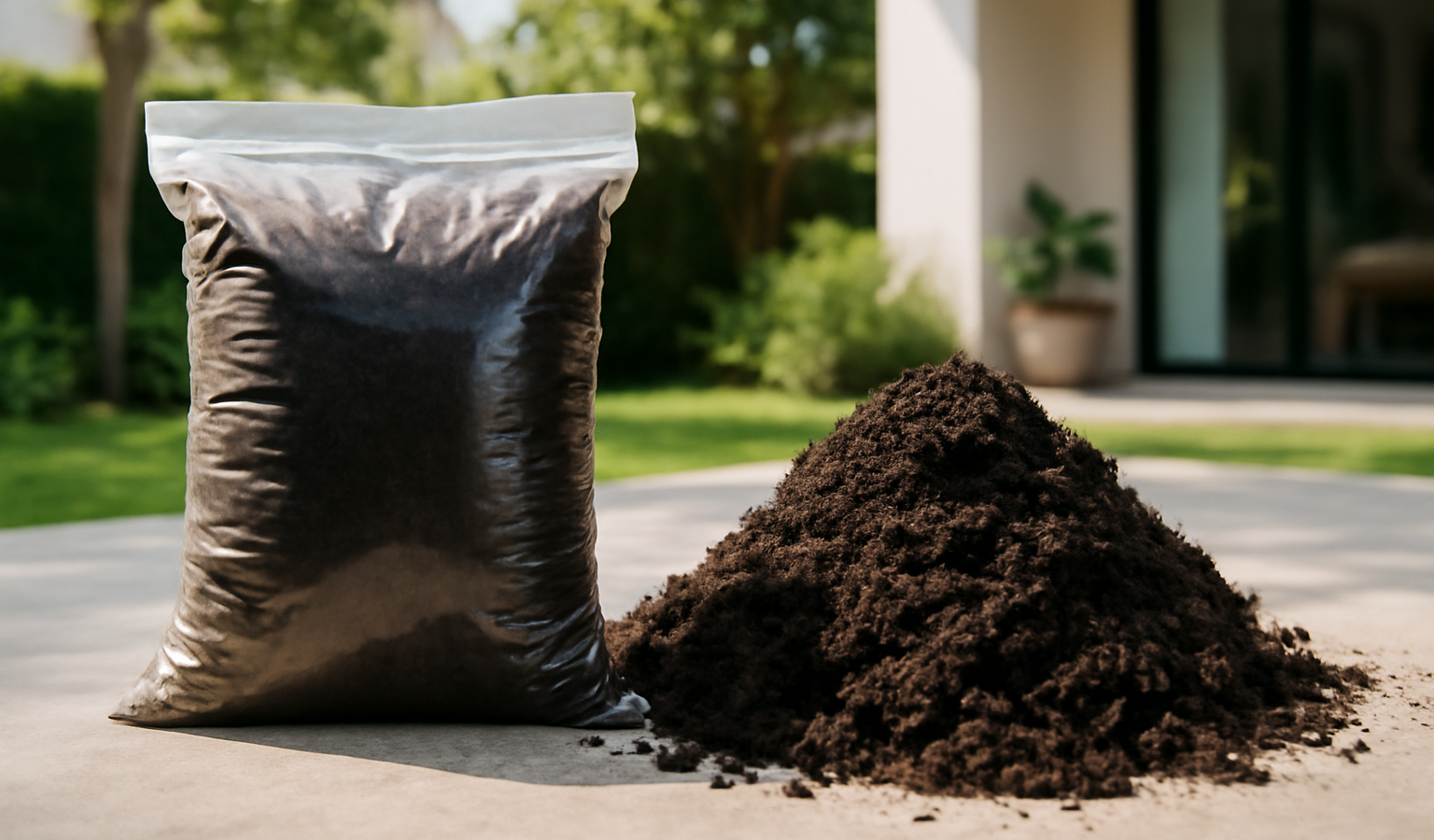
Standing in the garden center with a project in mind, you face a deceptively simple choice: grab a stack of tidy plastic bags, or order a dump-truck pile of bulk soil. The right answer hinges almost entirely on how much you need. The short version: bagged soil wins for small jobs, container planting, and consistent quality, while bulk soil wins dramatically on price once you need more than about a cubic yard, which is roughly 27 cubic feet, or about 36–40 bags. This guide compares the two on cost, quality, convenience, and quantity, and gives you the math to know exactly where the crossover point sits for your project.
Key Takeaways
- Bagged soil is convenient, consistent, and easy to carry, but costs far more per cubic foot.
- Bulk soil is much cheaper by volume and ideal for large jobs, but requires space, delivery, and labor to move.
- One cubic yard equals 27 cubic feet, roughly 36–40 standard bags; that’s near the price crossover point.
- Bagged products are pre-blended and screened for consistent quality; bulk quality varies by supplier, so inspect first.
- Use bagged for containers and small beds; order bulk for filling raised beds, large beds, or topdressing a lawn.
Quick Comparison at a Glance
| Factor | Bagged Soil | Bulk Soil |
|---|---|---|
| Cost per cubic foot | Highest | Much lower (often a fraction) |
| Quality consistency | High, blended & screened | Variable, inspect supplier |
| Convenience | Carry in a car, store easily | Needs delivery & staging space |
| Best quantity | Under ~1 cubic yard | 1 cubic yard and up |
| Labor | Light, lift bags | Heavy, shovel & haul a pile |
| Storage | Sealed, stays dry | Pile exposed; use promptly |
| Delivery fee | None | Often $50–$100+ |
| Best for | Containers, small beds, patching | Raised beds, large beds, lawns |
Bagged Soil: Convenient and Consistent
Bagged soil is the default for most home gardeners, and for good reason. Products like potting mix, raised-bed mix, garden soil, and compost come pre-blended, screened to remove rocks and debris, and sealed in plastic bags, typically 1, 1.5, or 2 cubic feet each. You can fit them in a car trunk, stack them in the garage, and open them only as needed.
The advantages
The biggest win is consistency. A reputable bagged mix is engineered to a recipe, so you know roughly what you’re getting, a peat- or coir-based potting mix that drains well in containers, or a balanced raised-bed blend. That predictability matters most where the medium is doing precise work, like seed starting or container growing, where the wrong texture means soggy roots or fast drying. Bagged products also stay clean and weed-free: sealed bags don’t sprout weeds or harbor the surprises a damp bulk pile sometimes does.
Convenience extends to logistics: no delivery to schedule, no driveway pile to clear before the neighbors complain, and no rush to use it before rain turns it to muck. You buy exactly the number of bags you need and store the rest dry. For containers, small raised beds, repotting houseplants, patching a bare lawn spot, or topping off existing beds, bagged is simply the practical choice.
The catch: price per volume
All that convenience is expensive by volume. Because you’re paying for bagging, branding, retail markup, and the convenience itself, bagged soil can cost several times more per cubic foot than the same material in bulk. For a few bags it’s irrelevant. But scale up, filling a 4×8-foot raised bed a foot deep needs about 32 cubic feet, or 20-plus bags, and the cost climbs fast. That’s where bulk takes over.
Bulk Soil: Cheap by the Yard
Bulk soil is sold loose by the cubic yard from landscape-supply yards, garden centers, and topsoil dealers. You either haul it yourself in a truck or trailer or, more commonly, have it delivered and dumped on your driveway. One cubic yard is a substantial heap, 27 cubic feet, enough to fill several raised beds or topdress a good stretch of lawn.
The advantages
The headline is price. Per cubic foot, bulk soil, topsoil, garden blend, compost, or mulch, costs far less than bagged, often a fraction. On a big project the savings can run into hundreds of dollars. Bulk is the only sensible option once you’re filling multiple raised beds, building a large new bed, regrading, or topdressing a lawn, where bagged quantities would be both absurd to carry and painfully expensive.
The trade-offs
Bulk demands more from you. You need space to stage the pile (a driveway, tarp, or open patch), the labor to move it by wheelbarrow and shovel, and ideally a plan to use it within a week or two before it compacts, sheds weeds, or washes around in rain. Delivery usually carries a fee of roughly $50–$100 or more depending on distance and load, which eats into the savings on truly small orders, another reason bulk only pays off above about a cubic yard.
Quality is the other variable. Bulk material isn’t held to a packaged recipe, so it ranges from excellent screened blends to coarse, weedy, or contaminated fill. Always inspect or ask before ordering: a good supplier will let you see and smell the product (compost should smell earthy, not sour or like ammonia) and tell you whether it’s screened, what it’s blended from, and where it came from. Buying from a reputable local landscape yard with reviews is the single best way to avoid a driveway full of junk.
Do the Math: Where’s the Crossover?
Knowing your volume turns this into a simple decision. Calculate the cubic feet you need, then convert: length × width × depth (all in feet) = cubic feet, and cubic feet ÷ 27 = cubic yards. A 4×8-foot raised bed filled 12 inches deep needs 32 cubic feet (about 1.2 cubic yards). A few quick guideposts:
- Under ~10 cubic feet (a few bags): Buy bagged, the delivery fee alone makes bulk uneconomical.
- Around 1 cubic yard / 27 cu ft / ~36–40 bags: The crossover zone, compare local bulk price plus delivery against bag totals.
- More than 1 cubic yard: Bulk almost always wins on price, often by a wide margin.
Many gardeners split the difference: order bulk for the heavy filling and keep a few bags of premium potting or seed-starting mix on hand for containers and precise jobs. That gives you bulk’s economy where volume matters and bagged consistency where quality matters most.
Side-by-Side: Which Should You Buy?
- Containers, houseplants, seed starting: Bagged, the consistent, screened mix is worth the premium.
- One small raised bed or patching: Bagged, the quantity is too small to justify delivery.
- Multiple raised beds or a large new bed: Bulk, the savings are substantial.
- Topdressing a lawn or regrading: Bulk, no contest on volume.
- No truck and no staging space: Bagged, unless you can arrange delivery and clear room for the pile.
Whatever you buy, getting the soil right is the foundation of every planting. If you’re building beds, our comparison of mushroom compost vs manure will help you choose the best amendment to mix in, and the Outdoor Living hub has more landscaping how-tos. Topdressing a lawn? Pair this with our guide on sun vs shade grass seed to overseed correctly at the same time.
The Verdict
It comes down to volume and convenience. Bagged soil wins for small jobs, containers, and any situation where consistent, weed-free quality is worth a premium, and it spares you delivery fees and shoveling. Bulk soil wins decisively once you need more than about a cubic yard, slashing the per-cubic-foot cost on raised beds, large plantings, and lawn topdressing, as long as you have space to stage it, the labor to move it, and a trustworthy supplier. For many gardeners the smartest play is both: bulk for the heavy lifting, a few quality bags for the precise work.
Frequently Asked Questions
How many bags of soil are in a cubic yard?
A cubic yard is 27 cubic feet, so it equals roughly 36 bags of 0.75 cu ft, 27 bags of 1 cu ft, or about 13–14 bags of 2 cu ft. That’s also near the price crossover, beyond about a cubic yard, bulk almost always beats bagged on cost.
Is bulk soil cheaper than bagged?
By volume, yes, often dramatically, frequently a fraction of the per-cubic-foot cost of bagged. But factor in the delivery fee (typically $50–$100+), so the savings only materialize above roughly a cubic yard. For just a few bags, bagged is cheaper overall.
How do I calculate how much soil I need?
Multiply length × width × depth in feet to get cubic feet, then divide by 27 for cubic yards. For example, a 4×8-foot bed filled 12 inches deep is 32 cubic feet, about 1.2 cubic yards, which puts it firmly in bulk territory.
Is bulk soil lower quality than bagged?
Not necessarily, but it’s more variable because it isn’t held to a packaged recipe. Quality ranges from excellent screened blends to coarse or weedy fill, so buy from a reputable local supplier, inspect the product first, and make sure compost smells earthy rather than sour or like ammonia.
Can I store leftover bulk soil?
It’s best used within a week or two. A loose pile compacts, sprouts weeds, and washes around in rain. If you must store it, cover the heap with a tarp on a hard surface to keep it dry and weed-free, but bagged soil is far better for long-term storage.