

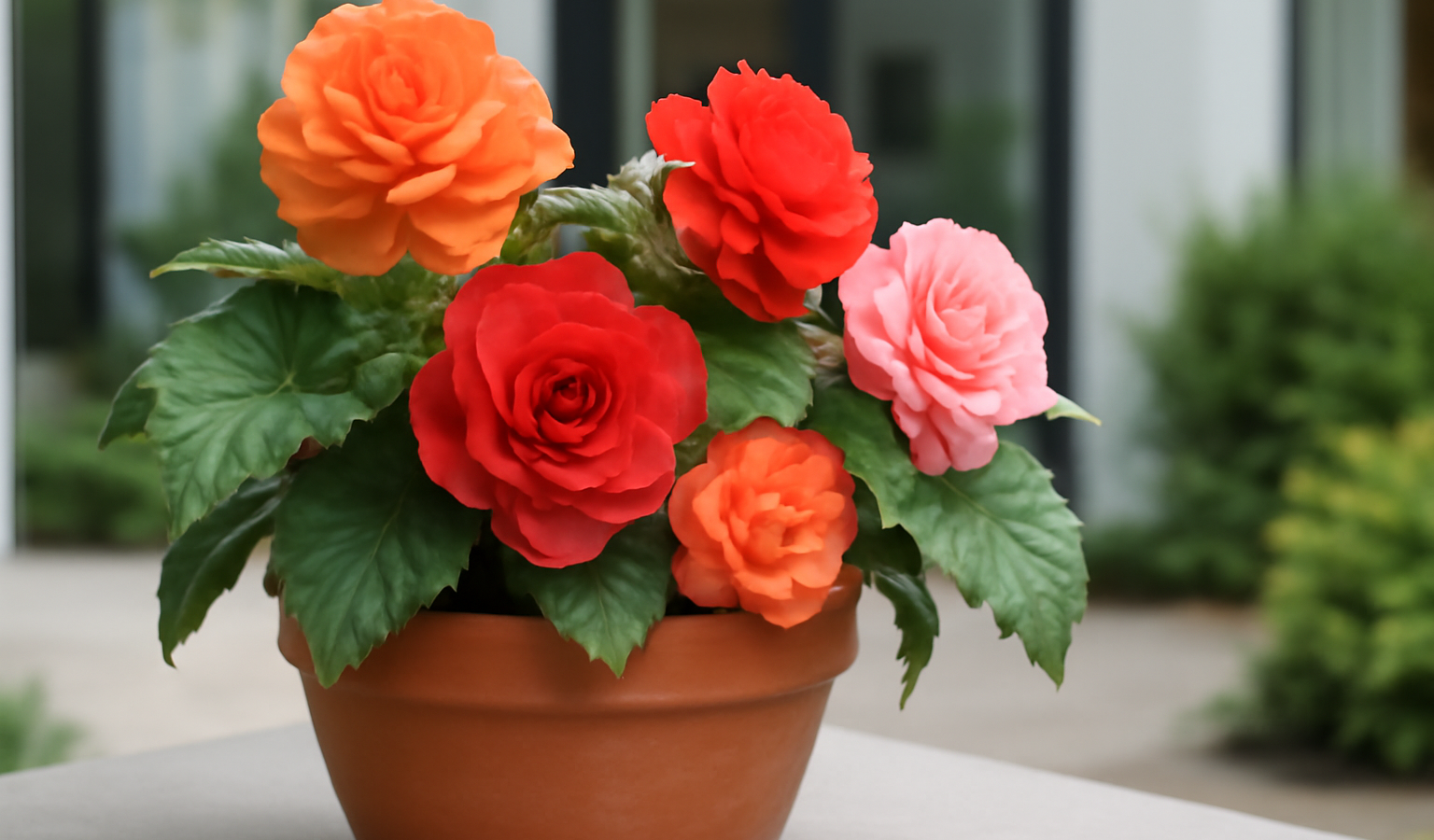
To grow tuberous begonias, start the tubers indoors in late winter set hollow-side up and barely covered, move them to a bright, sheltered spot with morning sun or dappled shade after frost, water carefully to keep the soil moist but never soggy, then lift and store the tubers before the first hard freeze. These are the showpieces of the shade garden — fat dormant tubers that explode into mounding or trailing plants topped with rose-like double flowers up to 4 or 5 inches across in saturated reds, oranges, yellows, pinks, and whites. Unlike the tough wax begonias you see in every parking-lot bed, tuberous begonias are a little more particular: they want cool roots, gentle light, even moisture, and protection from afternoon sun and hot, dry wind. Get those right and few flowers rival them for a porch, a hanging basket, or a shady border. This guide walks through starting tubers, the all-important hollow-side-up planting, light and watering, lifting and overwintering the tubers, and the mild toxicity worth noting around pets.
Key Takeaways
- Tender tubers, hardy only in zones 9-11; everywhere colder they are grown as a summer plant and the tubers are lifted and stored over winter.
- Plant tubers hollow (concave) side UP, barely covered, with the convex bottom down — getting this backward is the most common cause of failure.
- Bright shade or morning sun is ideal; hot afternoon sun scorches the leaves and blooms.
- Even moisture, never soggy — the fleshy stems and tubers rot fast in waterlogged soil.
- Start tubers indoors in late winter for a head start, then move out after all frost danger passes.
- Lift and store tubers before the first hard freeze to replant next spring; they are mildly toxic to pets and people if eaten.
Know What You Are Planting
Tuberous begonias (Begonia × tuberhybrida) are hybrids descended from species native to the cool, humid highlands of the South American Andes — which tells you everything about what they want: mild temperatures, gentle light, and steady humidity, not blazing heat. Each plant grows from a flattened, roundish tuber that stores energy through dormancy. From it rise succulent, somewhat brittle stems carrying large, often heavily double flowers and attractive, lopsided green-to-bronze leaves.
They come in two broad habits. Upright types form mounded plants 12 to 18 inches tall, perfect for shady beds and containers, with the biggest, showiest flowers facing up and out. Pendula or trailing types cascade over the edges of hanging baskets and window boxes in sheets of bloom. Within those, you will find ruffled, picotee, rosebud, and camellia-flowered forms in nearly every warm color. Because each plant grows from a single tuber, your investment is a handful of fat tubers in spring that turn into a season of color — and, with proper storage, return year after year. For a tougher shade companion that asks less fuss, see our notes in the plants and flowers hub.
Climate and Zones
Tuberous begonias are only winter-hardy in USDA zones 9 through 11, and even there they want a cool, sheltered microclimate. In the vast majority of the country — zones 8 and colder — they are grown as a summer plant: started in spring, enjoyed through the season, and lifted before frost. They are at their absolute best in regions with mild summers and cool nights, which is why coastal and Pacific Northwest gardeners grow such spectacular specimens. In hot, humid summer climates they can struggle once daytime temperatures push past the mid-80s°F; in those areas, give them their coolest, shadiest, best-ventilated spot and keep the roots moist.
Heat and harsh sun are the enemies, not cold tolerance — these plants simply will not survive a freeze, so timing the outdoor move and the fall lift around frost dates is the key calendar task.
Starting the Tubers Indoors
For the earliest, fullest plants, start tubers indoors 8 to 12 weeks before your last expected frost — typically late winter to early spring. Fill shallow trays or 4- to 6-inch pots with a light, well-drained mix of peat or coir and perlite. Here is the step that trips up most growers: set the tuber hollow side up. Tuberous begonia tubers are concave (dished or cupped) on the top and rounded on the bottom. The growth buds emerge from the dished top, so the cupped side must face up; the rounded side goes down into the mix. Plant backward and the shoots have to fight their way around the tuber, weakening or rotting the plant.
Press the tuber into the mix so the top sits just at or barely below the surface — no more than a half inch of mix over it, and many growers leave the very top exposed until shoots appear to avoid rot. Water lightly and place the tray somewhere warm (around 65 to 70°F) and bright but out of direct sun. Keep the mix barely moist, not wet, until sprouts emerge in a few weeks, then increase light and water as growth speeds up. Once the danger of frost has fully passed and shoots are several inches tall, harden the plants off over a week and move them outside or pot them into their final containers.
Planting Out: Depth, Spacing, and Containers
If you skip the indoor start, you can plant tubers directly into containers or beds after the last frost, still hollow side up and covered with about an inch of soil. Space upright types 8 to 12 inches apart so air moves freely between the brittle, disease-prone stems; trailing types are usually given their own basket or one to three per large container. A 10- to 12-inch pot suits one upright plant or a single trailing tuber nicely.
Use a rich but fast-draining potting mix — these plants hate sitting in water, and their thick stems and tubers rot quickly in heavy, soggy soil. Containers are often the best way to grow them because you control the soil and can move plants to chase the right light and dodge brutal afternoon sun. In beds, choose a spot with excellent drainage and improve heavy soil with compost and grit before planting.
Light, Water, and Feeding
Light is a balancing act. Tuberous begonias want bright, filtered light or gentle morning sun, with shade through the hot afternoon. Too much direct sun bleaches and scorches the leaves and shortens flower life; too little light and the plants grow leggy and bloom poorly. Dappled shade under high trees, an east-facing porch, or the north side of the house with open sky are all ideal.
Water to keep the soil evenly moist but never waterlogged — let the top inch dry slightly between waterings, then water thoroughly. Avoid wetting the foliage when you can, since the leaves and flowers are prone to powdery mildew and botrytis in damp, still air; water at the base and water in the morning. They love humidity but hate soggy roots, so good drainage is non-negotiable. Feed every two to three weeks during active growth with a balanced or slightly bloom-focused liquid fertilizer at half the labeled strength; over-feeding produces soft growth that flops and rots. Pinching the first few flower buds on young plants channels energy into a bushier plant and a heavier later flush.
Bloom: What to Expect and When
Indoor-started tubers bloom from early summer right up to the first frost, while direct-planted tubers start a few weeks later. The flowers are the reason to grow these plants — large, double, rose- or camellia-like blooms in glowing reds, oranges, salmons, pinks, yellows, and whites, often two to four inches across and sometimes larger on show varieties. Many types carry showy double male flowers flanked by smaller, plainer single female flowers; for the biggest display you can pinch off the smaller female blooms so the plant pours energy into the doubles. Deadhead spent flowers regularly to keep the show going and to prevent the mushy, fallen blooms from triggering rot on the leaves below.
Lifting and Overwintering the Tubers
Because they will not survive a freeze, gardeners in zones 8 and colder lift and store the tubers each fall — the same idea as overwintering dahlias or four o’clocks. As days shorten and nights cool in early fall, the plants naturally begin to slow and yellow. Stop feeding, then ease back on water to encourage dormancy. Lift the tubers before the first hard frost: dig carefully and wide to avoid spearing them, then cut the stems back to a couple of inches.
Let the tubers cure in a dry, frost-free, airy spot for one to two weeks until the remaining stem stubs detach easily and the surface is dry. Brush off loose soil, then nestle the tubers in a box of dry peat, vermiculite, sawdust, or sand and store them somewhere cool, dark, and frost-free at roughly 40 to 50°F. Check them monthly through winter and toss any that go soft or moldy. In spring, restart them indoors hollow side up as described above. Tubers grow larger and produce more stems each year they are saved, so a well-stored tuber rewards you with an ever-bigger plant.
Pests, Problems, and Toxicity
The most common problems are fungal: powdery mildew shows as white dust on the leaves, and botrytis (gray mold) attacks in cool, damp, crowded conditions. Both are prevented far more easily than cured — give plants room, water at the base in the morning, avoid wetting the foliage, and clean up fallen flowers and leaves promptly. Stem rot and tuber rot trace almost entirely to overwatering and poor drainage. For pests, watch for slugs and snails on the tender new growth, plus the occasional mealybug, thrips, or spider mite, especially on stressed plants; for telling mites and other tiny pests apart, our guide on aphids vs spider mites helps with ID.
On toxicity: begonias, including tuberous types, are considered toxic to dogs, cats, and horses if eaten, with the tubers being the most concentrated part. The insoluble oxalates cause oral irritation, drooling, and vomiting, so keep stored tubers and growing plants out of reach of pets that chew. They are generally regarded as only mildly toxic to people, but the tubers should not be eaten. With sensible placement this is a minor concern, but it is worth knowing before you set baskets where curious animals can reach them.
Frequently Asked Questions
Which side of a tuberous begonia tuber goes up?
The hollow, concave (dished) side faces up and the rounded, convex side faces down. Growth buds emerge from the cupped top, so planting it hollow-side-up lets the shoots come up cleanly. Barely cover the tuber, leaving the top near the soil surface to prevent rot.
How much sun do tuberous begonias need?
They do best in bright, filtered light or gentle morning sun with shade through the hot afternoon. Too much direct sun scorches the leaves and flowers; too little produces leggy plants and few blooms. Dappled shade or an east-facing spot is ideal.
Can I save tuberous begonia tubers over winter?
Yes. In zones 8 and colder, stop feeding in early fall, reduce water, and lift the tubers before the first hard frost. Cure them, then store in dry peat or vermiculite somewhere cool, dark, and frost-free around 40 to 50°F. Restart them indoors hollow-side-up the following spring.
Why are my begonia leaves covered in white powder or gray mold?
That is powdery mildew or botrytis, both fungal diseases that thrive in damp, crowded, poorly ventilated conditions. Space plants for airflow, water at the base in the morning rather than overhead, remove spent flowers and leaves, and avoid wetting the foliage.
Are tuberous begonias poisonous to pets?
Yes, begonias are toxic to dogs, cats, and horses if eaten, with the tubers being the most toxic part. They contain insoluble oxalates that cause mouth irritation, drooling, and vomiting. Keep growing plants and stored tubers away from pets that chew.