

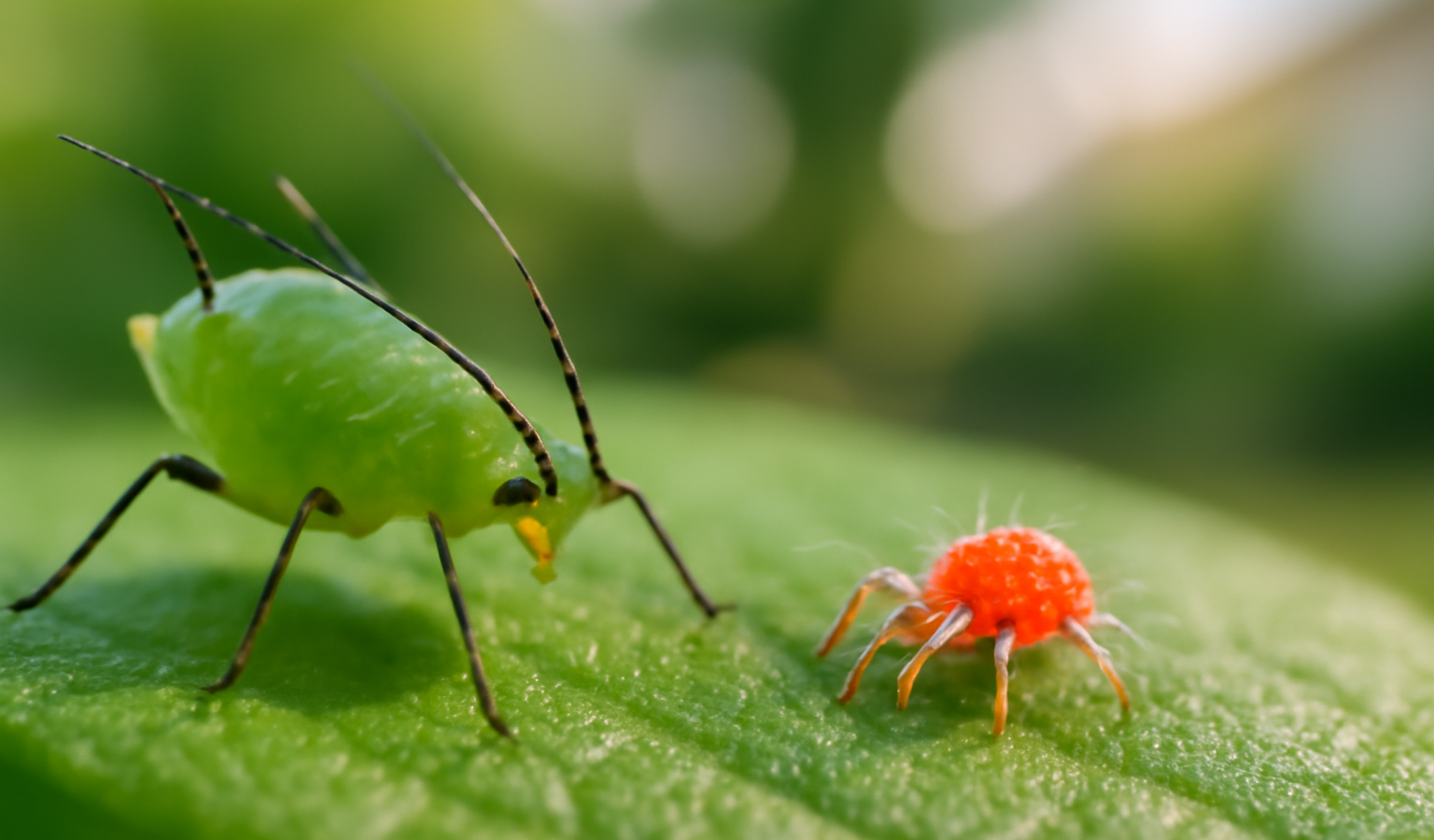
Aphids and spider mites are two of the most common sap-sucking pests on houseplants, vegetables, and ornamentals, and a stressed, sticky, or speckled plant could be hosting either one. But they are very different creatures that demand different tactics. Aphids are insects — soft, pear-shaped, and big enough to see clearly (about 1/16 to 1/8 inch), clustering in obvious colonies on new growth and leaving behind sticky honeydew and black sooty mold. Spider mites are not insects at all but tiny arachnids, often smaller than a pinhead, that you may only notice as moving dust on the leaf underside, fine silk webbing in the leaf axils, and a stippled, dusty, bronzed look to the foliage. Getting the ID right matters because spider mites explode in hot, dry conditions and shrug off some treatments, while aphids breed fastest on lush new growth and respond well to a simpler arsenal. This guide shows you how to identify and treat each, and how to keep them from coming back.
Key Takeaways
- Aphids are visible, soft, pear-shaped insects (green, black, white, or pink) that cluster on stems and new growth and leave sticky honeydew.
- Spider mites are nearly microscopic arachnids; the giveaways are fine webbing, tiny moving specks, and a stippled, bronzed, dusty leaf surface.
- Aphids love lush, over-fertilized new growth; spider mites thrive in hot, dry, dusty conditions and indoor heat.
- Both feed on sap and weaken plants; aphids also transmit viruses, while heavy mite damage can kill leaves.
- A strong water blast, insecticidal soap, and neem oil knock back both — but mites also need humidity and repeat sprays to break the cycle.
| Feature | Aphids | Spider Mites |
|---|---|---|
| What they are | Insects (6 legs) | Arachnids (8 legs), related to spiders |
| Size & visibility | 1/16–1/8 in, easily seen | Pinhead-sized specks, often need a lens |
| Appearance | Pear-shaped, soft; green, black, pink, white | Tiny moving dots; red, yellow, or brown |
| Telltale sign | Sticky honeydew, sooty mold, ants, colonies on new growth | Fine webbing, stippled/bronzed dusty leaves |
| Favored conditions | Cool-to-warm, lush nitrogen-rich growth | Hot, dry, dusty; low humidity, indoor heat |
| Reproduction speed | Very fast; live young, many generations | Explosive in heat; eggs hatch in days |
| Damage | Curled/yellowed leaves, virus transmission | Stippling, bronzing, leaf drop, death in severe cases |
Aphids
Aphids are small, soft-bodied insects that you can usually see with the naked eye. They come in green, black, gray, pink, yellow, and waxy white forms, but all share the same pear-shaped body and a pair of little tailpipe-like projections (cornicles) sticking out the rear end — a feature that confirms the ID under a hand lens. They feed by inserting needle-like mouthparts into the plant and sucking sap, and they reproduce at a staggering rate: in the growing season, females give birth to live, already-pregnant young without mating, so a few aphids become a smothering colony in a week. They cluster on the tenderest tissue — new shoot tips, flower buds, and leaf undersides — which is why over-fertilized, lush plants are aphid magnets.
How to identify aphids
Look at the growing tips and undersides of young leaves for dense clusters of soft, slow-moving bugs. The most distinctive clue is honeydew: aphids excrete a sugary, sticky waste that coats leaves below the colony, makes foliage shiny and tacky, and often grows a black “sooty mold.” If you see ants trooping up and down the stems, they are almost certainly farming aphids for that honeydew — follow the ants to the colony. Affected new growth becomes curled, puckered, yellowed, or distorted, and flower buds may fail to open. Because aphids move from plant to plant, they can also spread plant viruses, which is part of why early control matters. If your houseplant is leggy and weak on top of a pest problem, our guide on why pothos goes leggy covers the growth side of the equation.
How to treat aphids
Aphids are among the easiest pests to manage. Start with a strong blast of water from a hose or shower head, focusing on stem tips and leaf undersides — aphids are soft and clumsy, so a firm spray knocks most of them off and they rarely climb back. For colonies that persist, insecticidal soap kills on contact (coat the bugs thoroughly while wet), and neem oil adds residual and repellent action plus disrupts their breeding. Repeat every few days for one to two weeks because new aphids keep hatching. Pinch off and trash the most heavily infested shoot tips. Outdoors, encourage natural predators — ladybugs, lacewings, and hoverfly larvae devour aphids — and ease off the nitrogen fertilizer that drives the soft growth aphids crave. Controlling ants (which protect aphids from those predators) helps the beneficials do their job.
Spider mites
Spider mites are not insects — they are tiny arachnids, relatives of spiders and ticks, with eight legs and bodies often no bigger than a grain of salt. The most common garden species, the two-spotted spider mite, looks like a moving fleck of dust to the naked eye; you frequently notice the damage before you spot the mites themselves. They thrive in hot, dry, dusty conditions — the inside of a heated winter home, a sun-baked patio, or a drought-stressed garden bed — and in that environment they reproduce explosively, completing a generation in under a week and overwhelming a plant before you realize what’s happening. They puncture individual leaf cells and drain them, which produces the disease’s signature look.
How to identify spider mites
The first symptom is usually stippling: a fine sprinkling of tiny pale or yellow dots across the leaf, as if it were peppered with pinpricks, giving the foliage a dusty, bronzed, or sandblasted appearance that worsens until whole leaves turn gray-yellow and drop. The diagnostic clue is the fine silk webbing the mites spin across leaf undersides, in leaf axils, and over growing tips — most obvious in a bad infestation or when backlit. To confirm, hold a sheet of white paper under a suspect leaf and tap it: if you see tiny specks crawling across the paper, those are mites. Under a hand lens you can see the eight legs and, on two-spotted mites, the two dark spots on the body. Spider mites favor beans, tomatoes, strawberries, roses, conifers, and a wide range of houseplants. Because their early stippling can resemble other stresses, the moving-specks-on-paper test plus webbing is your confirmation.
How to treat spider mites
Mites are tougher to eradicate than aphids because they’re tiny, fast-breeding, and partly protected by their webbing. Begin by raising humidity and rinsing the plant: a thorough spray of water (again hitting leaf undersides) physically removes many mites and webbing, and mites hate moisture — keeping foliage and the surrounding air more humid directly suppresses them. Insecticidal soap and neem oil or other horticultural oils smother mites and their eggs, but you must achieve total coverage of the undersides and repeat every 3–5 days for at least two to three weeks to catch each new generation hatching from eggs the spray missed. Isolate infested houseplants immediately, since mites spread on air currents and brushing leaves. Prune out the worst-hit foliage. Outdoors, predatory mites and other beneficials help, and avoiding broad-spectrum insecticides matters — those often kill the predators and trigger even worse mite outbreaks. For more on choosing between the two main sprays, see our comparison of neem oil vs insecticidal soap.
Prevention that works on both
Scouting is your best defense for both pests: inspect new growth and leaf undersides weekly, ideally with a hand lens, and quarantine every new plant for a couple of weeks before it joins the collection. Keep plants unstressed but not overfed — lush, nitrogen-pumped growth invites aphids, while drought and dry indoor air invite mites — so water consistently and fertilize moderately. Keep foliage clean: wiping or rinsing leaves removes dust (which favors mites) and dislodges early colonies of both. A quick routine of cleaning houseplant leaves doubles as pest surveillance. Encourage or introduce beneficial predators outdoors, avoid blanket pesticide sprays that wipe them out, and act at the first sign rather than waiting — a colony of either pest is far easier to crush when it’s a dozen bugs than when it’s a webbed-over, honeydew-coated plant.
Other look-alikes and confirming the ID
A few other sap-suckers can muddy the picture, so it’s worth ruling them out. Whiteflies resemble winged aphids but are pure white and flutter up in a little cloud when you shake the plant; like aphids they produce honeydew and sooty mold. Mealybugs look like tiny tufts of white cotton wedged in leaf axils and stem joints, and they too leave honeydew. Scale insects appear as small, immobile brown or tan bumps stuck to stems and leaf undersides. Thrips cause silvery stippling that can look a little like early mite damage, but they leave tiny black specks of frass and you won’t find webbing. The two features that most reliably separate your two main suspects from the rest of the pack are honeydew (points to aphids, whiteflies, mealybugs, or scale) and fine webbing (unique to spider mites). When in doubt, the white-paper tap test for moving specks confirms mites, and a hand lens settles almost every other ID by revealing body shape, legs, and the telltale aphid cornicles.
The verdict: which pest is it?
Use three checks. Can you see them easily? Soft, pear-shaped bugs clustering on stems and shoot tips are aphids; if you see only faint moving dust and damage, suspect mites. Is it sticky or webbed? Sticky honeydew, sooty mold, and patrolling ants mean aphids; fine silk webbing and a stippled, bronzed leaf surface mean spider mites. What’s the environment? Lush, recently fertilized growth favors aphids, while hot, dry, dusty air — especially indoors in winter — favors mites. Once identified, both yield to a water blast plus insecticidal soap or neem, but mites demand more diligence: boost humidity, cover every leaf underside, and repeat the spray for two to three weeks to break their fast life cycle. Catch either early and you’ll spare the plant the curling, yellowing, and collapse that a full-blown infestation brings.
Frequently Asked Questions
How can I tell aphids from spider mites at a glance?
Aphids are big enough to see clearly — soft, pear-shaped insects clustering on new growth, often with sticky honeydew and ants. Spider mites are nearly microscopic; you’ll notice fine webbing and a stippled, dusty, bronzed look to the leaves before you ever see the mites themselves.
Why do spider mites keep coming back after I spray?
Mites hatch in waves from eggs that contact sprays often miss, and they breed in under a week in warm, dry air. You need to cover leaf undersides completely and repeat every 3–5 days for two to three weeks, while also raising humidity, which mites strongly dislike.
What’s the sticky stuff on my plant from aphids?
That’s honeydew, the sugary waste aphids excrete as they feed. It coats leaves below the colony, attracts ants, and often grows black sooty mold. Spider mites don’t produce honeydew, so a sticky plant points squarely to aphids (or another sap-sucker like whitefly or scale).
Will the same treatment work on both pests?
Largely yes — a strong water blast, insecticidal soap, and neem oil control both. The difference is diligence: aphids often clear in a week or two, while mites require more frequent, longer repeat sprays plus higher humidity to fully break their faster, egg-driven life cycle.
Are spider mites a type of insect?
No. Spider mites are arachnids with eight legs, related to spiders and ticks, not insects. That distinction matters because some insect-specific products are less effective on mites, and mite outbreaks can actually worsen after broad-spectrum insecticides kill their natural predators.