

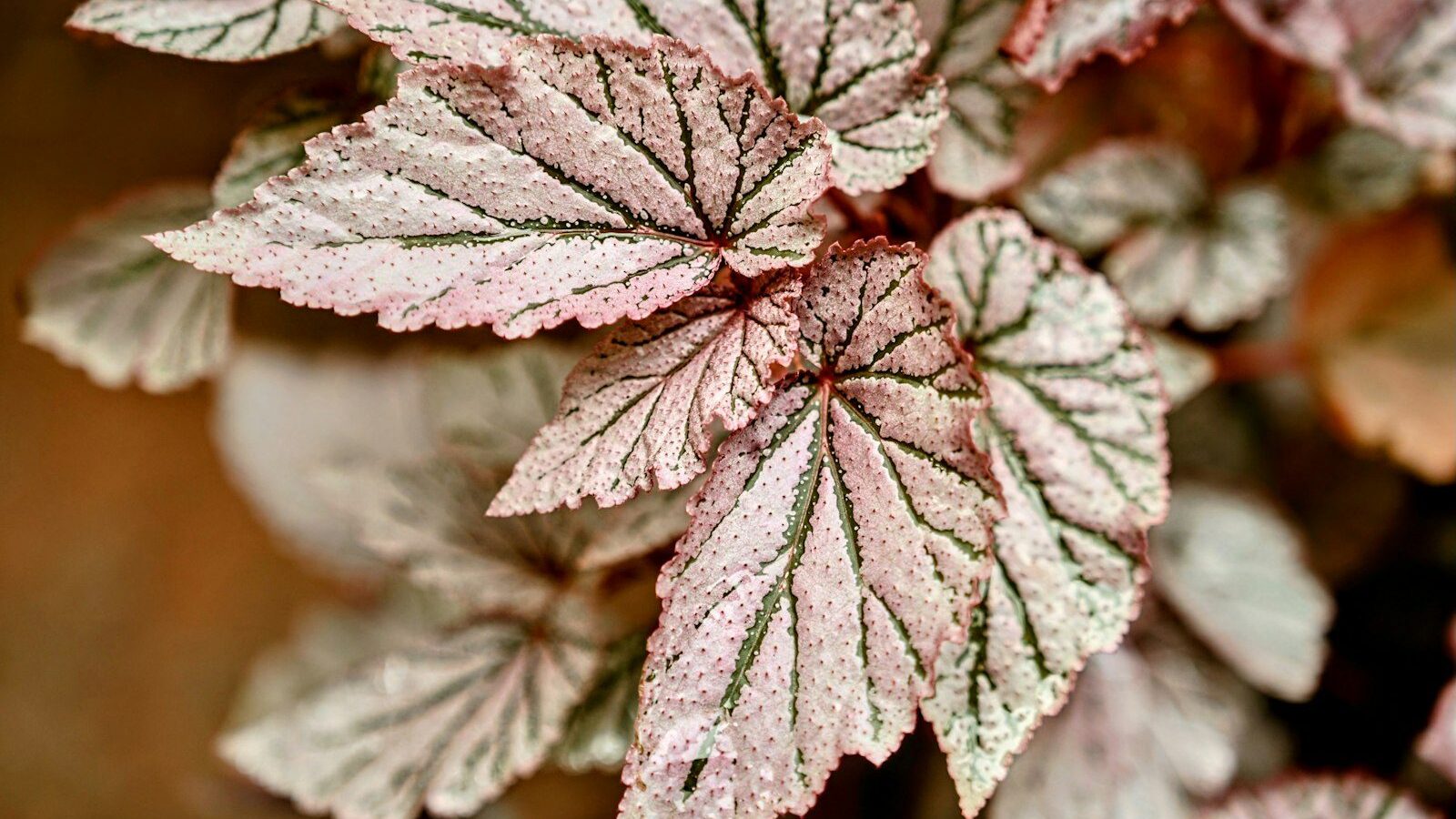
Rex begonias are grown entirely for their extraordinary leaves — swirls of silver, burgundy, plum, green, and pink, often with a metallic sheen and a spiraled “snail” base. They are foliage royalty, and like a lot of royalty they have opinions. Rex begonias are rhizomatous plants that want bright but gentle light, careful watering, and the humidity of a greenhouse without the soggy roots. Get the balance right and they are surprisingly tough; get it wrong and they sulk, drop leaves, or develop powdery mildew. This guide breaks down exactly what a rex begonia needs to show off indoors, including how to clone one from a single leaf.
Key Takeaways
- Light: bright, indirect light brings out the best color; no harsh direct sun.
- Water: let the top inch dry, then water at the soil line — keep water off the leaves.
- Soil: light, airy, fast-draining mix; pot shallow and wide for the rhizome.
- Humidity: loves 50%+; dry air causes crispy edges and stalls growth.
- Propagation: easy from leaf cuttings — a signature trick of this plant.
- Toxicity: toxic to cats and dogs (soluble calcium oxalates), mildly so to people.
Light: Bright Indirect for Best Color
Rex begonias produce their richest leaf color in bright, indirect light. An east-facing window with gentle morning sun, or a spot a few feet back from a brighter south or west window, is ideal. Good light keeps the patterns vivid and the plant compact. In too much direct sun, the thin leaves bleach, fade, and scorch at the edges; in too little light, the colors mute toward plain green and the plant grows leggy and sparse.
These begonias adapt well to grow lights, which makes them excellent choices for north-facing rooms or terrariums. A standard LED grow light running 10 to 12 hours a day keeps them colorful and full. Rotate the pot a quarter turn each week so the plant grows symmetrically rather than leaning toward the light. If you notice the leaves losing their metallic shimmer and reverting to flat green, that is the plant telling you it wants more light.
Watering Without Drowning
Watering is the trickiest part of rex begonia care because the plant hates both extremes. The rhizome and roots rot quickly if kept soggy, but the plant also wilts and crisps if allowed to bake dry. The reliable approach is to let the top inch of soil dry out, then water thoroughly until it drains from the bottom, and empty the saucer. In a warm, bright room during the growing season that might be every 5 to 7 days; in winter the plant uses far less and you should let it dry more between waterings.
Always water at the soil line, not over the foliage. Rex begonia leaves are prone to spotting and powdery mildew when they stay wet, so keeping them dry is one of the simplest ways to avoid trouble. Bottom-watering — setting the pot in a shallow tray of water for 15 minutes until the surface feels moist — is an excellent method for this plant because it moistens the roots without wetting the leaves or the crown. Use room-temperature water and never let the pot stand in a saucer of water.
Soil and Potting
Rex begonias grow from a surface rhizome and have relatively shallow, fine roots, so they want a light, airy, fast-draining medium. A good mix is quality potting soil lightened with extra perlite and a handful of orchid bark or coco coir — anything that keeps the blend from compacting and holding water around the rhizome. They prefer slightly acidic to neutral soil.
Because the rhizome creeps along the surface and the roots are shallow, rex begonias do best in wide, shallow pots rather than deep ones. A deep pot holds a column of wet soil the roots can’t use, inviting rot. Choose a container only slightly larger than the root ball with good drainage. When potting, set the rhizome at or just above the soil surface — burying it encourages rot. Feed lightly during spring and summer with a balanced liquid fertilizer diluted to half strength every 2 to 4 weeks, and stop feeding in winter. Repot every year or two in spring when the plant fills its pot. The airy-mix, shallow-pot logic mirrors advice across our Plants & Flowers guides.
Humidity and Temperature
If there is a single secret to lush rex begonias, it is humidity. These plants come from humid tropical forests and want relative humidity of 50% or higher — many growers aim for 60 to 70%. In dry indoor air, especially in winter with the heat running, leaf edges turn brown and crispy and growth stalls. A small humidifier near the plant is the most effective remedy. Pebble trays and grouping plants help a little, and rex begonias famously thrive in terrariums and glass cabinets where humidity stays high.
Avoid misting, though — wet leaves invite the powdery mildew and bacterial spotting these begonias are prone to. Raise ambient humidity instead. On temperature, keep them between 65°F and 75°F. They dislike cold and will suffer below about 55°F, so keep them away from drafty winter windows and cold doorways. Equally, keep them away from the dry, hot blast of heating vents. Steady warmth and steady humidity, with good airflow to discourage fungus, is the winning combination.
Propagation From Leaves
One of the joys of rex begonias is how easily they propagate from a single leaf — a genuine party trick. The best time is spring or summer when the plant is actively growing. There are two reliable methods.
Whole-leaf method
- Cut a healthy leaf with a short piece of stem using a clean blade.
- Turn the leaf over and use the blade to nick across several of the major veins on the underside.
- Lay the leaf flat, cut-side down, on moist, airy propagation mix, and pin it down with small stones or hairpins so the cut veins stay in contact with the soil.
- Cover with a clear dome or bag to hold humidity, keep warm and brightly lit, and wait. Tiny plantlets sprout from the cut veins over several weeks.
Leaf-wedge method
Cut a leaf into pie-shaped wedges, each containing a main vein, and insert the pointed end into moist mix. Keep humid and warm. Each wedge can form a new plantlet at its base. Once plantlets have a few leaves and roots of their own, pot them up individually. This is the same principle of high humidity and warmth used when rooting cuttings of other houseplants — our pothos propagation guide covers the water-and-soil basics.
Common Problems and Fixes
Powdery mildew
The most common rex begonia ailment, appearing as a white, dusty coating on leaves. It thrives in stagnant, humid air with poor circulation. Improve airflow with a small fan, avoid wetting the leaves, space plants apart, and treat affected leaves with a fungicide or a neem oil solution. Remove badly infected leaves entirely.
Crispy brown edges
This is the classic low-humidity symptom. Raise humidity with a humidifier and keep the plant out of dry drafts. Crispy edges can also follow underwatering or salt buildup from fertilizer, so check moisture and flush the soil occasionally.
Yellowing or dropping leaves
Usually overwatering and soggy soil. Let the mix dry more between waterings and confirm the pot drains freely. A little leaf drop in winter is normal as the plant slows down; sudden heavy drop suggests cold drafts or root rot.
Pests
Watch for mealybugs in leaf joints and along the rhizome, plus thrips and the occasional spider mite in dry conditions. Inspect regularly, isolate affected plants, and treat with insecticidal soap or neem oil, repeating every week or so until clear.
Are Rex Begonias Toxic to Pets?
Yes. Begonias contain soluble calcium oxalates and are listed as toxic to cats, dogs, and horses, with the highest concentration in the underground parts and rhizome. Chewing the plant can cause oral irritation, intense burning of the mouth, drooling, and vomiting, and large quantities can affect the kidneys in animals. They are considered only mildly toxic to humans, but it is still wise to keep them away from small children. Place rex begonias where pets cannot nibble them, and wash your hands after taking cuttings. If you have determined chewers in the home, a high shelf or hanging spot keeps both the plant and your pets safe.
Frequently Asked Questions
Why are my rex begonia leaves turning brown and crispy?
Almost always low humidity. Rex begonias want 50% or higher and develop crispy edges in dry indoor air, especially in winter. Run a humidifier nearby, keep the plant away from heating vents, and make sure you are not also letting the soil dry out completely.
How often should I water a rex begonia?
Let the top inch of soil dry, then water thoroughly — roughly every 5 to 7 days in the growing season and less in winter. Water at the soil line, never on the leaves, and consider bottom-watering to keep the foliage and crown dry and rot-free.
Can you propagate rex begonia from a leaf?
Yes, easily. Pin a leaf flat on moist mix with its veins nicked, or cut the leaf into wedges and insert them in mix. Keep warm and humid under a dome, and plantlets will sprout from the cuts over several weeks.
Why is my rex begonia losing its color?
Usually not enough light. In low light the metallic patterns fade toward plain green and growth gets leggy. Move it to brighter indirect light or add a grow light — but avoid harsh direct sun, which bleaches and scorches the leaves.
Are rex begonias poisonous to cats and dogs?
Yes. They contain soluble calcium oxalates and are toxic to cats and dogs, with the most concentration in the rhizome. Chewing causes oral burning, drooling, and vomiting. Keep them out of reach and wash your hands after handling cuttings.
Rex begonias ask for a specific set of conditions — bright filtered light, careful watering at the soil line, an airy shallow pot, and real humidity with good airflow — but none of it is hard once you know the rules. Meet those needs and you get one of the most jaw-dropping foliage plants available, and the ability to turn a single leaf into a whole shelf of them.