

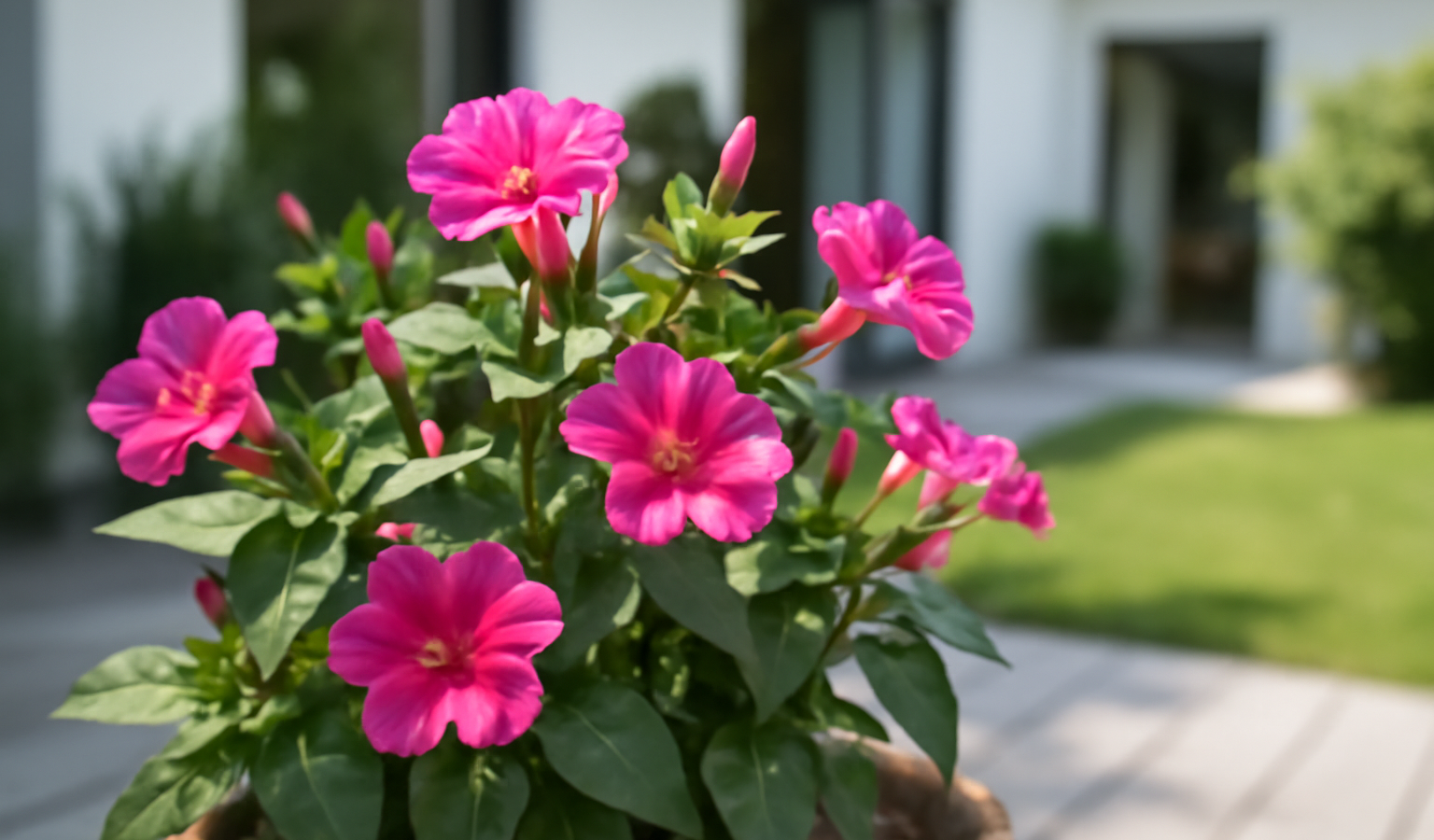
To grow four o’clocks (Mirabilis jalapa), sow seed directly after your last frost in full sun, or plant the fat tuberous roots an inch or two deep, and then largely leave them alone — this is one of the most forgiving flowers you can put in the ground. The plant earns its name because the trumpet-shaped, sweetly fragrant flowers stay shut through the heat of the day and pop open in late afternoon, roughly four o’clock, staying open through the night for moths and into the cool of morning. A single bushy plant can carry flowers in pink, magenta, yellow, white, and red all at once, sometimes with two colors splashed on the same bloom. They are treated as annuals in cold climates and as perennials in warm ones, where the underground tuber survives winter and resprouts each spring. This guide covers seed and tuber planting, the sun and soil they want, lifting and overwintering the tubers, the heavy self-seeding you need to manage, and the toxicity worth knowing before you plant them where kids and pets roam.
Key Takeaways
- Perennial in zones 7-11 from the underground tuber; grown as an annual everywhere colder, where it reseeds reliably.
- Full sun gives the best, densest bloom, though plants tolerate part shade and afternoon heat without complaint.
- Sow seed 1/4 to 1/2 inch deep after frost, or plant tubers 1 to 2 inches deep and a foot or more apart.
- Flowers open in late afternoon and stay open overnight, releasing a strong sweet fragrance that draws hawk moths and hummingbirds.
- Lift and store tubers in fall in zones 6 and colder to overwinter them like dahlias.
- All parts are toxic if eaten — seeds and roots especially — so site them carefully around children and pets.
Know What You Are Planting
Four o’clock is a tender perennial native to tropical South America, grown around the world for its fragrant evening flowers and easygoing nature. Above ground it makes a rounded, shrubby mound 2 to 3 feet tall and nearly as wide in a single season, clothed in deep green leaves and tipped with clusters of inch-and-a-half tubular flowers. Below ground it forms a thick, dark, carrot-like tuber that stores energy through the dormant season — the same structure that lets it return as a perennial in mild climates and that you can dig and save in cold ones.
The flowers are the show. They are heavily scented, almost like jasmine or orange blossom, and the perfume is strongest in the evening, which fits their pollinators: long-tongued hawk moths visit at dusk, and hummingbirds work the open blooms in the cool of morning. Because each flower lasts only a day, the plant simply makes more, so a healthy clump flowers nonstop from midsummer to frost. The species is also famous in genetics class for showing incomplete dominance — cross a red and a white four o’clock and you get pink — which is part of why so many color mixes exist. If you like fragrant night-garden plants, pair them with our notes on growing other evening bloomers in the plants and flowers hub.
Climate and Zones
In USDA zones 7 through 11, four o’clocks are a true perennial: the top growth dies back at frost, but the tuber rides out winter underground and resprouts in spring, returning bigger and earlier each year. In zones 9 to 11 they can be nearly evergreen and shrub-like. From zone 6 and colder the ground freezes too hard for the tuber to survive in place, so gardeners there treat the plant as an annual — and a generous one, because it almost always drops enough self-sown seed to come back on its own the following season even where the parent plant dies.
The plant loves heat and humidity and shrugs off the worst of a southern summer, which is exactly when many other flowers sulk. It is drought-tolerant once established thanks to that water-storing tuber. The only conditions it dislikes are cold, soggy soil and deep shade. If you garden in a hot climate and want reliable color in July and August, this is a plant that thrives in the season that defeats others.
How to Grow Four O’Clocks from Seed
Seed is the easiest and cheapest route, and the large, hard, black seeds — each about the size of a peppercorn — are simple to handle. Sow directly in the garden after all danger of frost has passed and the soil has warmed, usually mid to late spring. Plant seeds 1/4 to 1/2 inch deep and space them 12 to 18 inches apart, because each plant fills out into a sizable bush. Soaking the seeds in water overnight before planting softens the hard coat and speeds germination, which typically takes 7 to 14 days in warm soil.
To get a jump on the season in short-summer regions, start seed indoors 6 to 8 weeks before your last frost in 3- to 4-inch pots — they resent root disturbance, so larger cells make transplanting smoother. Harden off seedlings over a week before moving them outside. Plants started from seed usually begin blooming about 60 to 90 days after sowing, so a mid-spring sowing flowers from midsummer onward. Seed-grown plants form their own tubers by the end of the first season, which is what you will lift and store in cold climates.
Planting and Growing from Tubers
If you saved tubers from last year or bought dormant roots, plant them outdoors after the last frost. Set each tuber 1 to 2 inches deep with the growing crown — the end where old stems emerged — facing up, and space them 12 to 24 inches apart. A tuber that survived a winter has a big head start over seed and will sprout quickly and bloom weeks earlier, often by early summer. In mild zones where they overwinter in the ground, simply leave them in place; cut back the dead top growth and the clump will return on its own each spring, growing larger every year as the tuber thickens.
Tubers can be enormous on multi-year plants — the size of a large parsnip or bigger — and they are the secret to the plant’s drought tolerance and its quick spring rebound. You can also start saved tubers indoors in pots a few weeks before your last frost to extend the show, treating them much like you would dahlia or canna tubers.
Sun, Soil, Water, and Spacing
Give four o’clocks full sun for the heaviest bloom — six hours or more of direct light. They will grow and flower in part shade, particularly tolerating hot afternoon sun, but bloom thins as light drops. Soil is not fussy: average garden soil that drains is plenty. They handle poor, sandy, or clay soils and a wide pH range, though they grow lushest in a moderately fertile, well-drained loam. Avoid spots that stay wet in winter, which rots the tubers.
Water regularly during the first few weeks to establish, then back off — the tuber stores its own reserve and established plants are notably drought-tolerant, needing water only in long dry spells. Go easy on fertilizer; rich feeding produces leafy plants with fewer flowers. A single light application of a balanced or low-nitrogen fertilizer in late spring is all most plants need. Space plants 12 to 24 inches apart so air moves through the dense foliage and you get full, rounded bushes rather than crowded, leggy ones. In containers, use a large pot — at least 3 gallons — because the tuber needs room.
Bloom: What to Expect and When
Expect flowers from midsummer through the first hard frost, with the peak in the heat of July, August, and September. The trumpet-shaped blooms open in late afternoon — hence “four o’clocks” — and on cloudy or cooler days they may open earlier and stay open well into the next morning. The fragrance intensifies at dusk to court night-flying moths. Colors run through magenta, rose-pink, yellow, white, and red, and a single plant can carry several colors at once, sometimes streaked or splashed on one bloom. Deadheading is optional; the plant blooms freely without it, though removing spent flowers reduces the heavy seed set if self-sowing is a concern.
Lifting and Overwintering the Tubers
In zones 6 and colder, you can either let the plant reseed and grow it fresh each year, or dig and store the tubers to get an earlier, bigger plant next season — exactly the routine used for dahlias. After the first frost blackens the foliage, cut the stems back to a few inches and carefully dig the tuber, lifting wide to avoid slicing it. Brush off loose soil, trim the stems, and let the tubers cure in a dry, airy, frost-free spot for a few days.
Store cured tubers in a box of barely-damp peat, sawdust, sand, or vermiculite in a cool, dark, frost-free place — a basement or garage that stays around 40 to 50°F is ideal. Check them once or twice over winter; discard any that turn soft or rot, and lightly mist the packing medium if the tubers begin to shrivel. Replant outdoors after your last frost the following spring. In mild zones, skip all of this: just mulch the crowns over winter for insurance and let them resprout in place.
Self-Seeding and Keeping Them in Bounds
Four o’clocks are prolific self-seeders. Each flower can produce a single hard black seed, and a vigorous plant drops hundreds. In warm climates especially, those seeds germinate the next spring and the patch expands year over year — welcome if you want a naturalized drift, a nuisance if you want it confined. To control spread, deadhead before seeds ripen and drop, pull volunteer seedlings while small in spring, and grow plants in beds bordered by lawn or pavement where stray seedlings get mowed or cut. The plant is not classified as aggressively invasive in most regions, but it is enthusiastic, so plan for it. On the upside, that same generosity means you rarely need to buy seed twice.
Pests, Problems, and Toxicity
Pests are minimal. The most common nuisance is leaf damage from Japanese beetles or the occasional aphid, neither of which usually warrants treatment on such a vigorous plant. Good air circulation prevents the rare fungal leaf spot. Far more important is toxicity: every part of Mirabilis jalapa is poisonous if eaten, and the seeds and tuberous roots are the most dangerous parts. Ingestion can cause stomach pain, vomiting, and diarrhea in people and pets, and the sap can irritate skin. The hard black seeds are about the size and look of a small bead, which is exactly why curious children sometimes pick them up — site the plants away from where toddlers play and keep an eye on dogs that dig and chew roots. With sensible placement, the toxicity is a non-issue; it simply belongs on your radar before planting. For a less worrisome fragrant annual in a kid-and-pet zone, see our other easy-from-seed picks in the plants and flowers hub and the companion guide on growing tuberous begonias, which offer color without the seed risk.
Frequently Asked Questions
Why are they called four o’clocks?
The flowers stay closed through the heat of the day and open in the late afternoon, around four o’clock, then stay open all night and release their strongest fragrance at dusk for night-flying moths. On overcast or cool days they often open earlier and remain open into the morning.
Do four o’clocks come back every year?
In zones 7 and warmer the underground tuber survives winter and the plant returns as a perennial. In colder zones the plant dies at frost, but it self-seeds so freely that it usually reappears from seed each spring. You can also dig and store the tubers like dahlias to overwinter them.
How deep do I plant four o’clock seeds and tubers?
Sow seeds 1/4 to 1/2 inch deep after the last frost, spacing plants 12 to 18 inches apart. Plant tubers 1 to 2 inches deep with the crown facing up, 12 to 24 inches apart. Soaking seeds overnight before sowing speeds germination.
Are four o’clocks toxic to pets and children?
Yes. All parts are poisonous if eaten, and the seeds and roots are the most toxic. Ingestion can cause vomiting, diarrhea, and stomach upset in people, dogs, and cats, and the sap can irritate skin. Plant them away from areas where small children play or pets dig.
Do four o’clocks need full sun?
They bloom best in full sun, six or more hours daily, but they tolerate part shade and handle hot afternoon sun well. In shadier spots they still grow but flower less heavily. For the fullest, most colorful bush, give them as much sun as you can.