

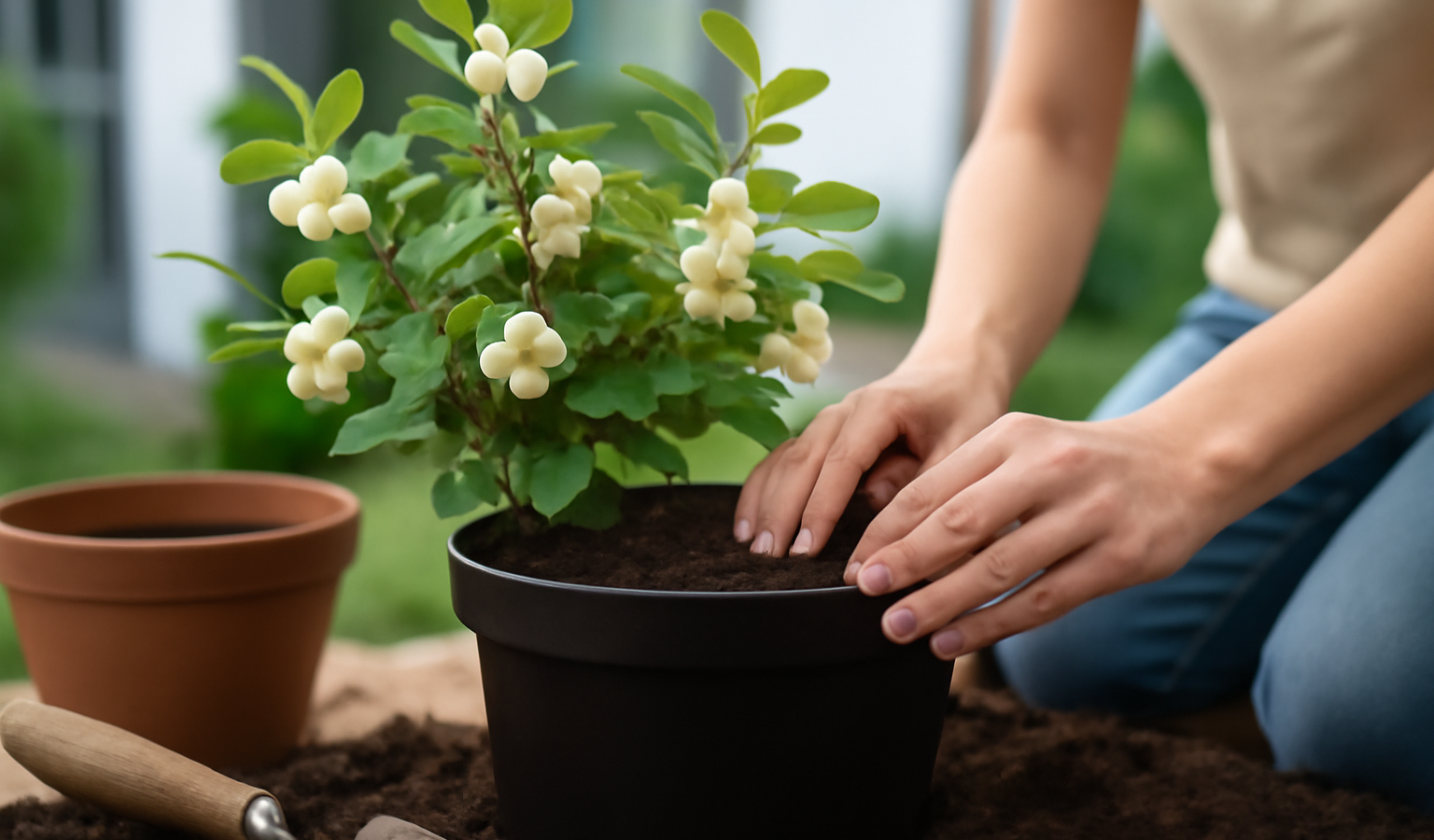
Snowberry (Symphoricarpos) earns its place for the season when most shrubs have given up: late fall and winter, when its bare branches hang heavy with clusters of plump, pure-white berries that look like little snowballs and persist long after the leaves drop. A tough, adaptable native shrub across much of North America, it thrives where many plants struggle—dry shade, poor soil, eroding banks, and the difficult margins of woodland. The small pink summer flowers feed bees and hummingbirds, the dense suckering thickets shelter and feed birds, and the whole plant practically grows itself. If you want winter interest and wildlife value from a shrub that tolerates neglect, snowberry delivers.
Key Takeaways
- Zones: Common snowberry (S. albus) is hardy in USDA zones 3–7; coralberry types extend into zone 9.
- Light: Full sun to full shade—one of the most shade-tolerant berrying shrubs, though sun gives the heaviest fruit.
- Soil: Highly adaptable, including clay, poor and dry soils; tolerates a wide pH range.
- Size & spacing: Typically 3–6 feet tall and wide; space 3–5 feet apart, closer for a hedge or bank cover.
- Flowers & berries: Small pink summer flowers followed by showy white (or pink/coral) berries that last into winter.
- Note: The berries are mildly toxic to people if eaten in quantity, though birds and wildlife rely on them.
Light: sun to deep shade
Snowberry’s flexibility with light is one of its best features. It grows in everything from full sun to full shade, which makes it a rare berrying shrub you can plant under trees or on a shaded north slope and still get fruit. That said, the trade-off is real: plants in full sun produce the most flowers and therefore the heaviest crop of berries, while those in deep shade flower and fruit more sparsely and grow somewhat looser and leggier. For the best winter berry display, give snowberry as much sun as the site allows; for filling a shaded problem area where you mainly want erosion control and wildlife cover, partial to full shade works fine.
Soil and planting
Few shrubs are as unfussy about soil. Snowberry tolerates clay, loam, sandy and rocky soils, poor and dry ground, and a wide range of pH from acidic to alkaline. It even handles compacted urban soils and the lean fill around new construction, which is why it’s used so often for erosion control and habitat restoration on tough sites. The main thing to provide is reasonable drainage; while it tolerates a range of moisture, it does best where water doesn’t permanently pool.
Plant in spring or fall, setting the shrub at the depth it grew in its container, then water in well and mulch to conserve moisture during establishment. Snowberry suckers outward to form a colony, so give it space: set plants 3–5 feet apart as specimens, and on the closer end of that range—or even tighter—when you want them to merge into a hedge, screen or bank cover. Remember it will spread on its own over time, so plan for the mature thicket, not just the nursery pot.
Watering and feeding
Keep newly planted snowberry watered through its first growing season—roughly an inch a week including rain—to establish the roots. Once settled in, it’s markedly drought-tolerant and needs little supplemental water, though a deep soak during extended summer drought keeps the foliage fresh and supports a better berry set. It also tolerates periodic wetness better than many shrubs, which adds to its usefulness on variable sites like swales and stream banks.
Feeding is essentially optional. As a native adapted to lean soils, snowberry rarely needs fertilizer; a spring topdressing of compost is more than enough for plants in poor ground. Avoid heavy nitrogen feeding, which pushes leafy growth and even more vigorous suckering at the expense of the flowers and berries you’re after.
Flowers, white berries and wildlife
In early to midsummer, snowberry produces clusters of small, bell-shaped pink (sometimes white) flowers that are easy to overlook but valuable to wildlife—they’re a nectar source for bees, bumblebees and hummingbirds. The real show comes later: by late summer and fall those flowers ripen into the signature round, waxy white berries (or, on coralberry and ‘Magical’-type cultivars, pink to coral fruits) that cluster along the stems and persist into winter after the leaves fall, glowing against the bare branches.
Those berries are a winter lifeline for wildlife. Birds—including grouse, quail, robins, thrushes and waxwings—feed on the fruit through the cold months, and the dense thickets provide nesting sites and cover for birds and small mammals; deer and other browsers eat the foliage. One important caution: the white berries are considered mildly toxic to humans and can cause stomach upset if eaten in quantity, so site snowberry thoughtfully if small children frequent the garden, even though birds eat them safely. For more on choosing berrying and wildlife shrubs, see our Plants & Flowers guides.
Controlling the suckers and spread
Snowberry spreads vigorously by underground rhizomes, sending up suckers to form dense, expanding thickets. On a bank, in a wild hedge or in a naturalized woodland edge, this is exactly what you want—it knits the soil together and creates habitat. In a formal border, though, it can become a nuisance, popping up well beyond where you planted it.
To keep it in check, dig out unwanted suckers as they appear, severing them below soil level with a sharp spade once or twice a season. You can also install a root barrier at planting, or simply site it where mowing or hard edges limit its travel. The upside of this habit is effortless propagation, covered below. If a colony grows too large overall, you can dig out and remove sections of the perimeter to reset its footprint.
Pruning and rejuvenation
Snowberry needs little pruning, but a yearly tidy keeps it dense and productive. Prune in late winter or early spring, before new growth begins—the plant flowers and fruits on new wood, so spring pruning won’t cost you any berries and actually encourages fresh, productive growth. Remove dead, weak and crossing stems, and shorten or thin overgrown branches to maintain a good shape and let light into the center.
For old, overgrown or straggly plants, snowberry takes hard rejuvenation pruning beautifully: cut the whole shrub back close to the ground in late winter and it resprouts vigorously, returning to flower and fruit within a year or two. On hedges and large bank plantings, you can shear or even cut back the whole stand periodically to renew it and control height. It’s a forgiving shrub—you’ll rarely do it harm with the pruners.
Propagating snowberry by division and cuttings
Because snowberry suckers so freely, the easiest way to make new plants is by division: in early spring or fall, dig up a rooted sucker from the edge of the colony, sever it from the parent with its roots attached, and replant it where you want it. Water it in and it generally establishes with little trouble—this is the fastest, most reliable method for home gardeners and a great way to share plants.
You can also propagate from cuttings—softwood cuttings in early summer or hardwood cuttings in late fall—rooted in moist, well-drained mix, and the species can be grown from seed, though seed is slow and often needs a period of cold stratification to germinate. For most gardeners, dividing suckers is so simple that it’s the obvious choice.
Pests, problems and using snowberry in the landscape
Snowberry is largely trouble-free. In humid conditions or crowded plantings it can develop powdery mildew or anthracnose/berry rot, both cosmetic and managed by improving air circulation through thinning, avoiding overhead watering, and the annual spring prune. The occasional aphid or scale is easily handled with insecticidal soap. Its main “problem” is simply its enthusiasm—the suckering spread that needs managing in tidy gardens.
Put that vigor to work and snowberry shines: use it for erosion control on slopes and banks, as an informal wildlife hedge or screen, in native and pollinator plantings, along woodland edges, and in those dry-shade corners where little else fruits. The white winter berries also make charming additions to seasonal cut arrangements (handled, not eaten). For ideas on using tough native shrubs to solve slopes, screening and problem areas, browse our Outdoor Living section.
Frequently Asked Questions
Are snowberry berries poisonous?
The white berries are considered mildly toxic to humans and can cause stomach upset if eaten in quantity, so site the shrub thoughtfully where small children play. Birds and wildlife, however, feed on them safely through winter, and the berries are a valuable cold-season food source.
Does snowberry grow in shade?
Yes—snowberry is one of the most shade-tolerant berrying shrubs, growing from full sun to full shade. Plants in full sun produce the most flowers and the heaviest berry crop, while those in deep shade fruit more sparsely and grow looser, but still thrive where many shrubs fail.
How do I stop snowberry from spreading?
Snowberry spreads by underground rhizomes, sending up suckers. Control it by digging out unwanted shoots below soil level once or twice a season with a sharp spade, installing a root barrier at planting, or siting it where mowing and hard edges limit its travel.
When should I prune snowberry?
Prune in late winter or early spring before new growth begins. Snowberry flowers and fruits on new wood, so spring pruning doesn’t cost you berries. Remove dead and crossing stems, and cut old overgrown plants nearly to the ground for vigorous rejuvenation.
How do you propagate snowberry?
The easiest method is division—dig up a rooted sucker from the colony’s edge in spring or fall, sever it with its roots, and replant. You can also root softwood cuttings in early summer or hardwood cuttings in late fall, or grow it from cold-stratified seed, though dividing suckers is fastest.
Snowberry is a low-effort, high-reward native: plant it in sun or shade and almost any soil, water it through the first season, manage its suckers, and prune it lightly each spring. In return you get summer flowers for pollinators, dense cover and winter berries for birds, and that unmistakable display of white “snowballs” when the rest of the garden is bare. For more wildlife-friendly and winter-interest shrubs, explore our Plants & Flowers collection.