

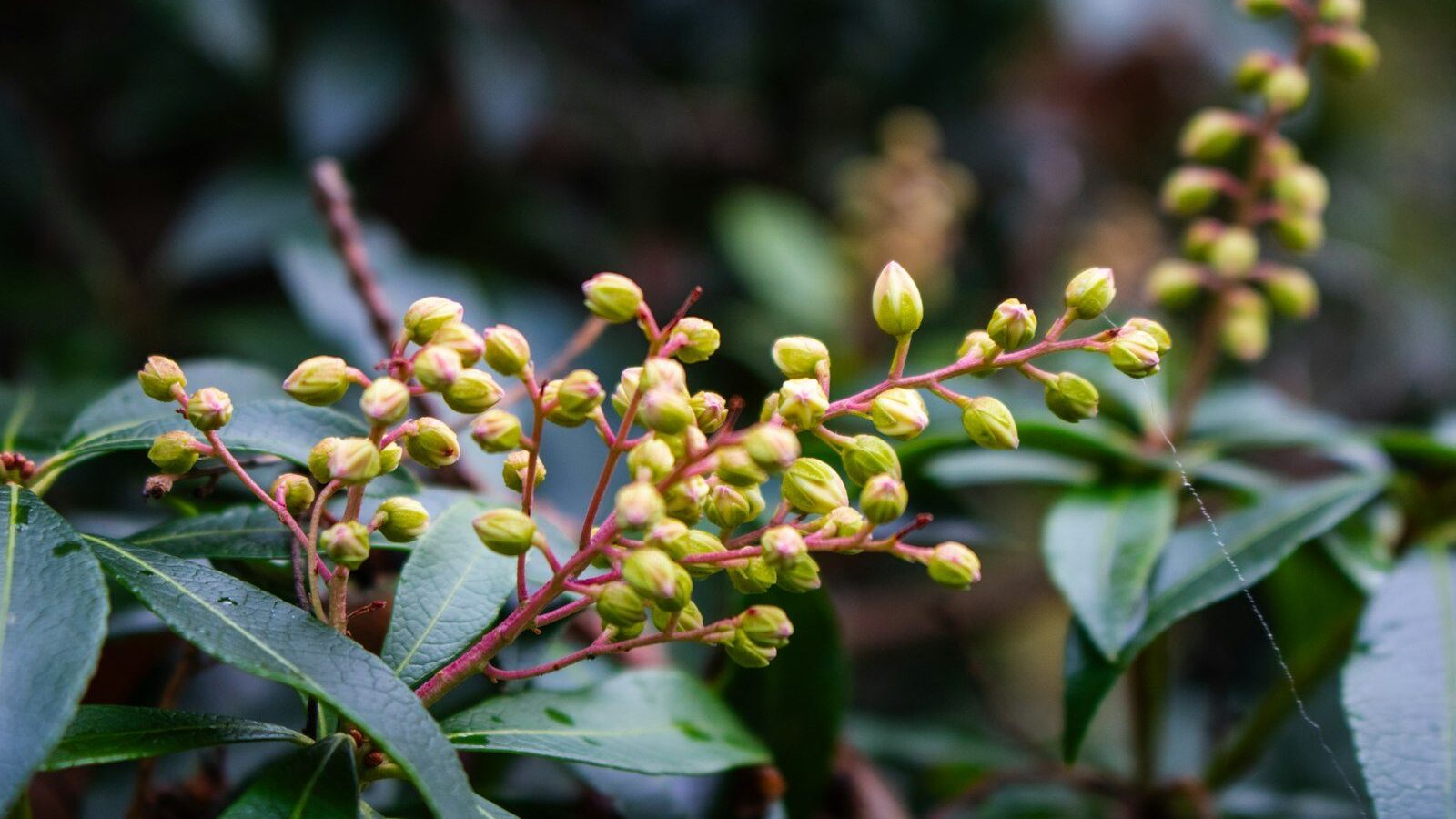
Pieris (Pieris japonica), often called Japanese andromeda or lily-of-the-valley shrub, is one of the hardest-working broadleaf evergreens you can put in a shady border. It earns its keep four seasons a year: cascading panicles of white or pink urn-shaped flowers in very early spring, fiery red or bronze new growth that glows against the older foliage, dangling flower buds that decorate the plant all winter, and a tidy, dense evergreen frame the rest of the year. If you already grow rhododendrons or azaleas successfully, you can grow Pieris, because it wants exactly the same things: acidic, humus-rich soil, dappled light, and consistent moisture without waterlogging. This guide walks through hardiness zones, soil, planting, watering, feeding, pruning, and the handful of problems that trip people up.
Key Takeaways
- Pieris is hardy in USDA zones 5–8; most varieties take full shade to part sun but color best with morning sun and afternoon shade.
- It demands acidic soil, ideally pH 4.5–6.0, that is rich in organic matter and well-drained — the same conditions rhododendrons love.
- Plant in spring or early fall, set the root flare at or slightly above grade, and mulch with 2–3 inches of pine bark or pine straw.
- Keep the soil evenly moist; Pieris is shallow-rooted and resents both drought and soggy feet.
- Prune lightly right after flowering — deadhead spent blooms and shape, but never shear hard into bare old wood.
- All parts of the plant are toxic if eaten, so site it away from spots where children or grazing animals browse.
Hardiness Zones and Where to Plant
Pieris is reliably hardy in USDA zones 5 through 8, with a few selections nudging into the warm edge of zone 4 or the cool edge of zone 9. In the colder part of that range, choose a spot sheltered from harsh, drying winter wind, which can scorch broadleaf evergreen foliage when the ground is frozen and roots cannot replace lost moisture. An east- or north-facing location near a wall, fence, or taller shrubs gives that protection.
Light is a balancing act. Pieris tolerates more shade than most flowering shrubs, but it flowers and colors up best in dappled light or a few hours of gentle morning sun followed by afternoon shade. Deep, dense shade thins the plant and reduces bloom, while hot, unfiltered afternoon sun bleaches the leaves and stresses the shallow roots in summer. The brilliant red flush of new spring growth is also richest when the plant gets some morning light. Think of the dappled edge of a woodland or the north side of a house as the sweet spot.
Size varies widely by cultivar, so match the plant to the space. The standard species can reach 9–12 feet tall and 6–8 feet wide over many years, while popular compact varieties like ‘Mountain Fire’ settle around 6 feet, and dwarf forms such as ‘Cavatine’ or ‘Little Heath’ stay 2–3 feet — ideal for foundation plantings, containers, or the front of a shade border.
Soil: Acidic, Rich, and Well-Drained
This is the make-or-break factor. Pieris is a member of the heath family (Ericaceae) and, like its rhododendron and blueberry relatives, it needs acidic soil in the pH 4.5 to 6.0 range. In neutral or alkaline soil the leaves turn a sickly yellow between the veins — classic iron chlorosis — because the roots cannot take up iron at high pH. Before planting, it is worth running a simple soil test. If your pH reads above 6.0, you can lower it over time by working in elemental sulfur and acidic organic matter, though deeply alkaline clay soils are a constant fight and a raised bed of imported acidic mix may be the better answer.
Equally important is texture. Pieris roots are fine, shallow, and fibrous, and they rot in standing water yet dry out fast in sandy ground. The ideal is a moisture-retentive but freely draining soil loaded with organic matter. At planting time, blend a generous amount of compost, composted pine bark, or aged leaf mold into the planting area. These amendments hold moisture, feed soil life, and gently acidify as they break down. Avoid heavy, compacted clay unless you amend it heavily or build up; if water pools in the hole after rain, choose a different spot or plant high.
How to Plant Pieris
The best planting windows are early spring or early fall, when soil is warm enough to encourage rooting but the air is cool and rainfall is more reliable. Fall planting in zones 6–8 gives roots a head start before summer heat; in zone 5, lean toward spring so the plant establishes before its first winter.
Dig a hole two to three times as wide as the root ball but no deeper than the root ball is tall. Pieris must sit with its root flare at or slightly above the surrounding grade; planting too deep suffocates the shallow roots and is a leading cause of slow decline. Tease apart any circling roots on a pot-bound plant, set it in the hole, backfill with the amended native soil, and water deeply to settle out air pockets. Space multiple plants according to their mature width — typically 3–6 feet apart for full-size types, closer for dwarfs used as a low informal hedge.
Finish with a 2–3 inch layer of acidic mulch — pine bark, pine straw, or shredded oak leaves — kept a couple of inches back from the stems. Mulch is not optional here: it conserves moisture, keeps the shallow roots cool, suppresses weeds, and slowly maintains the acidity these plants need. Refresh it each year.
Watering and Feeding
Because the root system is shallow, consistent moisture is essential, especially in the first two or three years and during any dry spell. Aim to keep the soil evenly moist — like a wrung-out sponge — never bone dry and never waterlogged. A deep soaking once or twice a week in summer beats frequent light sprinkles, which only wet the surface. New growth wilting at midday and bouncing back by evening is a normal heat response; foliage that stays limp or browns at the margins signals genuine drought stress. In zones with cold winters, water the plant well in late fall before the ground freezes so it heads into winter fully hydrated, which reduces leaf scorch.
Pieris is not a heavy feeder. A single application of a fertilizer formulated for acid-loving plants (sold for rhododendrons, azaleas, and camellias) in early spring as new growth begins is plenty. Follow the label rate and avoid over-fertilizing, which produces lush, weak growth prone to lace bug damage. If you spot interveinal yellowing despite correct pH, a supplemental product containing chelated iron and sulfur — often labeled for greening acid-lovers — corrects it. The same acid-loving care suits its cousins, so if you grow these alongside other heath-family shrubs, our notes on how to prune rhododendrons and azaleas pair well with this guide.
Pruning Pieris
Pieris naturally forms a dense, well-shaped mound and needs little pruning, which is good news because it sets next spring’s flower buds in summer on the current season’s growth. Prune at the wrong time and you cut off the buds. The rule is simple: prune right after flowering finishes in spring, before new buds form.
Start by deadheading the spent flower clusters. Snapping or snipping off the faded brown panicles tidies the plant and channels energy into growth rather than seed. Then do any shaping: remove dead, damaged, or crossing branches, and shorten the occasional wayward shoot back to a healthy side branch or bud to keep the form full. Resist the urge to shear Pieris like a hedge — it ruins the natural cascading habit and removes the developing buds. The shrub also responds poorly to hard renovation cuts into thick, bare old wood, which often fail to resprout, so renew an overgrown plant gradually over two or three seasons rather than all at once. Always use clean, sharp bypass pruners.
Seasons of Interest and Wildlife
Part of the charm of Pieris is how much it offers across the year. In late winter to early spring — often weeks ahead of most shrubs — the drooping panicles of small, urn-shaped flowers open in white, blush, or rose, gently fragrant and reminiscent of lily-of-the-valley, which is where one common name comes from. As the flowers fade, the real show begins: vivid red, copper, or pink new growth emerges and slowly hardens to glossy green, a flush that varieties like ‘Mountain Fire’ and ‘Forest Flame’ were bred to maximize. Through summer and fall the plant is a calm evergreen backdrop, and by autumn it has already formed strings of greenish or reddish flower buds that hang decoratively all winter, promising next year’s display.
The early flowers are a welcome nectar source for the first bumblebees and other pollinators emerging in cool weather, when little else is blooming. Worth knowing, though: every part of Pieris is toxic if ingested, containing the same grayanotoxins found in other heath-family plants. It is generally left alone by deer for that reason, which makes it valuable in deer-pressured gardens, but you should site it thoughtfully away from areas where children play or livestock graze. For more shade-loving, low-care choices to plant alongside it, browse the rest of our Plants & Flowers guides.
Common Problems and Fixes
Lace Bugs
The most common pest is the andromeda lace bug, which sucks sap and leaves the upper leaf surface stippled silvery-gray with telltale dark, varnish-like droppings on the undersides. Plants in too much sun and dry soil are far more susceptible, so correct siting is the first defense. Treat infestations with insecticidal soap or horticultural oil applied to the leaf undersides, repeating as needed early in the season when nymphs hatch.
Yellow Leaves (Chlorosis)
Leaves that turn yellow between green veins almost always mean the soil is too alkaline, locking out iron. Test and lower the pH with sulfur and acidic mulch, and apply a chelated iron product for a faster green-up. Overall yellowing with poor vigor can instead point to soggy, poorly drained soil rotting the roots.
Leaf Spot and Dieback
Fungal leaf spots show as brown or purplish blotches and are usually cosmetic; rake up fallen leaves and improve air circulation. More serious is Phytophthora root rot in wet ground, which causes branches to wilt and die back — prevent it with good drainage rather than trying to cure it. For other shrubs that share these acid-soil habits and similar care, see our guide on how to grow fothergilla.
Frequently Asked Questions
How much sun does Pieris need?
Pieris does best in dappled light or morning sun with afternoon shade. It tolerates fairly deep shade but flowers less and grows thinner there, while hot afternoon sun bleaches the foliage and stresses the shallow roots. A bright, protected spot on the east or north side of a house is ideal.
Why are my Pieris leaves turning yellow?
Interveinal yellowing — green veins on a yellow leaf — is iron chlorosis caused by soil that is too alkaline. Test the pH; it should sit between 4.5 and 6.0. Lower it with elemental sulfur and acidic mulch, and apply a chelated iron product for a quicker fix. Uniform yellowing with poor growth usually means waterlogged, rotting roots.
When should I prune Pieris?
Prune immediately after the spring flowers fade. The plant sets next year’s buds in summer, so pruning later removes them. Deadhead the spent panicles and lightly shape the shrub, but never shear it hard into bare old wood, which often does not resprout.
How big does Pieris get?
It depends entirely on the variety. The species can reach 9–12 feet tall over many years, popular cultivars like ‘Mountain Fire’ top out around 6 feet, and dwarf forms such as ‘Cavatine’ and ‘Little Heath’ stay 2–3 feet — perfect for small gardens and containers.
Is Pieris poisonous?
Yes. All parts of Pieris are toxic if eaten, containing grayanotoxins like those in rhododendrons. This makes it resistant to deer browsing, but you should plant it away from areas used by small children or grazing animals, and wash your hands after handling cut stems.
Give Pieris the acidic, organic-rich soil and gentle dappled light it craves, keep the roots evenly moist under a layer of pine mulch, and prune only lightly after bloom, and you will be rewarded with one of the most generous four-season evergreens in the shade garden — flowers when little else dares, fiery new growth in spring, and decorative buds carrying you all the way back to winter.