

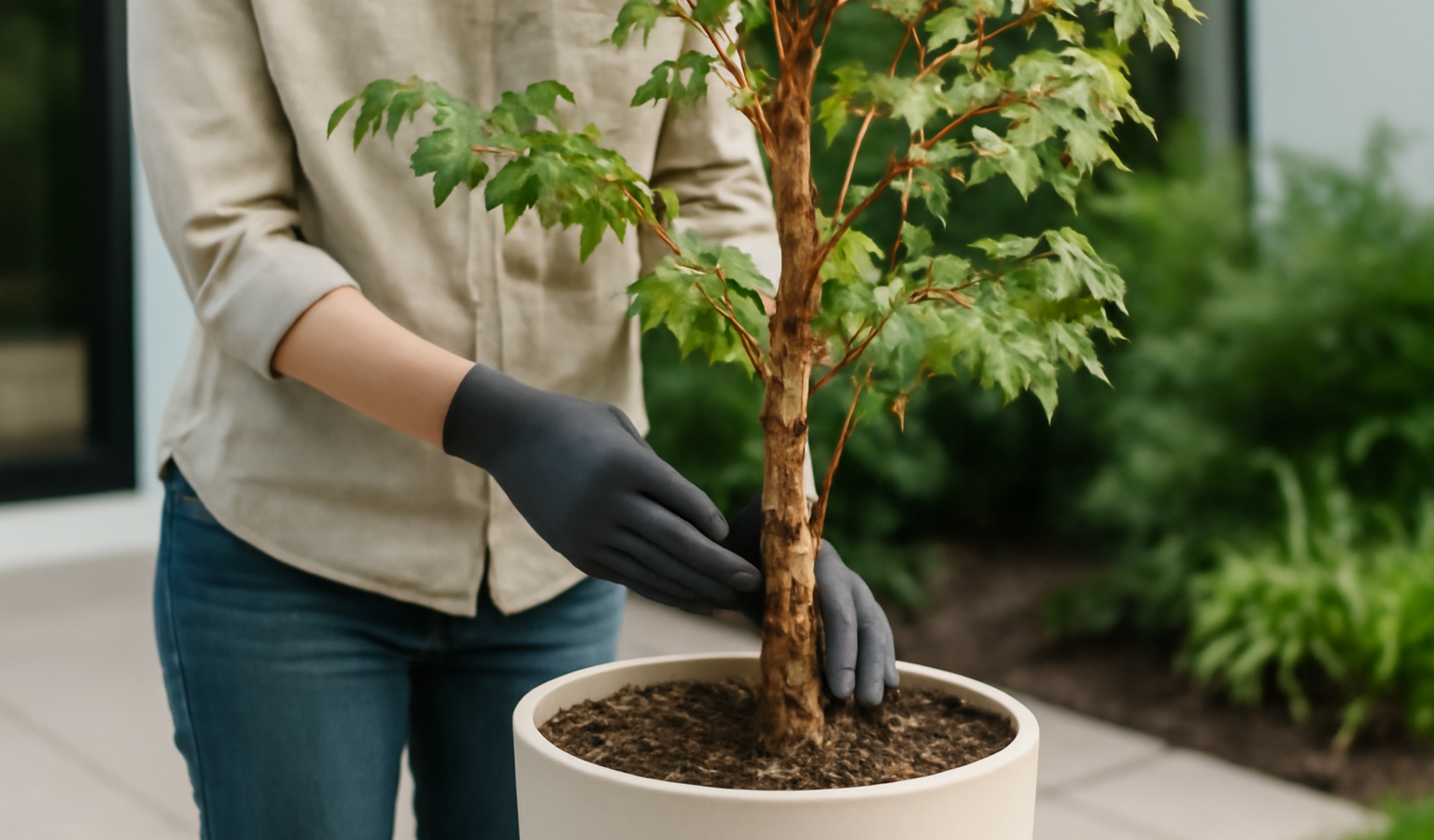
Few trees earn their keep through all four seasons the way the paperbark maple does. Botanically known as Acer griseum, this small ornamental tree is grown less for its summer canopy and more for what it reveals once the leaves drop: a trunk and branches wrapped in glowing, papery, cinnamon-to-copper bark that peels back in curling sheets. On a gray January afternoon, a well-sited specimen practically catches fire when the low sun hits it. Add a tidy size that fits real-world yards, fiery red-orange fall color, and almost no pest or disease trouble, and you have one of the most rewarding trees a home gardener can plant. The trade-offs are real but manageable: it grows slowly, and good nursery stock is expensive because the seed is notoriously hard to germinate. This guide walks through everything you need to plant and care for a paperbark maple so it thrives for decades.
Key Takeaways
- Paperbark maple (Acer griseum) is prized for its exfoliating cinnamon-copper bark that gives year-round interest, especially in winter.
- It is a slow grower, adding roughly 1 foot per year and reaching about 20-30 feet tall by 15-25 feet wide over 20-30 years.
- Hardy in USDA zones 4-8, it takes full sun to part shade and prefers moist, well-drained, slightly acidic soil.
- Plant in spring or fall as a specimen near a patio, entry, or window where the bark and red-orange fall color can be enjoyed up close.
- Water regularly for the first 2-3 years, mulch well, fertilize lightly, and keep pruning minimal — prune in summer or late dormancy to avoid sap bleed.
- Pests and diseases are rare (watch for verticillium wilt); nursery trees are pricey mainly because the seed has very low viability.
What Is a Paperbark Maple?
Paperbark maple is a deciduous tree in the maple family, native to central China and introduced to Western horticulture in the early 1900s. Unlike the familiar five-lobed leaves most people picture on a maple, Acer griseum has trifoliate leaves — each leaf is divided into three distinct leaflets, giving the canopy a softer, more textured look. The leaflets are blue-green to medium green through the growing season, with a slightly downy, paler underside.
The signature feature, though, is the bark. As the tree matures, its smooth young bark begins to exfoliate, curling away from the trunk and limbs in thin, papery sheets that range from warm cinnamon and chestnut to bright copper-orange. The peeling reveals fresh bark beneath, so the effect renews itself year after year. Because the canopy is open and the tree stays modest in size, the trunk and structural branches remain visible — making the bark a constant, defining presence rather than a hidden detail. This is why the tree is so often planted where people will pass it daily.
The Exfoliating Bark and Winter Interest
If you grow only one tree for winter interest, paperbark maple is a strong candidate. Once the leaves fall in autumn, the bare structure takes center stage. Backlit by morning or late-afternoon sun, the translucent peeling curls seem to glow, and a light dusting of snow against the copper tones is genuinely striking. The bark color reads strongest in winter precisely because there are no leaves competing for attention.
Young trees show some peeling within a few years, but the bark becomes noticeably more dramatic as the tree ages and the trunk thickens — another reason patience pays off with this species. To make the most of it, site the tree where winter sun will rake across the trunk, ideally with a darker backdrop such as an evergreen hedge, a fence, or a house wall that lets the warm bark tones pop. Resist the urge to “tidy” the curling bark by pulling it off; let it shed naturally so the display stays continuous. For more ideas on building year-round interest into a yard, our Plants & Flowers hub collects companion guides worth browsing.
Mature Size and Growth Rate
Paperbark maple is a small tree, which is a large part of its appeal in modern landscapes. Over 20 to 30 years it typically reaches 20 to 30 feet tall and 15 to 25 feet wide, developing an upright-oval to rounded crown. In ideal conditions and given enough decades, exceptional specimens can push a bit taller, but for planning purposes treat the 20-30 foot range as realistic.
It is a deliberately slow grower, adding only about 1 foot of height per year. That pace has two implications. First, it stays in scale with houses, patios, and smaller lots for a long time, rarely overwhelming a space the way a fast shade tree can. Second, you should buy the largest tree your budget allows if you want presence sooner, because a young whip will take many years to become a focal point. The slow growth, combined with the difficulty of propagation, is also the main reason paperbark maples command premium prices at the nursery. Think of it as a tree you plant for the long view — for yourself in ten years and for whoever lives there in thirty.
Hardiness Zones and Climate
Paperbark maple is reliably hardy in USDA zones 4 through 8. That range covers a huge swath of the United States, from the upper Midwest and New England down through the Mid-Atlantic, into the Southeast, and across much of the Pacific Northwest and parts of the Mountain West. In zone 4 it shrugs off hard winters; in zone 8 it performs well provided it gets adequate soil moisture and isn’t baked in relentless afternoon heat.
In the warmest part of its range, give the tree some afternoon shade and pay closer attention to watering during summer dry spells. In the coldest zones, the tree is fully cold-hardy once established, but young trees benefit from a thick mulch layer to insulate roots through their first few winters. Gardeners in zone 9 and warmer generally find the tree struggles, as it appreciates a genuine winter dormancy.
Where to Plant: Siting and Soil
Paperbark maple is a specimen tree first and foremost — it rewards being planted alone, where its form and bark can be appreciated rather than crowded into a mixed border. The best locations are spots you see often: near a patio, beside a front entry or walkway, framed by a picture window, or anchoring a small courtyard. Because it casts light, dappled shade and stays compact, it also works as a small lawn tree or a focal point at the corner of a deck. Planning a seating area around it? Our outdoor living guides can help you arrange a patio so the tree becomes the centerpiece.
Sun and Shade
The tree grows in full sun to part shade. Full sun (six or more hours daily) generally produces the strongest fall color and the densest crown, but in hot southern gardens part shade — especially relief from harsh afternoon sun — keeps the tree happier and reduces water stress. A spot with morning sun and light afternoon shade is close to ideal in most climates.
Soil and Drainage
Paperbark maple wants soil that is moist but well-drained, and it prefers a slightly acidic pH (roughly 5.5 to 7.0). It tolerates clay better than many ornamental maples, but it will not thrive in standing water or chronically soggy ground, so avoid low spots where water pools after rain. If your soil is heavy or compacted, loosen a wide area at planting and incorporate compost to improve both drainage and moisture retention. The tree is reasonably adaptable, but consistent soil moisture during the growing season is what it likes best.
Spacing
Plan for the mature spread of 15 to 25 feet. Set the tree at least 10 to 12 feet from buildings, fences, and other trees so the crown can develop freely and air can circulate around it. Keep it clear of overhead utility lines — though at 20-30 feet it rarely becomes a conflict — and far enough from walkways that low branches won’t need constant pruning later.
How and When to Plant
The best times to plant are early spring, after the ground thaws and before leaf-out, or early fall, which gives roots several weeks to establish before winter. Both windows let the tree settle in while temperatures are moderate. Avoid planting in the heat of midsummer if you can help it.
- Dig a planting hole two to three times as wide as the root ball but no deeper than the root ball itself. The root flare should sit slightly above or level with the surrounding grade — never buried.
- If the tree is container-grown, gently tease apart any circling roots before setting it in the hole. For balled-and-burlapped stock, remove twine and fold back or cut away the burlap from the top of the root ball.
- Backfill with the native soil you removed, breaking up clods. Skip heavy amendments in the backfill; you want roots to grow out into the surrounding soil rather than staying in a cushy pocket.
- Firm the soil gently to remove air pockets, then water deeply to settle everything in.
- Build a low soil berm at the edge of the root ball to hold water, and apply mulch as described below.
Watering and Establishment
Watering during the establishment period is the single most important thing you can do for a young paperbark maple. For the first 2 to 3 years, water deeply and regularly so the root zone stays evenly moist but never waterlogged. A practical rule is a deep soak once or twice a week during the growing season, more often in hot, dry, or windy weather, and less when rain does the job for you. Deep, infrequent watering encourages roots to grow downward; frequent light sprinkling encourages shallow roots that dry out fast.
Check soil moisture a few inches down before watering rather than relying on a fixed schedule. Once the tree is well established — typically after the third year — it becomes moderately drought tolerant, though it still appreciates supplemental water during extended dry spells, especially in warmer zones. Consistent moisture also supports better fall color.
Mulching
Apply a 2-to-3-inch layer of organic mulch — shredded bark, wood chips, or leaf mold — over the root zone, extending it out to the drip line as the tree grows. Mulch conserves soil moisture, moderates soil temperature through summer heat and winter cold, and suppresses competing weeds and turf. Keep mulch pulled back a few inches from the trunk so it doesn’t trap moisture against the bark and invite rot or pests. Refresh the layer once a year as it breaks down. For young trees in cold zones, a slightly thicker winter mulch helps protect roots.
Fertilizing
Paperbark maple is not a heavy feeder, and overfeeding does more harm than good — it can push soft, fast growth that contradicts the tree’s naturally slow, sturdy habit. In decent soil, the tree often needs no fertilizer at all. If growth seems weak or foliage looks pale, apply a light dose of a balanced, slow-release fertilizer in early spring, following label rates. A yearly top-dressing of compost is a gentler approach that feeds the soil and improves structure at the same time. Avoid late-season feeding, which can encourage tender growth that won’t harden off before winter.
Pruning
Paperbark maple needs very little pruning, which suits its slow growth and naturally graceful form. The main goals are structural: in the early years, select for a strong central leader or a well-balanced framework, and remove any crossing, rubbing, or competing branches. After that, limit yourself to taking out dead, damaged, or poorly placed wood.
Timing matters because maples are “bleeders” — pruned in late winter or early spring, they ooze sap from the cuts. The bleeding is largely cosmetic and rarely harms a healthy tree, but to avoid it, prune in summer once the leaves are fully out, or in late dormancy. Many growers favor mid-to-late summer for any meaningful structural cuts. Always use clean, sharp tools and cut just outside the branch collar. Because the trunk and bark are the attraction, resist over-pruning; an open, layered structure that shows off the bark is the look you’re after.
Staking and Protecting Young Trees
Most newly planted trees establish best without staking, since trunk movement builds taproot and trunk strength. But a tall, top-heavy young paperbark maple in a windy site may need temporary support. If you stake, use two or three stakes with soft, wide ties placed low on the trunk, leave some slack so the tree can flex, and remove the stakes after one growing season — leaving them longer can weaken the trunk and girdle the bark.
Protect the thin young bark from mechanical damage. String trimmers and mower decks are the most common culprits; a mulch ring keeps equipment away from the trunk entirely. In areas with rabbits or deer, a trunk guard through winter prevents gnawing, and in regions with intense winter sun, a light-colored guard can reduce frost cracking on young trunks. Because the exfoliating bark is the whole point, a wound that scars the trunk is more than cosmetic here.
Fall Color
While the bark steals the winter show, autumn brings the foliage’s moment. The trifoliate leaves turn warm shades of red, scarlet, and red-orange, often holding their color well and lingering on the tree a bit later than many neighbors. The display can vary year to year with weather — bright sunny days and cool nights produce the most intense color — and trees in full sun generally color more vividly than those in deeper shade. Pairing the fall foliage with the emerging bark display makes autumn into winter the tree’s strongest stretch of the year.
Pests and Diseases
One of the great virtues of paperbark maple is how little trouble it gives. It has notably low susceptibility to the pests and diseases that plague some ornamental trees, and a healthy, well-sited specimen usually sails along with no chemical intervention at all. The one disease worth knowing is verticillium wilt, a soil-borne fungus that affects many maples; symptoms include sudden wilting or dieback of branches, often on one side of the tree. There’s no cure, so prevention matters: don’t plant in soil where a verticillium-susceptible tree recently died, keep the tree vigorous with good watering and mulch, and promptly prune out and dispose of any dead wood. Occasional minor issues like aphids or leaf scorch in drought are rarely serious. Overall, this is a low-maintenance tree once it’s established.
Container and Small-Yard Suitability
Thanks to its modest mature size and slow growth, paperbark maple is one of the better trees for small lots, courtyards, and even large containers for a number of years. In a small yard it functions as a true four-season focal point without the bulk of a big shade tree. In a container, choose a large, well-drained pot, use a quality potting mix, and be prepared to water more often and protect roots from hard freezes, since potted roots are less insulated than those in the ground. Eventually a container tree will want to go into the ground, but it can spend several happy years on a patio or terrace first. If you’re filling in the ground plane beneath or around it, low groundcovers such as mondo grass or liriope pair well and keep the base tidy without competing aggressively for water.
Why Nursery Stock Is Expensive
If you’ve shopped for a paperbark maple, you’ve noticed it costs considerably more than many trees of similar size. There are two reasons. First, it grows slowly, so a nursery invests several extra years of care, space, and labor to produce a saleable tree. Second, and more significantly, Acer griseum is hard to propagate: a large share of its seed is empty or non-viable, with germination rates often very low. Growers have to collect and sow large quantities of seed to get relatively few seedlings, and propagation by other methods is also slow and inconsistent. That scarcity of nursery-ready trees keeps prices high. The upside is that the tree you buy is, in effect, a long-term investment that will look better with every passing decade.
Frequently Asked Questions
How fast does a paperbark maple grow?
It’s a slow grower, adding roughly 1 foot of height per year. Over 20 to 30 years it reaches about 20-30 feet tall and 15-25 feet wide. If you want presence sooner, buy the largest nursery tree your budget allows.
What USDA zones can I grow paperbark maple in?
It’s reliably hardy in USDA zones 4 through 8. In hot zone 8 gardens, give it afternoon shade and steady water; in zone 4, mulch young trees well to protect roots through cold winters. It generally struggles in zone 9 and warmer.
Why is the bark peeling, and should I remove it?
Peeling is normal and is the tree’s signature feature. As the tree matures, the bark exfoliates in papery cinnamon-to-copper curls, revealing fresh bark beneath. Leave it alone — let it shed naturally so the year-round display, especially in winter, stays continuous.
When should I prune a paperbark maple?
Prune as little as possible, focusing on structure and removing dead or crossing wood. Because maples bleed sap when cut in late winter or early spring, do meaningful pruning in summer after leaves emerge, or in late dormancy. Use clean, sharp tools and cut just outside the branch collar.
Why are paperbark maples so expensive?
Two reasons: the tree grows slowly, so nurseries spend extra years raising it, and the seed has very low viability, making propagation difficult and yields small. That scarcity drives up the price, but the tree only improves with age, so it’s a long-term investment.
Plant a paperbark maple in the right spot, water it faithfully through establishment, and then mostly leave it alone — and you’ll be rewarded with a tree that gives back every month of the year, glowing brightest in the depths of winter when the rest of the garden has gone quiet.