

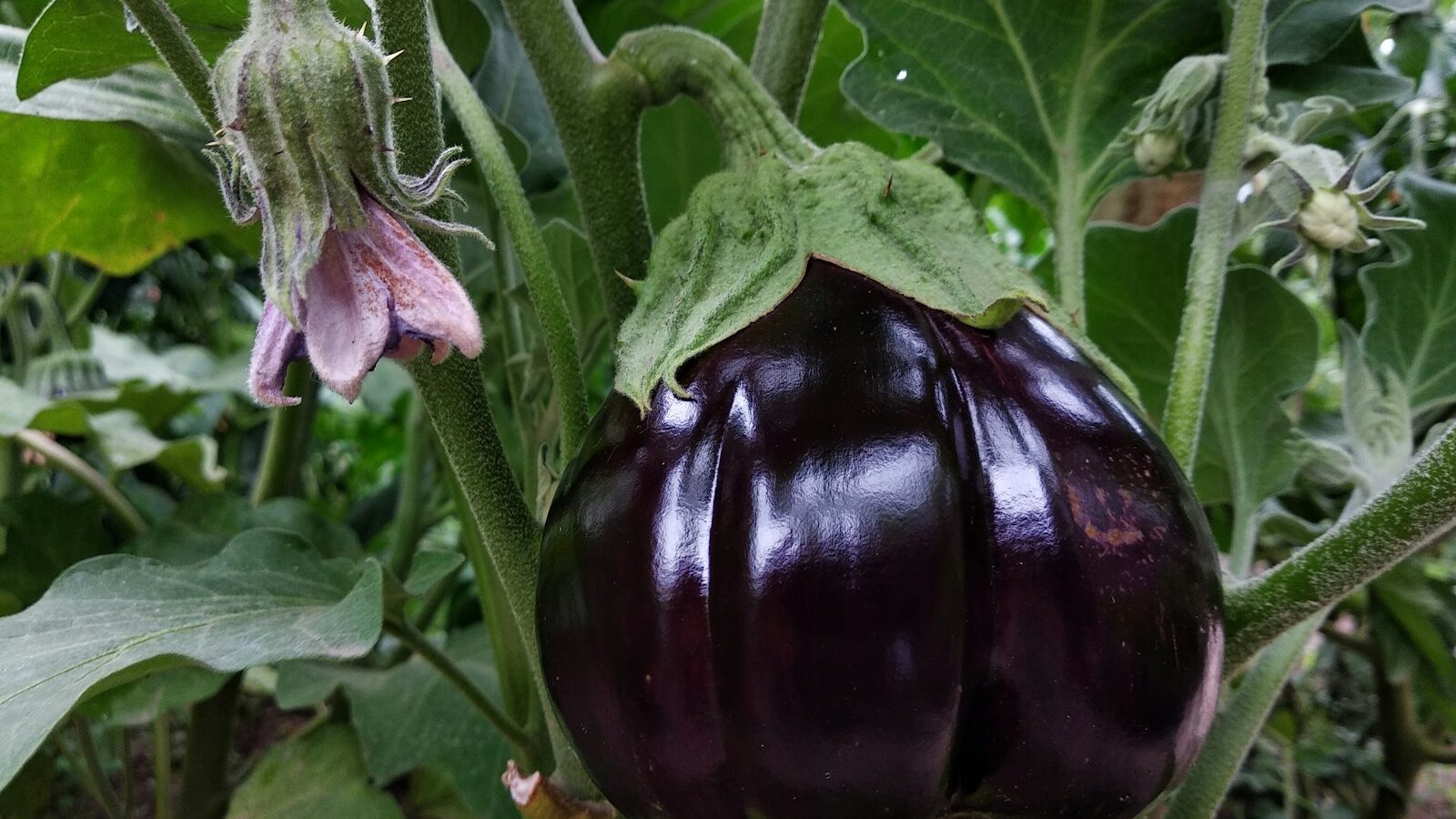
Eggplant is one of the most rewarding crops you can grow when summer turns hot, producing glossy, sun-loving fruit on sturdy, ornamental plants. The secret is treating it like the heat-lover it is: warm soil, full sun, rich ground, and patience until nights stay reliably warm. Get those basics right and a few plants will keep your kitchen stocked with eggplant from midsummer until the first frost.
Eggplant quick facts
- Warm-season; loves heat (70F+ soil)
- Start seeds early indoors or buy transplants
- Full sun, rich soil, steady moisture
- Stake plants & harvest young, glossy fruit
- Flea beetles are the main early pest
As an Amazon Associate we earn from qualifying purchases.
If you are brand new to edibles, it helps to read our how to start a vegetable garden overview first, then come back here for eggplant specifics. Eggplant shares its growing calendar and warm-season needs with two of its close relatives, so the techniques below will feel familiar if you have ever grown how to grow peppers or how to grow tomatoes.
Why eggplant needs heat (and how to time it)
Eggplant (Solanum melongena) is a tropical perennial grown as an annual in most of the US and around the world. More than almost any other common vegetable, it craves warmth. Seeds germinate best at soil temperatures of 80 to 90F, and young plants sulk, drop flowers, or simply stop growing whenever soil dips below about 70F or nights fall under 60F. Cold, soggy spring soil is the number one reason eggplant transplants fail.
Get the timing right
- Count backward from your last frost. Eggplant needs warm soil and warm nights, which usually arrive two to three weeks after your average last-frost date.
- Wait for steady warmth. Daytime temps of 70 to 85F and nights consistently above 55 to 60F are ideal.
- Use a soil thermometer. Plant out only once the soil at planting depth reads 65 to 70F and is climbing.
- Don’t rush. An eggplant set out two weeks late will often overtake one planted into cold soil and stunted.
Because the season is long (most varieties need 70 to 90 warm days to fruit), gardeners in cooler or short-season climates lean heavily on early indoor starts, season-extending mulch, and warm microclimates against south-facing walls or fences. For more on building those microclimates in small spaces, see our urban gardening guide.
Starting from seed indoors vs. buying transplants
Eggplant has a slow, leisurely start, so it is almost always grown from transplants rather than seed sown directly in the garden. You have two good paths.
Start seeds indoors (more variety, lower cost)
- Sow seeds 8 to 10 weeks before your intended transplant date — earlier than tomatoes or peppers.
- Use a warm spot or a heat mat to hold the mix at 80 to 90F until sprouts appear (often 7 to 14 days).
- Provide bright light right away — a sunny south window or grow lights prevent leggy seedlings.
- Pot up into 3 to 4 inch containers once true leaves form, and feed lightly with a diluted fertilizer.
- Browse eggplant seeds for compact, container, and heirloom varieties.
Buy transplants (faster, easier)
- Look for stocky, deep-green plants with no flowers or fruit yet.
- Avoid root-bound, yellowing, or pest-chewed seedlings.
- Buy close to your planting window so you are not babysitting them indoors.
Harden off any transplant — homegrown or purchased — over 7 to 10 days by gradually exposing it to outdoor sun and wind. Skipping this step leads to sunscald and transplant shock that can set the plant back for weeks.
Choosing a site, soil, and spacing
Eggplant is hungry, thirsty, and sun-loving. The more of those three needs you meet generously, the more fruit you get.
The ideal eggplant spot
- Sun: Full sun — at least 6 to 8 hours of direct light daily. More is better.
- Soil: Rich, well-drained, and high in organic matter. Work in 2 to 3 inches of compost or aged manure before planting.
- pH: Slightly acidic to neutral, around 5.8 to 6.8.
- Warmth: Raised beds and dark mulch (black plastic or landscape fabric) warm the soil faster and hold heat.
Spacing
- Set transplants 18 to 24 inches apart, in rows 30 to 36 inches apart.
- Plant at the same depth they grew in their pots — unlike tomatoes, eggplant does not need to be buried deep.
- Don’t crowd: good airflow reduces fungal disease and lets each plant size up.
Avoid planting eggplant where tomatoes, peppers, or potatoes grew the previous year. These relatives share soilborne diseases and pests, so a simple two- to three-year rotation keeps problems from building up.
Staking, watering, and feeding
A healthy eggplant becomes a surprisingly heavy, top-laden plant. Once it sets several fruit, unsupported branches can snap or sprawl onto wet soil where fruit rots and pests find them.
Support heavy plants
- Drive a sturdy stake or small tomato cage in at planting time to avoid disturbing roots later.
- Loosely tie the main stem as it grows, and support branches that get weighed down by fruit.
- Grab a set of garden plant stakes or cages before the plants get big.
Water consistently
- Aim for 1 to 1.5 inches of water per week, more during heat waves or in containers.
- Keep moisture even — wild swings between bone-dry and soaked cause bitter fruit, blossom drop, and blossom-end rot.
- Water at the base (drip or soaker) to keep foliage dry, and mulch to lock in moisture and suppress weeds.
Feed for fruit
- Mix a balanced or slightly higher-phosphorus fertilizer into the soil at planting.
- Once flowering and fruiting begin, feed every 2 to 3 weeks — avoid heavy nitrogen, which grows leaves at the expense of fruit.
- A steady supply of a quality vegetable fertilizer keeps production rolling all summer.
Growing eggplant in containers
Eggplant is an excellent container crop — arguably better in pots than in cool-climate garden beds, because containers warm up fast and you can move them to the sunniest, hottest spot you have. Compact varieties were practically made for patios and balconies.
Container tips
- Pot size: One plant per 5-gallon (12-inch-plus) container; bigger is better for water stability.
- Mix: Use a quality potting mix, not garden soil, and ensure strong drainage.
- Color: Dark pots absorb heat — a bonus for this heat-lover.
- Water: Containers dry out fast; check daily in summer and never let them wilt.
- Feed: Nutrients leach quickly from pots, so feed lightly and regularly.
Choose dwarf or “patio” eggplant types for containers, and still stake them — even small plants tip over once loaded with fruit.
Harvesting young and glossy
The single biggest mistake home gardeners make with eggplant is waiting too long to pick. Eggplant is best harvested young, while the skin is tight, glossy, and the flesh is tender. Overripe fruit turns dull, develops hard seeds, and tastes bitter.
How to tell it’s ready
- Glossy skin: A shiny, taut surface means it’s prime. Dull skin means it’s past peak.
- The press test: Press gently — the flesh should spring back. If the dent stays, it’s overripe.
- Size: Harvest before the variety’s mature size for the best texture; don’t wait for it to get huge.
- Cut, don’t pull: Use pruners or a knife to cut the tough stem, leaving a short bit of calyx attached.
Pick regularly. Frequent harvesting signals the plant to keep flowering and fruiting, so the more you pick, the more you get. Eggplant keeps only a few days in the fridge, so harvest close to when you plan to cook.
Common pests and how to stop them
Eggplant is a magnet for a few specific pests, especially while plants are young. The good news: a little early vigilance prevents most problems.
The usual suspects
- Flea beetles: The number one early pest. These tiny jumping beetles pepper leaves with shot-hole damage and can devastate young plants. Cover transplants with floating row cover until they’re large and established (remove it once flowers form so pollinators can reach them).
- Colorado potato beetle: Yellow-and-black-striped adults and orange larvae chew leaves heavily. Hand-pick adults and crush the orange egg clusters on leaf undersides.
- Aphids: Cluster on tender new growth and spread disease. Blast off with water, encourage ladybugs, or use insecticidal soap.
- Spider mites: Thrive in hot, dry conditions; look for fine webbing and stippled leaves. Keep plants well-watered and hose off foliage.
Floating row cover is your best friend early on — it shuts out flea beetles and beetles while the plant is most vulnerable, and it traps a little extra warmth, which eggplant loves. Healthy, well-fed, well-watered plants also simply shrug off pest pressure better than stressed ones.
Frequently asked questions
When should I plant eggplant outdoors?
Plant out two to three weeks after your average last frost, once the soil at planting depth reads at least 65 to 70F and nights stay above 55 to 60F. Eggplant set into cold soil stalls and often never fully recovers, so waiting for steady warmth pays off.
Why are my eggplant flowers dropping without setting fruit?
Blossom drop is usually caused by temperature stress (too cold at night or extreme daytime heat), inconsistent watering, or too much nitrogen fertilizer. Keep moisture even, feed for fruiting rather than leafy growth, and the plant will set fruit once conditions stabilize.
How do I know when eggplant is ripe?
Pick it young, while the skin is glossy and taut. Press gently with a thumb — if the flesh springs back, it’s ready; if the dent stays, it’s overripe. Dull skin and hard seeds mean you waited too long, and the fruit will taste bitter.
What’s eating holes in my eggplant leaves?
Tiny shot-holes scattered across leaves are almost always flea beetles, the most common eggplant pest. Protect young plants with floating row cover until they’re large and flowering. Larger ragged holes point to Colorado potato beetles, which you can hand-pick.
Can I grow eggplant in a pot?
Yes — eggplant grows beautifully in containers, and pots warm up faster than garden soil, which suits this heat-lover. Use at least a 5-gallon container per plant, a quality potting mix, water daily in summer, feed regularly, and stake even compact varieties.