

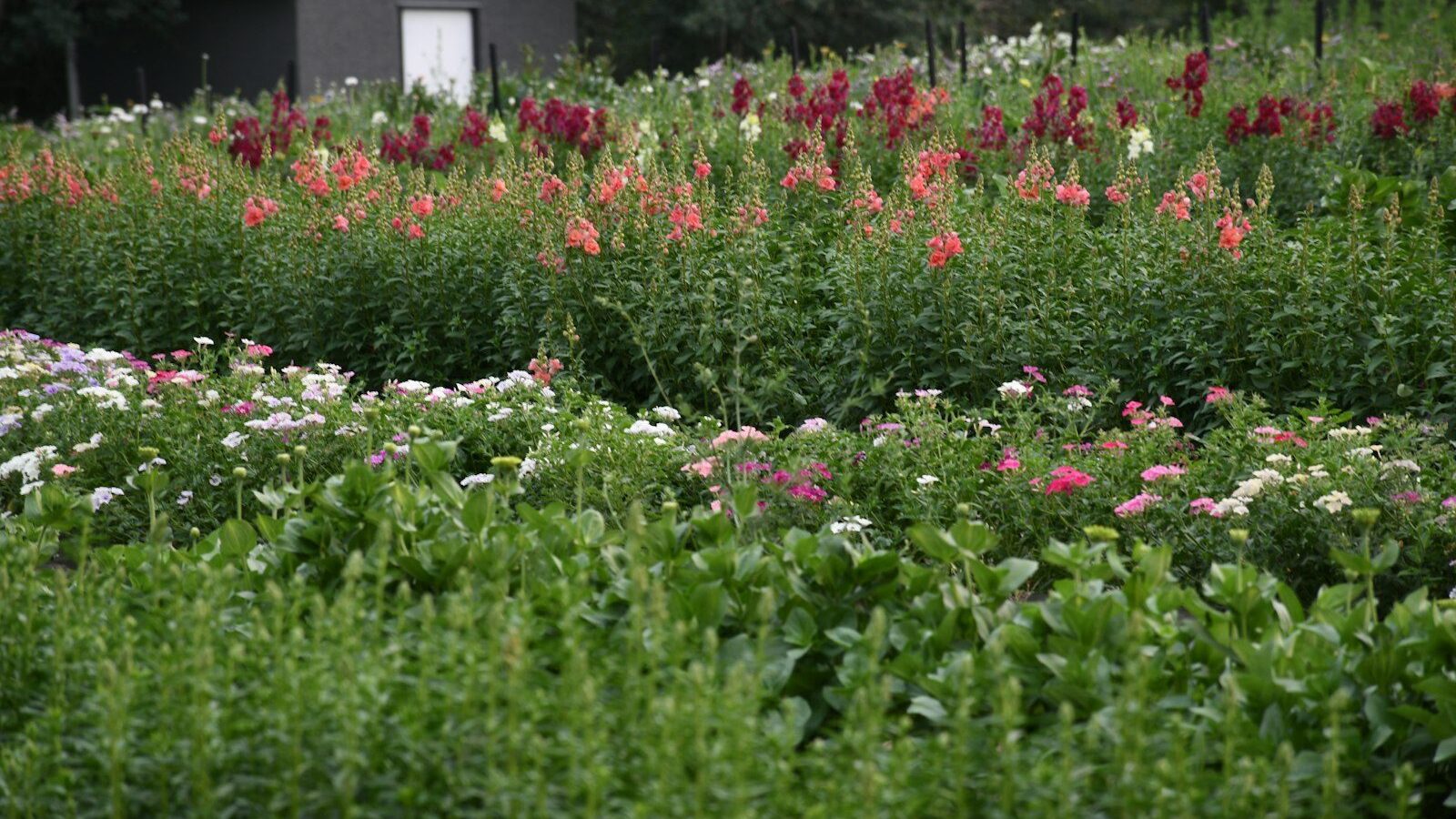
A cut flower garden is the most rewarding patch you can grow: a few hundred square feet, or even a couple of raised beds, can keep your house in bouquets from late spring until frost. The secret is not a green thumb — it is choosing productive “cut-and-come-again” crops, planting in tight blocks for support, sowing in succession so you never run dry, and cutting at the right stage and time of day. This guide covers how to plan the beds, which flowers earn their space, how to keep the harvest rolling for months, and how to make those stems last in the vase.
Key Takeaways
- Plant in dense, intensive blocks or rows — 6–12 inch spacing — so stems support each other and you maximize yield per square foot.
- Choose “cut-and-come-again” flowers like zinnias, cosmos, and sweet peas that bloom more the more you cut.
- Sow in succession every 2–3 weeks and mix in early, mid, and late crops to bloom from spring to frost.
- Most cutting flowers want full sun (6+ hours), rich soil, consistent water, and netting or staking for tall stems.
- Harvest in the cool of early morning, cut at the right bud stage, and condition stems in clean water before arranging.
Planning Your Cut Flower Beds
A cutting garden is grown for production, not display, so you plant it like a vegetable plot: in dense, accessible rows or blocks rather than scattered through borders. Beds 3–4 feet wide let you reach the center from either side without stepping on the soil, and paths of 18–24 inches give you room to harvest with a bucket. You do not need much space — a 4×8 foot raised bed of zinnias and cosmos will produce dozens of bouquets across a season. Site the garden where it gets at least six hours of direct sun; most cutting flowers are sun-lovers that grow leggy and bloom poorly in shade.
Prep the soil deeply before planting. Cutting flowers are heavy producers and reward rich, well-drained ground, so work in 2–3 inches of compost and a balanced organic fertilizer before the season starts. Plant closer than the seed packet suggests — spacing of 6 to 12 inches for most annuals encourages long, straight, single stems and lets plants hold each other upright. The trade-off of that density is that tall crops flop, so install horizontal support netting (a single layer of plastic or jute mesh stretched over the bed at 12–18 inches) early, while plants are small, and let them grow up through it. If your space is limited to a balcony or patio, many cutting flowers grow well in deep containers — see our urban gardening hub for small-space approaches.
The Best Flowers for Cutting
The flowers that make a cutting garden productive are the ones that bloom harder the more you harvest, have long straight stems, and last in a vase. If you are starting out, build your garden around the reliable workhorses below before branching into specialty crops.
Easy, high-yield cutting flowers
- Zinnias — the ultimate beginner cut flower: heat-loving, fast from seed, and the more you cut the more they bloom. ‘Benary’s Giant’ offers tall, sturdy stems.
- Cosmos — airy, prolific, and unstoppable once established; pinch young plants and deadhead to keep them flowering until frost.
- Sunflowers — choose branching, pollenless varieties for cutting (single-stem types give one bloom each).
- Sweet peas — fragrant, early, cool-season climbers; the more you pick the longer they last.
- Snapdragons — cool-tolerant spikes with excellent vase life; plant early and late.
- Dahlias — tubers that bloom from midsummer to frost with enormous, varied flowers; cut freely to keep production up.
- Celosia, rudbeckia, and gomphrena — heat-proof, long-lasting fillers that bridge the dog days of summer.
Round out the bouquets with “foliage and filler” crops — basil, dill, ammi, and ornamental grasses — which give arrangements movement and structure. A productive cutting garden is roughly 70% focal flowers, 20% filler, and 10% spikes or “spiller” elements. For perennials that return each year, peonies, yarrow, and salvias add structure to the patch.
Succession Sowing for Months of Blooms
The difference between a garden that blooms for three weeks and one that blooms for five months is succession planting. Rather than sowing all your zinnias at once, sow a new batch every 2–3 weeks from your last frost until about ten weeks before your first fall frost. As one block winds down, the next is coming into peak — so the harvest never stops.
Layer the season with crops suited to each window. In cool spring, plant hardy annuals like sweet peas, snapdragons, larkspur, and bachelor’s buttons, many of which can be direct-sown or transplanted weeks before the last frost and even overwintered in mild zones for an early, spectacular flush. Through the heat of summer, lean on warm-season annuals — zinnias, cosmos, celosia, sunflowers, and dahlias — that revel in the temperatures that exhaust spring flowers. As nights cool in fall, the hardy annuals and dahlias surge again until frost. Keeping a simple calendar of sowing dates by crop, anchored to your local frost dates, turns this from guesswork into a reliable rhythm. Mixing in spring bulbs and a few flowering perennials stretches the season at both ends.
Watering, Feeding, and Maintenance
Cutting flowers are productive plants that demand steady moisture and food. Aim for about an inch of water a week, delivered deeply once or twice rather than a daily sprinkle, which encourages deep roots and long stems. Drip irrigation or a soaker hose keeps water off the foliage and flowers, reducing disease and keeping blooms clean. Mulch the beds with a couple of inches of straw or shredded leaves to hold moisture and suppress weeds that compete with your flowers.
Feed every two to four weeks with a balanced liquid fertilizer during active growth and bloom; flowers grown for repeated cutting are hungry and benefit from a phosphorus and potassium boost once flowering begins. Two maintenance habits drive yield more than anything else: pinching young plants (snip out the growing tip of zinnias, cosmos, snaps, and celosia at 8–12 inches tall to force branching and more stems) and relentless harvesting or deadheading. The moment a cutting flower sets seed, it stops producing — so cutting bouquets is not just a reward, it is the maintenance that keeps the plant blooming.
Harvesting and Vase Life
How and when you cut determines how long the flowers last. Harvest in the cool of early morning when stems are fully hydrated, never in the heat of midday when they are stressed and wilting. Use clean, sharp snips and carry a bucket of clean water into the garden so stems go straight into water — even a few minutes of air can shorten vase life. Cut deep, taking long stems, which also encourages longer regrowth.
Stage matters because flowers continue to open after cutting. Harvest zinnias and dahlias when fully open (they will not open further once cut), but cut tulips, peonies, and many spikes like snapdragons when buds are showing color but not yet fully open. Once inside, strip any leaves that would sit below the waterline (submerged foliage rots and fouls the water), recut stems at an angle, and let them “condition” in a bucket of cool water in a dark, cool spot for several hours or overnight before arranging. Change vase water every couple of days, keep arrangements out of direct sun and away from ripening fruit (which releases ethylene gas that ages flowers), and most homegrown stems will last a week or more.
Frequently Asked Questions
What are the easiest flowers to grow for cutting?
Zinnias and cosmos are the easiest and most productive cut flowers for beginners — both grow fast from direct-sown seed, love heat, and bloom more the more you cut them. Sunflowers, celosia, and gomphrena are similarly forgiving. They tolerate imperfect care and reward you with months of stems.
How big should a cut flower garden be?
You can grow plenty of bouquets in a single 4×8 foot raised bed packed with zinnias and cosmos. A 10×10 foot plot with a mix of focal flowers, fillers, and spikes will supply weekly arrangements through the whole season. Start small, plant densely, and expand once you know your harvest rhythm.
When should I cut flowers for the longest vase life?
Harvest in the early morning when stems are fully hydrated, using clean snips and carrying a bucket of water into the garden. Cut zinnias and dahlias fully open, but cut tulips, peonies, and snapdragons when buds show color but are not fully open. Condition stems in cool water for several hours before arranging.
Why should I pinch my cut flowers?
Pinching out the growing tip of young zinnias, cosmos, snapdragons, and celosia at 8–12 inches tall forces the plant to branch, producing many more long stems instead of one central bloom. It delays the first flower by a week or two but dramatically increases total yield over the season.
How do I keep flowers blooming all season?
Sow in succession every 2–3 weeks, layer cool-season and warm-season crops to cover spring through frost, and harvest or deadhead relentlessly. Cutting flowers stop producing once they set seed, so frequent cutting is the maintenance that keeps the plants blooming. Steady water and feeding sustain the heavy production.