

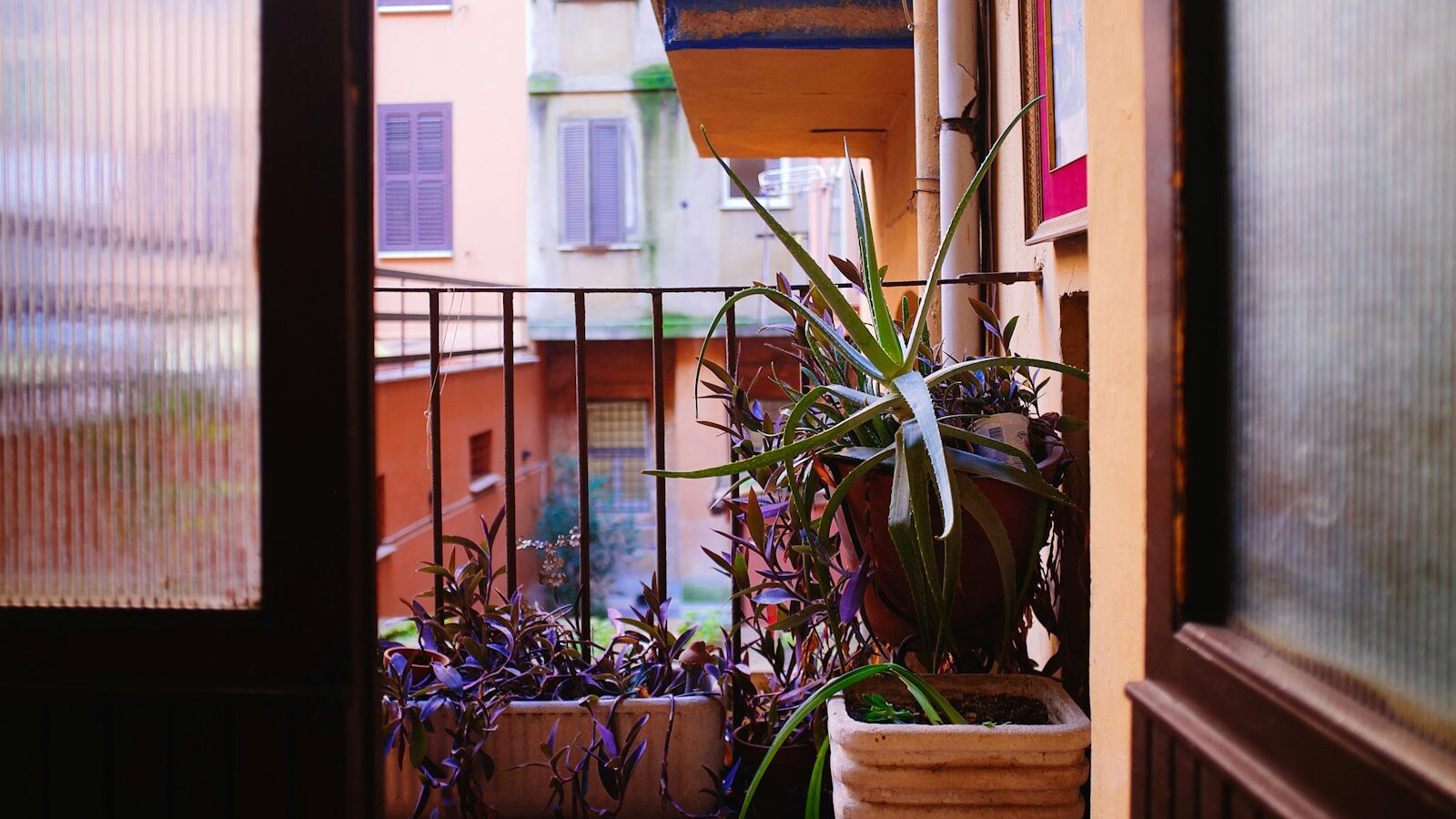
Planter boxes are the workhorses of Singapore landscaping. They let you grow lush greenery on hard surfaces where there is no soil to dig into — HDB balconies, condo patios, rooftop terraces and the tight side strips of landed homes. Choose the right box and you get tidy, healthy plants for years; choose badly and you face waterlogged roots, rusting metal, rotting timber or, worse, a heavy unit that nobody cleared with the building management. This guide walks through the main planter box types, the materials that survive our tropical climate, realistic SGD costs, and how to buy or commission the right unit for your space.
Where planter boxes are used in Singapore
Almost every Singapore home has a spot that suits a planter box. The most common uses we see are:
- Balconies — trough-style boxes along the parapet or freestanding pots for HDB and condo balconies, usually planted with herbs, dwarf shrubs or trailing greenery.
- Patios and ground-floor courtyards — larger statement boxes for frangipani, palms or clumping bamboo.
- Rooftops and sky terraces — lightweight boxes that won’t overload the slab, often grouped to define seating zones.
- Vertical screening — tall boxes planted with bamboo or columnar plants to block out neighbours or an unwanted view.
- Landed gardens — built-in masonry planters along boundary walls, driveways and pool edges.
If your goal is screening or a living wall rather than individual boxes, read our guide to vertical gardens and green walls, which covers modular systems in more depth.
Planter box materials compared
Material is the single biggest decision. It drives the look, the price, the weight your structure must carry, and how long the box lasts in Singapore’s heat, humidity and monsoon downpours. The table below compares the six materials we specify most often.
| Material | Rough cost (SGD) | Weight | Tropical durability | Look |
|---|---|---|---|---|
| Concrete / precast | $150–$600+ per box | Very heavy | Excellent; may stain or develop algae | Solid, modern, monolithic |
| GRC (glass-reinforced concrete) | $180–$700 | Light to medium | Excellent; concrete look without the mass | Concrete finish, slim walls |
| Timber (hardwood) | $120–$500 | Medium | Moderate; needs sealing, can rot or attract termites | Warm, natural |
| FRP / fibreglass | $150–$800 | Light | Very good; UV-stable grades resist fading | Smooth, any colour, can mimic stone |
| Metal (powder-coated aluminium / Corten) | $200–$900+ | Light to medium | Good if treated; mild steel rusts fast | Sleek and contemporary, or rustic Corten |
| WPC (wood-plastic composite) | $100–$400 | Light to medium | Very good; won’t rot, low maintenance | Timber-like, consistent |
A quick rule of thumb: for ground level and landed gardens where weight is no issue, concrete planter boxes offer the best value and longevity. For balconies and rooftops where every kilogram counts, GRC, FRP or WPC give you the look without the load.
Custom versus ready-made
Ready-made (off-the-shelf) boxes are cheaper, available immediately and come in standard sizes from nurseries and online sellers. They suit renters, small balconies and anyone on a tight budget. The trade-off is limited sizes, colours and finishes — you fit your plants to the box rather than the other way round.
Custom fabrication makes sense when you need boxes built to a precise length (say, the exact run of a balcony parapet), an unusual depth for a specimen tree, a particular colour to match your facade, or an integrated bench or screen. Expect a lead time of two to four weeks and a premium of roughly 30–80% over a comparable ready-made unit. For larger projects, custom is often the only way to get a clean, seamless result.
Sizing and drainage
Get the depth right and most plants look after themselves. As a guide, allow at least 200mm of soil depth for herbs and groundcovers, 300–400mm for shrubs and 500mm or more for small trees and bamboo. Wider boxes hold moisture more evenly than narrow ones, which dry out fast in our sun.
Drainage is non-negotiable in a climate that can dump 100mm of rain in an afternoon. Every box needs:
- Drainage holes sized and spaced so water never pools at the roots.
- A drainage layer (clay pebbles or a drainage cell mat) above the holes.
- A geotextile membrane to stop soil washing out and clogging the holes.
- A way to direct outflow — a tray, channel or downpipe — so you don’t stain the floor below or annoy a neighbour.
Self-watering and irrigated planter boxes
If you travel often or simply forget to water, self-watering planter boxes are worth the extra cost. They hold a reservoir of water at the base; the soil draws moisture up by capillary action through a wicking layer, so plants take what they need over days rather than relying on a daily can. A float or sight gauge tells you when to top up.
For multiple boxes or a long balcony run, a low-pressure drip irrigation line on a battery or smart timer is more reliable and cheaper per box than individual self-watering units. Either way, you cut watering time and reduce the risk of plants drying out during a hot spell. Expect to pay around $40–$120 extra per box for a self-watering insert, or $150–$400 to set up a small drip system.
Weight, waterproofing and approvals on balconies and rooftops
This is where many DIY projects go wrong. Wet soil is heavy — roughly 1,500–1,800kg per cubic metre once saturated — so a row of deep concrete boxes can easily add several hundred kilograms to a balcony or rooftop slab. Two points to take seriously:
- Structural loading. For anything substantial on a balcony or rooftop, check the imposed load limit with your building’s records or a qualified engineer before you buy. Spreading weight over feet or a frame helps, but the slab’s capacity is the hard limit.
- Waterproofing. Standing water and constant damp will find any weakness in the floor membrane. Keep boxes raised on feet so air and water flow underneath, never block scuppers or floor drains, and avoid built-in masonry planters on a waterproofed slab unless the membrane is detailed to take it.
In condos, heavy or fixed planters, drilling and any change visible from outside usually need MCST approval — check your by-laws before committing. For larger rooftop schemes, see our guide to a rooftop sky garden in Singapore, and for compact homes our HDB and condo balcony garden ideas.
Where to buy or commission planter boxes
Your options run from cheapest to most bespoke:
- Nurseries and garden centres — ready-made pots and troughs, good for small balconies.
- Online marketplaces — the widest range of FRP, WPC and metal boxes, often with delivery.
- Specialist planter box suppliers — better quality, larger sizes and trade advice on weight and drainage.
- Custom fabricators and landscaping firms — for built-to-measure GRC, concrete or metal boxes, and for full installation.
If your project involves several boxes, planting, irrigation and waterproofing together, a single landscape design and build contractor will usually deliver a tidier, better-coordinated result than buying boxes and arranging trades separately.
Rough costs in Singapore
As a planning guide, a small ready-made balcony trough runs $50–$200; a mid-size FRP, WPC or GRC box $150–$500; and a large or custom-fabricated unit $500–$1,500 or more. Add roughly $30–$150 per box for soil and plants, and a delivery or installation charge for heavier items. A complete balcony fit-out of three to five planted boxes typically lands somewhere between $800 and $3,000 depending on materials and planting.
Frequently asked questions
What is the best planter box material for a Singapore balcony?
FRP, GRC and WPC are the top picks. They are light enough for balcony loading, shrug off our heat and rain, and come in finishes from concrete to timber. Avoid mild steel (it rusts) and untreated softwood (it rots).
How deep should a planter box be?
Around 200mm for herbs and groundcovers, 300–400mm for shrubs, and 500mm or more for small trees and bamboo. Deeper, wider boxes also hold moisture better in our climate.
Do I need MCST approval for planter boxes in a condo?
Freestanding pots on feet are usually fine, but heavy or fixed planters, drilling, and anything that changes the building’s external appearance generally need MCST approval. Always check your by-laws first.
Are self-watering planter boxes worth it?
Yes, if you travel or water inconsistently. The reservoir keeps soil evenly moist for days and reduces plant loss. For several boxes, a drip irrigation line on a timer is often cheaper per box.
How much do planter boxes cost in Singapore?
From about $50 for a small ready-made trough to $500+ for mid-size quality boxes and $1,500 or more for large custom units. Budget extra for soil, plants and delivery or installation.