

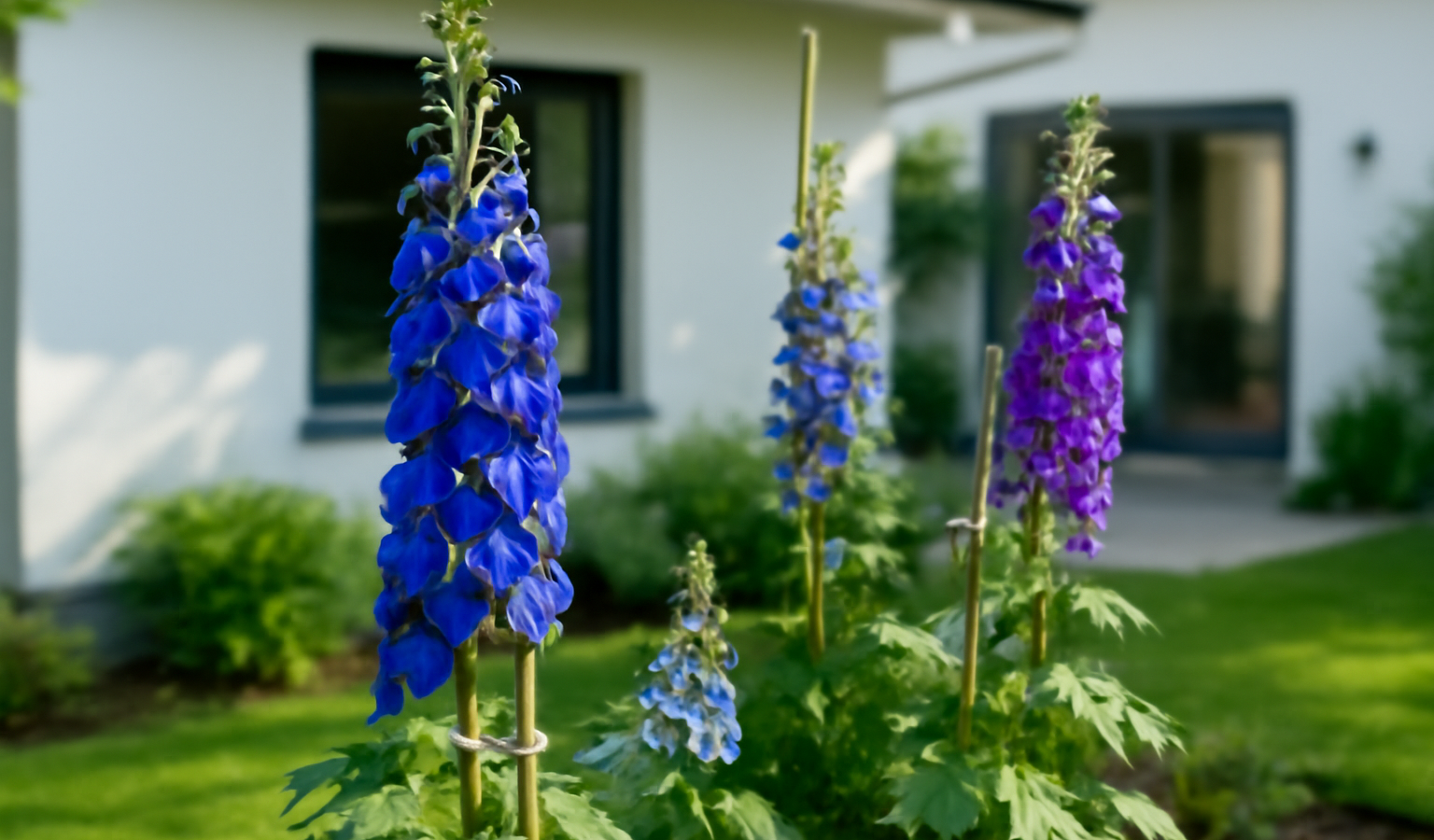
Few perennials make a statement like a delphinium in full bloom — dense spires of blue, purple, white, or pink flowers rising four to six feet above the border in early summer. They are the classic backbone of an English cottage garden, and while they have a reputation for being demanding, the truth is that delphiniums are straightforward as long as you meet three conditions: a cool climate, rich and well-drained soil, and sturdy staking to hold those top-heavy spires upright. Cut them back after the first flush and many varieties will reward you with a second bloom in late summer. This guide covers planting, the all-important staking, deadheading for rebloom, and a safety note every grower should know.
Key Takeaways
- Cool-climate plants: delphiniums thrive in USDA zones 3–7 with cool summers; they struggle in hot, humid regions.
- Stake early: the tall spires snap in wind and rain — install supports while plants are still short, not after they flop.
- Rich, well-drained soil: heavy feeders that want fertile, neutral-to-slightly-alkaline soil and consistent moisture, never waterlogged.
- Cut back for rebloom: remove spent spires to the base after the first flush to encourage a second round of flowers.
- Toxic to people and pets: all parts contain alkaloids that are poisonous if eaten — site them away from grazing animals and curious children.
Climate: Why Delphiniums Love It Cool
Delphiniums are cool-climate perennials at heart, happiest in USDA zones 3 through 7 where summers stay mild and nights are cool. They put on their best show in regions like the Pacific Northwest, the Northeast, the upper Midwest, and the UK — anywhere with cool, moist summers. In hot, humid climates (zones 8 and warmer), they tend to be short-lived and often perform as annuals or biennials; gardeners there should plant in fall for winter and spring bloom before the heat arrives, choose heat-tolerant strains, and provide afternoon shade. Cool summers are the single biggest factor in growing the tall, robust, long-lived plants you see in classic perennial borders.
Site and Soil
Choose a spot with full sun — at least six hours — though in warmer areas some afternoon shade helps the plants cope with heat. Just as important is shelter: those tall spires act like sails, so a position protected from strong wind (near a fence, hedge, or wall, but not so close it shades them) dramatically reduces breakage. Delphiniums are heavy feeders that demand fertile, deep, well-drained soil rich in organic matter. They prefer a neutral to slightly alkaline pH (around 6.5–7.5); if your soil is acidic, a little lime helps. The cardinal sin is wet, heavy soil in winter, which rots the crowns — improve drainage with compost and grit before planting, and never let them sit in soggy ground.
Planting
Plant delphiniums in spring after the last frost, or in early fall in mild regions. You can start from nursery plants, divisions, or seed — though seed-grown plants take a season or two to reach full size and named hybrids (like the famous Pacific Giants or the compact New Millennium series) are usually bought as plants for reliable color. Space them 18–24 inches apart to allow air circulation, which helps prevent the powdery mildew they are prone to. Set the crown at soil level, water in well, and mulch to keep the roots cool and moisture even — but keep mulch pulled back from the crown itself to avoid rot. Work some compost or a balanced fertilizer into the planting hole, since these plants are hungry.
Staking: The Step You Cannot Skip
Tall delphiniums are notoriously top-heavy, and a single summer thunderstorm can snap unsupported spires at the base in minutes. Staking is not optional for the full-size varieties. The secret is to install supports early — while the plants are still short, in spring — so the stems grow up through and around the support naturally rather than being yanked upright after they have already flopped.
You have a few good options. For individual spires, push a tall, sturdy bamboo cane or stake in close to each stem and tie loosely with soft twine or plant ties at intervals as the stem grows, using a figure-eight loop so the tie does not strangle the stem. For a clump, a grow-through grid support or a circular peony ring set over the emerging shoots in spring lets the stems rise through the openings and supports the whole plant invisibly once the foliage fills in. Whichever you use, tie loosely and keep up with new growth — a delphinium can add height fast in late spring. Compact, modern dwarf varieties (under three feet) may need little or no staking, which is one reason they have become popular for windier or lower-maintenance gardens.
Watering and Feeding
Delphiniums want consistent moisture, especially while they are building those big spires in spring — about an inch of water a week, more in dry spells, applied at the base to keep the foliage dry and ward off mildew. They do not want to sit wet, so the balance is even moisture in well-drained soil. Because they are heavy feeders, give them a balanced fertilizer in early spring as growth begins, and a second feeding after the first bloom to fuel rebloom. A spring mulch of compost both feeds the plant slowly and conserves moisture.
Deadheading and Cutting Back for Rebloom
After the first flush of flowers fades in early to midsummer, deadheading and cutting back can earn you a second show. As soon as the main spire finishes, cut that flowering stem right down to the base, near the ground, leaving the fresh basal foliage intact. This removal of spent stems signals the plant to push up new shoots from the base. Keep the plant watered and fed, and in many varieties a second, somewhat shorter flush of spires will appear in late summer or early fall.
If you want flowers for cutting, harvest spires when the lower third to half of the florets are open; they make superb, long-lasting cut flowers. Letting spent flowers form seed pods, by contrast, drains the plant’s energy and reduces rebloom, so deadhead promptly unless you specifically want to collect seed. As cold weather arrives, cut the whole plant back to a few inches and mulch the crown for winter protection in colder zones.
A Word on Toxicity
Delphiniums (and their close relatives the larkspurs) are beautiful but genuinely poisonous. All parts of the plant contain diterpenoid alkaloids that are toxic to humans, dogs, cats, and especially livestock if eaten — larkspur is a notorious cause of cattle poisoning on rangeland. The young foliage and seeds are the most potent. This does not mean you cannot grow them, but do site them away from pastures and out of reach of grazing animals, wash your hands after handling and pruning (the sap can irritate skin), and keep small children and pets from nibbling. Never confuse them with anything edible. With that simple awareness, they are perfectly safe to enjoy in an ornamental border.
Common Problems
Powdery mildew (white coating on leaves) is the most common issue, favored by humidity and crowding — space plants well, water at the base, and provide good airflow. Slugs and snails love the tender new spring shoots and can shred emerging growth overnight; bait, trap, or hand-pick them as the plants come up. Crown and root rot strike in wet, poorly drained soil, so drainage is your best defense. Floppy or broken stems mean inadequate or late staking. Short-lived plants in warm climates are usually a sign the summers are simply too hot — treat them as annuals there or switch to heat-tolerant strains. For more on amending soil pH for fussy perennials, see our guide on lime vs gypsum for soil, and browse the Plants & Flowers hub for more flower-growing guides like our guide to growing violas.
Frequently Asked Questions
Do delphiniums need staking?
Full-size varieties almost always do — their tall spires snap in wind and rain without support. Install stakes or a grow-through grid early in spring while the plants are short, so stems grow up through the support. Dwarf varieties under three feet may not need staking.
Will delphiniums bloom again after cutting back?
Often yes. Cut spent flower spires down to the base after the first flush, keep the plant watered and fed, and many varieties push up a second, shorter round of blooms in late summer or early fall.
Can I grow delphiniums in a hot climate?
It is difficult — delphiniums are cool-climate plants that struggle in heat and humidity (zones 8+). In warm regions, plant in fall for spring bloom, choose heat-tolerant strains, give afternoon shade, and expect to treat them as annuals or short-lived perennials.
Are delphiniums poisonous?
Yes. All parts contain alkaloids toxic to people, dogs, cats, and livestock if eaten, with young foliage and seeds the most potent. Site them away from grazing animals, wash hands after handling, and keep children and pets from nibbling.
How tall do delphiniums grow?
Full-size varieties like the Pacific Giants commonly reach 4–6 feet, with the flower spire making up much of that height. Compact and dwarf strains stay around 2–3 feet, which makes them sturdier and far less likely to need staking.