

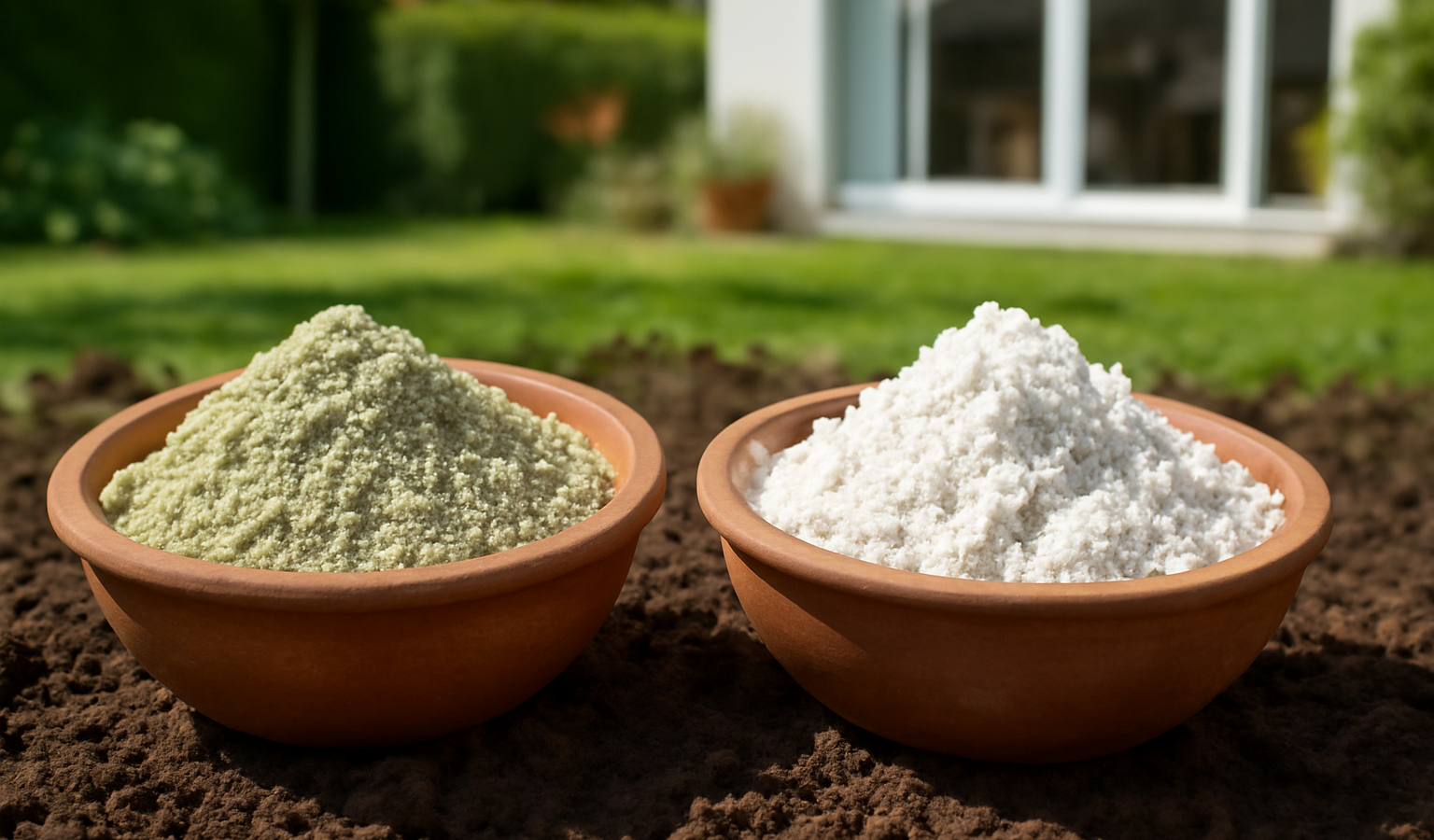
Walk into any garden center and you’ll find bags of lime and bags of gypsum sitting side by side, both promising to “fix” your soil. They look almost identical, they’re both calcium-rich amendments, and gardeners constantly use them interchangeably. That’s a mistake. Lime and gypsum do fundamentally different jobs, and choosing the wrong one wastes money, time, and sometimes makes your soil problem worse. The single most important thing to understand is this: lime changes your soil’s pH, and gypsum does not. Everything else flows from that one difference. Below we break down exactly what each amendment does, when to reach for it, how much to apply per 1,000 square feet, and how to stop guessing and start using a soil test to make the call.
Key Takeaways
- Lime (calcium carbonate) raises soil pH and neutralizes acidity; gypsum (calcium sulfate) does not meaningfully change pH at all.
- Use lime when a soil test shows acidic soil (low pH) that you need to bring up toward 6.0 to 7.0.
- Use gypsum to loosen and improve the structure of heavy, compacted, or sodium-affected (sodic) clay, and to add calcium without altering pH.
- Both amendments supply calcium; dolomitic lime also supplies magnesium, while gypsum also supplies sulfur.
- Typical lime rates run roughly 25 to 50 lb per 1,000 sq ft, and lime takes months to react fully in the soil.
- Always start with a soil test. Guessing about pH and soil structure is the most common and costly mistake gardeners make.
| Factor | Lime | Gypsum |
|---|---|---|
| Chemical name | Calcium carbonate (calcitic) or calcium-magnesium carbonate (dolomitic) | Calcium sulfate (dihydrate) |
| Effect on pH | Raises pH; neutralizes acidity | Essentially none; pH-neutral |
| Nutrients added | Calcium (plus magnesium if dolomitic) | Calcium and sulfur |
| Best for | Acidic soil that tests too low in pH | Compacted or sodic (sodium-heavy) clay |
| Improves clay structure? | Indirectly, mainly via calcium and pH correction | Yes, directly flocculates dispersed clay |
| Typical rate per 1,000 sq ft | ~25 to 50 lb (test-dependent) | ~40 to 100 lb (structure-dependent) |
| Time to work | Slow; weeks to several months | Faster on structure; weeks |
| Risk if misused | Over-liming pushes pH too high | Wasted on soil that isn’t sodic; no pH benefit |
Lime: the pH corrector
Lime’s entire purpose is to raise soil pH. Most agricultural and garden lime is ground limestone, which is calcium carbonate. When you work it into acidic soil, the carbonate reacts with hydrogen ions and neutralizes them, pulling the pH upward toward neutral. If your lawn looks tired, moss is creeping in, fertilizer seems to do nothing, and a soil test reads 5.2 or 5.5, lime is almost certainly what you need. Most garden vegetables, turfgrasses, and ornamentals prefer a pH in the 6.0 to 7.0 range, where nutrients are most available to roots. Below about 6.0, elements like phosphorus get locked up and aluminum can become toxic, so plants struggle even when the soil technically contains plenty of food.
Calcitic vs dolomitic lime
There are two common types, and the difference matters. Calcitic lime is mostly calcium carbonate and adds calcium only. Dolomitic lime is a calcium-magnesium carbonate and adds both calcium and magnesium. If your soil test shows low magnesium along with low pH, dolomitic lime handles both problems at once. If your magnesium is already adequate or high, stick with calcitic lime, because piling on extra magnesium can actually degrade clay structure and throw your calcium-to-magnesium balance out of whack. This is one of those details where reading your soil test report pays off, rather than grabbing whatever bag is cheapest.
How much lime and how fast it works
Application rate depends on how acidic your soil is and how much clay it holds, because clay soils resist pH change and need more lime than sandy soils. A common range is roughly 25 to 50 lb of ground limestone per 1,000 square feet to nudge pH up by about half a point to a full point, but a soil lab will give you a precise recommendation based on your buffer pH. Do not exceed about 50 lb per 1,000 sq ft in a single application; if your test calls for more, split it across two applications six months apart so you don’t shock the soil or overshoot. Lime is slow. The fine particles need moisture and time to react, and you often won’t see the full pH shift for two to six months. For best results, apply it in fall so it has the whole winter to work, and till or rake it into the top few inches rather than leaving it on the surface, since lime barely moves downward on its own. Retest in six to twelve months before applying again.
Gypsum: the structure improver
Gypsum is calcium sulfate, and here is the honest truth most product marketing glosses over: gypsum does not meaningfully change soil pH. It will not raise pH like lime, and it will not lower the pH of alkaline soil either. It is essentially pH-neutral. So if your goal is to correct acidity, gypsum is the wrong tool, full stop. What gypsum actually does well is improve the physical structure of certain difficult clay soils. The calcium it supplies displaces sodium and helps flocculate, or clump together, dispersed clay particles. In plain terms, it can take a tight, slick, waterlogged clay and help it form crumbs that let water and air move through.
When gypsum genuinely helps
Gypsum shines on sodic soils, meaning clay soils with high sodium content. These are common in arid regions, near roads treated with de-icing salt, and in areas with poor-quality irrigation water. In a sodic soil, sodium causes the clay to disperse and seal up, creating a hard, poorly draining crust. The calcium in gypsum swaps places with that sodium on the clay particles, the sodium then leaches away with rain or irrigation, and the soil opens up. Gypsum also delivers sulfur, a secondary nutrient many soils run short on, and calcium for plants that need it, such as tomatoes prone to blossom end rot. Because it’s water-soluble and doesn’t depend on a chemical pH reaction, gypsum tends to show structural benefits a bit faster than lime, often within a few weeks to a season.
Where gypsum disappoints
The most common gypsum mistake is spreading it on ordinary, non-sodic clay and expecting a miracle. If your heavy clay is compacted simply because it’s clay, not because of sodium, gypsum does relatively little, and you’d get far more improvement from generous amounts of compost and organic matter. Gypsum is not a substitute for fixing acidity, not a substitute for compost, and not a cure for every drainage complaint. Typical rates for structural improvement run from about 40 lb per 1,000 sq ft for a light treatment up to 100 lb or more for heavily sodic ground, applied and watered in. As with lime, your soil test, ideally one that reports sodium and the exchangeable sodium percentage, tells you whether gypsum is worth the bag.
The verdict
Lime and gypsum are not competitors so much as tools for two different jobs. Reach for lime when a soil test shows your soil is too acidic and you need to raise the pH into the comfortable 6.0 to 7.0 range that most plants enjoy; choose dolomitic lime if you also need magnesium, calcitic if you don’t. Reach for gypsum when you’re dealing with compacted, crusting, sodium-affected clay and you want to improve structure and drainage, or when you simply need to add calcium and sulfur without touching pH. The one rule that ties it all together is to test first. A basic soil test from your county extension office or a reputable lab costs very little and tells you your pH, your nutrient levels, and often your soil texture, removing all the guesswork.
If your real problem is heavy soil that drains poorly, remember that no amendment beats organic matter. Working in two to three inches of compost does more for long-term clay structure than lime or gypsum alone, and it feeds the soil biology that keeps drainage open year after year. Once your pH and structure are sorted, the next thing to dial in is how you feed those plants, and our guide to slow-release vs quick-release fertilizer walks through matching nutrient timing to your goals. If drainage is still an issue after amending, how you deliver water matters too, and comparing drip irrigation vs sprinkler systems can help you avoid the waterlogging that makes clay problems worse. For more projects to get your yard and beds dialed in, browse the full outdoor living hub.
Bottom line: don’t use gypsum hoping to change your pH, and don’t lime a soil that’s already alkaline. Match the amendment to the actual problem your soil test reveals, apply the right rate per 1,000 square feet, give it time to work, and retest before reapplying. Do that, and you’ll spend less on bags of product while getting healthier, better-structured soil that your plants will reward you for.
Frequently Asked Questions
Does gypsum lower soil pH?
No. Gypsum is calcium sulfate and is essentially pH-neutral, so it neither raises nor lowers soil pH in any meaningful way. If you need to lower an alkaline pH, use elemental sulfur instead; if you need to raise an acidic pH, use lime. Gypsum’s job is improving clay structure and adding calcium and sulfur, not adjusting pH.
Can I use lime and gypsum together?
Yes, in the right situation. If a soil test shows your soil is both acidic and structurally poor or sodic, you can lime to raise the pH and use gypsum to improve structure and supply calcium. Just base both rates on your soil test and don’t double up blindly, since over-application of either can cause its own problems.
How much lime do I need per 1,000 square feet?
It depends on your current pH and soil texture, but a common range is about 25 to 50 lb of ground limestone per 1,000 sq ft to raise pH by roughly half a point to a full point. Clay soils need more than sandy soils. A soil lab’s buffer pH reading gives the most accurate rate, so test before applying.
Will gypsum fix my hard, compacted clay soil?
Only if the compaction is caused by sodium, which makes the soil sodic. For ordinary clay that’s just dense because it’s clay, gypsum does little, and you’ll get far better results from working in compost and organic matter. A soil test that reports sodium or exchangeable sodium percentage tells you whether gypsum is the right call.
How long does lime take to work?
Lime is slow because its particles need moisture and time to react with the soil. You often won’t see the full pH change for two to six months, which is why fall is a popular time to apply, giving it all winter to work. Mix it into the top few inches and retest in six to twelve months before applying more.