

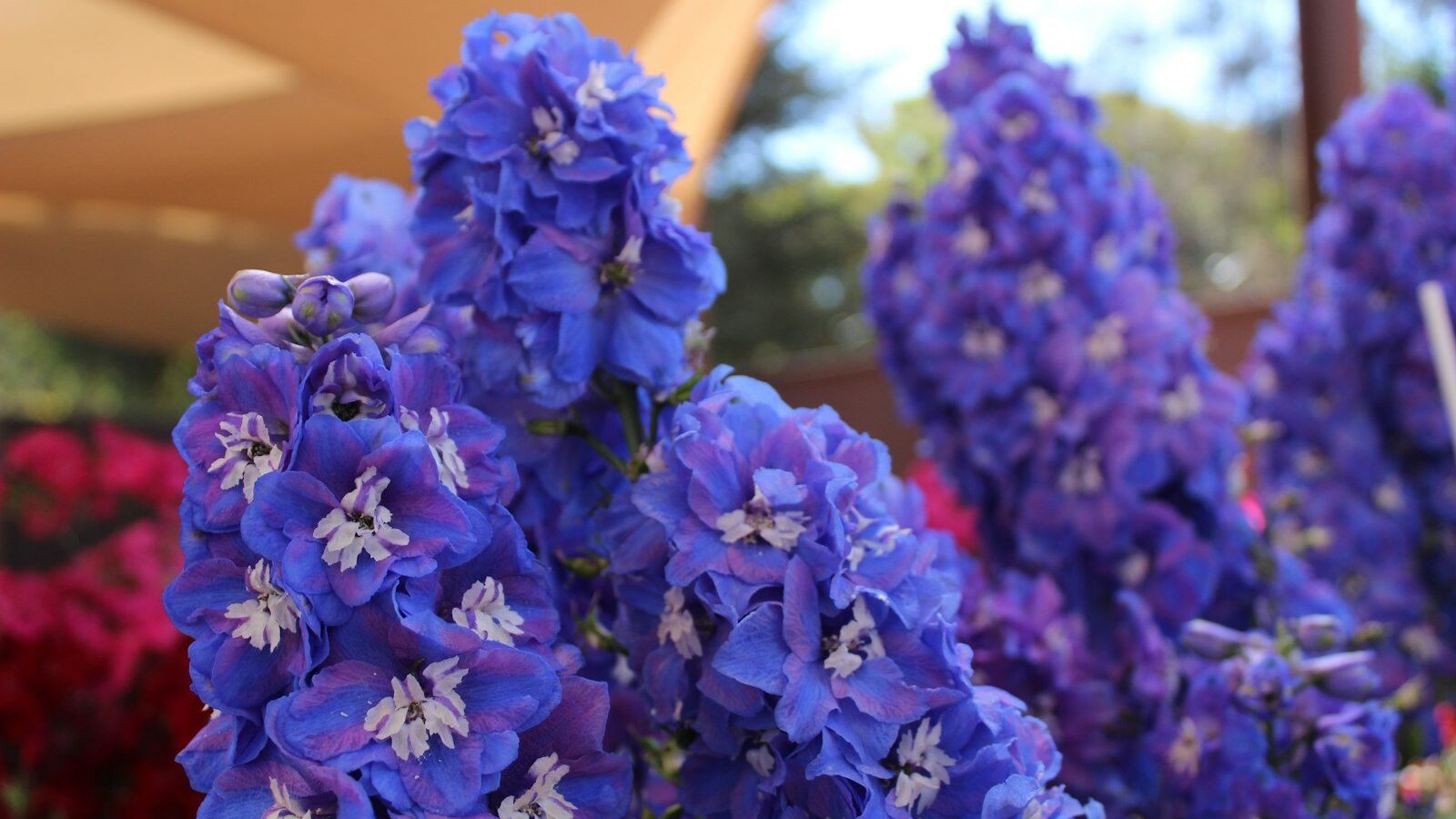
Few flowers command a border like delphinium: towering spires of densely packed blooms, most famously in shades of true blue rarely seen elsewhere in the garden, rising 4 to 6 feet (sometimes more). They are the classic cottage-garden showstopper — and they have a reputation for being demanding. The truth is simpler: delphiniums need three things done well — rich soil, cool conditions, and sturdy staking. Get those right and even first-timers can grow spectacular spikes. They are at their best in cool-summer regions and USDA zones 3–7.
Key Takeaways
- Delphiniums want full sun, cool summers, and rich, moist, well-drained, slightly alkaline soil.
- Stake every plant early — the tall flower spikes snap in wind and rain without support.
- They are heavy feeders and drinkers; feed in spring and again after the first bloom.
- Cut spent spikes to the base for a possible second flush of flowers in late summer.
- Best in zones 3–7; in hot-summer climates grow them as cool-season annuals or in afternoon shade.
Choosing the Right Delphinium
Matching the type to your climate and patience level is the first decision.
- Elatum hybrids (tall): The iconic 5–7 foot spires, including the Pacific Giants and the New Millennium series. Stunning but the most staking-dependent and shortest-lived (often 2–3 years).
- Belladonna group: Shorter (3–4 feet), branching, looser spikes that need less staking, rebloom more willingly, and tend to live longer. A great choice for windy or beginner gardens.
- Grandiflorum / Chinese delphinium (D. grandiflorum): Compact 1–2 foot plants, often grown as annuals or short-lived perennials; far more heat-tolerant.
- Larkspur: The annual cousin (Consolida), sown from seed each year — easier, but not a true perennial delphinium.
Soil, Sun and Planting
Delphiniums are greedy plants that demand deep, fertile, moisture-retentive but well-drained soil. Before planting, dig in a generous amount of compost or well-rotted manure to a depth of 12–18 inches. They prefer a neutral to slightly alkaline pH (6.5–7.5); add lime to acidic soils. Give them full sun in cool climates, but in regions with hot summers, a site with morning sun and shelter from harsh afternoon heat — and from wind — produces stronger, longer-lasting spikes.
- Plant in spring after the last frost, or in early fall in mild climates, spacing plants 18–24 inches apart.
- Set the crown level with the soil surface — burying it invites crown rot.
- Water in thoroughly and mulch with compost, keeping the mulch off the crown.
- If sowing seed, start indoors 8–10 weeks before the last frost; fresh seed germinates best and benefits from a short chill.
Good drainage is critical despite their thirst — delphiniums want consistently moist soil but rot quickly in standing water, especially over winter.
Shelter is the most overlooked siting factor. A delphinium that gets everything else right will still be ruined by a windy, exposed position, where even staked spikes whip and bruise. Tuck them against a hedge, fence, or the lee of a building that breaks the prevailing wind but does not shade them out, and you will dramatically cut both staking failures and flower damage. In hot regions, that same protected microclimate ideally also screens the worst of the afternoon sun, since heat — not cold — is what shortens a delphinium’s life in most American gardens.
Staking: The Step You Cannot Skip
This is where most delphinium dreams collapse — literally. A 6-foot hollow flower stalk loaded with blooms is no match for a summer thunderstorm, and a single gust can snap the season’s display in seconds. Stake early and stake individually.
- Install stakes when plants are about 12 inches tall, before the spikes form, so you do not damage roots later.
- Use a tall, sturdy stake (bamboo or metal) per spike, reaching nearly to the expected flower height.
- Tie loosely with soft twine or plant ties at 12-inch intervals as the stalk grows, leaving room for the stem to flex.
- For belladonna and other branching types, a grow-through grid or a ring of stakes with crisscrossed twine supports the whole clump at once.
Watering and Feeding
Delphiniums are both heavy drinkers and heavy feeders. Keep the soil consistently moist — about 1–2 inches of water per week, never letting it dry out during active growth and bloom, but never waterlogged either. Water at the base to keep the foliage dry and discourage mildew. Feed in early spring as growth resumes with a balanced fertilizer or a top-dressing of compost, and again with a lighter feed right after the first flush of flowers to fuel reblooming. A spring application of lime where soils are acidic keeps them in their happy pH range. Thin the shoots on established clumps in spring — keeping only the 5–7 strongest stems per plant — to produce fewer but much stronger, fuller spikes.
Deadheading and Reblooming
When a spike finishes flowering, cut it down to the base, just above the low foliage. Removing the spent stalk before it sets seed, combined with that post-bloom feed and steady water, often coaxes a fresh set of smaller spikes for a second show in late summer or early fall. Leaving spent flowers to form seed, by contrast, signals the plant to wind down and reduces both rebloom and the plant’s longevity. If you want to save seed or let it self-sow, leave just one or two spikes and cut the rest.
Overwintering and Longevity
Tall hybrid delphiniums are reliably hardy in zones 3–7 but tend to be short-lived perennials, often declining after two or three seasons — many gardeners treat them as semi-disposable and replant or divide regularly. After the foliage dies back in fall, cut the plant to the ground and apply a loose winter mulch, taking care that it does not trap moisture against the crown, which causes rot in wet-winter areas. Divide healthy clumps in early spring every 3–4 years, replanting the vigorous outer pieces. In hot-summer regions (zone 8 and warmer), delphiniums rarely persist; grow them as cool-season annuals, planting in fall or very early spring for a single spectacular show.
Starting Delphiniums From Seed
Buying established plants is the quickest route to bloom, but delphiniums grow well from seed if you respect a few quirks — chiefly that the seed is short-lived and germinates best fresh and cool.
- Use fresh seed; if storing, keep it in the refrigerator, as warmth and age kill viability fast.
- Sow indoors 8–10 weeks before the last frost, barely covering the seed since darkness aids germination.
- Chill the sown tray in the refrigerator for about two weeks, then move it to a cool 50–60°F spot to sprout — high heat suppresses germination.
- Grow the seedlings on cool and bright, harden them off, and transplant after frost.
Seed-grown hybrids from a good strain like New Millennium often bloom their first year if started early, and they tend to be sturdier and more heat-tolerant than older Pacific Giant types.
Designing With Delphiniums
Delphiniums are built for the back of the border, where their vertical spires punctuate the rounded, mounding shapes of roses, peonies, and hardy geraniums in the classic English cottage scheme. Because the lower stems can go bare, always plant something bushy in front to hide their “ankles.” Their true-blue forms are among the few genuinely blue flowers available and combine stunningly with soft yellows, whites, and pinks. Plant in generous groups of three or more rather than single sentinels for the full vertical impact, and remember they make dramatic, if relatively short-lived, cut flowers — harvest when the lower third of the spike has opened.
Pests and Problems
Slugs and snails are public enemy number one, especially on tender spring shoots — patrol at night, use barriers or traps, and protect emerging growth. Powdery mildew can coat the foliage in humid or crowded conditions; prevent it with good spacing, base watering, and thinning. Delphiniums are also prone to crown and root rot in poorly drained or overly wet winter soil, and to bacterial and fungal leaf spots. A note of caution: all parts of delphinium are toxic if eaten, so site them away from areas where children or pets graze. On the upside, that toxicity makes them quite deer-resistant.
Delphiniums are the backbone of a classic cottage border. For more vertical drama, see our guide to its easy annual cousin larkspur, and browse the plants and flowers hub for companions that fill in around their bare lower stems. Pair them with mounding, deer-resistant perennials like yarrow for a planting that thrives in the same sunny, well-drained beds.
Frequently Asked Questions
Do delphiniums come back every year?
Yes, they are perennial in zones 3–7, but tall hybrids are short-lived — often just 2–3 years. Divide every few years and replant to keep a strong display. In hot climates grow them as annuals.
How do I keep delphiniums from falling over?
Stake each spike individually starting when plants are about 12 inches tall, tying loosely at intervals as they grow. Plant in a sheltered spot out of strong wind to reduce snapping.
Will delphiniums bloom again after cutting?
Often yes. Cut spent spikes to the base before they set seed, feed lightly, and keep the soil moist — this can trigger a second, smaller flush of spikes in late summer or fall.
Can delphiniums grow in hot climates?
They struggle in zone 8 and warmer because they need cool summers. Grow them as cool-season annuals planted in fall or early spring, or give them morning sun with afternoon shade.
Are delphiniums poisonous?
Yes — all parts are toxic if ingested by people or pets, which also makes them deer-resistant. Plant them away from spots where children or animals might nibble.