

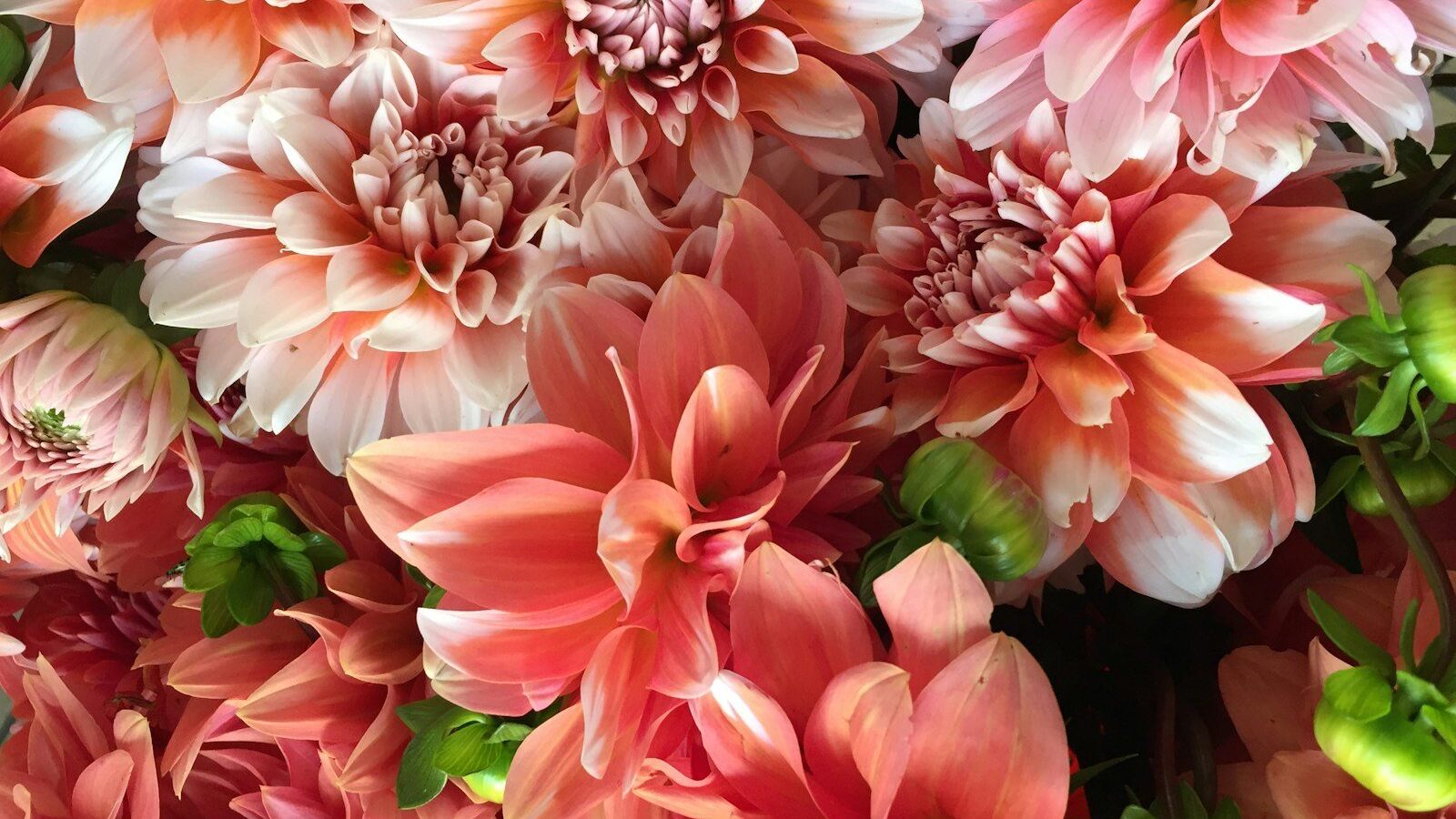
Dahlias give you more cut flowers per square foot than almost anything else in the garden, blooming from midsummer until the first hard frost. Plant the tubers after your soil warms, pinch them once when they’re young, keep them staked and deadheaded, and a single plant will hand you dozens of blooms. The catch is that dahlia tubers are frost-tender, so in most of the US you either dig and store them each fall or treat them as annuals. This guide walks through the whole cycle: choosing tubers, planting depth and spacing, staking, feeding, deadheading, pest control, and lifting and storing for next year.
Key Takeaways
- Plant tubers 4–6 inches deep, eye facing up, after soil hits 60°F (usually 1–2 weeks after your last frost).
- Space dinnerplate types 24 inches apart, smaller types 12–18 inches; give them full sun and rich, well-drained soil.
- Pinch the center growing tip above the 4th leaf set to force bushier plants and more blooms.
- Stake at planting time, deadhead spent blooms relentlessly, and feed with a low-nitrogen fertilizer.
- In zones 7 and colder, lift tubers after frost blackens the foliage and store them dry at 40–50°F over winter.
Choosing and buying dahlia tubers
Dahlias are sold as tubers (fleshy roots that look a bit like sweet potatoes), as potted plants, or as seed. Tubers are the most economical way to grow named varieties and the most reliable. A healthy tuber has at least one visible “eye” — a small bump or pink growth point near the crown where the old stem attached. The tuber itself can look shriveled and still grow fine, but it must be firm, not mushy or moldy, and it must have that eye. A tuber with no eye will never sprout no matter how good it looks.
Dahlias range from 12-inch border types to 5-foot giants, and blooms range from 1-inch pompons to 10-inch “dinnerplates.” For beginners and for cutting, the 3–6 inch flowering types on 3–4 foot plants are the sweet spot — productive, sturdy, and not as floppy as the giants. Good cutting and garden varieties include ‘Café au Lait’ (blush dinnerplate, a wedding favorite), ‘Cornel’ (red ball, ships and lasts well in a vase), ‘Bishop of Llandaff’ (single red blooms over dark foliage), ‘Karma’ series (bred specifically for cut-flower stem length), and ‘Gallery’ types (compact, container-friendly). Buy from a tuber specialist rather than a discount bin where tubers may have dried out.
When and where to plant
Dahlias are warm-season plants. Wait until your last spring frost has passed and the soil has warmed to at least 60°F — planting into cold, wet soil is the fastest way to rot a tuber. For most of the US that means mid-to-late May; in the South it’s April, and in cold northern zones it’s early June. If you want a head start, pot tubers up indoors in 1-gallon containers 4–6 weeks before planting out and move the growing plants to the garden once frost danger passes.
Give dahlias full sun — at least 6 to 8 hours daily. They flower poorly in shade. Soil should be rich, fertile, and above all well-drained; dahlias hate soggy feet. Work 2–3 inches of compost into the bed before planting. A slightly acidic to neutral pH of 6.5 is ideal. If your soil is heavy clay, plant in raised beds or amend heavily with compost and coarse grit to improve drainage.
How to plant dahlia tubers
Dig a hole about 6 inches deep. Lay the tuber on its side in the bottom with the eye pointing up, then cover with 2–3 inches of soil — you don’t fill the hole completely at first. As the shoot grows, gradually backfill until the hole is level. Final planting depth ends up around 4–6 inches. Do not water at planting time. This is the single most common mistake: a freshly planted tuber has no roots and no leaves to use water, so moisture just sits and invites rot. Wait until you see green growth above the soil before you begin watering, unless your soil is bone-dry and the weather is hot.
Spacing depends on size. Plant compact bedding dahlias 12 inches apart, medium cutting types 18 inches apart, and large dinnerplate varieties 24 inches apart so air can circulate and reduce mildew. If you’re growing in rows for cutting, 18 inches in the row with 30-inch aisles works well. Drive your support stake into the ground at planting time — pushing a stake in later risks spearing the tuber.
Staking and support
All but the dwarf varieties need support; a wind gust or a heavy rain will snap a flower-laden stem or topple the whole plant. The simplest method is a single sturdy 5–6 foot wooden stake or piece of rebar per plant, with the main stem tied loosely every 12 inches as it grows using soft twine or strips of fabric. For a row of dahlias, the “corralling” method is faster: drive stakes every few feet down both sides of the row and run twine between them at 12 and 24 inches, creating a fence that holds the whole row upright. Tomato cages work for the smaller varieties.
Pinching for more flowers
When a young plant reaches about 12–16 inches tall and has three or four sets of leaves, pinch or snip out the central growing tip just above the fourth leaf set. It feels brutal to cut off the top of a healthy plant, but it forces the plant to branch from the leaf nodes below, producing a bushier plant with many more flowering stems. Pinched plants bloom slightly later but far more abundantly, and the extra branching also gives you longer cutting stems.
Watering and feeding
Once plants are established and actively growing, dahlias are thirsty. Water deeply two or three times a week in hot weather, aiming for the equivalent of about an inch of water, and water at the base rather than overhead to keep foliage dry and discourage powdery mildew. A 2–3 inch mulch of straw or shredded bark conserves moisture and keeps roots cool.
Skip high-nitrogen fertilizers — they produce lush leaves and few flowers, and they make tubers that store poorly. Use a low-nitrogen, higher-phosphorus and potassium formula such as a 5-10-10 or a 0-20-20, applied about a month after planting and again when buds first appear. Stop feeding by late summer so the plants can direct energy into building storage tubers before fall.
Deadheading and cutting
Dahlias bloom more the more you cut them. Deadhead spent flowers promptly — and learn to tell a spent bloom from an unopened bud, since they can look similar. A finished flower head is firm and pointed; a new bud is round and soft. Snip spent blooms back to the next set of leaves or a side bud, not just below the flower, to keep the plant tidy and productive.
For the vase, cut in the cool of early morning when blooms are nearly or fully open — unlike many cut flowers, dahlias do not continue opening once cut. Cut deep, taking long stems, and place them immediately in water. Searing the stem ends in hot water for a few seconds, or conditioning them in cool water for several hours before arranging, extends vase life to 4–7 days. The more you cut, the more the plant produces, so a productive dahlia row can supply bouquets weekly from July to October.
Pests and problems
Slugs and snails devour young shoots in spring — protect emerging growth with iron-phosphate bait or copper barriers. Earwigs chew flower petals; trap them in rolled damp newspaper or upturned, straw-stuffed pots. Aphids cluster on tender growth and can spread viruses; blast them off with water or treat with insecticidal soap. Spider mites appear in hot, dry spells, causing stippled, bronzed leaves — keep plants well-watered to deter them.
Powdery mildew shows up as a white coating on leaves late in the season; good spacing, base watering, and air circulation are the best prevention. The most serious issue is virus, which causes mottled, distorted foliage and stunting — there is no cure, so dig and discard affected plants and don’t propagate from them. If a plant grows all leaves and no flowers, suspect too much nitrogen or too much shade.
Lifting and storing tubers for winter
In USDA zones 8 and warmer, dahlias usually survive in the ground with a thick mulch. In zone 7 and colder, you’ll need to lift and store the tubers. Wait until the first hard frost blackens the foliage, then cut the stems back to about 4–6 inches. Leave the tubers in the ground for another week or two to cure and develop eyes for next year, then carefully fork them up, working well away from the crown to avoid stabbing them.
Gently brush or rinse off soil, let the clumps dry for a day or two out of direct sun, then trim off the fine feeder roots. You can store clumps whole and divide in spring, or divide now — each division needs at least one eye to grow. Pack the tubers in a box or paper bag with a dry medium such as vermiculite, peat, or wood shavings so they don’t touch, and store at 40–50°F with moderate humidity (a basement, garage, or root cellar). Check monthly: discard any that go soft or moldy, and lightly mist any that shrivel badly. Replant in spring once frost danger passes and the cycle begins again.
For more flower-growing projects, see our guides on growing chrysanthemums for fall color and growing gerbera daisies for long-lasting cut blooms, or browse the full Plants & Flowers section.
Frequently Asked Questions
How long do dahlias take to bloom from tubers?
Most dahlias flower about 8 to 10 weeks after planting, typically starting in mid-July from a late-May planting and continuing until frost. Pinching delays the first bloom by a week or two but greatly increases the total flower count.
Do I need to water dahlias right after planting?
No. A freshly planted tuber has no roots or leaves to take up water, so early watering just promotes rot. Wait until green shoots emerge above the soil before you begin watering, unless conditions are hot and the soil is completely dry.
Can I leave dahlia tubers in the ground over winter?
In USDA zones 8 and warmer, yes, with a thick protective mulch. In zone 7 and colder the ground freezes deep enough to kill them, so you should lift the tubers after the first hard frost and store them dry at 40–50°F.
Why is my dahlia all leaves and no flowers?
The usual causes are too much nitrogen fertilizer, which drives foliage at the expense of blooms, or too little sun. Switch to a low-nitrogen feed, make sure the plant gets at least 6–8 hours of direct sun, and be patient if it was pinched.
How do I divide dahlia tubers?
Divide in fall after lifting or in spring before planting. Cut the clump apart so each division includes a section of the crown with at least one visible eye. A tuber without an eye will not sprout, no matter how plump it looks.