

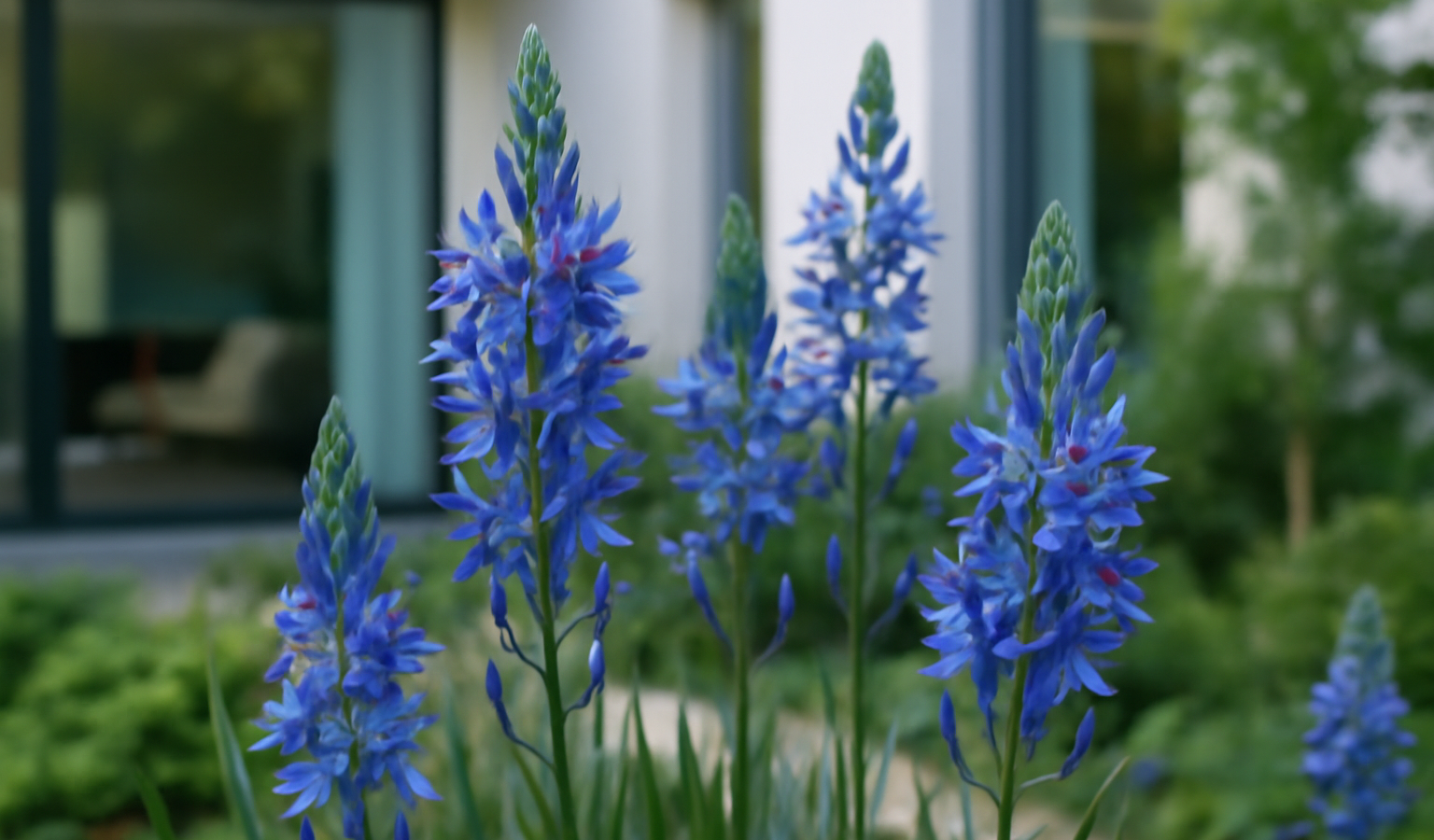
Camassia, or camas, is the rare spring bulb that actually wants the damp, heavy soil where tulips and most other bulbs rot. A North American native of wet meadows and prairies, it sends up tall, elegant spires of star-shaped flowers in shades of blue, violet, and white in late spring, just as the daffodils and tulips are fading, bridging the gap before the summer perennials take over. Hardy in USDA zones 4 through 8, the spikes rise 1 to 4 feet depending on the species, and because camas thrives in soil that stays moist into early summer, it is one of the few bulbs you can naturalize in low spots, rain gardens, and damp meadow grass where it will multiply into drifts over the years. Plant the bulbs in fall, give them sun to part shade and ground that does not bake dry in spring, and leave them undisturbed; camas is genuinely low maintenance, deer-resistant, and beloved by bees. The single rule is moisture in spring and a spot you will not have to dig.
Key Takeaways
- Hardy native bulb in USDA zones 4-8; tall blue, violet, or white spires bloom in late spring, after tulips and daffodils.
- Unlike most bulbs, camas thrives in moist to wet, heavy soil that stays damp through spring; ideal for low spots, rain gardens, and damp meadows.
- Plant bulbs in fall, 3-5 in deep and 4-8 in apart, in full sun to part shade.
- Excellent for naturalizing: leave undisturbed and it multiplies into drifts by offsets and self-seeding.
- Deer- and rodent-resistant, low maintenance; let the foliage die back naturally to feed next year’s bloom.
What Camassia Is and Why Grow It
Camassia is a genus of bulbous perennials in the asparagus family, native to the moist meadows, prairies, and streamsides of North America, where Indigenous peoples harvested the bulbs of certain species as a staple food. In the garden you will meet a handful of species. Camassia leichtlinii is the tall one, reaching 3 to 4 feet, with dense spires of starry flowers in blue, violet, or creamy white, including the popular soft-blue ‘Caerulea’ and white ‘Alba’ and double ‘Semiplena’. Camassia quamash (common camas) is shorter, 1 to 2 feet, with intense deep-blue to purple flowers and an earlier bloom. Camassia cusickii carries pale steel-blue flowers on stout stems, and the petite Camassia leichtlinii selections fill in the range. All share the same upright raceme of six-petaled stars opening from the bottom up.
The reason to grow camas is twofold. First, the look: those vertical blue spires bring a cool, prairie-meadow elegance and crucial late-spring color in the awkward weeks after the early bulbs finish and before peonies and roses begin. Second, and more practically, camas solves a problem no other common bulb can. If you have a low, damp corner, a clay soil that stays wet in spring, or a patch of moist meadow grass where tulips would simply melt away, camas will not merely survive there, it will flourish and naturalize into expanding drifts. The flowers are magnets for bees and other pollinators, the bulbs are ignored by deer, squirrels, voles, and most other pests, and once planted they ask almost nothing. For a damp-loving display, pair them with other moisture lovers you might grow at a pond margin or in a rain garden.
Where and When to Plant
Hardiness and light
Camassia is hardy in USDA zones 4 through 8, taking cold winters in stride as a prairie native should. Give it full sun to part shade. In full sun the spikes are sturdiest and bloom most heavily, but camas is happy in light or dappled shade and in the partial shade beneath deciduous trees that leaf out after the bulbs have flowered. In hotter zones, a little afternoon shade prolongs the bloom. Because the foliage emerges and flowers in spring before tree canopies are dense, camas works beautifully naturalized in light woodland edges and orchard grass as well as in open meadow and border.
Soil and the moisture difference
This is what sets camas apart from every other spring bulb you grow. Where tulips, daffodils, and most bulbs demand sharp drainage and dry summer dormancy and rot in wet ground, camas evolved in soil that stays moist, even wet, through spring and into early summer. So the very spots that kill other bulbs, the low corner, the heavy clay, the seasonally damp meadow, are exactly where camas excels. It tolerates and even prefers soil that is moisture-retentive and on the heavy side, as long as it is not permanently waterlogged stagnant bog. Rich soil with plenty of organic matter suits it; work in compost before planting heavy clay to improve structure. A pH from mildly acidic to neutral is fine. The one caveat is that the soil should drain enough to avoid standing water sitting around the bulbs all winter, which can rot them; moist in spring and merely not bone-dry the rest of the year is the target.
When to plant
Plant camassia bulbs in autumn, the same window as other spring-flowering bulbs, from September through November, while the soil is still workable and before it freezes hard. Fall planting gives the bulbs the cold winter period they need to root and to trigger spring flowering. Buy firm, plump, dormant bulbs and get them in the ground promptly, as they do not store as well as tulips and prefer not to sit out of soil for long.
Planting Camassia Bulbs
Depth and spacing
Plant camassia bulbs 3 to 5 inches deep, measured to the base of the bulb, with the pointed nose facing up; the larger C. leichtlinii bulbs go toward the deeper end, smaller C. quamash bulbs at the shallower end, following the general rule of two to three times the bulb’s height. Space them 4 to 8 inches apart, the wider spacing if you want them to bulk up and naturalize over the years, the closer spacing for an immediate dense show. For the most natural look, especially when naturalizing in grass or a meadow, scatter the bulbs by the handful and plant them where they fall rather than in rows, which gives the informal drift that suits this prairie plant. Set the bulbs in groups and clusters of odd numbers rather than dotting them singly.
Planting technique
Dig individual holes with a bulb planter or trowel, or excavate a wider area and set several bulbs in at once, which is faster for drifts. Loosen the soil at the base of the hole and, on heavy clay, mix in compost. Set the bulb upright, backfill, firm gently, and water in to settle the soil. If you are naturalizing in established turf, cut and lift a flap of sod, set the bulbs underneath at the right depth, and replace the turf. There is no need for the gritty drainage layer you might add under tulips; camas wants the moisture clay holds. A light mulch of leaf mold or compost over the area conserves moisture and feeds the soil.
Care and Naturalizing
Watering
The key season for water is spring, when the bulbs are in active growth and flowering. The soil should stay moist through this period, which in most gardens spring rain provides; in a dry spring, water to keep the ground damp while the plants are growing and blooming. After flowering, as the foliage begins to yellow and the plant heads toward summer dormancy, the bulbs tolerate and even prefer somewhat drier conditions, though unlike tulips they do not demand a hot, baked summer rest and are unbothered by ordinary garden moisture. In a naturally moist site, you will likely never need to water at all.
Feeding and foliage
Camas is not a hungry plant, but an annual feed keeps a naturalized colony vigorous. Top-dress in early spring with compost or a balanced bulb fertilizer as the shoots emerge. The single most important care task is to let the foliage die back naturally after flowering. The leaves photosynthesize and recharge the bulb for next year’s bloom, so resist cutting or mowing them down while they are still green. Wait until they have yellowed and withered, usually by early to midsummer, before removing them or mowing a naturalized meadow planting. Cutting green foliage early is the most common reason camas blooms poorly the following year.
Naturalizing and multiplying
Camas is one of the best bulbs for naturalizing in the right conditions. Left undisturbed, the bulbs multiply by producing offsets around the parent, and the plants also self-seed if you leave the spent flower spikes to ripen their seed capsules. Over several years a few dozen bulbs can expand into broad, swaying drifts in a damp meadow or border. To encourage this, simply leave them alone: do not dig, do not divide unnecessarily, and let some flowers set seed. If a clump becomes congested and flowering declines after many years, you can lift and divide the bulbs after the foliage dies back in summer, replanting the offsets immediately. For meadow plantings, delay the first mow until midsummer after the foliage and any ripening seed have done their work.
Design and Companion Planting
Camassia’s tall, vertical spires are a designer’s gift, providing strong upright form and cool blue tones in the late-spring garden. In a border, plant them in generous groups among emerging perennials whose foliage will hide the camas leaves as they fade, such as hardy geraniums, hostas, ferns, and daylilies. They are spectacular rising through a low groundcover or among the fresh growth of late-spring perennials. For naturalizing, combine camas with other moisture-tolerant meadow plants and late daffodils, and let them weave through grass for a prairie effect. The blues sit beautifully against the chartreuse of euphorbias and lady’s mantle, and the white forms light up a part-shaded woodland edge. Because they bloom as the early bulbs finish, they extend the bulb season seamlessly. For more ideas on combining bulbs and perennials, explore the Plants & Flowers hub, and if you struggle with bulbs that fail to flower, our notes on why spring bulbs go blind are worth a read.
Pests, Problems, and Troubleshooting
Camassia is about as trouble-free as bulbs come. Its great practical virtue, beyond tolerating wet soil, is that it is resistant to the pests that plague other bulbs: deer and rabbits leave it alone, and squirrels, voles, and other rodents do not dig up or eat the bulbs the way they raid tulips and crocus, so you can plant camas without cages or repellents. The main problem you might encounter is bulb rot, which comes only from genuinely waterlogged, stagnant soil where water sits around the bulbs all winter; the cure is to choose a site that is moist but still drains, never a permanent puddle. Poor flowering almost always traces to one of three causes: foliage cut down too early before it recharged the bulb, too much shade, or a clump grown so congested over many years that the bulbs compete; the fixes are to let leaves die back naturally, give more sun, and divide an old crowded colony. Otherwise camas simply gets on with it. Plant the bulbs in fall in moist ground, let the foliage ripen each year, and leave them be, and you will be rewarded with expanding drifts of blue spring spires that improve season after season with no work at all.
Frequently Asked Questions
Can camassia grow in wet soil?
Yes, and that is its great advantage over other bulbs. Camas evolved in wet meadows and thrives in moist to wet, heavy clay soil that would rot tulips and daffodils, as long as the ground is not a permanently stagnant, waterlogged puddle all winter.
When does camassia bloom?
Camassia blooms in late spring, generally after the daffodils and tulips have finished and before summer perennials begin. This timing makes it valuable for bridging the gap in mid to late May, depending on your climate and species.
Do squirrels and deer eat camassia bulbs?
No. Camassia is resistant to deer, rabbits, squirrels, and voles. Unlike tulips and crocus, the bulbs are not dug up or eaten, so you can plant them without protective cages or repellents, which makes them ideal for pest-prone gardens.
How deep do I plant camassia bulbs?
Plant them 3 to 5 inches deep to the base of the bulb, pointed end up, and 4 to 8 inches apart. Use the deeper end of the range for the larger Camassia leichtlinii bulbs and the shallower end for the smaller Camassia quamash.
Why didn’t my camassia flower this year?
The usual causes are cutting the foliage down before it yellowed naturally, too much shade, or an old congested clump. Let leaves die back fully to recharge the bulbs, give them more sun, and divide a crowded colony after the foliage fades.