

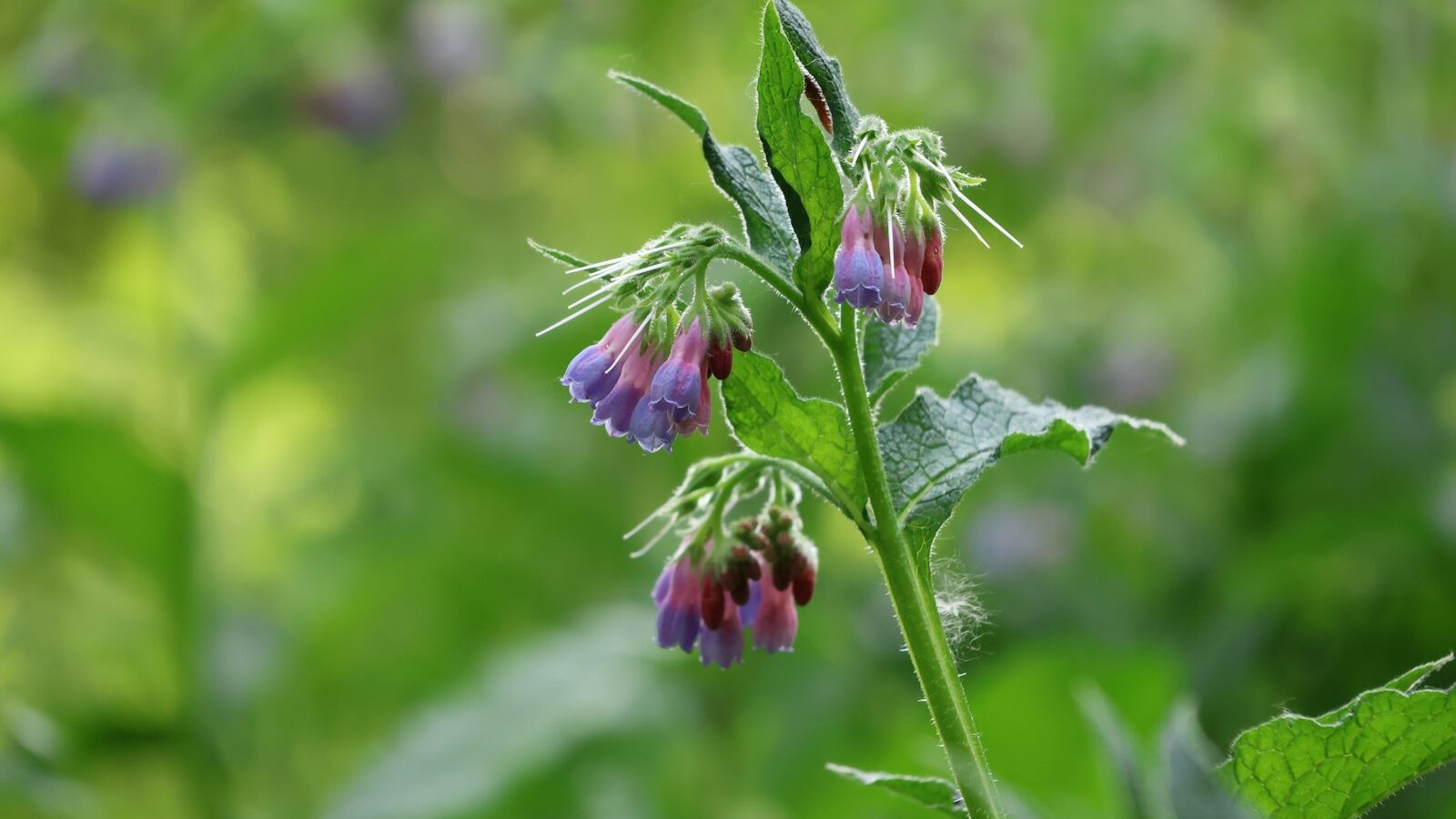
Grow comfrey for one main reason: it manufactures free fertilizer in your backyard. This vigorous perennial sends a thick taproot 6 to 10 feet down into the subsoil, pulls up potassium, nitrogen, and calcium that most plants never reach, and packs those nutrients into leaves you can cut three or four times a season. Plant it once in USDA zones 3 through 9, give it full sun to part shade, and it will outlive you. The single most important decision you will make is which type to plant. Choose the sterile cultivar ‘Bocking 14’ Russian comfrey, not common comfrey, because common comfrey self-seeds aggressively and is nearly impossible to remove once it takes hold. Everything else about growing comfrey is easy. Getting the variety right is the part people regret skipping.
Key Takeaways
- Plant the sterile cultivar ‘Bocking 14’ Russian comfrey — it sets no viable seed and only spreads if you chop the roots, unlike weedy common comfrey.
- Hardy in USDA zones 3 to 9, full sun to part shade, tolerant of almost any soil; grows 3 to 5 ft tall and wide.
- Propagate from root cuttings or crown divisions in spring, spacing plants 2 to 3 ft apart; do not grow Bocking 14 from seed.
- The deep taproot acts as a “dynamic accumulator,” mining subsoil nutrients into leaves you cut 3 to 4 times a season for fertilizer, mulch, and compost.
- Use comfrey externally and in the garden only — the leaves contain pyrrolizidine alkaloids that are toxic to the liver if eaten.
What Comfrey Is and Why It Earns Its Space
Comfrey is a clumping perennial in the borage family, with broad, coarse, fuzzy leaves that can reach 18 inches long and arching stems topped by bell-shaped flowers in purple, pink, or cream. Bees and bumblebees work those flowers hard from late spring into summer, which alone justifies a clump in the corner of a vegetable plot. But comfrey’s real reputation in permaculture rests on the phrase “dynamic accumulator.” The idea is straightforward once you picture the roots. Most garden vegetables feed in the top 6 to 12 inches of soil, where nutrients leach away with every heavy rain. Comfrey’s taproot drives far deeper, often 6 to 10 feet, tapping mineral reserves locked in the subsoil that shallow-rooted crops cannot touch. As the plant grows, it loads its leaves with those minerals — particularly potassium, which fruiting and flowering plants crave, along with useful nitrogen and calcium.
When you cut those leaves and lay them around your tomatoes or compost them, you are effectively pumping subsoil fertility up to the surface where your crops can use it. A single mature plant can yield several pounds of leaf at each cutting, and because it regrows so fast, you harvest the same plant repeatedly through the season. That is a closed-loop, no-cost fertilizer system running off sunlight and a deep root. Pair a comfrey patch with a working compost system and you cut your fertilizer bill to nothing. If you are building out a productive backyard, comfrey belongs on the same shortlist as the other workhorse perennials in our plants and flowers guides.
Zones, Sun, and Soil
Comfrey is genuinely tough. It is reliably hardy in USDA zones 3 through 9, dying back to the crown after hard frost and pushing up fresh growth the moment the soil warms in spring. In the coldest zones it benefits from a light mulch over the crown for winter, though established plants rarely need babying. It grows in full sun and in part shade, which makes it useful under the dappled edge of fruit trees where many crops sulk. Expect a mature clump to reach 3 to 5 feet tall and roughly as wide once it settles in, usually by its second or third season.
Soil is the easy part. Comfrey adapts to nearly anything — heavy clay, sandy loam, slightly acidic to slightly alkaline ground. It prefers moist, fertile soil and will grow lushest there, but it survives dry spells once established because that deep taproot reaches water the surface has lost. It is not picky about drainage, though it does not enjoy sitting in a true bog. The practical takeaway: stop worrying about your soil and start worrying about placement, because the soil will not be the thing that holds comfrey back. Nothing will.
Spread Caution: Read This Before You Plant Anything
This is the section that matters most, and it is the one most beginners skip until it is too late. Comfrey is so vigorous that it crosses the line into invasive behavior if you choose the wrong type. There are two issues to understand: seeding and root regrowth.
Why common comfrey becomes a problem
Common comfrey, Symphytum officinale, sets viable seed in large quantity and self-sows freely around the parent plant. Seedlings pop up across the bed, the lawn, and the neighbor’s fence line. On top of that, comfrey spreads from root fragments. The taproot is brittle, and any piece left in the ground — even a chunk the size of your thumb — will regrow into a full new plant. That combination is brutal to undo. Once common comfrey is established, you cannot dig it out cleanly, because every broken root tip you miss becomes next year’s plant. People spend years trying to evict it. Tilling makes it worse by chopping the roots into dozens of new starts.
Plant the sterile cultivar instead
The fix is simple: plant ‘Bocking 14’ Russian comfrey, a selected cultivar of Symphytum x uplandicum. This is the strain serious permaculture growers use, and for good reason. Bocking 14 is functionally sterile — it produces little or no viable seed, so it will not sow itself across your yard. It still spreads from root cuttings, but only if you actively chop or dig the roots. Left undisturbed, a Bocking 14 clump stays put and simply gets larger and more productive each year. That means you control where it goes. You will not find Bocking 14 sold as seed, because it does not come true from seed; it is propagated only vegetatively, from root cuttings and crown divisions. If a vendor offers “comfrey seed,” that is common comfrey, and you should pass.
Containment tips that actually work
Treat comfrey as a permanent fixture. Pick a spot where you genuinely want a 3-to-5-foot perennial for the next decade and plant it there on purpose. Good locations include a dedicated bed at the back of the garden, the base of fruit trees, a fence line, or an awkward corner you want filled. If you are nervous about spread, sink a physical root barrier — the same heavy polypropylene barrier used for running bamboo works well — at least 18 to 24 inches deep around the planting area. Avoid rototilling anywhere near a comfrey clump, since that is the single fastest way to multiply it. And if you ever do plant a seeding type, deadhead or cut the flower stalks before seed sets to stop self-sowing. With Bocking 14 and a sensible spot, none of this is hard. Just decide before you dig.
How to Plant Comfrey From Root Cuttings and Crowns
Because Bocking 14 is grown vegetatively, you start it from root cuttings or crown divisions rather than seed. Both establish quickly and cheaply, and once you have one plant you have an endless supply. Spring is the ideal planting time, after the soil has warmed and the danger of hard frost has passed — roughly March through May depending on your zone. Early fall planting works in milder zones 7 through 9, giving roots time to settle before winter.
Root cuttings are the most common starting point. A root cutting is simply a 2-to-6-inch length of the taproot. Plant each piece horizontally about 2 to 3 inches deep, cover it, and water it in. It does not matter much which end is up; comfrey root is forgiving and will sprout regardless. A crown division is a chunk of the established plant’s crown with growth buds and some attached root, dug from the edge of a mature clump in spring; plant it with the crown at or just below the soil surface. Expect cuttings to show leaves within a few weeks once soil temperatures climb. Space plants 2 to 3 feet apart in every direction, since each one fills out to several feet across. For a fertilizer bed, a row of three to six plants is plenty for an average vegetable garden. Water new plantings regularly for the first month or two until the taproot dives deep and the plant becomes self-sufficient.
Care, Cutting Back, and Harvesting
After the first season, comfrey care is close to nonexistent. It is drought tolerant once established, so you only need to water during extended dry spells or in containers. It does not require feeding — the whole point is that it feeds itself and everything around it — though a topdressing of compost or a splash of its own comfrey tea will push even more lush leaf growth if you want maximum harvest.
Harvesting is where the plant pays you back. Cut the leaves 3 to 4 times during the growing season, roughly every 4 to 6 weeks from late spring through early fall. The first cut usually comes when the plant is 12 to 18 inches tall and just beginning to flower. Use shears or a sickle and cut the whole clump down to about 2 inches above the crown — do not be timid, because hard cutting triggers vigorous regrowth. Wear gloves and long sleeves; the bristly leaves can irritate sensitive skin. After each cut the plant bounces back within weeks. Stop cutting about a month before your first expected hard frost so the plant can build reserves and harden off for winter. Then it dies back, rests, and repeats the whole cycle next spring with zero replanting.
How to Use Comfrey in the Garden
Comfrey tea (liquid fertilizer)
Comfrey tea is a high-potassium liquid feed, excellent for tomatoes, peppers, squash, and anything flowering or fruiting. To make it, stuff a bucket or barrel full of chopped comfrey leaves, weigh them down, and add just enough water to cover (a rough ratio is about 1 pound of leaves to a gallon of water). Cover loosely and let it steep for 3 to 6 weeks. Fair warning: it smells genuinely foul as it breaks down, so keep the bucket away from the patio. Strain off the dark liquid and dilute it heavily — roughly 1 part comfrey tea to 10 or 15 parts water, until it looks like weak tea — then pour it around the root zone of hungry plants every couple of weeks during the growing season. For a concentrated version, pack leaves into a container with a hole in the bottom and no added water; over a few weeks they rot down into a thick black concentrate you dilute even further, about 1 to 20.
Chop-and-drop mulch
The laziest and arguably best use is chop-and-drop. Cut the leaves and lay them directly on the soil surface as mulch around fruit trees, berry bushes, and vegetable beds. They wilt fast and break down within a couple of weeks, releasing their minerals straight into the root zone while suppressing weeds and holding moisture. A ring of comfrey planted at the drip line of an apple or pear tree gives you an on-the-spot mulch and fertilizer source you simply cut and drop in place. It is the same principle behind any good vegetable garden mulching routine, except the mulch grows itself a few feet away.
Compost activator
Comfrey leaves are rich in nitrogen and break down rapidly, which makes them an excellent compost activator. Layer them into a slow or stalled compost pile and they heat it up and speed decomposition of tougher browns. A few handfuls of fresh comfrey can revive a sluggish heap, and the finished compost carries comfrey’s mineral load into your beds. If your pile has been crawling along, working comfrey into it is one of the simplest ways to make compost break down faster.
Bee plant and traditional uses
Let a few flower stalks bloom and the bell-shaped flowers become a magnet for honeybees and bumblebees through late spring and summer, supporting pollinators that visit the rest of your garden. Comfrey also has a long folk-medicine history under the name “knitbone,” traditionally used in poultices on the skin. Here is the necessary caution, not medical advice: comfrey leaves and roots contain pyrrolizidine alkaloids, compounds that are toxic to the liver when consumed. For that reason, internal use is strongly discouraged, and comfrey should not be eaten or taken as a tea or supplement. Keep your use of this plant to the garden and external applications only, and treat any medicinal use as a question for a qualified professional rather than something to experiment with.
Pests and Problems
Here comfrey is almost boringly trouble-free. It has virtually no serious pests or diseases. Deer and rabbits leave it alone, thanks to the coarse, bristly leaves, so it works well as an unappetizing border in deer country. You may occasionally see a touch of rust (orange-brown pustules on the leaves) in damp seasons or on tired growth; the fix is simply to cut the plant hard, remove the affected leaves, and let the clean regrowth come back. It is drought tolerant once established and shrugs off neglect. Honestly, the only real “problem” comfrey presents is the one covered above — growing where you did not want it — and choosing Bocking 14 and a permanent spot solves that before it starts.
Frequently Asked Questions
Is comfrey invasive, and how do I keep it from spreading?
Common comfrey can be invasive because it self-seeds and regrows from any root fragment. Plant the sterile cultivar Bocking 14 Russian comfrey instead — it sets no viable seed and only spreads if you chop or dig its roots. Choose a permanent spot, avoid tilling near it, and sink an 18-to-24-inch root barrier if you want extra insurance.
What is the difference between common comfrey and Bocking 14?
Common comfrey (Symphytum officinale) produces fertile seed and sows itself everywhere. Bocking 14 is a selected cultivar of Russian comfrey (Symphytum x uplandicum) that is functionally sterile, so it stays where you plant it. Bocking 14 is also a heavier producer of nutrient-rich leaf, which is why it is the standard choice for fertilizer use.
How do I grow Bocking 14 if it has no seed?
You grow it from root cuttings or crown divisions, not seed. Plant a 2-to-6-inch piece of root horizontally about 2 to 3 inches deep in spring, or divide an established crown. Space plants 2 to 3 feet apart. If a seller offers comfrey seed, it is common comfrey, not Bocking 14.
How often can I harvest comfrey leaves?
Cut an established plant 3 to 4 times per growing season, about every 4 to 6 weeks from late spring into early fall. Cut the whole clump down to 2 inches above the crown each time; hard cutting drives fast regrowth. Stop cutting roughly a month before your first hard frost.
Can you eat comfrey or drink comfrey tea?
No. Comfrey contains pyrrolizidine alkaloids that are toxic to the liver if consumed, so it should not be eaten or taken internally. The “comfrey tea” gardeners make is a liquid fertilizer for plants, not a beverage. Use comfrey for the garden and external purposes only, and consult a professional for any medicinal question.