

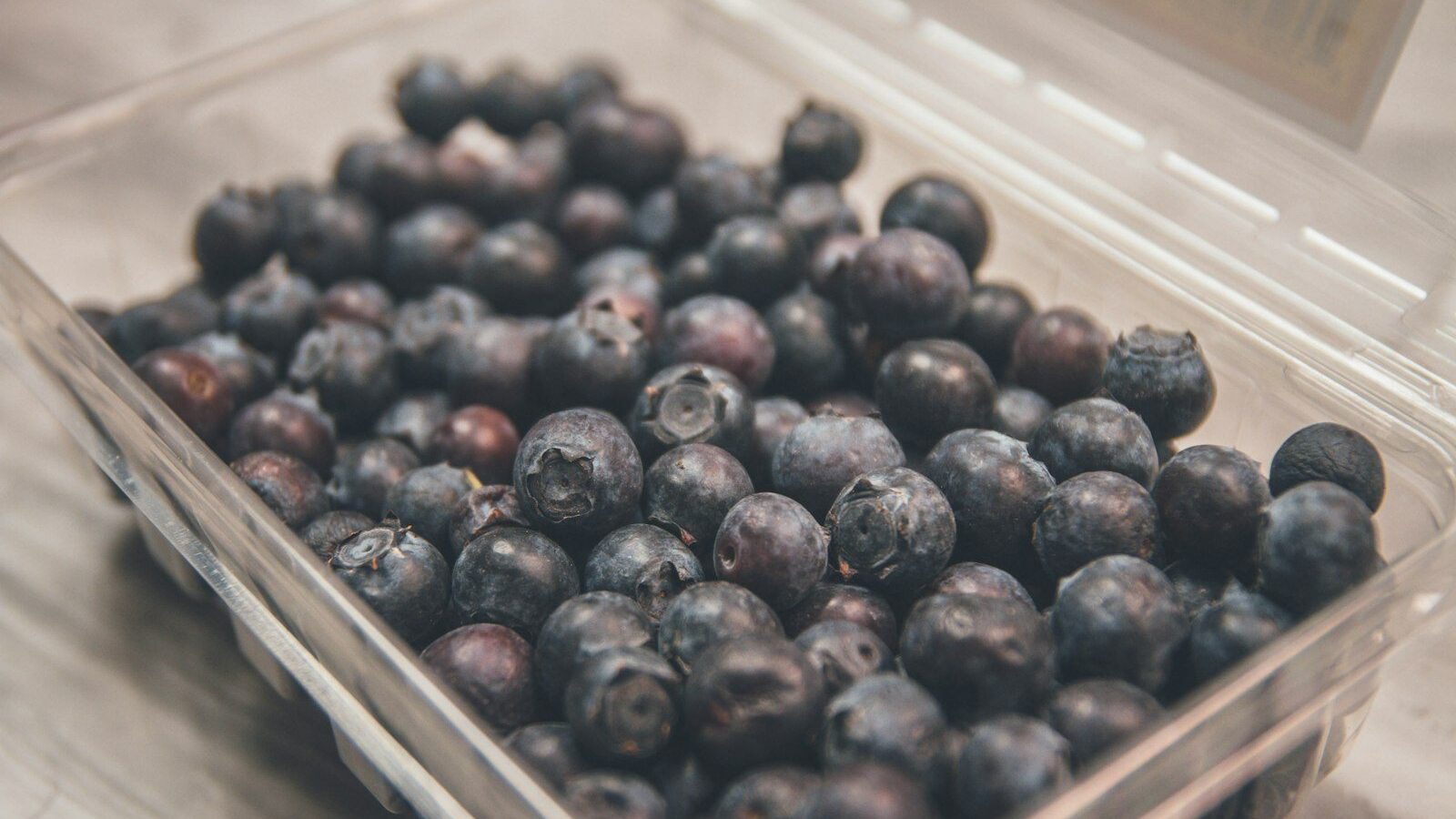
Blueberries are the ideal container fruit, and not just for small spaces. Because they demand acidic soil that most garden beds simply don’t provide, growing them in pots lets you give them the exact conditions they crave — and pots make it easy on a patio, balcony, or deck where you’d never dig a bed. A well-tended potted blueberry can crop for a decade or more, throwing off fiery red and orange foliage in fall on top of the summer harvest. The two things that separate thriving plants from struggling ones are acidic soil and consistent, low-mineral water. Get those right and the rest is easy. This guide covers variety choice, pot size, the all-important acidic mix, watering with rainwater, feeding, pruning, and overwintering.
Key Takeaways
- Blueberries need acidic soil — pH 4.5 to 5.5. Use a dedicated ericaceous (acidic) potting mix, never general-purpose soil.
- Choose compact varieties bred for containers (e.g. ‘Top Hat’, ‘Sunshine Blue’, ‘Pink Icing’, ‘Patriot’) and plant two different varieties for better pollination and bigger yields.
- Use a pot at least 18–24 inches wide; one plant per large pot.
- Water consistently with rainwater if possible — tap water is often alkaline and slowly raises the pH, starving the plant over time.
- Feed with an ericaceous/acidic fertilizer, prune in late winter once established, and protect roots over winter since potted roots are more cold-exposed than in the ground.
Best Blueberry Varieties for Pots
Pick compact, container-friendly varieties rather than full-size field types. The main groups: highbush (the standard, needs winter chill), half-high (compact, very cold-hardy hybrids), southern highbush (lower chill, good for mild-winter regions), and rabbiteye (heat-tolerant, for the South). For pots, the standouts are:
- ‘Top Hat’ — a true dwarf, around 18–24 inches, perfect for a patio pot and partly self-fertile.
- ‘Sunshine Blue’ — compact southern highbush, semi-evergreen, low chill requirement, and self-fertile.
- ‘Pink Icing’ — compact with stunning blue-green and pink foliage, ornamental as well as productive.
- ‘Patriot’ and ‘Bluecrop’ — slightly larger highbush types that still do well in big pots and crop heavily.
- ‘Jelly Bean’ and ‘Peach Sorbet’ — dwarf bushy types bred specifically for containers.
While many of these are self-fertile, planting two different varieties that bloom at the same time dramatically improves cross-pollination, giving you more and larger berries. Match the variety group to your climate — a highbush type needs a cold winter to fruit, while southern highbush and rabbiteye suit warm regions with mild winters.
Pot Size and Type
Give each blueberry plenty of room: a final pot of at least 18 to 24 inches in diameter (around 12–20 gallons), one plant per pot. You can start a young plant in a smaller container and pot up as it grows, but a mature highbush wants the larger size to support a good crop. Plastic, glazed ceramic, or wood hold moisture better than unglazed terracotta, which dries out fast — and since consistent moisture is critical for blueberries, that matters. Ensure generous drainage holes: blueberries want steady moisture but hate sitting in waterlogged soil, which rots their fine, shallow roots. Raise the pot on feet so it drains freely. A lighter-colored pot keeps the rootball cooler in summer, which the shallow-rooted plants appreciate.
The Critical Part: Acidic Soil
This is the make-or-break factor. Blueberries are ericaceous — they evolved in acidic, peaty woodland soils and require a soil pH of roughly 4.5 to 5.5. In neutral or alkaline soil they can’t take up iron and other nutrients, the leaves turn yellow between the veins (chlorosis), growth stalls, and the plant slowly starves. Do not use general-purpose potting soil or garden soil.
Fill the pot with a dedicated ericaceous (acidic) potting mix, sold specifically for blueberries, azaleas, rhododendrons, and camellias. If you blend your own, base it on acidic ingredients — composted pine bark, coir or peat, and an acidic amendment — and avoid anything containing lime. You can lower and maintain acidity over time with elemental sulfur worked into the surface, and a mulch of pine needles, pine bark, or composted sawdust both holds moisture and gently keeps the surface acidic as it breaks down. Check the soil pH once or twice a season with an inexpensive meter or test kit, because pH naturally drifts upward over time — especially if you water with tap water.
Watering — and Why Rainwater Matters
Blueberries have shallow, fibrous roots that dry out quickly in a pot, so they need consistent moisture — the soil should stay evenly damp but never waterlogged. In summer that often means watering daily, especially while berries are swelling; let the plant dry out at that stage and you’ll lose fruit to shriveling and drop. A 2-inch mulch of pine bark or needles slows evaporation and is well worth doing.
The less obvious issue is water quality. Tap water in many areas is “hard” and slightly alkaline, and watering with it month after month slowly raises the soil pH out of the blueberry’s happy range — the single most common reason potted blueberries decline. Wherever possible, water with collected rainwater, which is naturally soft and slightly acidic. Set up a rain barrel if you can. If you must use tap water for stretches, monitor pH more closely and correct it with sulfur or an acidifying feed as needed. This one habit does more for long-term blueberry health than almost anything else.
Feeding
Feed potted blueberries with a fertilizer formulated for ericaceous (acid-loving) plants, which supplies nutrients in forms the plant can use at low pH and helps maintain acidity rather than fighting it. Avoid general fertilizers and anything containing nitrate or lime. Begin feeding in early spring as growth resumes and continue through the growing season per the product directions, tapering off by late summer so the plant hardens for winter. Blueberries are relatively light feeders — over-fertilizing, especially with high-nitrogen products, can burn the sensitive roots and reduce fruiting. If you see yellowing leaves with green veins (iron chlorosis), the usual cause is pH that’s crept too high, not a lack of fertilizer; correct the pH first. For more container-growing fundamentals that apply here too, see our guide on how to grow fruit trees in containers.
Pruning
For the first two or three years, prune very little — let the plant build a strong framework, and pinch off the flowers in the first year so its energy goes into roots and shoots rather than a token crop. Once established, prune in late winter while dormant. Blueberries fruit best on young wood that’s one to three years old, so the goal is to remove the oldest, least productive canes (those thicker than about a thumb, with peeling gray bark) at the base, along with any dead, weak, twiggy, or crossing growth. This opens the bush to light and air and pushes out vigorous new fruiting wood. Removing roughly the oldest fifth to quarter of the canes each year keeps a mature plant renewing itself and cropping well.
Pollination, Fruiting, and Birds
Even self-fertile varieties crop more heavily with a second compatible variety nearby for cross-pollination, so if you have room, grow two. Bees do the work, so keep pots where pollinators can reach the flowers and avoid spraying insecticides during bloom. Berries ripen over several weeks in summer; pick them a few days after they turn fully blue, when they detach easily and have developed full sweetness — color alone isn’t ripeness. The one battle you’ll fight is with birds, who find ripening blueberries irresistible; drape the bushes in fine bird netting as the fruit begins to color, securing it so birds can’t get trapped underneath.
Overwintering
Blueberries are hardy plants, but roots in a pot are far more exposed to cold than roots in the ground because the small soil volume freezes through. Most highbush and half-high types are very cold-hardy and need winter chill to fruit, so they stay outdoors — but insulate the container. Cluster pots together against a sheltered wall, wrap them in burlap or bubble wrap, or sink the pots into the ground or a mulch pile for the coldest months; the aim is protecting the roots, not the dormant top. Keep the mix from drying out completely over winter, but don’t let it sit saturated through freeze-thaw cycles. In very cold regions, an unheated garage or shed once the plant is fully dormant and leafless is a safe haven — just check that the soil stays barely moist. Move plants back into the open and resume normal watering as growth restarts in spring. For more small-space and container projects, browse the full Urban Gardening section.
Frequently Asked Questions
What kind of soil do blueberries need in pots?
Acidic soil with a pH of about 4.5 to 5.5. Use a dedicated ericaceous (acid-loving) potting mix sold for blueberries, azaleas, and rhododendrons — never general-purpose potting soil or garden soil, which is too alkaline and causes the leaves to yellow and the plant to starve.
Can I water potted blueberries with tap water?
Occasionally yes, but tap water is often hard and slightly alkaline, and using it long-term slowly raises the soil pH out of the blueberry’s range — the most common cause of decline. Rainwater is soft and slightly acidic and is far better. If you must use tap water, monitor pH and correct it with sulfur or an acidifying feed.
Do I need two blueberry plants to get fruit?
Many container varieties are self-fertile and will fruit alone, but planting two different varieties that bloom at the same time greatly improves pollination and gives you more and larger berries. If you have room for two pots, it’s well worth it.
What size pot do blueberries need?
A final pot at least 18 to 24 inches in diameter (roughly 12 to 20 gallons), one plant per pot. You can start a young plant smaller and pot up as it grows, but a mature bush needs the larger size to crop well. Make sure the pot has good drainage holes.
How do I protect potted blueberries in winter?
The roots in a pot freeze more easily than in the ground, so insulate the container — cluster pots against a sheltered wall, wrap them in burlap or bubble wrap, or sink them into the ground or a mulch pile. Keep the mix barely moist, not saturated. In very cold climates, an unheated garage or shed works once the plant is dormant.