

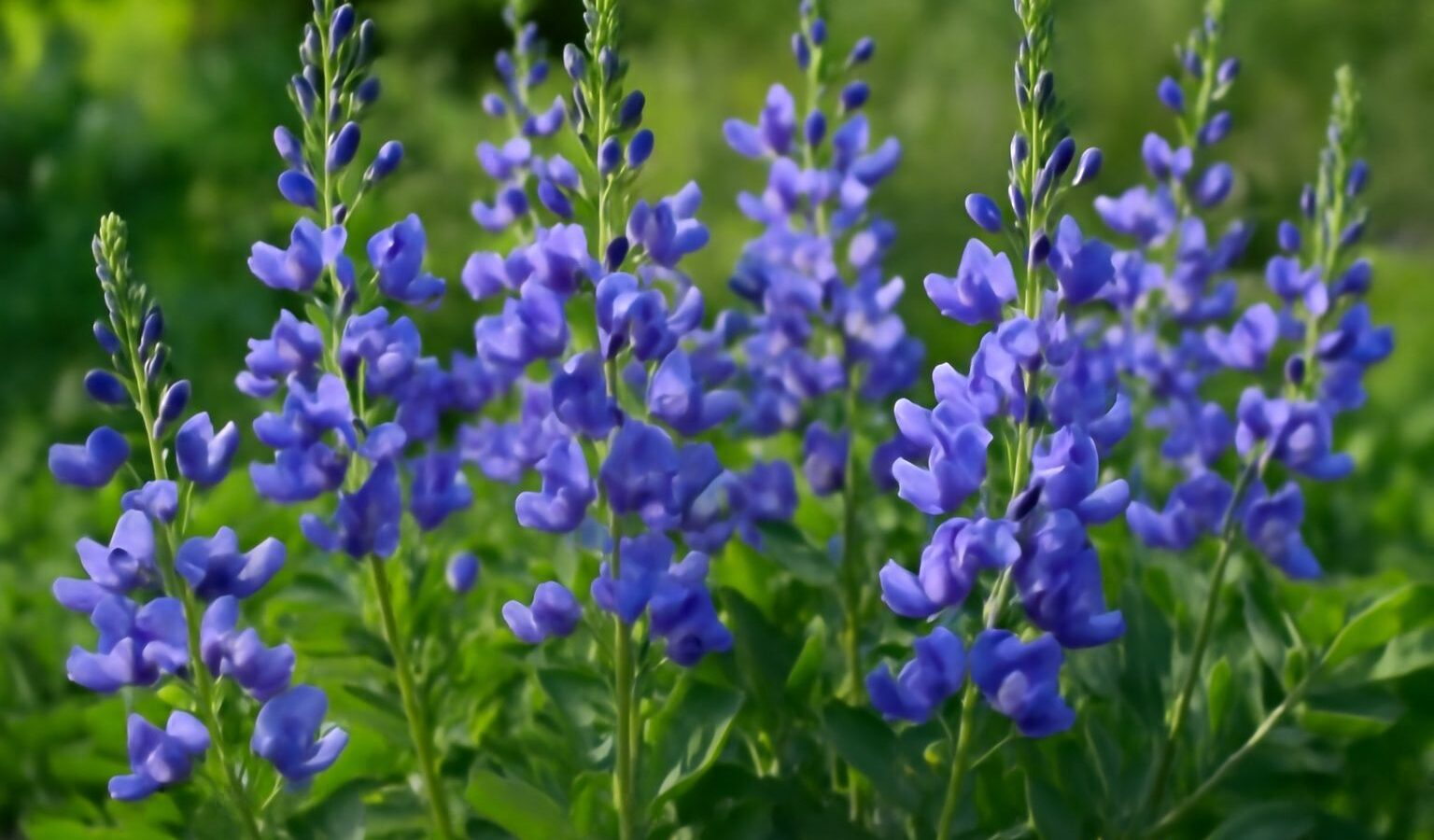
Baptisia, or false indigo, is the perennial you plant once and enjoy for decades. This native prairie legume sends up shrubby, blue-green clumps topped in late spring with tall spires of pea-like flowers in blue, purple, yellow, white, or smoky bicolors, followed by ornamental black seed pods that rattle in the wind. It is deeply drought-tolerant, deer-resistant, pest-free, and remarkably long-lived. Plant baptisia in full sun and well-drained soil, give it room — clumps reach 3 to 4 feet wide — water sparingly once established, and resist the urge to move it. Hardy in USDA zones 3 through 9, it asks almost nothing in return for a magnificent, shrub-like presence.
Key Takeaways
- Zones: Hardy and long-lived in USDA zones 3–9.
- Sun: Full sun (6+ hours); part shade leads to floppy, sparse growth.
- Soil: Average to lean, well-drained; tolerates poor and dry soils.
- Spacing: 3–4 feet apart — clumps grow as wide as they are tall.
- Bloom: Late spring to early summer, followed by decorative seed pods.
- Care: Minimal — slow to establish, then nearly maintenance-free; rarely needs division.
Meet Baptisia: A Native Prairie Legume
Baptisia is a North American native, most at home in prairies, open woodlands, and meadows across the eastern and central United States. As a member of the legume family, it fixes its own nitrogen through root-borne bacteria, which is why it thrives in poor soil and never needs fertilizer. The plant forms a substantial, vase-shaped clump 3 to 4 feet tall and equally wide, with attractive blue-green, clover-like foliage that looks good all season — it functions almost like a flowering shrub in the perennial border.
In late spring to early summer, baptisia sends up flower spikes that resemble lupines, lined with pea-shaped blooms. After flowering, the spent spikes develop into inflated charcoal-black seed pods, which are ornamental in their own right and prized for dried arrangements. The historical common name “false indigo” comes from its early use as a substitute dye source for true indigo.
The classic species is Baptisia australis, the blue false indigo, with rich indigo-blue flowers. B. alba offers white spires, and B. sphaerocarpa is yellow. Breeders have produced an excellent range of hybrids in the Decadence and PrairieBlues series — look for ‘Cherries Jubilee’ (maroon and yellow), ‘Lemon Meringue’ (yellow), ‘Twilite Prairieblues’ (purple and gold), and ‘Solar Flare’ (yellow aging to orange-red). All share the same easy, tough nature.
Where to Plant: Sun, Soil & Site
Sunlight
Baptisia demands full sun — at least six hours of direct light, and more is better. In full sun it grows dense, upright, and self-supporting, and flowers heavily. In part shade the clumps stretch toward the light, grow sparse and floppy, bloom poorly, and often need staking. If you only have a partly shaded spot, baptisia is not the right plant; give it the sunniest position you have.
Soil and drainage
One of baptisia’s great virtues is its tolerance of poor, dry, and lean soils — it actually prefers them to rich ground. It grows in sandy, gravelly, rocky, and average loam soils with equal ease, and tolerates a wide pH range from acidic to slightly alkaline (roughly 6.0 to 7.5). The only firm requirement is good drainage; it will not tolerate soggy, waterlogged ground, especially over winter. Avoid heavy, wet clay and low spots. Because it fixes its own nitrogen, do not enrich the planting hole heavily — overly rich, fertile soil produces lush, weak, floppy growth.
How to Plant Baptisia
Plant container-grown baptisia in spring, after the last frost, so it has the full season to settle in. Choose the spot carefully and commit to it: baptisia grows a deep, woody taproot that makes mature plants extremely difficult — often impossible — to move or transplant successfully. Spacing is generous because of the clump’s eventual size: set plants 3 to 4 feet apart so they have room to fill out without crowding.
- Dig a hole as deep as the root ball and twice as wide; do not amend heavily.
- Set the plant at the same depth it grew in the container, crown level with the soil surface.
- Backfill with native soil, firm gently, and water in well.
- Mulch lightly to conserve moisture and suppress weeds while the plant establishes.
- Be patient — baptisia is slow the first year or two as it builds its taproot, then takes off in years three and beyond.
Baptisia can be grown from seed, but it requires patience. The hard seed coat needs scarification (nicking or sanding) and often a period of cold stratification to germinate, and seed-grown plants take two to three years or more to reach flowering size. Hybrids will not come true from seed. For named cultivars, buy nursery plants.
Watering and Feeding
Water newly planted baptisia regularly through its first growing season — about an inch a week when rain is short — to help the taproot establish. Once established (by the second or third year), baptisia is exceptionally drought-tolerant thanks to that deep root, and rarely needs supplemental water except in extended drought. Overwatering an established plant does more harm than good and can promote rot.
Skip the fertilizer. As a nitrogen-fixing legume, baptisia makes its own and thrives in lean soil. Feeding — particularly with high-nitrogen products — produces soft, overgrown, floppy stems that splay open and require staking. At most, a thin topdress of compost in spring is plenty; in average soil, even that is unnecessary.
Pruning, Support & Seasonal Care
Baptisia needs very little pruning. After flowering you have a choice: leave the spent spikes to develop into the ornamental black seed pods (great for winter interest and dried arrangements), or shear them off if you prefer a tidier, more compact mound of foliage for the rest of the season. Shearing the whole plant back lightly after bloom keeps a neater shape and can prevent flopping in richer soils.
Well-grown plants in full sun and lean soil generally stand on their own. If a clump tends to open up in the middle — usually a sign of too much shade or too-rich soil — install a peony-style grow-through support ring early in spring before the stems elongate, or do the post-bloom shear. In late fall or early spring, cut the entire clump back to a few inches above the ground to clear the old stems before new growth emerges. The foliage may blacken after hard frost, which is normal.
Dividing and Propagation
Unlike most perennials, baptisia rarely needs dividing and strongly resents it. The deep taproot makes division difficult and often kills or severely sets back the plant. The best practice is simply to leave established clumps undisturbed — they improve with age and can live for decades in the same spot. If you must divide, do it in very early spring on a younger plant, digging deeply to capture as much of the taproot as possible, and expect a slow recovery. For increasing your stock, growing from scarified seed or taking softwood stem cuttings in early summer is generally more reliable than division.
Common Problems and Pests
Baptisia is about as trouble-free as a perennial gets. It is deer- and rabbit-resistant, largely ignored by pests, and not prone to serious disease. The most common “problem” is impatience: a young plant that seems to do nothing for a year or two is simply building its taproot below ground and will reward you once established. The second most common issue is flopping, which is nearly always caused by insufficient sun or overly rich, overfed soil — correct the site or use a support ring.
On the disease front, occasional minor issues include powdery mildew in humid, crowded conditions and small weevils that may bore into developing seed pods (harmless to the plant — it just reduces viable seed). Good air circulation prevents the former, and neither warrants treatment in most gardens. Root rot only occurs in poorly drained, waterlogged soil, which is easily avoided by siting the plant in well-drained ground.
Baptisia’s shrubby form and deep blue flowers make it a structural anchor in sunny, low-water borders. Pair it with ornamental grasses, coneflowers, and other prairie natives, and find more easy, long-lived perennials in our plants and flowers guides. For more tough, drought-tolerant companions that share its love of sun and lean soil, see our guides to growing lamb’s ear and the late-season asters that extend the show into fall.
Frequently Asked Questions
How long does baptisia take to establish?
Be patient. Baptisia spends its first one to two years building a deep taproot and may grow slowly or stay small. By the third year it takes off and becomes a large, vigorous, shrub-like clump. Once established it can live and thrive in the same spot for decades.
Why is my baptisia flopping over?
Flopping is almost always caused by too little sun or soil that’s too rich. Baptisia needs full sun and lean soil to stay upright. Give it the sunniest spot you have, never fertilize it, and if needed install a grow-through support ring in early spring or shear the clump lightly after bloom.
Can I transplant or divide baptisia?
It’s best not to. Baptisia grows a deep woody taproot and strongly resents being moved or divided — transplanting often kills or severely sets back the plant. Choose its permanent location at planting time. To propagate, use scarified seed or summer stem cuttings rather than division.
Does baptisia need fertilizer?
No. As a nitrogen-fixing legume, baptisia makes its own nitrogen and thrives in poor, lean soil. Fertilizing produces weak, floppy growth. At most, a light topdress of compost in spring is all it ever needs.
Is baptisia deer-resistant?
Yes. Baptisia is reliably deer- and rabbit-resistant — the foliage contains compounds animals find unpalatable. This makes it an excellent choice for gardens with heavy browsing pressure where many other perennials get eaten.