

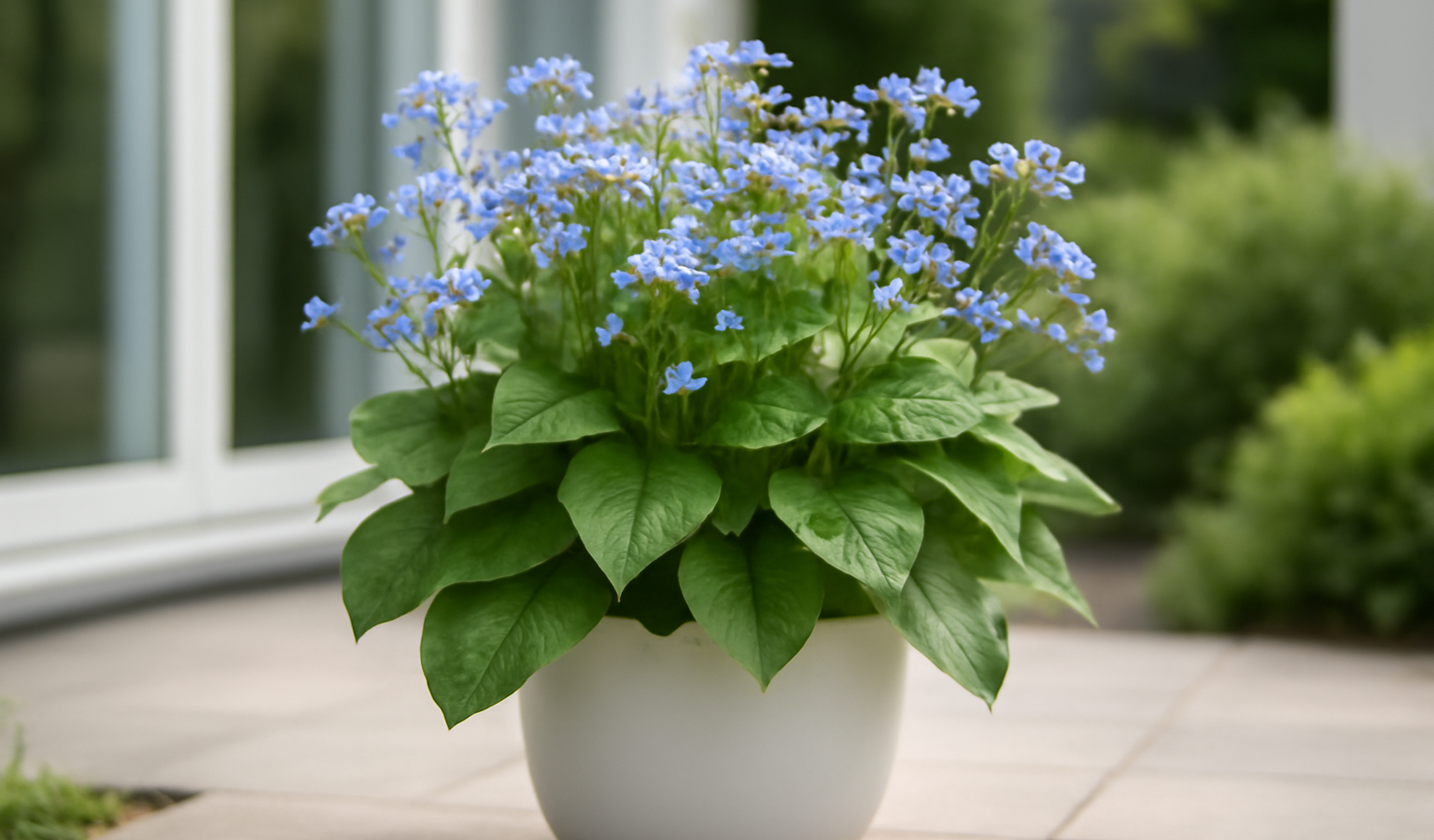
If you have a shady spot that defeats most perennials, brunnera deserves a long look. Often sold as false forget-me-not or Siberian bugloss, Brunnera macrophylla earns its place twice over: in early spring it throws up airy sprays of tiny sky-blue flowers that look exactly like forget-me-nots, and for the rest of the season it holds court with bold, heart-shaped leaves that range from plain green to dramatic frosted silver. It is one of the few plants I reach for when a client wants something that reads as “designed” in deep shade without any fuss. This guide walks through exactly how to grow brunnera well, from picking the right spot to dividing established clumps, with the specific numbers you need rather than vague encouragement.
Key Takeaways
- Brunnera is hardy in USDA zones 3 to 8 and grows best in part to full shade, struggling badly in hot afternoon sun.
- Give it moist, humus-rich, well-drained soil; consistent moisture is the single biggest factor in keeping the foliage clean and unscorched.
- Space plants 12 to 18 inches apart so the heart-shaped leaves knit into a weed-suppressing groundcover within two seasons.
- Expect blue, forget-me-not-like flowers in early to mid spring; the silver and variegated foliage is the real long-term draw.
- Divide clumps every 3 to 4 years in early spring or fall to keep them vigorous and to make free new plants.
- Watch for slugs, leaf scorch in too much sun, and occasional powdery mildew in stagnant air.
Getting to Know Brunnera
Brunnera is a clump-forming herbaceous perennial in the borage family, native to the woodlands of the Caucasus and Western Siberia. That woodland heritage tells you almost everything about how to treat it: it wants the conditions of a forest floor, which means dappled light, leaf-rich soil, and steady moisture. The plant forms a low mound, typically 12 to 18 inches tall and 18 to 24 inches wide at maturity, with the flower stems rising a little above the leaf mound in spring.
The flowers come first, in early to mid spring, before the leaves have fully expanded. They are small, five-petaled, and a clear sky blue, carried in loose branching panicles that hover over the emerging foliage like a blue haze. The resemblance to true forget-me-nots (Myosotis) is so strong that the common name false forget-me-not stuck, but unlike true forget-me-nots, brunnera is a long-lived perennial rather than a short-lived self-seeder. The bloom period runs roughly four to six weeks.
Once the flowers fade, the foliage takes over and becomes the main event. The leaves are large, rough-textured, and distinctly heart-shaped, and on the best cultivars they are washed or netted with silver. A mature ‘Jack Frost’ plant in summer looks almost metallic from a distance, brightening the darkest corners of a bed. This dual identity, spring flower followed by season-long foliage, is what makes brunnera so useful in the shade garden, and it is why I treat it more like a foliage plant that happens to bloom than a flower that happens to have leaves.
Where to Plant: Light and Hardiness
Brunnera is reliably hardy in USDA zones 3 through 8, which covers most of the country outside the deep South and the hottest parts of the Southwest. In the colder end of that range it sails through winter with no protection. At the warm end, zone 8, you need to be more careful about siting it in full shade and keeping the soil cool and moist, because heat is its real enemy, not cold.
Light is where most people go wrong. Brunnera wants part shade to full shade, and the emphasis really is on shade. A spot that gets gentle morning sun and is shaded through the afternoon is close to ideal. What it cannot tolerate is hot, direct afternoon sun, which causes the leaf margins to brown and crisp, a condition gardeners call leaf scorch. The silver-leaved cultivars are slightly more sun-tolerant than the plain green species because the reflective coating protects the leaf surface, but even those look ragged by July if you plant them in a baking exposure. In the cooler parts of zones 3 to 5, you can push brunnera into more morning sun than you could in zone 8. When in doubt, give it less sun rather than more; the foliage stays cleaner and the whole plant looks better through summer.
Good companions for this kind of woodland shade siting include hostas, ferns, hellebores, and astilbe, all of which want the same cool, moist, shaded conditions. If you are still deciding what belongs where in a shade bed, our overview of plants and flowers for the home garden is a useful starting point for matching plants to exposures.
Soil Preparation
Brunnera asks for moist, humus-rich, well-drained soil with a slightly acidic to neutral pH, roughly 6.0 to 7.0. The phrase “moist but well-drained” sounds contradictory but it is exactly what woodland soil delivers: plenty of organic matter that holds water like a sponge while still letting excess drain away. The plant resents both bone-dry soil and waterlogged soil that sits soggy through winter.
Before planting, work 2 to 3 inches of compost or well-rotted leaf mold into the top 8 to 10 inches of the bed. This single step does more than any fertilizer ever will, because it builds the moisture-retentive, crumbly structure brunnera evolved to grow in. If your soil is heavy clay that puddles after rain, dig in extra compost and consider planting on a slightly raised mound to improve drainage around the crown. On the other end, if your soil is sandy and dries fast, the same compost helps it hold water between rains. Either way, the goal is the dark, fluffy, sponge-like soil of a forest floor.
Planting Steps and Timing
The best times to plant brunnera are spring, after the last hard frost, and early fall, which gives the roots six weeks or more to establish before the ground freezes. Both windows take advantage of cool, moist weather. Avoid planting in the heat of midsummer; if you must, plant in the evening and water heavily for the first two weeks.
- Dig a hole twice as wide as the root ball and the same depth, so the crown sits level with the surrounding soil. Planting too deep invites crown rot.
- Loosen the roots gently if they are circling the inside of the pot, then set the plant in the hole at the same depth it grew in the container.
- Backfill with the soil you amended with compost, firm it lightly with your hands, and water in thoroughly to settle the soil and remove air pockets.
- Apply a 2-inch layer of mulch around the plant, keeping it an inch or two clear of the crown.
- Keep the soil consistently moist for the first four to six weeks while the roots reach out into the surrounding bed.
Container-grown plants from a nursery are the easiest way to start, and they establish quickly. Bare-root divisions also transplant well when handled during the dormant or near-dormant periods of early spring or fall.
Spacing and Using Brunnera as Groundcover
Space brunnera plants 12 to 18 inches apart. At the tighter 12-inch spacing the clumps will close ranks and cover the ground within two growing seasons, which is what you want if your goal is a solid groundcover sweep. At 18 inches you get more of a “specimen mound” look with breathing room between plants, which suits a mixed border where each plant is meant to read individually.
As a groundcover, brunnera is genuinely excellent. The broad heart-shaped leaves overlap to shade the soil, which suppresses weed seedlings and keeps the root zone cool and moist, a self-reinforcing benefit. Mass it under deciduous trees, along a north-facing foundation, or as the front edge of a woodland path. Because it spreads slowly by short rhizomes rather than aggressive runners, it stays where you put it and will not overrun neighbors, unlike some thuggish shade groundcovers. If you are weighing brunnera against a faster, sunnier spreader, our comparison of how to grow creeping phlox covers a good sun-loving alternative for slopes and edges.
Watering
Consistent moisture is the key to growing brunnera that looks good all season. The plant has no tolerance for drought; the first symptom of dry soil is browning, crisping leaf edges that never recover and only get worse as summer goes on. Aim to keep the soil evenly moist but not waterlogged.
In a typical week, brunnera wants the equivalent of about an inch of water, whether from rain or irrigation. During hot, dry spells you will likely need to water once or twice a week, applying water deeply at the base rather than splashing the leaves, which can encourage powdery mildew. Plants in containers dry out far faster and may need daily attention in summer heat. A finger pushed two inches into the soil tells you everything: if it comes out dry, water; if it is still damp, wait. Established clumps in good woodland soil with a mulch layer are surprisingly forgiving, but newly planted ones need babying through their first summer.
Feeding and Mulching
Brunnera is not a heavy feeder. In rich, compost-amended soil it needs little or nothing. A light feeding once a year is plenty: scratch in a balanced slow-release granular fertilizer in early spring as new growth emerges, or simply top-dress with an inch of compost, which feeds the soil and the plant at the same time. Avoid high-nitrogen lawn fertilizers, which push soft, floppy growth that scorches more easily and is more attractive to slugs.
Mulch does more for brunnera than fertilizer ever will. A 2 to 3-inch layer of shredded bark, leaf mold, or compost laid down in spring keeps the soil cool, conserves the moisture brunnera craves, and suppresses weeds, all while slowly breaking down to enrich the soil. Keep the mulch pulled back an inch or two from the crown so the base of the plant stays dry and rot-free. Refresh the layer each spring as it decomposes. In many ways, an annual mulch is the entire maintenance program for an established planting.
Dividing and Propagation
Divide brunnera every 3 to 4 years to keep clumps vigorous, to rejuvenate plants that have grown hollow or sparse in the center, and to multiply your stock for free. The best timing is early spring, just as growth begins, or fall, after the heat has broken. Both periods let the divisions root into cool, moist soil without summer stress.
- Lift the whole clump with a spading fork, getting under the root mass to keep as many roots intact as possible.
- Shake or hose off enough soil to see the crown, then cut or pull the clump into sections, making sure each division has both healthy roots and at least two or three growth buds or shoots.
- Replant the divisions immediately at the same depth they grew before, spacing them 12 to 18 inches apart, and water in well.
- Keep new divisions consistently moist and lightly shaded until they show fresh growth, which signals they have rooted.
A note on the silver and variegated cultivars: division is the only reliable way to propagate them true to type. Brunnera does set seed and the plain green species will self-sow modestly, but seedlings from named cultivars almost always revert to ordinary green leaves, losing the silver patterning that made the parent worth buying. Some variegated forms like ‘Variegata’ can also throw all-green shoots, called reversions; cut these out at the base as soon as you see them so they do not outcompete the variegated growth.
Best Cultivars to Grow
The species itself is a fine, tough plant, but the named cultivars are where brunnera gets exciting, mostly thanks to their foliage. A few worth seeking out:
- ‘Jack Frost’ — the benchmark and most widely sold cultivar. Silver leaves netted with green veins and a green edge, exceptionally bright in shade and a former Perennial Plant of the Year.
- ‘Looking Glass’ — an almost entirely silver-leaved sport of ‘Jack Frost’, the most metallic-looking of the group; it glows in deep shade but appreciates the coolest, moistest spot you can give it.
- ‘Silver Heart’ — thicker, more substantial silver leaves than ‘Jack Frost’, noted for better heat and humidity tolerance, making it a smart pick in the warmer end of the range.
- ‘Alexander’s Great’ — a giant of the group with silver leaves up to 10 inches across, building an impressive mound for the back of a shade planting.
- ‘Sea Heart’ — heavy-substance silver foliage bred for vigor and resilience, holding up well through summer.
- ‘Variegata’ (sometimes sold as ‘Dawson’s White’) — green leaves boldly edged in creamy white; striking but the most prone to scorch, so give it the deepest shade and watch for green reversions.
If you garden in zone 7 or 8 where summer heat and humidity are the limiting factors, lean toward the tougher selections like ‘Silver Heart’ and ‘Sea Heart’. In cooler climates almost any of them will thrive.
Pests, Diseases, and Leaf Scorch
Brunnera is refreshingly trouble-free, but a handful of issues are worth knowing.
Slugs and Snails
The most common pests are slugs and snails, which chew ragged holes in the tender leaves, especially in the cool damp conditions brunnera enjoys. The same moisture the plant loves is what slugs love too. Hand-pick at night, set out shallow dishes of beer as traps, or scatter iron-phosphate slug bait, which is safe around pets and wildlife. A ring of crushed eggshells or diatomaceous earth around prized clumps offers some physical deterrence.
Leaf Scorch
Leaf scorch is the most frequent complaint, and it is not a disease but a cultural problem: too much sun, too little water, or both. The leaf margins turn brown and crispy, particularly in mid to late summer. The fix is to address the cause, more shade and more consistent moisture. You can trim off badly scorched leaves to tidy the plant; fresh growth often follows once conditions improve. If a clump scorches every single year, move it to a shadier, moister spot in fall.
Powdery Mildew
In late summer, especially where air is stagnant and humid, brunnera can develop powdery mildew, a dusty white coating on the leaves. It is rarely fatal but it is unsightly. Improve air circulation by not overcrowding plants, water at the base rather than overhead, and remove badly affected leaves. Cutting the whole plant back can prompt a flush of clean new foliage.
Seasonal and Winter Care
Brunnera’s care follows the seasons in a simple rhythm. In early spring, clear away the previous year’s dead foliage, top-dress with compost or a light fertilizer, and refresh the mulch as flower stems begin to rise. Through summer, the job is mostly watering and slug patrol, plus trimming any scorched or mildewed leaves. There is no need to deadhead for the plant’s health, though removing spent flower stems tidies the look and, on the species, reduces unwanted self-seeding.
In fall, the foliage declines and you can cut the plant back to the ground after a hard frost knocks it down, or leave the dying leaves in place over winter as a natural mulch and tidy them in spring; both approaches work. Winter care is minimal because brunnera is fully hardy to zone 3. A layer of shredded leaves or mulch over the crown in zones 3 to 4 buffers against repeated freeze-thaw heaving, but in most gardens the plant needs no special winter protection at all. It dies back completely and returns reliably each spring, one of the lowest-maintenance perennials you can grow in shade. Because it disappears entirely over winter, brunnera behaves much like other hardy perennials rather than evergreens; if the distinction matters for your planting plan, our guide to annuals versus perennials explains how to plan beds around plants that vanish and return.
Companion Planting
Brunnera plays beautifully with the rest of the shade-garden cast. Its silver heart-shaped leaves are a natural foil for the bold paddle leaves of hostas, the lacy fronds of ferns, and the leathery foliage of hellebores. The early blue flowers coincide with daffodils and other spring bulbs, and the expanding leaves do a tidy job of hiding the ripening, yellowing bulb foliage afterward, a genuinely useful trick. For a layered, all-season look, pair it with astilbe for midsummer plumes, heuchera for contrasting leaf color, and pulmonaria, which echoes both the silver foliage and the early blue flowers. In a woodland border, repeat brunnera every few feet to tie the planting together; the consistent silver mounds give the eye something to follow and make a mixed shade bed feel intentional rather than random.
Frequently Asked Questions
Does brunnera spread aggressively?
No. Brunnera spreads slowly by short rhizomes, forming a tidy, expanding clump rather than running through the bed. It makes a well-behaved groundcover and will not overrun neighbors the way some shade spreaders do, though the plain green species may self-sow modestly if you leave the seed heads on.
Will brunnera grow in full shade?
Yes. Brunnera tolerates full shade better than most flowering perennials and actually prefers it in warmer climates. It will still bloom in deep shade, though slightly less heavily. What it cannot handle is hot afternoon sun, which scorches the leaf edges.
Why are the leaf edges on my brunnera turning brown and crispy?
That is leaf scorch, caused by too much sun, too little water, or both. It is a cultural issue, not a disease. Move the plant to a shadier, moister spot, keep the soil consistently damp, and mulch to hold moisture. Trim off the worst leaves and fresh ones usually follow.
How often should I divide brunnera?
Every 3 to 4 years, in early spring as growth starts or in fall once the heat breaks. Lift the clump, cut it into sections each with roots and a few growth buds, and replant immediately. Division is also the only way to propagate the silver cultivars true to type, since seedlings revert to green.
When does brunnera bloom and for how long?
Brunnera blooms in early to mid spring, before the foliage fully expands, producing airy sprays of small sky-blue flowers that look like forget-me-nots. The display lasts roughly four to six weeks, after which the silver heart-shaped leaves carry the plant for the rest of the season.