

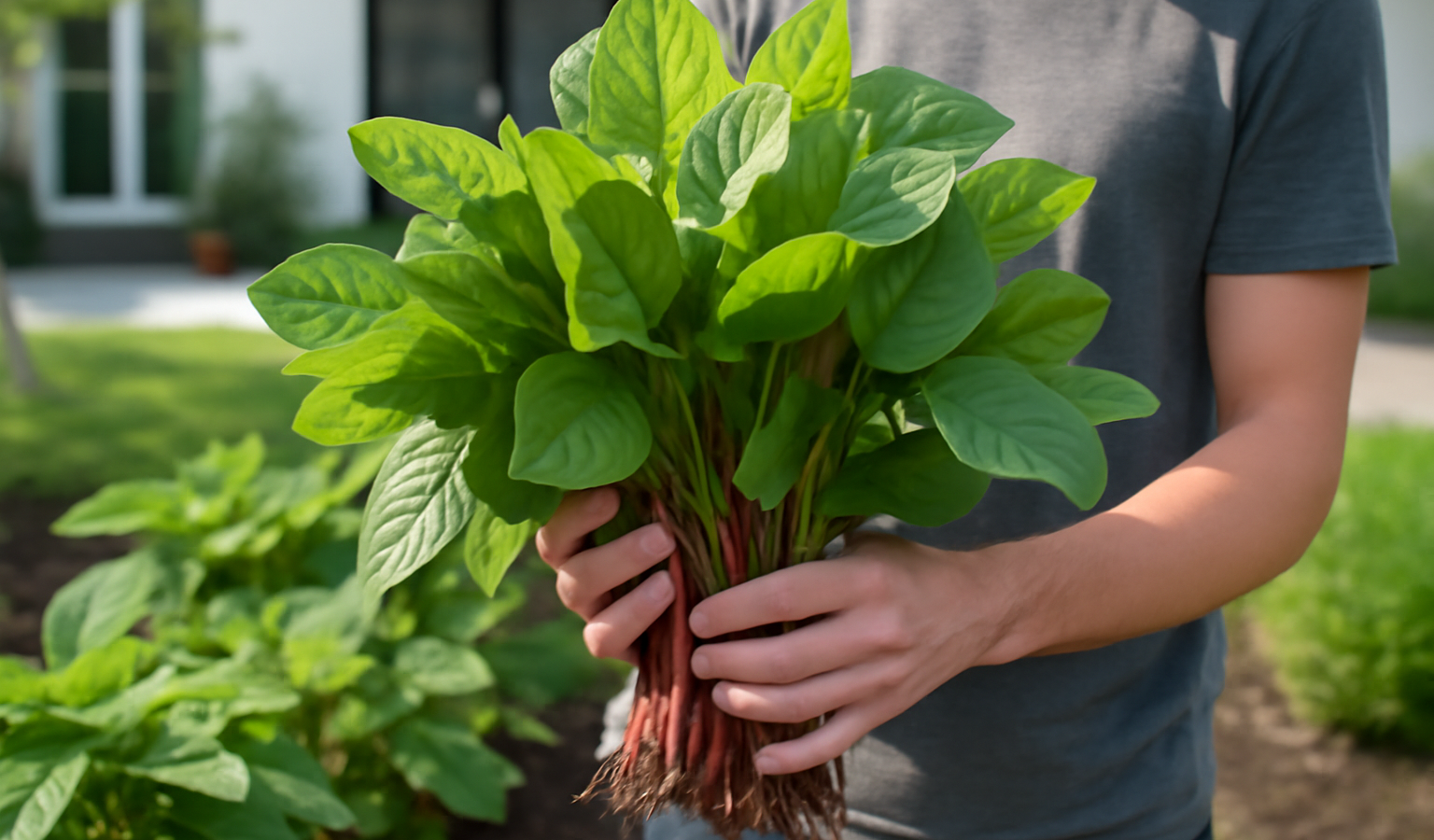
Amaranth is one of the most productive crops you can grow in the heat of summer, and it pulls double duty: the tender young leaves and stems are harvested as a cooked green known across the Caribbean as callaloo and across Africa, India, and Southeast Asia under a dozen other names, while the same plant left to mature produces clusters of tiny, protein-rich grain. Where lettuce and spinach have long since bolted in July, amaranth is just hitting its stride. Sow the dust-fine seed about a quarter-inch deep once the soil has warmed past 65°F, thin leaf plants to 6–10 inches apart, and you can begin cutting greens in as little as three to four weeks. Treated cut-and-come-again, a single bed of leaf amaranth will crop for the entire summer, regrowing flushes of mild, mineral-rich leaves after every harvest until frost. It thrives in USDA zones 4–11 as a warm-season annual, shrugs off heat and drought that flatten other greens, and tolerates poor soil better than almost any leafy vegetable. This guide covers choosing leaf versus grain types, sowing into warm soil, spacing, the cut-and-come-again harvest that keeps it productive, saving grain, and managing the handful of pests that bother it.
Key Takeaways
- Warm-season crop: Amaranth needs heat — sow only after soil hits 65–70°F; it grows fastest in the months when spinach and lettuce fail.
- Two harvests in one: Young leaves and stems are cooked as callaloo; mature plants set edible, gluten-free grain.
- Sowing: Surface-sow to 0.25 inch deep into warm soil; seed is tiny, so mix with sand and thin the seedlings.
- Spacing: Thin leaf amaranth to 6–10 inches apart; grain types need 12–18 inches for full-size seed heads.
- Harvest: Cut-and-come-again from 3–4 weeks — snip the top 4–6 inches and the plant rebranches for repeat flushes all summer.
- Zones: Grown as a frost-tender annual in USDA zones 4–11; self-seeds readily, so deadhead if you do not want volunteers.
Leaf Amaranth vs Grain Amaranth: What to Grow
The first decision is which kind of amaranth fits your goal, because breeders have selected types that lean one way or the other even though every amaranth is technically edible at both stages. Leaf (vegetable) amaranth — sold as callaloo, Chinese spinach, een choy, or tampala, and including species like Amaranthus tricolor, A. dubius, and A. viridis — has been selected for broad, tender, fast-growing foliage. These are the types to grow if your priority is greens. Many have spectacular leaves splashed with red, magenta, or gold, so they earn a place in an ornamental border as easily as a vegetable bed.
Grain amaranth — chiefly Amaranthus cruentus, A. hypochondriacus, and the South American A. caudatus (“love-lies-bleeding”) — grows taller, often four to seven feet, and pours its energy into enormous flower plumes packed with tens of thousands of pale seeds. You can still eat the young leaves of a grain type, but the plants get coarse and the leaves smaller as they bolt toward seed production. For a home garden that wants the best of both, grow a dedicated leaf variety for kitchen greens and tuck in a few grain plants for late-summer seed heads and dramatic height. If you enjoy growing unusual edibles, you might also like our guide to other heat-tolerant summer greens that crop through the same season.
When and How to Sow
Amaranth is a true warm-season plant and the single biggest mistake gardeners make is sowing too early. The seed will sit and sulk in cold ground and may rot; germination is fast and even only once soil temperatures reach 65–70°F, which in most temperate zones means late spring to early summer, roughly two to three weeks after your last frost date. There is no rush — a June sowing often overtakes a chilly May one. In long-summer regions you can make successional sowings every three weeks from late spring through midsummer to keep tender new leaves coming.
The seed is extremely fine, almost like dust, so sowing depth matters: aim for a quarter-inch deep at most, and many growers simply scatter seed on a firmed, raked surface and press it in. Because it is so small, mixing the seed with a handful of dry sand helps you spread it evenly and avoid a thick clump of seedlings. Direct-sow where plants are to grow; amaranth has a taproot and grows so fast that transplanting offers little advantage, though you can start it in modules under cover a couple of weeks before your soil warms if you want a head start. Keep the surface consistently moist until the seedlings emerge, usually within five to ten days in warm conditions.
Spacing and Thinning
Spacing depends entirely on what you are growing for. For leaf amaranth harvested young and often, you can broadcast densely and treat the bed as a cut-and-come-again patch, snipping seedlings at three to four inches like a baby-leaf crop, then letting the rest grow on. For larger plants that you will harvest repeatedly through the summer, thin to 6–10 inches apart in rows about 12 inches apart. The thinnings are not wasted — every one is a baby-leaf salad or a handful for the pot.
Grain amaranth needs much more room to build its big seed heads: thin to 12–18 inches apart in rows 18–30 inches apart, giving each plant the air and light it needs to ripen seed and the stem strength to stand up to summer storms. Crowded grain plants stay spindly and lodge (fall over) under the weight of their plumes. Whichever you grow, thin while seedlings are small to avoid disturbing the roots of the keepers.
Soil, Watering, and Feeding
One of amaranth’s great virtues is that it asks for very little. It crops well in average-to-poor soil that would disappoint most vegetables and tolerates a wide pH band from roughly 5.5 to 7.5. That said, the lush, tender leaves you want for callaloo come from a steady supply of nitrogen, so leaf types reward a fertile bed enriched with compost or a balanced feed early in the season. Avoid overdoing nitrogen on grain types, which can delay or reduce seed set in favor of foliage.
Amaranth is genuinely drought-tolerant once established — its deep taproot finds moisture that shallow-rooted greens cannot — which is exactly why it shines in a hot, dry summer. For the most tender leaves, though, water deeply during prolonged dry spells; stressed plants get tougher and bolt sooner. Full sun gives the best growth and, in the colored varieties, the most vivid leaf pigments. A light mulch conserves moisture and keeps weeds down while the fast-growing canopy fills in.
Harvesting Callaloo Cut-and-Come-Again
This is where amaranth earns its keep. You can begin picking leaves as soon as plants are about a foot tall, roughly three to four weeks from sowing. The most productive method is cut-and-come-again: snip out the top four to six inches of each growing tip, taking the tender young leaves and soft stems together. Pinching out the top this way does two useful things — it gives you the most succulent part of the plant for the kitchen, and it forces the plant to branch lower down, producing two or more new shoots for every one you removed. Repeat every one to two weeks and a leaf-amaranth bed becomes bushier and more productive as the summer goes on, throwing fresh flushes right up until the first frost.
Always leave the lower leaves and some growing points so the plant can keep photosynthesizing and regrowing — never strip a plant bare. Harvest in the morning when leaves are turgid, and use them quickly, as amaranth greens wilt faster than sturdier brassicas. Note that, like spinach and chard, amaranth leaves contain oxalates, so they are eaten cooked rather than raw in quantity; brief steaming or sautéing wilts them down dramatically, much like spinach. The young stems cook tender too.
Harvesting and Saving the Grain
If you let plants run on to flower, the seed is ready to harvest in late summer to autumn, typically 90 to 120 days from sowing. The seed heads ripen unevenly, so the practical test is to gently rub or shake a plume over your hand — when ripe seed falls freely, it is time. Cut the heads on a dry day, dry them further indoors on a sheet or in paper bags for a week or two, then thresh by rubbing the heads between your hands and winnow away the chaff with a fan or a gentle breeze. The tiny seeds can be cooked like a porridge or popped like miniature popcorn. Be aware that amaranth is a prolific self-seeder: any seed you let drop will produce a flush of volunteers next year, so deadhead spent plants if you do not want it spreading.
Pests, Problems, and Zones
Amaranth is one of the lowest-maintenance greens you can grow, but a few issues are worth watching. Flea beetles can pepper young leaves with tiny shot holes, especially on seedlings; a floating row cover over the bed until plants are established sidesteps most of the damage. Aphids may cluster on tender tips in hot weather — a blast of water or an insecticidal soap usually clears them. In humid climates, leaf spot or rust can appear late in the season but rarely ruins a cut-and-come-again crop. The biggest risk is simply cold: amaranth is frost-tender and the first light frost will blacken it, so it is grown strictly as a warm-season annual.
Because it is grown for a single warm season and then killed by frost, amaranth performs across a very wide range — effectively USDA zones 4 through 11 — as long as you have a few warm months between frosts. Northern gardeners with short summers should favor fast leaf types and sow as soon as the soil is reliably warm; southern and tropical growers can crop it almost year-round. For another tough crop that handles the same searing midsummer conditions, see our notes on succulent purslane, which thrives in the very same beds.
Frequently Asked Questions
Is amaranth the same as callaloo?
Callaloo is the Caribbean name for the cooked-green dish and, by extension, the leaf amaranth grown for it. So callaloo is amaranth greens — though in some islands the word also refers to taro leaves. The leaf amaranth you grow for callaloo is selected for tender, fast foliage.
Can you eat amaranth leaves raw?
Young leaves can be added raw to salads in small amounts, but amaranth leaves contain oxalates like spinach and chard, so they are usually eaten cooked. A quick steam or sauté wilts them down and is the traditional way to prepare callaloo.
How long does amaranth take to grow?
Leaf amaranth is ready to start cutting in about three to four weeks from sowing and crops cut-and-come-again all summer. Grain amaranth needs roughly 90 to 120 days to ripen its seed heads.
Why are my amaranth seeds not germinating?
Almost always because the soil is too cold. Amaranth needs soil at 65–70°F to sprout reliably; sown into cold spring ground the seed sits and may rot. Wait until two to three weeks after your last frost and sow no deeper than a quarter-inch.
Does amaranth come back every year?
Not from the roots — it is a frost-tender annual that dies with the first cold. But it self-seeds heavily, so dropped seed produces a flush of volunteers the following summer. Deadhead spent plants if you do not want it spreading.