

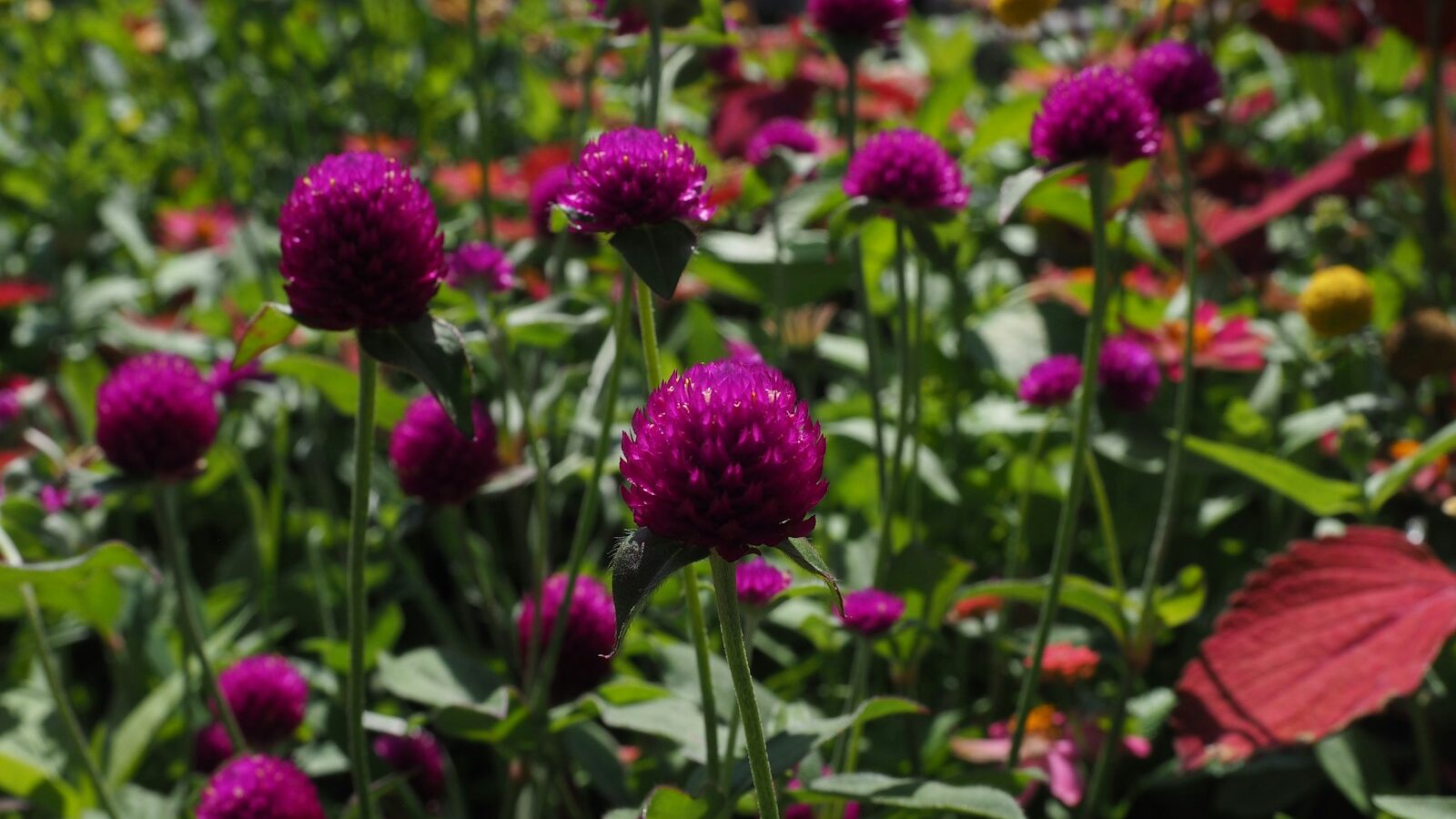
Globe amaranth (Gomphrena globosa) is the kind of plant that thrives precisely where others wilt. Through the hottest, most humid, driest stretch of summer—when many flowers sulk—globe amaranth keeps pumping out its papery, clover-shaped blooms in magenta, purple, pink, white, orange, and red, often without a single complaint until frost. The flowers are technically colorful bracts, which is why they hold their shape and color for weeks on the plant and dry beautifully for everlasting arrangements. It is grown as a warm-season annual in most of the country (a tender perennial only in frost-free zones 9 to 11), and it is genuinely easy: give it sun, well-drained soil, and warmth, and it asks for little else. This guide covers timing, sun, spacing, watering, deadheading, drying the flowers, and keeping this heat-loving annual blooming all the way to fall.
Key Takeaways
- Grown as an annual in zones 2–8; a tender perennial only in frost-free zones 9–11.
- Full sun is essential—6 or more hours—for compact plants and nonstop bloom.
- Loves heat, humidity, and drought; one of the toughest summer annuals available.
- Blooms from early summer to frost on plants 6 inches to 2 feet tall by variety.
- Space 10 to 18 inches apart depending on the cultivar’s mature size.
- Excellent cut and dried flower—the papery bracts hold color for months.
- Low-maintenance and pest-resistant; deadheading keeps it tidy and blooming.
Climate, Timing, and Where to Site It
In nearly all of the United States, globe amaranth is grown as a warm-season annual, completing its life cycle in a single growing season and dying with the first hard frost. Only in the frost-free reaches of USDA zones 9 to 11 does it behave as a short-lived tender perennial. Wherever you are, it is a heat lover: it positively thrives in the high temperatures and humidity that flatten more delicate flowers, which makes it invaluable in the South and in any garden that bakes in midsummer.
Because it craves warmth, do not rush it outdoors. Wait until all danger of frost has passed and the soil has warmed—globe amaranth set out into cold soil sulks and may rot. Site it in full sun; six or more hours of direct light produce the most compact, well-branched plants and the heaviest bloom, while shade brings on leggy growth and few flowers. It excels in beds and borders, in containers and window boxes, as edging, and in cutting gardens. Compact types like the ‘Gnome’ and ‘Buddy’ series stay 6 to 10 inches tall and make tidy edging, while ‘Las Vegas’, ‘Audray’, and the orange-flowered Gomphrena haageana ‘Strawberry Fields’ reach 18 to 24 inches and shine in the back of a bed or a vase.
Soil and Starting Plants
Globe amaranth is undemanding about soil as long as it drains well. Average garden soil with a neutral pH suits it fine; it even tolerates poor, sandy ground. The one condition it dislikes is heavy, soggy soil, which invites root rot—amend clay with compost or grit, or grow it in raised beds and containers where drainage is assured. Rich soil is unnecessary and can produce lush foliage at the expense of flowers.
You can buy transplants or start your own from seed. Sow indoors six to eight weeks before your last frost date; the seed germinates best with warmth (around 70 to 75°F) and benefits from a brief soak beforehand to soften its woolly coat. Transplant out only after the weather has settled and warmed. You can also direct-sow once the soil is reliably warm, though in short-season areas indoor starts give you a head start on bloom. Space plants 10 to 18 inches apart according to the variety’s mature size—closer for compact edging types, wider for tall cutting types.
Watering and Feeding
Water new transplants regularly until they establish, then ease off. Globe amaranth is notably drought-tolerant and prefers to dry slightly between waterings; consistently soggy soil is far more likely to harm it than the occasional dry spell. About an inch of water a week, including rain, is plenty for plants in the ground. Container plants dry faster and need more frequent watering in summer heat, but still want the soil to approach dryness between drinks. Water at the base rather than overhead to keep foliage dry and discourage disease.
Feeding requirements are modest. A light application of a balanced fertilizer at planting, or a monthly dose of dilute liquid feed for container plants, keeps growth steady. Avoid heavy nitrogen, which pushes leafy growth and reduces flowering. In decent garden soil, globe amaranth often performs well with no supplemental feeding at all.
Bloom, Pinching, and Deadheading
The “flowers” of globe amaranth are actually dense, rounded clusters of papery bracts—about the size and shape of a clover bloom—and because the color lives in those long-lasting bracts rather than in fragile petals, each one holds for weeks. Bloom begins in early summer and, on a well-grown plant, continues unbroken until frost. The flowers draw butterflies and bees, making globe amaranth a low-effort pollinator plant as well as an ornamental one.
To get the bushiest, most floriferous plants, pinch out the growing tips of young plants when they are a few inches tall; this triggers branching and multiplies the number of flower stems. Through the season, deadhead or simply cut blooms for the vase—regular harvesting acts as deadheading and keeps the plant producing. Globe amaranth is wonderfully forgiving here: even if you neglect it, it keeps flowering, but a little pinching and cutting yields a noticeably fuller, more generous plant.
Cutting and Drying the Flowers
Globe amaranth is one of the premier “everlasting” flowers for drying, and this is a major reason gardeners grow it. For dried arrangements, cut the stems when the blooms are fully formed but before they begin to fade, strip the lower leaves, bundle the stems loosely, and hang them upside down in a warm, dark, well-ventilated spot for one to two weeks. The bracts retain their vivid color almost indefinitely, holding up in wreaths, dried bouquets, and craft projects far longer than most dried flowers.
As a fresh cut flower, globe amaranth also has excellent vase life and a sturdy stem that combines well with both fresh and dried companions. Its dependable summer-to-frost production makes it a staple of the cutting garden. For a complementary heat-tolerant filler, see the Plants & Flowers hub, and pair it with taller late bloomers such as those in our perennial sunflowers guide for a long-lasting summer-into-fall display.
Pests, Disease, and Troubleshooting
Globe amaranth is among the most problem-free annuals you can grow, shrugging off the heat, humidity, and drought that stress other plants. The handful of issues that appear are usually tied to wet conditions or poor airflow:
- Powdery mildew: A whitish film on leaves in humid, crowded, or shady plantings. Space plants for airflow, grow in full sun, and water at the base.
- Root rot: Caused by soggy, poorly drained soil. Improve drainage and let the soil dry between waterings.
- Leaf spot: Occasional fungal spotting in wet seasons; remove affected leaves and avoid overhead watering.
- Leggy, sparse growth: A sign of too little sun or skipped pinching. Move to full sun and pinch young plants to encourage branching.
- Aphids or spider mites: Occasional in hot, dry conditions; a strong water spray or insecticidal soap handles them.
End of Season and Saving Seed
As a frost-tender plant, globe amaranth collapses with the first hard freeze in zones 8 and colder; simply pull and compost the spent plants. In zones 9 to 11 it may overwinter and return, though even there it is often grown fresh each year for the best appearance. Before frost, it is easy to save seed: let a few of the last blooms dry fully on the plant, then rub the woolly seed heads apart and store the seed in a cool, dry place for next spring. Many gardeners find globe amaranth self-sows lightly in mild-winter areas, popping up volunteers the following season.
The overall takeaway is that globe amaranth is about as close to foolproof as flowering annuals get. Give it sun, warmth, and decent drainage, pinch it once when young, harvest the blooms freely, and it will reward you with months of bright, butterfly-friendly, long-lasting color that you can carry indoors fresh or dried. For more easy summer color options to grow alongside it, browse the guides in our Plants & Flowers hub.
Frequently Asked Questions
Is globe amaranth an annual or a perennial?
In most of the United States it is grown as a warm-season annual that dies with the first frost. It is a tender perennial only in frost-free USDA zones 9 to 11. Wherever you garden, it loves heat and humidity and blooms continuously from early summer until frost, making it a workhorse of the summer bed and cutting garden.
How do I dry globe amaranth flowers?
Cut the stems when the blooms are fully formed but not yet fading, strip the lower leaves, bundle them loosely, and hang them upside down in a warm, dark, well-ventilated place for one to two weeks. Because the color is in papery bracts rather than petals, the dried flowers hold their vivid hue almost indefinitely in wreaths and arrangements.
How far apart should I plant globe amaranth?
Space plants 10 to 18 inches apart depending on the variety. Compact edging types like the ‘Gnome’ or ‘Buddy’ series can go about 10 inches apart, while taller cutting types such as ‘Las Vegas’ or ‘Strawberry Fields’ want closer to 18 inches. Good spacing keeps airflow up and helps prevent powdery mildew.
Why is my globe amaranth tall and floppy with few flowers?
Leggy, sparse plants almost always mean too little sun or skipped pinching. Grow globe amaranth in full sun (six or more hours), and pinch out the growing tips of young plants to force branching. Avoid high-nitrogen fertilizer, which encourages leafy growth at the expense of blooms.
Does globe amaranth attract pollinators?
Yes. The papery clover-like blooms are a reliable nectar source for butterflies and bees throughout the summer, and because the plant flowers nonstop in heat when other nectar sources fade, it is a valuable addition to a pollinator garden. It is also deer-resistant and largely ignored by pests.