

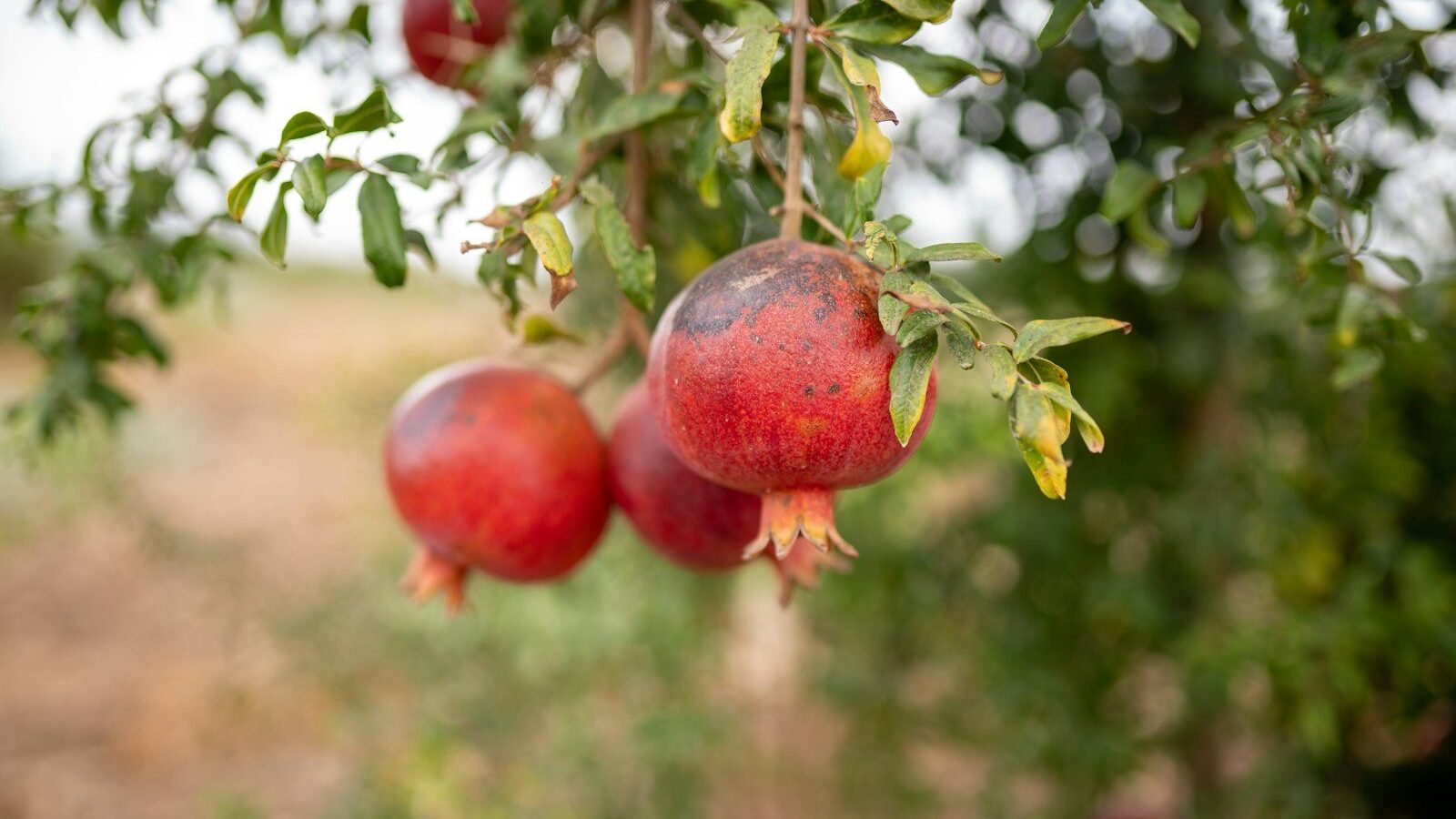
To grow a pomegranate tree, plant a self-fertile cultivar like ‘Wonderful’ in the sunniest, hottest, best-drained spot you have, water it deeply but evenly once it sets fruit, and prune lightly in late winter. Pomegranates are among the easiest fruit trees for hot, dry climates: they shrug off heat, tolerate poor soil, ask for low chill, and reward patience with leathery red fruit packed with jewel-like seeds. They thrive outdoors in USDA zones 7 through 10, and in colder regions you can grow a dwarf variety in a pot and overwinter it in a garage. Below is the full playbook, from siting and planting through pollination, container care, pests, and a month-by-month calendar so you actually get a crop.
Key Takeaways
- Best outdoors in USDA zones 7-10 (zone 6 with winter protection); pomegranates love hot, arid summers to ripen.
- ‘Wonderful’ is the standard self-fertile cultivar, so a single tree fruits, though bees noticeably improve fruit set.
- Low chill (~100-200 hours) means they suit mild-winter regions where peaches and apples struggle.
- Even, deep watering during fruit set prevents the cracking and splitting that ruins so many backyard crops.
- Dwarf types (‘Nana’, ‘State Fair’) excel in 15-20 gallon pots and can winter indoors or in a cold garage.
USDA Hardiness Zones and Climate
Pomegranates (Punica granatum) are reliably hardy in USDA zones 7 through 10, and many established trees take brief dips into the low teens once mature. In zone 6 they can survive with serious winter protection, mulching, or a sheltered microclimate against a south-facing wall, though hard freezes below about 10°F will damage wood and may kill young plants to the ground. The bigger limiter is summer heat. Pomegranates need a long, hot, dry growing season to ripen fruit fully and develop the sugars that make the arils sweet. If you garden in a cool coastal or short-season climate, the tree may flower and set fruit that never finishes. That is exactly where container growing earns its keep, because you can move a potted tree into the warmest spot available.
This is a Mediterranean and Middle Eastern native, so it is built for the conditions that defeat thirstier fruit. If you are already growing other heat-and-drought-tolerant fruit, the care will feel familiar; the rhythm is much like learning how to grow an olive tree in a hot-summer garden.
Chill Hours: Why Mild Winters Work
Most deciduous fruit trees need a set number of winter chill hours (time below 45°F) to break dormancy and fruit properly. Pomegranates are refreshingly undemanding here, needing only about 100 to 200 chill hours depending on cultivar. That low requirement is why they fruit happily in mild-winter regions of the Southwest, California, Texas, and the Deep South where high-chill apples and many stone fruits sulk. The flip side is the heat demand: while a peach worries about getting enough cold, a pomegranate worries about getting enough hot. It wants long, baking summers to mature and sweeten the crop. Think of low chill plus high heat as the climate signature that tells you a pomegranate will be happy.
Siting: Sun, Heat, and Drainage
Give a pomegranate the hottest, brightest spot on your property. Full sun means at least 6 to 8 hours of direct light, and more is better; reflected heat from a south or west wall actually helps ripen fruit. Shade produces leggy growth, sparse flowers, and sour fruit.
Drainage matters more than soil richness. Pomegranates tolerate a wide pH band of roughly 5.5 to 7 and grow in everything from sand to clay loam, but they resent wet feet. On heavy clay or low ground, plant on a raised mound or berm to lift the root crown above standing water. Avoid frost pockets at the bottom of slopes where cold air settles, since late spring frosts can kill flowers and ruin a season’s crop. Spacing depends on your goal: 10 to 15 feet apart for full-size specimens grown as open trees, or as close as 6 to 8 feet for a fruiting hedge or screen.
How to Plant a Pomegranate Tree
Plant bare-root stock in late winter to early spring while dormant; container plants can go in spring through early fall in mild climates, ideally avoiding the peak of midsummer heat. Work the steps below in order.
- Dig a hole twice as wide as the root ball but no deeper, so the plant sits at the same depth it grew in the nursery. Roughen the sides of the hole if you are in clay.
- Loosen circling roots on container stock; gently spread the roots of bare-root plants over a small cone of soil at the bottom of the hole.
- Set the root crown level with or slightly above the surrounding grade. On heavy soil, plant a couple inches high on a mound to guarantee drainage.
- Backfill with the native soil you removed. Skip rich amendments, which encourage roots to circle in the hole rather than venturing out.
- Water in deeply to settle the soil and collapse air pockets. Build a shallow basin around the trunk to catch irrigation.
- Mulch with 2 to 3 inches of bark or wood chips, kept a few inches back from the trunk to prevent rot and discourage borers.
- For the first season, water deeply once or twice a week so the young root system establishes before you taper off.
Pollination and Fruit Set
Good news for small gardens: pomegranates are mostly self-fertile, so a single tree will set fruit on its own. ‘Wonderful’, the cultivar you see most often in US nurseries and grocery stores, is self-fertile and a dependable producer. That said, pollination is not automatic. Pomegranates produce two flower types, and only the larger, vase-shaped flowers carry fruit; the slimmer bell-shaped blooms drop. Bees and other pollinators meaningfully improve fruit set, so plant a few flowering perennials nearby and avoid spraying insecticides while the tree is in bloom. Planting a second variety can nudge yields higher through cross-pollination, but it is a bonus, not a requirement. The most common cause of poor set in backyard trees is not pollination at all but a young plant, deep shade, or erratic watering.
Years to Fruit
Patience pays here. A pomegranate typically begins producing a few fruit in its second or third year after planting, then ramps up steadily, reaching full bearing by around year five. Resist the urge to overfeed a young tree with nitrogen to rush things; lush leafy growth comes at the expense of flowers and fruit. Let the plant build a sturdy framework first, water and prune consistently, and the crop will follow. Trees can remain productive for decades, and many old specimens fruit well past 50 years.
Pruning and Training
Decide early whether you want a multi-trunk shrub or a single-trunk tree, because pomegranates sucker enthusiastically and the form you choose dictates your maintenance.
Multi-Trunk Shrub
The natural and lowest-effort form. Select 3 to 5 strong stems as permanent trunks and let them carry the canopy. You still thin out crowded, crossing, and dead wood, but you embrace the suckering habit rather than fighting it. This shape recovers fastest from cold damage.
Single-Trunk Tree
For a tidier, tree-like specimen, choose one dominant leader and rub or cut off all competing shoots and basal suckers regularly. This is more work because the plant constantly throws new suckers from the base, and a single hard freeze can take out your only trunk.
Prune in late winter while dormant, before bud break. Remove dead, damaged, and crossing branches, open the center for light and airflow, and shorten overly long shoots to encourage branching. Pull or cut suckers throughout the growing season whenever they appear. Because fruit forms on the tips of new growth on mature wood, avoid shearing the whole canopy each year, which removes your fruiting wood. Light annual shaping beats heavy periodic hacking.
Watering and Feeding
Pomegranates are drought-tolerant once established, but consistency is the secret to clean, unsplit fruit. The classic backyard failure is fruit splitting and cracking, and it is almost always caused by irregular water: the soil dries out, the gardener soaks it, the swelling arils outpace the rind, and the fruit splits. The fix is even, deep watering, especially through fruit set and development in summer. Aim to keep soil moisture steady rather than swinging between bone-dry and saturated; deep soaks every 7 to 10 days in summer suit most in-ground trees, adjusted for your soil and heat.
Feed modestly. A light application of balanced fertilizer in late winter and again in early summer is plenty for an in-ground tree. Too much nitrogen produces leaves and suckers instead of fruit, so err on the lean side. The same restraint applies to other heat-loving fruit; if you also grow stone fruit, the watering-during-fruiting principle carries over to how to grow a nectarine tree as well.
Growing Pomegranates in a Pot
Pomegranates are outstanding container plants, and this is your route to homegrown fruit in cold climates. Dwarf cultivars like ‘Nana’ and ‘State Fair’ stay compact, flower heavily, and fruit well in pots, while a potted standard variety can be kept smaller through pruning. The big advantage of a container is mobility: you can chase the sun in summer and move the plant somewhere protected for winter.
Pot Size, Soil, and Water
- Pot: Start in a 5 to 7 gallon container and pot up over a few years to a 15 to 20 gallon pot for a mature, fruiting plant. Ensure generous drainage holes.
- Soil: Use a free-draining potting mix, not garden soil. A quality mix amended with extra perlite or coarse sand keeps roots oxygenated and prevents the waterlogging that kills container pomegranates.
- Water: Pots dry faster than ground, so check often in summer and water when the top inch or two is dry. As with in-ground trees, keep moisture even during fruit set to prevent splitting. Do not let a fruiting pot dry to a crisp.
- Feed: Container plants need more frequent, dilute feeding than in-ground trees because nutrients leach out with watering. A balanced liquid feed every few weeks in the growing season works well.
Overwintering Indoors or in a Garage
In zones colder than 7, overwinter potted pomegranates rather than leaving them out to freeze. Pomegranates are deciduous and go dormant, which makes them easy to store. After the leaves drop in fall, move the dormant plant into an unheated garage, shed, or cool basement where temperatures stay above hard-freezing but cold enough to keep it dormant. While dormant it needs very little: just enough occasional water to keep the root ball from drying completely, and no fertilizer. Bring it back outside after your last frost in spring, reintroducing it to full sun gradually over a week or two to avoid scorching tender new leaves. This dormant-storage trick lets gardeners well north of the tree’s normal range harvest their own pomegranates.
Pests and Diseases
Pomegranates are relatively trouble-free, but a few issues recur often enough to watch for.
- Leaf-footed bug: The signature pomegranate pest. These shield-shaped insects pierce developing fruit, causing internal damage and aril discoloration. Hand-pick adults in the cool morning, knock nymphs into soapy water, and clear nearby weedy harborage.
- Aphids: Cluster on new growth and flower buds, leaving sticky honeydew and sooty mold. A strong jet of water, encouraging ladybugs, or insecticidal soap usually handles them.
- Fruit splitting: Not a disease but the most common defect, driven by irregular water as the arils swell. Even, deep irrigation during fruit development is the cure.
- Fungal leaf spot and fruit rot: Damp, crowded canopies invite fungal leaf spots and fruit decay. Prune for airflow, water at the base rather than overhead, and rake up fallen leaves and mummified fruit to break the cycle.
For deeper background on pollinator-friendly planting and companion species that support fruit set, browse the Plants & Flowers hub.
Harvesting
Pomegranates ripen in fall, roughly September through November depending on cultivar and climate. They do not continue ripening off the tree, so harvest when ready. Look for deep, full color, a fruit that feels heavy for its size, and a shape that has flattened slightly from round to faintly squared. A ripe fruit makes a metallic sound when tapped. Cut, do not pull, the fruit from the branch to avoid tearing the stem. If fruit begins to split on the tree, pick it immediately and use it, since split fruit invites pests and rot. Stored in a cool place, whole pomegranates keep for weeks.
Seasonal Care Calendar
- Late winter: Prune while dormant, remove dead and crossing wood, and apply a light feeding. Plant bare-root stock now.
- Spring: Watch for the last frost, resume regular watering as growth starts, rub off unwanted suckers, and bring overwintered pots back outdoors gradually.
- Early summer: Tree flowers; protect pollinators by not spraying during bloom. Begin even, deep watering as fruit sets and give a second light feeding.
- Midsummer: Keep soil moisture steady to prevent splitting, scout for leaf-footed bugs and aphids, and pull suckers as they appear.
- Fall: Harvest as fruit colors and feels heavy; pick any splitting fruit promptly. Rake up fallen leaves and mummies to reduce disease.
- Early winter: After leaf drop, move potted plants into a cold garage or shed for dormancy; mulch in-ground trees in marginal zones.
Frequently Asked Questions
Can I grow a pomegranate in a pot in a cold climate?
Yes. Grow a dwarf variety such as ‘Nana’ or ‘State Fair’ in a 15 to 20 gallon pot with free-draining soil. After the leaves drop in fall, move the dormant plant into an unheated garage, shed, or cool basement that stays above hard-freezing, water it only occasionally through winter, then bring it back outside gradually after your last spring frost.
Do I need two pomegranate trees to get fruit?
No. Pomegranates are mostly self-fertile, and the standard cultivar ‘Wonderful’ fruits on its own. Bees do improve fruit set, and a second variety can boost yields through cross-pollination, but a single tree will produce fruit by itself.
How long until a pomegranate tree bears fruit?
Expect a few fruit in the second or third year after planting, with the tree reaching full production by around year five. Avoid heavy nitrogen feeding on young trees, which pushes leafy growth at the expense of flowers and fruit.
Why is my pomegranate fruit splitting?
Splitting is almost always caused by irregular watering. When soil dries out and is then soaked, the arils swell faster than the rind can stretch and the fruit cracks. Keep soil moisture even and water deeply during fruit set and development to prevent it.
What USDA zones do pomegranates grow in?
They are reliably hardy outdoors in USDA zones 7 through 10 and can survive in zone 6 with winter protection. They need long, hot summers to ripen fruit fully, so they perform best in hot, arid climates. In cooler or colder regions, grow them in containers and overwinter them indoors.