

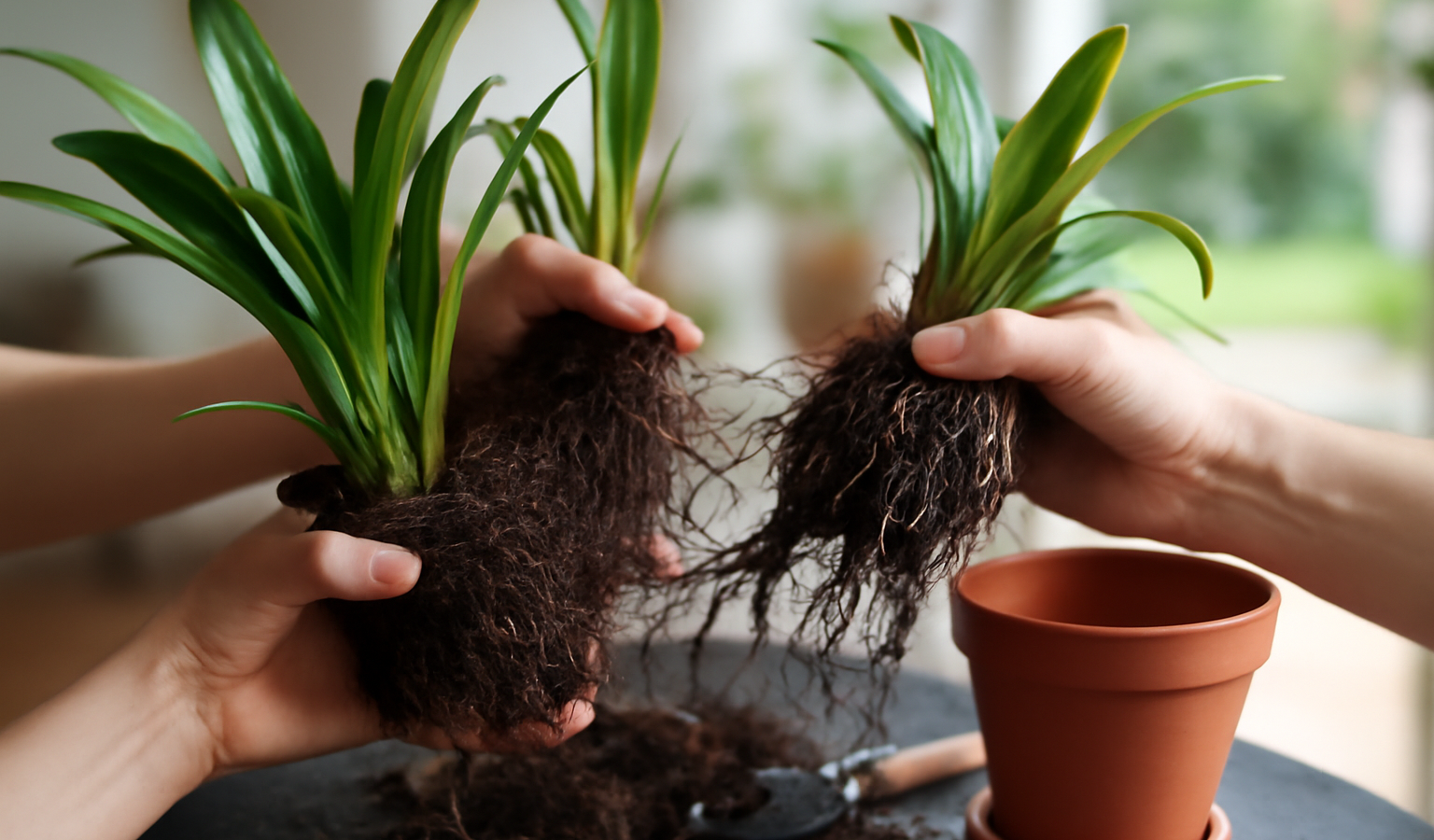
Some houseplants cannot be propagated from a cutting in a glass of water — they simply do not grow from stem nodes. Snake plants, peace lilies, calatheas, ZZ plants and most ferns form clumps of growth rising from a shared root mass, and the way you multiply them is to split that clump into smaller, self-sufficient plants. Division is the fastest propagation method there is: instead of waiting weeks for roots to form, you walk away with two or three fully rooted plants in the same afternoon. It also doubles as maintenance, relieving a pot-bound plant that has stopped growing and refreshing tired old centers. The trick is knowing which plants divide, how to read the rootball, and how to separate it without shredding the roots that keep each new section alive.
Key Takeaways
- Division works on clumping plants — snake plant, peace lily, calathea, ferns, ZZ plant, spider plant — not on single-stem vines.
- The best time to divide is spring or early summer, ideally when repotting a root-bound plant.
- Each division needs its own roots and at least two or three healthy leaves or growth points to survive.
- Tease apart loose root mats by hand; cut dense rhizomes with a clean sharp knife rather than tearing them.
- Pot divisions in fresh mix, water in, keep humid and out of direct sun for two weeks while they recover.
Which Houseplants Can Be Divided
Division suits any plant that grows as a clump or colony of multiple stems, crowns or rhizomes sharing one pot. The classic candidates are the ones water propagation cannot touch. Snake plants (Dracaena trifasciata) spread by thick underground rhizomes that throw up new leaf fans; each fan, with a piece of rhizome and some roots, becomes a new plant. Peace lilies grow as a cluster of crowns, and a mature plant pulls apart into several clumps, each with leaves and roots. Calatheas and marantas (the prayer plants) form dense clumps of stems rising from a shallow rhizome mass and divide cleanly once you find the natural seams.
Ferns — Boston, bird’s nest, maidenhair and the rest — build up a fibrous, matted crown that you can split into wedges, each with fronds and a share of roots. ZZ plants store energy in potato-like rhizomes that separate into independent clumps. Spider plants, cast iron plants, Chinese evergreen (aglaonema), and clumping grasses and sedges all divide the same way. As a rule of thumb: if you can see several distinct shoots or leaf fans coming up from the soil rather than one main stem, the plant can be divided.
What does not divide is anything that grows from a single stem or vine — pothos, monstera, most philodendrons, rubber plants, fiddle-leaf figs. Those you propagate from stem cuttings instead, which we cover in detail in our guide on propagating houseplants in water. Trying to “divide” a single-stemmed plant just means cutting one plant into two halves, neither of which is whole.
When to Divide — and Why It Helps the Plant
The ideal window is spring through early summer, when plants are entering their active growing season and have the vigor to recover quickly and push new roots. Dividing in the depths of winter, when growth is stalled, leaves the divisions sitting in shock for months. The best practical moment is when you are already repotting a root-bound plant — one whose roots circle the pot, push out the drainage holes, or have stopped putting out new growth. A snake plant that has cracked its plastic nursery pot or a peace lily that wilts a day after watering because the pot is solid roots is telling you it is ready to be split.
Division solves a problem that other care fixes cannot. A pot-bound clump exhausts its soil, dries out fast, and slows or stops growing — symptoms people often misread as a feeding or light issue. If you have a snake plant that simply refuses to put out new leaves despite good light, an overcrowded rootball is a common cause, as we explore in why a snake plant stops growing. Splitting the clump gives each piece fresh soil and room to expand, and you get free plants in the bargain. Most clumping houseplants are happy to be divided every two to three years.
How to Split the Rootball, Step by Step
1. Water a day ahead and gather tools
Water the plant the day before so the rootball is moist but not soggy — hydrated roots are more flexible and less likely to snap, and damp soil falls away more cleanly than bone-dry dust. Set out a clean sharp knife or pruners (wiped with isopropyl alcohol), the new pots, fresh potting mix, and a sheet of newspaper or a tarp, because division is messy. Doing it outdoors or in a sink makes cleanup far easier.
2. Remove the plant from its pot
Tip the pot on its side and ease the plant out, supporting the base. If it is stuck, run a knife around the inside edge or squeeze a flexible pot to free the rootball. Do not yank it out by the leaves — you will tear foliage from roots. With a badly root-bound plant you may need to slide a long knife down the inside of the pot to cut the circling roots loose.
3. Loosen the roots and read the clump
Gently shake and brush away the loose soil so you can see the structure underneath. Most clumping plants reveal natural divisions once they are exposed — separate fans on a snake plant, distinct crowns on a peace lily, clusters of stems on a calathea. Tease away enough soil to see where one section ends and the next begins. You are looking for groupings that each carry their own roots and their own top growth.
4. Separate the sections
How you separate depends on the plant. Loose, fibrous root mats — ferns, spider plants — can often be pulled apart with your fingers or thumbs, working the sections gently away from each other. Dense, knotted, or rhizomatous rootballs — snake plants, ZZ plants, mature peace lilies — resist tearing, and forcing them shreds the roots. For those, use the clean knife to slice straight through the rootball between the natural groupings. A decisive cut does far less damage than a long wrestling match. Make sure every division you cut off keeps a fair share of roots and at least two to three healthy leaves, fronds or growth points. A leaf with no roots, or a chunk of root with no top growth, rarely survives on its own.
5. Tidy up each division
Before potting, trim off any mushy, blackened or rotten roots back to firm white tissue, and remove dead or badly damaged leaves so each piece can put its energy into recovery rather than propping up failing growth. If you spot signs of soft brown rot at the center of an old clump, cut well clear of it — keeping rot out of the new pots is worth losing a little healthy tissue. Knowing the difference between rot and simple overwatering helps here; our guide on root rot versus overwatering walks through what healthy versus failing roots look like.
Potting Up and Aftercare
Pot each division into a container only slightly larger than its root mass. The most common post-division mistake is over-potting — dropping a small division into a big pot of soil that stays wet and rots the roots before they can fill it. Use fresh, appropriate potting mix: a well-draining houseplant mix for peace lilies and calatheas, a grittier cactus-and-succulent blend cut with extra perlite for snake plants and ZZ plants, which hate sitting wet. Set the division at the same depth it grew before — burying the crown invites rot — firm the mix gently around the roots, and water it in thoroughly to settle the soil and close air pockets around the roots.
The two weeks after division are recovery time, and the plant’s job is to grow new feeder roots into the fresh soil. Set the divisions out of direct sun in bright, indirect light; harsh sun stresses a plant that cannot yet take up water efficiently. Keep the soil lightly moist for moisture-loving plants like peace lilies, ferns and calatheas, and raising humidity with a clear bag, a dome, or a nearby humidifier cushions the shock — especially for fussy calatheas, which sulk and crisp at the leaf edges if the air is dry. Snake plants and ZZ plants are the exception: water them sparingly after division and let the mix dry between drinks, because their cut rhizomes rot easily in wet soil. Hold off on fertilizer for at least four to six weeks; feeding tender, damaged roots can burn them, and the fresh potting mix already carries enough nutrients to start.
Expect some sulking. Drooping leaves, a few yellowing fronds, or a calathea that closes up tight are all normal transplant shock and usually pass within a week or two as new roots establish. The signal that a division has taken is fresh growth — a new leaf fan on the snake plant, an unfurling frond on the fern, a new spear on the peace lily. Once you see it, you can ease back into normal watering and resume feeding. From that point each division is simply a smaller version of the plant you started with, and within a season or two it will have filled its own pot — ready, eventually, to be divided all over again.
Troubleshooting Division Problems
If a division collapses entirely within days, it most likely went into its new pot with too few roots, or it was potted too deep and the crown rotted. Next time, keep more roots with each piece and set the crown at soil level. Persistent yellowing weeks after division usually means the soil is staying too wet — back off watering, check that the pot drains freely, and confirm you have not over-potted. Crispy brown leaf edges on calatheas and ferns point to low humidity rather than a division failure; tent the plant or run a humidifier. If a snake plant or ZZ division goes soft and squishy at the base, that is rhizome rot from overwatering after the split — unpot it, cut away the mush, let the cut surfaces callus for a day, and repot dry. And if your “divisions” never establish because each one is just a single leaf with no roots, remember the core rule: every viable division needs both roots and growth points, joined together on the same piece.
Frequently Asked Questions
What is the best time of year to divide houseplants?
Spring through early summer is ideal, when plants are actively growing and recover fastest. The most practical moment is whenever you are already repotting a root-bound plant. Avoid dividing in winter, when growth stalls and divisions sit in shock for months instead of pushing new roots.
How small can I make each division?
Each division must keep its own roots plus at least two or three healthy leaves, fronds or growth points. Smaller than that and the piece often lacks the resources to recover. Larger divisions establish faster and look fuller sooner, so do not chop a plant into more pieces than it can comfortably support.
Should I pull the rootball apart or cut it?
It depends on the plant. Loose, fibrous root mats like ferns and spider plants can be teased apart by hand. Dense, knotted or rhizomatous rootballs — snake plants, ZZ plants, mature peace lilies — should be cut with a clean, sharp knife. A decisive cut damages far fewer roots than tearing a stubborn clump apart.
Why are my divisions drooping after I repotted them?
Some drooping, yellowing or leaf-closing is normal transplant shock and usually passes in one to two weeks as new roots establish. Help them recover by keeping them out of direct sun, maintaining steady (not soggy) moisture, and raising humidity. Hold off on fertilizer for four to six weeks so you do not burn the tender new roots.
Can I divide a snake plant or ZZ plant the same way as a peace lily?
The cutting technique is similar — slice through the rhizome between natural clumps — but the aftercare differs. Snake plants and ZZ plants store water and rot easily, so use a gritty, fast-draining mix and water sparingly after division. Peace lilies, ferns and calatheas prefer steadier moisture and benefit from higher humidity while they recover.
Division is the quickest win in houseplant propagation: no waiting for roots, no glass of water to babysit, just an afternoon of untangling and a row of new plants by dinnertime. Keep roots and top growth together on every piece, match the soil and watering to the plant’s tolerance for wet feet, and give each division two calm weeks to settle. Pair this with stem-cutting methods for your vining plants and you can keep an entire urban gardening collection expanding indefinitely — for free.