

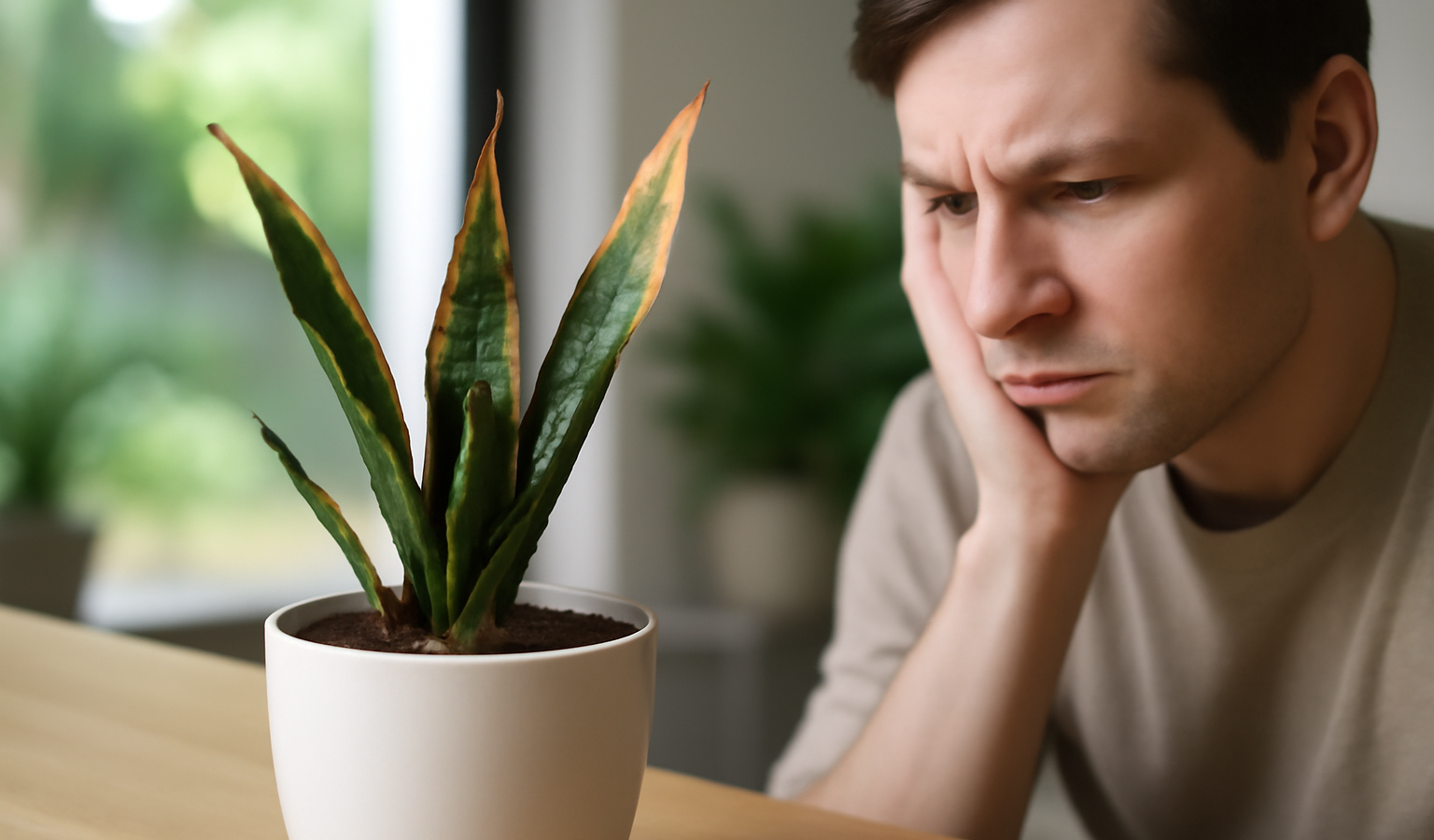
You bought a snake plant because everyone swore it was indestructible, and now it just… sits there. Same height, same number of leaves, month after month. Before you assume something is wrong, understand this: a snake plant (Sansevieria, now reclassified as Dracaena trifasciata) is one of the slowest-growing houseplants you can own even under ideal conditions. A healthy specimen might add two to four new leaves a year and gain a few inches of height, and most of that happens in a tight window from late spring through early fall. So the first question is never “what’s killing it” but “is this actually a problem, or is the plant just being a snake plant?” The difference matters, because the wrong fix can do more harm than the stall itself.
That said, there are six genuine reasons a snake plant slows down or refuses to push new growth, and they overlap more than you’d think. Below I’ll walk through each one in the order I check them in my own collection, with a clear way to diagnose it and the specific fix. Work through them top to bottom, because the most common cause is also the one people panic about the least.
Key Takeaways
- Snake plants are naturally slow and go nearly dormant from October through March; no new growth in winter is normal, not a problem.
- Low light is the number-one fixable cause of a stalled snake plant. They survive in shade but only grow well in bright, indirect light.
- They actually grow faster when slightly potbound, so a too-large pot full of wet soil stalls them and invites root rot.
- Temperatures below about 55°F shut growth down entirely; keep them at 65 to 85°F to see active leaves.
- Overwatering is the silent stall and the one that turns into a dead plant. Wait until the top half of the soil is bone dry.
- A light feeding once or twice during the growing season is plenty; these plants do not need much, but zero feeding over years will slow them.
Cause 1: Winter Dormancy (The Most Likely Answer)
If it’s anywhere from October to March and your snake plant hasn’t moved, stop reading and relax. This is almost certainly normal. Snake plants are native to the rocky, seasonally dry regions of West Africa, and they’re wired to grow when light and warmth are abundant and to coast through the lean months. Indoors, that translates to a long resting period through fall and winter when the days are short and the plant simply isn’t building new tissue. During this stretch, even a perfectly healthy plant in a sunny window can sit unchanged for four or five months straight.
How to diagnose it
Check the calendar and the plant’s overall condition. If the existing leaves are firm, upright, and a healthy green (or properly variegated for your cultivar), and the only “symptom” is a lack of new growth between roughly mid-October and mid-March, you’re looking at normal dormancy. There’s nothing to fix. A dormant snake plant feels solid when you gently squeeze a leaf and shows no yellowing, mushiness, or wrinkling.
The fix
Do less, not more. In winter, cut watering back to roughly once every four to six weeks, stop fertilizing entirely, and keep the plant in its brightest available spot to limit any decline. Resist the urge to “wake it up” with extra water or feed; that’s how dormancy turns into root rot. When spring returns and daylight stretches past about twelve hours, you’ll see new growth begin on its own, usually a fresh spear pushing up from the soil between April and June. Patience here is genuinely the whole strategy.
Cause 2: Too Little Light
This is the most common cause that actually needs fixing. Snake plants are sold as “low-light” plants, and they are tolerant of shade, but tolerance and thriving are two different things. A plant in a dim corner six feet from a north window will stay alive for years without ever growing, because it simply doesn’t have enough light energy to build new leaves. People read “low light” as “no light required” and then wonder why their plant has been frozen in time since they bought it.
How to diagnose it
Look at where the plant lives and how the existing leaves behave. Telltale signs of too little light include leaves that are darker and floppier than they should be, leaning hard toward the nearest window, and on variegated cultivars like ‘Laurentii’, a fading of the yellow edges back toward solid green. Do a quick shadow test at midday: hold your hand a foot above the soil. If it casts no visible shadow at all, there isn’t enough light to support growth. If it casts only a faint, fuzzy shadow, you’re in survival territory, not growing territory.
The fix
Move the plant to bright, indirect light. An east-facing window with a few hours of gentle morning sun is ideal, and a spot within two to three feet of a south or west window (sheer-curtained to soften harsh afternoon rays) is excellent too. Snake plants can also handle a few hours of direct sun once acclimated, which actually speeds growth, but make the transition gradually over a week or two to avoid scorching the leaves. If you simply don’t have a bright window, a basic LED grow light running ten to twelve hours a day, positioned about a foot above the plant, will absolutely get it growing. After relocating, give it a few weeks; new growth from a light correction isn’t instant, but it will come during the growing season.
Cause 3: The Pot Is Too Big (or It’s Drowning in Soil)
Here’s the counterintuitive one. Most plants grow faster after you upsize the pot, but snake plants are the opposite. They genuinely prefer to be slightly potbound, and they often push out new leaves and pups most enthusiastically when their roots are crowded. Repotting a perfectly happy snake plant into a pot two or three sizes larger is one of the fastest ways to stall it. All that extra soil holds water far longer than the plant can use it, the roots sit cold and wet, and growth grinds to a halt while the plant focuses on filling out roots instead of leaves.
How to diagnose it
Think back to whether you recently repotted, and into how big a jump. If you moved a plant from a 6-inch pot straight into a 10-inch pot and it stalled afterward, the pot is your answer. Another clue: the soil stays damp for a very long time after watering, often more than two weeks, because there’s far more soil volume than roots to drink it up. Conversely, a plant that’s been in the same small pot for three or more years and has stopped growing may finally be too rootbound, with roots circling tightly, cracking the pot, or forcing themselves out the drainage holes.
The fix
Match the pot to the plant. The rule of thumb is to step up only one pot size at a time, roughly one to two inches larger in diameter, and only when the plant is genuinely crowded, which for a snake plant means every two to four years at most. If you over-potted, the best move is to repot back down into a snugger container with fast-draining cactus or succulent mix (you can amend regular potting soil with about one-third perlite or coarse sand). Always use a pot with a drainage hole; terracotta is excellent here because it wicks moisture and dries the root zone faster. If the plant is truly rootbound after years in the same pot, that’s your cue for a modest one-size upgrade or, better yet, a division to make new plants. If you’re weighing this plant against other low-maintenance options, our snake plant vs ZZ plant comparison covers how their growth habits and pot preferences differ.
Cause 4: Wrong Season or Cool Temperatures
Snake plants are warm-climate plants, and temperature drives their growth as much as light does. Even in spring or summer, a plant kept in a chilly room, near a drafty window, or by an air-conditioning vent will refuse to grow. Below about 55°F, the plant essentially shuts down, and sustained cold (especially under 50°F) can cause cold damage that looks like soft, mushy, or discolored patches on the leaves. So if your plant is stalled and lives somewhere cool, temperature may be the hidden brake.
How to diagnose it
Feel the air where the plant sits, especially overnight and in the early morning when temperatures dip lowest. Common cold spots are entryways, single-pane windows in winter, basements, garages, and anywhere directly in the path of an AC vent. If the room regularly drops below 60°F at night, that alone can keep growth paused even during the growing season. Cold-stressed leaves may also feel limp or develop pale, water-soaked-looking areas.
The fix
Keep snake plants in the sweet spot of 65 to 85°F, which is exactly the range most homes sit at anyway, and never let them drop below about 55°F. Move the plant away from cold drafts, exterior doors, and AC vents. In winter, pull it back a foot or so from icy window glass at night even if it lives there during the day. Once the plant is consistently warm and the days are lengthening, you’ve removed one of the two big levers (the other being light) that control whether it grows at all.
Cause 5: Overwatering and Root Rot
Overwatering is the single most dangerous cause on this list, because it doesn’t just stall the plant, it kills it. Snake plants store water in their thick, fleshy leaves and rhizomes, so they need far less water than people expect. When the soil stays wet, the roots can’t breathe, they begin to rot, and a plant with rotting roots can’t take up the water and nutrients it needs to grow. So you end up overwatering a plant that looks like it needs water, all while the real problem is too much of it. Early on, this shows up purely as stalled growth; later, the leaves yellow, soften, and topple.
How to diagnose it
Stick your finger two to three inches into the soil. If it’s damp and you watered more than a week or two ago, you’re overwatering. Look for yellowing leaves (especially at the base), leaves that feel soft or squishy rather than firm, a wrinkled-yet-wet appearance, or a sour, musty smell from the soil. If you suspect rot, gently slide the plant out of its pot and inspect the roots and rhizomes: healthy ones are firm and pale, while rotting ones are brown, black, mushy, and may smell foul. Telling overwatering apart from genuine thirst trips a lot of people up, and our guide to root rot vs overwatering breaks down the visual differences in detail.
The fix
Let the soil dry out far more than you think you should. In summer, water roughly every two to three weeks, and only when the top half of the pot’s soil is completely dry. In winter, stretch that to once every four to six weeks. When you do water, soak thoroughly until it runs from the drainage hole, then dump any water in the saucer so the roots never sit in it. If you find active root rot, unpot the plant, cut away every mushy root and rhizome with clean, sharp scissors, let the cuts callus for a day, and repot into fresh, dry, fast-draining mix. Then leave it alone for a week before the first light watering. A snake plant recovering from rot will pause growth while it rebuilds roots, so don’t expect new leaves until it’s clearly healthy again.
Cause 6: Not Enough Feeding
This is the least common cause and the one to check last, because snake plants are famously light feeders and most stalls have nothing to do with fertilizer. Still, a plant that’s been in the same potting soil for several years, never fed, can simply run low on available nutrients, and that will gradually slow it down. The mistake people make once they hear “feed it” is overcorrecting and dumping on fertilizer, which a slow plant can’t use and which builds up as salts that burn the roots, stalling growth even further.
How to diagnose it
Ask yourself two questions: when did I last repot or refresh the soil, and have I ever fertilized? If the answer is “years ago” and “never,” and you’ve already ruled out light, temperature, pot size, and overwatering, then a nutrient shortfall is a reasonable suspect. The plant may look generally pale or simply make no progress through a full growing season despite good conditions everywhere else.
The fix
Feed lightly and only during the growing season. A balanced houseplant fertilizer (something like a 10-10-10) diluted to half strength, applied once or twice between late spring and late summer, is all a snake plant wants. Never fertilize in fall or winter when the plant is dormant, and never fertilize a plant sitting in dry soil; water lightly first to avoid root burn. If you suspect salt buildup from past over-feeding, flush the pot by running plain water through it several times to leach out the excess. With snake plants, restraint beats enthusiasm every single time.
How to Prevent a Stalled Snake Plant Going Forward
Once you’ve gotten your plant growing again, keeping it that way is mostly about giving it consistent conditions and then leaving it alone. The two biggest growth drivers are light and warmth, so the single best thing you can do is park the plant in bright, indirect light at a steady 65 to 85°F and not move it around chasing perfection. A snake plant rewards consistency over fiddling.
Build your watering around the seasons rather than a fixed schedule. Through the warm months, check the soil every couple of weeks and water only when the top half is bone dry; through fall and winter, water far less, often just once a month or even less. Always use a pot with drainage and a gritty, fast-draining mix, and never let the plant sit in a saucer of water. Keep it in a pot that’s only slightly larger than its root ball, repot just once every two to four years (or when roots are truly bursting out), and treat division as your default way to handle a plant that’s outgrown its home.
Feed lightly once or twice in summer and not at all the rest of the year. Wipe dust off the leaves every month or two so they can absorb light efficiently, and adjust your expectations to match the plant: a few new leaves and a couple of inches per year is a thriving snake plant, not a slow one. If you like the look but want to understand how it stacks up against other easy upright growers, or you’re troubleshooting a leggy relative, our guide to why a ZZ plant gets leggy tackles a similar slow-grower problem. For more care fundamentals across your whole collection, browse the Plants & Flowers hub.
Frequently Asked Questions
How long does it take for a snake plant to grow a new leaf?
During the active growing season, a new spear typically takes several weeks to a couple of months to emerge and reach full height. A healthy snake plant usually produces only two to four new leaves over an entire year, with nearly all of that growth happening between late spring and early fall.
Is it normal for my snake plant to not grow in winter?
Yes, completely. Snake plants go nearly dormant from roughly October through March because of shorter days and cooler temperatures. No new growth during this window is normal and expected. Cut back on watering, stop fertilizing, and wait for spring, when growth resumes on its own.
Should I repot my snake plant to make it grow faster?
Usually no. Snake plants prefer to be slightly potbound and often grow best when their roots are crowded. Repotting into a much larger pot typically slows growth because the extra wet soil chills the roots and invites rot. Only repot every two to four years, stepping up just one pot size.
Can a snake plant grow in low light?
It can survive in low light for years, but it won’t grow much there. To see new leaves, give it bright, indirect light, such as near an east-facing window or a few feet from a south or west window. In a very dim corner, expect the plant to hold steady but not put on new growth.
Why is my snake plant alive but not growing or dying?
That holding pattern almost always means conditions are good enough to survive but not to grow, most often too little light, cool temperatures, winter dormancy, or being recently over-potted. Work through those factors in order. If the leaves are firm and green, it’s stable and just waiting for better light, warmth, and the growing season.