

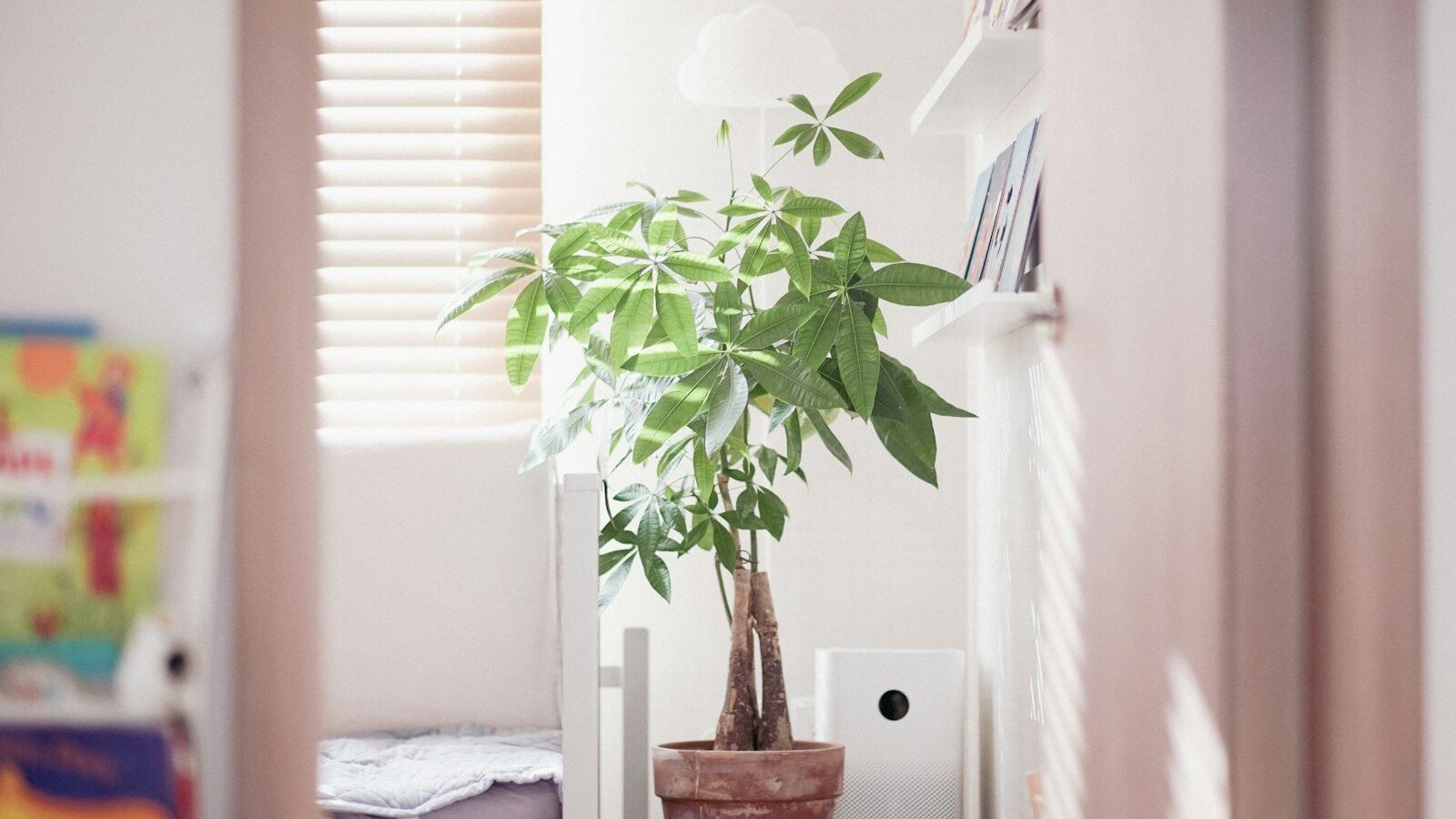
The money tree, Pachira aquatica, is the houseplant with the famous braided trunk and a fan of glossy, hand-shaped leaves on top. Native to the wetlands of Central and South America, it earned its lucky reputation through feng shui, where it is believed to attract prosperity and good fortune — which, combined with how genuinely easy it is to grow, explains why it shows up on so many desks and in so many homes. The braid is created by training several young, supple trunks together as they grow; mature, single-trunk specimens exist too. Whatever the form, money trees are tolerant, attractive, and refreshingly low-drama once you understand their preference for steady moisture without sogginess.
Key Takeaways
- Light: bright, indirect light; rotate regularly to keep growth even.
- Water: water when the top 2 inches dry out, roughly every 1–2 weeks; never let it sit in water.
- Soil: well-draining, peat-based mix; despite the name, it does not want soggy roots indoors.
- Humidity: enjoys higher humidity (50%+) but tolerates average household air.
- Pet-safe: generally considered non-toxic to cats and dogs per the ASPCA.
Light Requirements
Money trees thrive in bright, indirect light. A spot near an east-facing window with gentle morning sun, or a few feet back from a brighter south- or west-facing window, suits them perfectly. They will tolerate medium light, growing more slowly there, which is part of why they survive in offices, but their best, fullest growth happens in bright filtered light. Keep them out of harsh, direct afternoon sun — the leaves scorch and develop bleached or brown patches.
One quirk worth knowing: money trees grow toward the light and the leafy canopy can become lopsided fast. To keep the crown balanced above that decorative braided trunk, rotate the pot a quarter-turn every week or two. If your space is dim, the plant will get leggy and drop lower leaves; a grow light or a brighter location fixes it. Avoid moving a money tree around too often, though — like many tropicals, it can sulk and shed a few leaves after a big change in conditions, so pick a good spot and leave it.
How to Water a Money Tree
Watering trips up more money-tree owners than anything else, largely because the species name aquatica and its wetland origins suggest it wants constant water. In a pot indoors, it does not. The reliable approach is to water thoroughly when the top 2 inches of soil have dried out, letting water run all the way through the drainage holes, then discarding whatever collects in the saucer. In practice this lands at roughly every one to two weeks, more often in bright summer conditions and less in winter.
The classic mistake is keeping the soil constantly wet, which rots the roots. The earliest sign of overwatering is yellowing leaves and a soft, possibly smelly base of the trunk. Underwatering, by contrast, shows up as crispy brown leaf edges and drooping, wrinkled foliage. Both can also cause the small leaflets to brown and drop. When unsure, err toward letting it dry a little more — money trees recover from a missed watering far better than from drowning. Use room-temperature water and water evenly around the pot.
Soil and Potting
A money tree wants a rich but well-draining medium. A quality peat- or coir-based houseplant mix amended with perlite and a little coarse sand drains freely while holding enough moisture to keep the plant happy. A pre-blended mix labeled for general houseplants or even a lightened succulent mix works well. The non-negotiable requirement is a pot with drainage holes — this plant will not forgive standing water at the roots.
Because money trees are often sold in small, decorative containers, check whether yours has drainage; if it sits inside a cachepot, lift it out to water and drain fully before returning it. A pot only slightly larger than the root ball is ideal, as oversized pots hold excess wet soil. For help dialing in the right blend, see our Plants & Flowers care guides.
Temperature and Humidity
Keep money trees in comfortable household warmth, ideally 65–80°F (18–27°C). They have no frost tolerance and dislike anything below about 50°F (10°C), so protect them from cold winter windows and chilly drafts. They are also sensitive to abrupt swings, so avoid placing one above a heat vent or in the direct blast of an air conditioner — both can trigger leaf drop.
As a tropical wetland native, the money tree genuinely appreciates higher humidity, ideally above 50%. In a humid bathroom or a plant-filled room it will look its lushest, with fewer brown leaf tips. That said, it adapts to average indoor humidity reasonably well. If your home runs dry, particularly in winter, group it with other plants, set it on a pebble tray, or run a humidifier nearby. Browning leaf tips are the usual clue that the air is too dry. An occasional gentle misting and wiping the leaves clean keeps the foliage glossy and lets it breathe.
Fertilizing
Feed money trees during the active growing season, spring through early fall, with a balanced liquid houseplant fertilizer diluted to half strength about once a month. They are not heavy feeders, so more is not better — excess fertilizer causes salt buildup and leaf-tip burn. Cut feeding out entirely in the late fall and winter dormant period. If you notice a whitish crust forming on the soil surface, that is mineral salt accumulation; flush the pot with plain water several times to leach it away, and consider easing off the fertilizer.
Caring for the Braided Trunk
The braid is a horticultural craft, not a natural growth pattern. Nurseries weave several young, flexible trunks together while they are still pliable, and as the plant grows the trunks fuse and thicken into that signature shape. To maintain it on a young plant, you can gently continue the braid as new growth lengthens, loosely tying the top until it sets. Don’t force or over-tighten the trunks, which can damage the bark and girdle the plant. On older, woody specimens the braid is permanent and needs no maintenance.
You can also prune the canopy to control height and encourage a fuller crown. Using clean shears, cut back overlong or leggy stems just above a leaf node; the plant will branch out below the cut. Pruning in spring gives the fastest regrowth. Remove any yellowing or dead leaves as they appear to keep the plant tidy and reduce hiding spots for pests. The same node-and-branch logic that governs cutting back woody plants applies here — see our guide to pruning shrubs.
Repotting and Propagation
Money trees are moderate growers and usually need repotting every two to three years, or when roots circle the surface, poke through the drainage holes, or the plant dries out too fast. Repot in spring into a container one size up, settling the plant at its original depth in fresh well-draining mix and watering it in. Keeping it slightly root-bound actually helps limit its size if you want it to stay compact.
To propagate, take 4–6 inch stem-tip cuttings in spring or summer, each with a few leaves and at least one node. Remove the lowest leaves, dip the cut end in rooting hormone, and root in moist, well-draining mix kept warm and humid under a loose plastic dome, or start the cutting in water and pot it up once roots form. Rooting typically takes several weeks. For step-by-step technique, see our guide on how to propagate plants from cuttings. Note that cuttings grow single trunks; the braid only happens with multiple trunks trained together.
Common Problems and Pests
Yellowing leaves are the most common complaint and usually point to overwatering — let the soil dry and check that the pot drains. Brown, crispy leaf tips and edges indicate dry air or underwatering. Leaf drop follows sudden changes in light, temperature, or watering, so consistency is key. Leggy growth with sparse leaves means more light is needed. A soft, mushy, or foul-smelling trunk base is a serious sign of root and stem rot from overwatering, and the plant may need its healthy upper portion saved as a cutting.
Pests that occasionally target money trees include spider mites (favoring dry air, leaving fine webbing and stippling), mealybugs (white cottony clusters), scale (small brown bumps), and aphids. Inspect leaf undersides and joints regularly. Wipe down the foliage and rinse the plant to dislodge light infestations, and treat stubborn ones with insecticidal soap or neem oil every 7–10 days. Boosting humidity helps deter spider mites in particular.
Is a Money Tree Toxic to Pets?
Money trees are generally considered non-toxic to cats and dogs and are listed as non-toxic by the ASPCA, making them a pet-friendly choice. As with any houseplant, a pet that chews the leaves may experience mild stomach upset simply from eating something it shouldn’t, so it is still wise to discourage nibbling. But you do not face the serious oral-irritation or poisoning concerns that come with toxic plants like schefflera, pothos, or dieffenbachia, which makes the money tree an easy plant to recommend for homes with curious animals.
Frequently Asked Questions
Why are my money tree leaves turning yellow?
Yellow leaves almost always signal overwatering. Despite the wetland origins, an indoor money tree wants the top 2 inches of soil to dry between waterings. Let the soil dry out, make sure the pot drains freely, and reduce how often you water.
How often should I water a money tree?
Water when the top 2 inches of soil are dry, which usually works out to every one to two weeks. Water thoroughly until it drains from the bottom, then empty the saucer. Water more in bright summer light and less in winter.
Why is my money tree losing leaves?
Leaf drop is a stress response, typically to a sudden change in light, temperature, or watering, or to a cold draft. Keep conditions consistent, avoid moving it around, and check that you are not over- or under-watering.
How do I keep the trunk braided?
On a young plant with flexible trunks you can loosely continue the braid as it grows, tying the top gently until it sets — never tightly. On mature, woody specimens the braid is permanent and needs no upkeep. Cuttings grow as single trunks.
Is a money tree safe for cats and dogs?
Yes — Pachira aquatica is listed as non-toxic to cats and dogs by the ASPCA, making it a pet-friendly houseplant. Chewing leaves may cause mild stomach upset, so discourage nibbling, but it poses no serious poisoning risk.
For a plant with such an exotic look, the money tree is wonderfully undemanding. Give it bright indirect light, water only when the top couple of inches of soil dry out, keep it warm and reasonably humid, and rotate it now and then for an even crown. Avoid the temptation to overwater — the one habit that undoes most money trees — and this lucky, pet-safe tropical will reward you with glossy foliage and that distinctive braided trunk for many years.